Ayu Aulia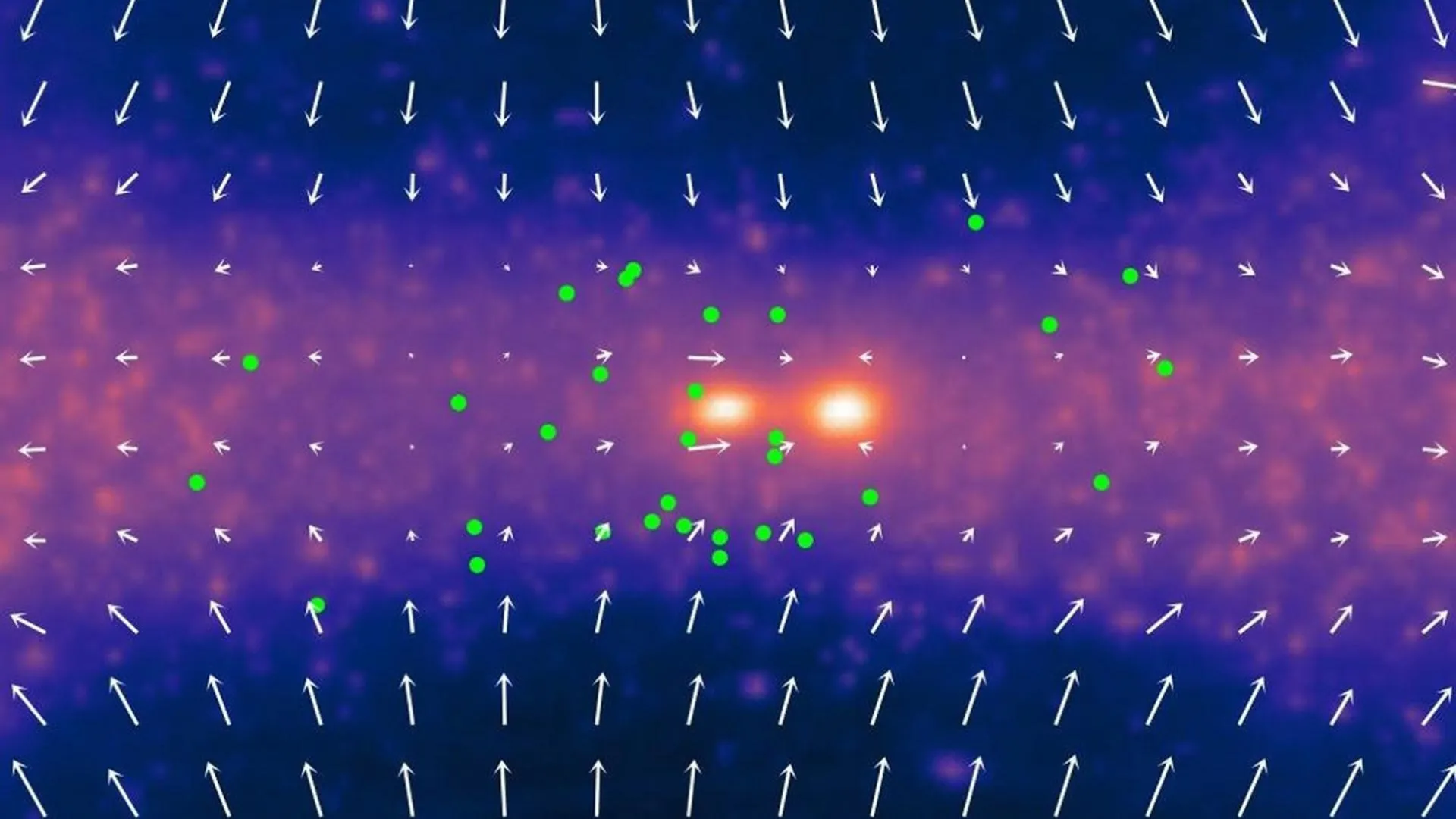
A groundbreaking astrophysical investigation has illuminated a colossal, previously unrecognized structure of matter that profoundly influences the movements of galaxies surrounding our own Milky Way. This discovery offers a compelling resolution to a long-standing cosmological conundrum concerning the unexpected outward trajectories of numerous galaxies within our local cosmic vicinity, suggesting that a vast, flattened "cosmic sheet" sculpts the gravitational landscape of our immediate universe.
The understanding of our universe’s grand architecture began to coalesce nearly a century ago, fundamentally shaped by the pioneering observations of astronomer Edwin Hubble. His seminal work revealed that the vast majority of galaxies are actively receding from the Milky Way, an observation that provided the cornerstone for the theory of an expanding universe and, by extension, the Big Bang model—a paradigm shift that fundamentally redefined humanity’s place in the cosmos. Hubble’s findings were instrumental in establishing that the universe originated from an extraordinarily hot, dense state and has been continuously expanding ever since. However, even in that nascent era of modern cosmology, scientists recognized that this universal expansion was not without its localized exceptions. The Andromeda Galaxy, our closest galactic neighbor, presents a prominent example, hurtling towards the Milky Way at an impressive velocity of approximately 100 kilometers per second, a gravitational embrace destined to culminate in a cosmic collision billions of years hence. This particular anomaly was readily explained by the immense gravitational pull exerted by these two massive galaxies on each other, locally overpowering the general cosmic expansion.
Yet, beyond the well-understood dynamics of the Milky Way-Andromeda binary, a more perplexing mystery persisted for over five decades, challenging astronomers’ ability to reconcile local galactic motions with the broader cosmological framework. Observational data consistently indicated that most large galaxies situated in the immediate vicinity of the Local Group—the gravitational ensemble comprising the Milky Way, the Andromeda Galaxy, and dozens of smaller satellite galaxies—were not, as might be intuitively expected, being drawn inwards by the collective gravitational might of this substantial galactic cluster. Instead, these surrounding galaxies appeared to be receding from us, mirroring the general cosmic expansion, even though their proximity to the Local Group’s considerable mass should, in principle, exert a significant attractive force, drawing them inwards against the background expansion. This incongruity presented a critical gap in our understanding of the localized gravitational dynamics that govern our galactic neighborhood, suggesting either an incomplete grasp of the mass distribution or an overlooked large-scale structure influencing these movements.
The resolution to this enduring astrophysical puzzle has now been proposed by an international research consortium, spearheaded by PhD graduate Ewoud Wempe of the Kapteyn Institute in Groningen. Through an intricate series of advanced computational simulations, the team has unveiled a compelling explanation: the matter encompassing the Local Group is not isotropically distributed but rather configured into an expansive, distinctly flattened structure. This immense cosmic sheet extends across tens of millions of light-years, a scale far exceeding individual galaxies or even galaxy clusters. Crucially, this structure is composed not merely of ordinary, baryonic matter—the luminous stars, gas, and dust we can directly observe—but also incorporates the invisible, enigmatic dark matter that constitutes approximately 27% of the universe’s total mass and plays a dominant role in galactic dynamics and large-scale structure formation. Complementing this flattened distribution, the simulations further reveal the existence of colossal, virtually empty regions, known as cosmic voids, situated both above and below this sheet. These voids, characterized by an extreme paucity of galaxies and matter, represent the largest structures in the universe, acting as the antithesis to the dense filaments and clusters that define the cosmic web.
The fidelity of these simulations proved remarkable, demonstrating that this specific arrangement of matter—the flattened sheet flanked by voids—could precisely reproduce both the observed spatial positions and the velocities of the galaxies surrounding our Local Group. This successful replication of real-world astronomical patterns within the computational model lends substantial credence to the existence and influential role of this newly identified cosmic sheet. It suggests that the large-scale distribution of dark and ordinary matter in our immediate cosmic environment is not uniform but organized in a specific geometry that dictates the gravitational forces experienced by nearby galaxies.
To construct this intricate computational model, the scientists embarked on a journey back to the universe’s infancy. Their starting point involved leveraging precise measurements of the cosmic microwave background (CMB)—the faint afterglow radiation from the Big Bang. The CMB provides a snapshot of the universe approximately 380,000 years after its inception, revealing the primordial fluctuations in temperature and density that served as the seeds for all subsequent cosmic structures. Using this foundational data, the researchers estimated the initial distribution of matter shortly after the Big Bang. A powerful supercomputer then undertook the monumental task of evolving this early universe forward in cosmic time, meticulously simulating the gravitational interactions, expansion, and accretion processes over billions of years. The culmination of this computational endeavor was the emergence of a system that exhibited a striking resemblance to the present-day Local Group, complete with its constituent galaxies and surrounding cosmic structures.
The resulting simulations achieved an extraordinary level of detail and accuracy. They meticulously replicated the masses, precise spatial locations, and dynamic motions of the Milky Way and Andromeda, two of the most massive and gravitationally dominant galaxies in our immediate vicinity. Furthermore, the model successfully reproduced the positions and velocities of 31 distinct galaxies situated just beyond the gravitational confines of the Local Group. The uncanny resemblance between the simulated environment and our actual cosmic surroundings led the researchers to aptly describe their creation as a "virtual twin" of our local universe. This designation underscores the model’s high degree of verisimilitude, suggesting that it encapsulates the fundamental physical processes and initial conditions that have shaped our galactic neighborhood over cosmic timescales.
The inclusion of the flat distribution of matter within this virtual twin model proved to be the pivotal element in resolving the long-standing paradox of receding galaxies. When this cosmic sheet was incorporated, the simulations demonstrated that the surrounding galaxies moved away from the Local Group at speeds that closely matched those actually observed by astronomers. The explanation lies in a sophisticated interplay of gravitational forces. Despite the significant inward pull exerted by the collective mass of the Local Group, galaxies situated within the plane of this newly discovered cosmic sheet are simultaneously influenced by additional, distributed mass spread throughout that same expansive plane. This widely dispersed yet substantial mass within the sheet effectively counterbalances a significant portion of the Local Group’s central gravitational attraction. Consequently, while still subject to the Local Group’s pull, the net gravitational effect experienced by these galaxies is attenuated, allowing them to participate more fully in the general cosmic expansion and thus appear to recede from us. Conversely, the vast cosmic voids positioned above and below this flattened plane contain an extremely low density of galaxies and matter. This scarcity of material explains why astronomers do not observe objects falling towards the Local Group from those particular directions; there simply isn’t enough mass in those regions to exert a significant gravitational tug, further solidifying the model’s explanatory power.
According to lead researcher Ewoud Wempe, this study represents a significant advancement, constituting the first highly detailed and comprehensive attempt to precisely determine the intricate distribution and dynamic motion of dark matter specifically within the immediate environs of the Milky Way and Andromeda. He emphasized the rigorous approach taken by the team, stating, "We are exploring all possible local configurations of the early universe that ultimately could lead to the Local Group." This exhaustive methodology underscores the robustness of their findings. Wempe further articulated the profound satisfaction derived from the outcome: "It is great that we now have a model that is consistent with the current cosmological model on the one hand, and with the dynamics of our local environment on the other." This consistency is paramount, as it ensures that the localized explanation for galactic motions seamlessly integrates with the broader, established framework of cosmic expansion and structure formation.
The findings have also garnered enthusiastic endorsement from other prominent figures in the astronomical community. Renowned astronomer Amina Helmi lauded the research, highlighting the persistent challenge this particular problem has posed to researchers for many decades. Her comments underscore the significance of this breakthrough in resolving a long-standing observational discrepancy. Helmi expressed her excitement, noting, "I am excited to see that, based purely on the motions of galaxies, we can determine a mass distribution that corresponds to the positions of galaxies within and just outside the Local Group." This statement emphasizes the power of using kinematic data—the observed motions of galaxies—to infer the underlying distribution of both visible and invisible matter, a crucial validation for cosmological models.
The discovery of this giant cosmic sheet and its role in shaping our local galactic dynamics carries profound implications for our understanding of the universe’s structure and evolution. It refines our models of the Local Group’s interaction with the larger cosmic web, the vast network of filaments, clusters, and voids that permeates the universe. This research provides a crucial, high-resolution view of how dark matter, the enigmatic scaffolding of the cosmos, is distributed and how its gravitational influence orchestrates the ballet of galaxies on scales larger than individual galactic halos but smaller than superclusters. It suggests that the Local Group is not merely an isolated island of galaxies but is embedded within a specific, larger-scale gravitational environment that exerts a palpable influence on its surroundings. This insight could lead to a re-evaluation of how local gravitational effects are disentangled from the overarching cosmic expansion in observational cosmology.
Looking forward, this research opens several exciting avenues for future investigation. The "virtual twin" model provides a powerful tool for further probing the nuances of our cosmic neighborhood. Future studies could focus on refining the model’s parameters, potentially incorporating more detailed physics or higher-resolution initial conditions to test its predictive power even further. Moreover, the existence of such a prominent, flattened structure might have observable consequences beyond galactic motions, perhaps influencing the paths of cosmic rays or the distribution of intergalactic gas. New observational campaigns could be designed to specifically search for independent evidence of this cosmic sheet, perhaps through gravitational lensing surveys that can map the distribution of dark matter more directly, or through studies of the faint intergalactic medium. The ultimate goal remains to construct an ever more accurate and comprehensive map of the universe’s matter distribution, from the smallest galactic scales to the grandest cosmic structures, continually enhancing our understanding of the forces that have shaped and continue to shape our universe. This recent discovery represents a significant leap in that ongoing quest, providing a compelling explanation for a decades-old enigma and offering a clearer picture of our own galactic home’s place within the intricate tapestry of the cosmos.




 Lisa Mariana
 Aura Kasih
 Safa Marwah