Ayu Aulia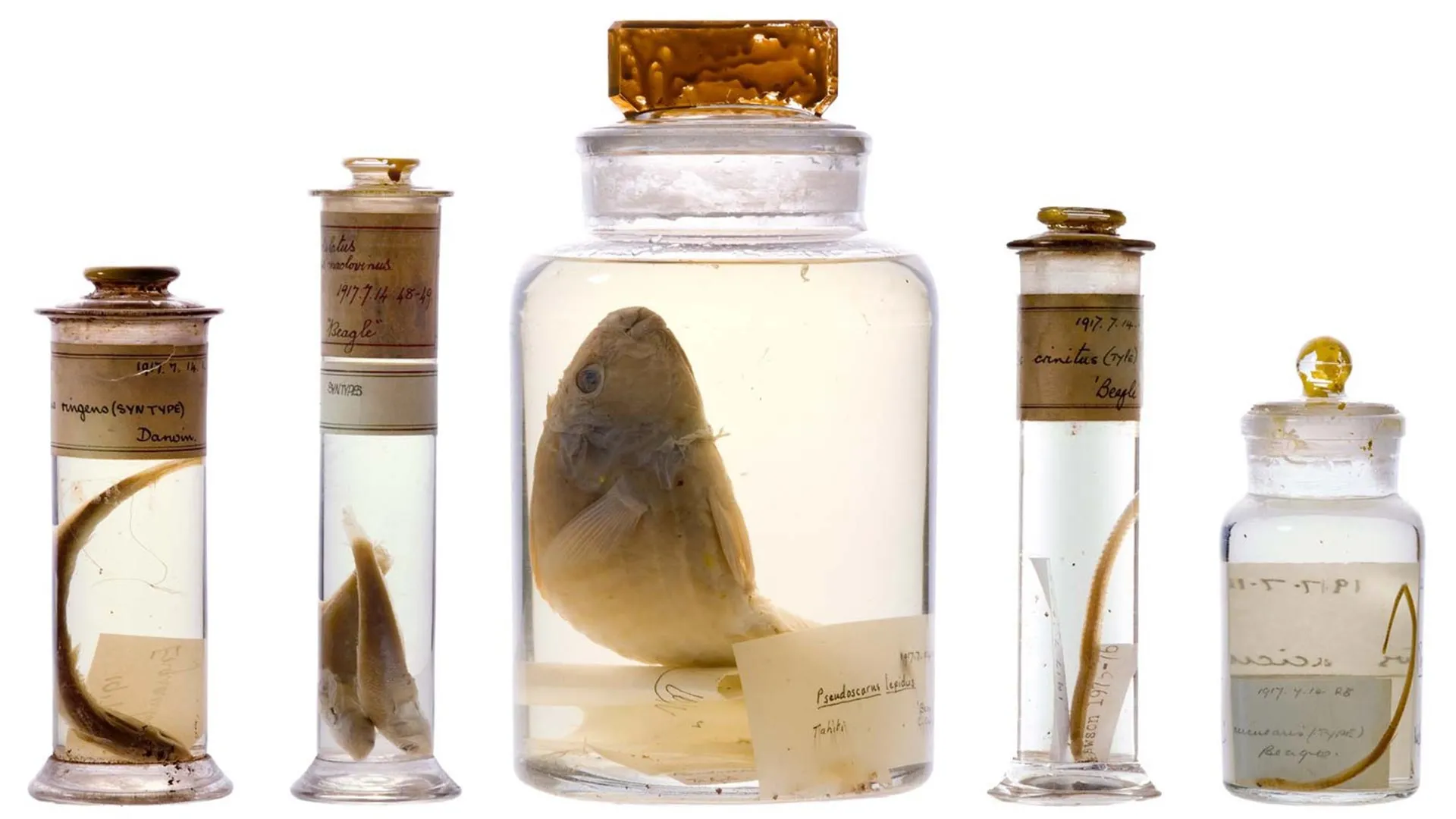
A groundbreaking scientific endeavor has successfully peered into the sealed vessels containing Charles Darwin’s original biological collections from his seminal HMS Beagle expedition, offering unprecedented insights into their contents without compromising their nearly two-century-old integrity. This innovative approach, utilizing advanced optical technology, represents a significant leap forward in the study and preservation of invaluable natural history specimens, providing a non-destructive pathway to understanding the historical context and chemical makeup of these irreplaceable artifacts.
The scientific community has long grappled with the inherent tension between the desire to study historically significant biological specimens and the imperative to preserve them for future generations. Collections dating back to the foundational voyages of discovery, such as Charles Darwin’s circumnavigation aboard the HMS Beagle between 1831 and 1836, represent an unparalleled treasure trove of biological diversity and evolutionary insight. These specimens, meticulously collected from diverse ecosystems, particularly the Galápagos Archipelago, formed the empirical bedrock for Darwin’s revolutionary theories on natural selection and speciation. Their physical integrity is paramount, yet traditional methods for analyzing their preservation environments often necessitated opening the containers, risking exposure to degradation, contamination, or evaporation of vital fluids.
The recent investigation centered on a cohort of 46 historical samples housed within the extensive collections of the Natural History Museum in London. This selection encompassed a broad taxonomic range, including various mammals, reptiles, fish, jellyfish, and crustaceans, all gathered during the nascent stages of scientific exploration by Darwin and his contemporaries. The multidisciplinary team embarked on a detailed chemical analysis, seeking to ascertain the exact composition of the preservation media encasing these fragile relics without ever disturbing their hermetic seals.
A critical revelation from this study concerned the historical variability in preservation methodologies. The findings indicated that the choice of preservation fluid and pre-treatment protocols was often contingent upon both the specific biological classification of the organism and the chronological period of its initial storage. For instance, larger vertebrate specimens like mammals and reptiles frequently underwent initial fixation with formalin prior to their long-term immersion in ethanol solutions. Conversely, invertebrates exhibited a more diverse array of preservation strategies, involving not only formalin and buffered solutions but also complex mixtures incorporating additives such as glycerol, suggesting an evolving understanding of chemical preservation science over time.
The efficacy of the non-invasive technique was remarkable, enabling the precise identification of preservation fluids in approximately 80% of the examined specimens. An additional 15% yielded partial but still valuable identification, significantly enhancing curators’ understanding of these collections. Beyond fluid analysis, the methodology also provided crucial information regarding the material composition of the containers themselves, differentiating between glass and plastic vessels. This detail is not trivial; it offers a timeline of technological adoption in museum practices and informs decisions regarding the long-term stability and potential interactions between the container, the fluid, and the specimen.
At the heart of this technological breakthrough lies a sophisticated portable laser spectroscopy method known as Spatially Offset Raman Spectroscopy (SORS). This cutting-edge technique empowers scientists to probe the intricate chemical composition of preservation liquids directly through the solid walls of sealed containers. The operational principle of SORS involves directing a precisely calibrated laser beam into the container. As the laser light interacts with the molecules within the preservation fluid, a portion of the light undergoes inelastic scattering, resulting in subtle shifts in its wavelength. These unique spectral signatures, meticulously measured and analyzed, serve as chemical fingerprints, unequivocally revealing the molecular identity of the substances enclosed.
Raman spectroscopy, as a foundational technique, relies on the Raman effect, where monochromatic light interacts with a sample and undergoes inelastic scattering. While conventional Raman spectroscopy is powerful for surface analysis, its utility is limited when attempting to penetrate opaque or turbid materials. SORS overcomes this limitation by employing a spatial offset between the point of laser illumination and the point of scattered light collection. This spatial separation allows for the collection of scattered photons that have traversed deeper into the material, effectively filtering out surface signals and enabling interrogation of subsurface layers. For museum applications, this means the chemical signature of the fluid can be discerned from signals originating from the container material itself, a crucial distinction when analyzing sealed vessels.
The development of SORS originated at the STFC’s Central Laser Facility, a testament to the transformative potential of fundamental research. Its utility, however, extends far beyond the realm of natural history collections. The same core technology has been rigorously adopted and deployed in critical security applications globally, notably integrated into airport security scanners manufactured by Agilent Technologies, where it is used for the non-invasive detection of hazardous substances within sealed packages. This dual application underscores the robustness and versatility of SORS as a scientific instrument.
Dr. Sara Mosca, a leading researcher at the STFC Central Laser Facility, underscored the profound implications of this innovation. "Historically," she explained, "gaining insight into the specific preservation fluid contained within each jar necessitated breaching its seal. Such an action carries inherent risks: accelerated evaporation of the fluid, potential contamination from external agents, and the irreversible exposure of the specimen to detrimental environmental conditions." Dr. Mosca further emphasized, "This advanced technique now affords us the capacity to meticulously monitor and meticulously care for these irreplaceable specimens without in any way compromising their fundamental integrity."
The global repository of scientific heritage includes an astonishing volume of specimens preserved in liquid media, estimated to exceed 100 million individual items across countless institutions. For museum curators and collection managers, the precise knowledge of the chemical composition of these preservation fluids is not merely academic; it is an existential requirement for ensuring the long-term viability and stability of these invaluable collections. Over extended periods, preservation fluids can undergo chemical degradation, change pH, or gradually evaporate, all of which pose significant threats to the delicate biological material they are intended to protect. The ability to conduct comprehensive chemical analyses of these liquids without ever breaching their sealed containers provides museum professionals with an unprecedented and powerful new capability. This empowers them to proactively track the health of their collections, identify potential issues before they escalate, and implement targeted interventions to avert irreversible damage.
This technological advancement heralds a new era for natural history research and collection management. Wren Montgomery, a research technician at the Natural History Museum, articulated the transformative potential within the context of the museum’s "NHM Unlocked" initiative. "Through this program, here at the Museum, we are now equipped to analyze jars containing specimens without requiring their physical opening or disturbing their inherent integrity," Montgomery stated. "This work signifies a pivotal progression in demonstrating the Museum’s steadfast commitment to fundamentally transforming the study of natural history." She further elaborated on the broader impact: "The capacity to meticulously analyze the precise storage conditions of these precious specimens, and to gain a profound understanding of the fluid in which they are meticulously kept, holds immense implications for how we conscientiously care for these collections and how we vigilantly preserve them for the exigencies of future research for many decades to come."
The implications extend far beyond mere cataloging. Accurate knowledge of preservation fluids can inform future genetic studies, as different chemicals have varying effects on DNA degradation. It can aid in understanding historical biogeography, species variation, and even past environmental conditions, as specimens are often microcosms of their original habitats. The non-invasive nature of SORS opens the door for routine, large-scale screening of collections, creating comprehensive chemical profiles that can be integrated into digital databases, enhancing accessibility and research potential for scientists worldwide.
The study, which meticulously detailed these findings, was formally published in the esteemed scientific journal ACS Omega. Its significance was further underscored by its selection as an ACS Editors’ Choice on January 13, 2026, a designation reserved for articles of exceptional scientific merit and broad interest. This recognition solidifies its position as a landmark contribution to both analytical chemistry and the evolving field of biodiversity conservation. The synergy between cutting-edge physics, chemical analysis, and museology exemplified by this project not only safeguards the legacies of scientific pioneers like Darwin but also paves the way for a more sustainable and insightful approach to exploring the planet’s vast natural heritage.


 Lisa Mariana
 Aura Kasih
 Safa Marwah