Lisa Mariana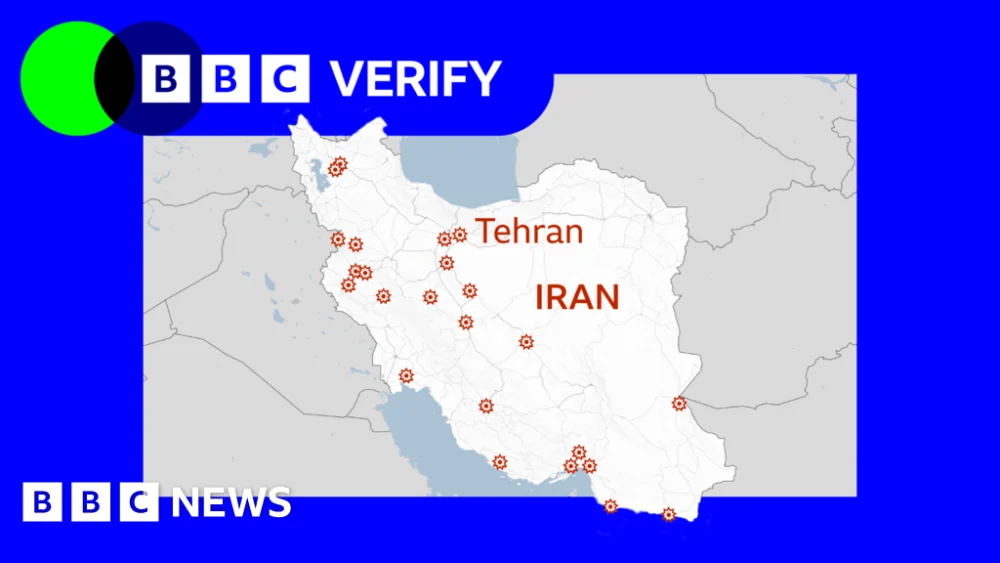
The Middle East finds itself engulfed in a rapidly escalating and multifaceted conflict, now reaching its fifth day, as a concerted US-Israeli offensive against Iran triggers widespread retaliatory actions, dramatically redrawing the region’s security landscape from the Indian Ocean to the Levant and beyond. This intensifying confrontation has seen a significant expansion of military operations, targeting crucial strategic infrastructure, military installations, and even civilian areas across a vast geographical expanse, underscoring a profound shift in regional power dynamics and posing severe challenges to international stability.
The gravity of the situation was underscored by a significant naval engagement in international waters, confirmed by US Defense Secretary Pete Hegseth. A United States submarine successfully neutralized an Iranian warship, the Iris Dena, operating in the Indian Ocean. The vessel, carrying an estimated 180 personnel, was reportedly struck by a torpedo while in proximity to Sri Lankan waters. Tragic reports from Sri Lankan authorities indicate that only 32 individuals have been rescued thus far, with approximately 80 bodies recovered, signaling a substantial loss of life and marking a perilous expansion of the conflict into global maritime domains. This incident represents a direct naval confrontation with potentially far-reaching implications for international shipping routes and naval conduct.
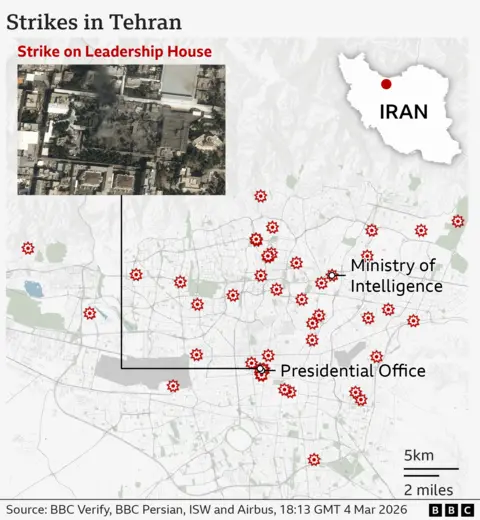
Simultaneously, the air campaign against Iran has intensified, with Israeli forces announcing extensive strikes within the Islamic Republic. On Wednesday, Israel confirmed it had targeted "security headquarters" in the Iranian capital, Tehran, alongside sites associated with the Basij paramilitary force and various missile installations throughout the city. These actions follow an initial wave of joint US-Israeli operations launched on Saturday, which aimed to dismantle Iranian air defense networks in both western and central Iran, including strategic locations within Tehran itself. These initial strikes were particularly impactful, with reports confirming the death of former Supreme Leader Ayatollah Ali Khamenei in Tehran during the opening salvos of the offensive.
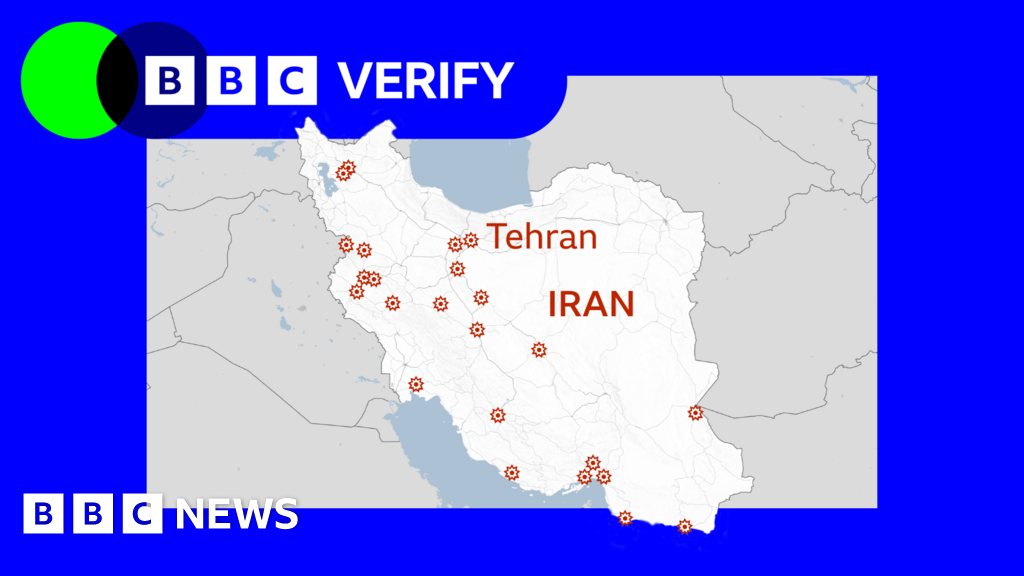
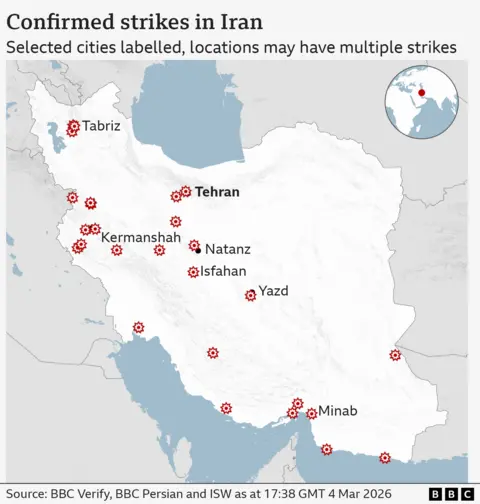
The scale of the bombardment within Iran is considerable. BBC Verify has independently corroborated visual evidence of strikes at no fewer than 13 distinct locations within Tehran, with an additional 12 towns and cities across the country also reporting direct hits. The human toll is already mounting, with the US-based Human Rights Activists News Agency (HRANA) reporting a staggering 1,097 civilian fatalities within Iran since the conflict began on February 28. A particularly harrowing account emerged from Minab, a city in southern Iran, where state media reported that at least 153 people, including numerous children, were killed when a girls’ school was struck by three missiles on Saturday. While independent verification of this specific incident remains challenging, it highlights the devastating impact on civilian populations.
Beyond civilian infrastructure, military assets have been heavily targeted. Sites in Kermanshah and Tabriz, significant military hubs, have sustained damage. Iranian naval facilities in Konarak and Bandar Abbas, both critical ports in the south of the country, have also been hit, severely degrading Tehran’s maritime capabilities. Furthermore, satellite imagery analysis has provided concrete evidence of damage to at least three Iranian missile sites and, significantly, the nuclear facility at Natanz, suggesting a concerted effort to cripple Iran’s strategic military and nuclear programs. The targeting of these sensitive sites indicates a strategic objective extending beyond mere retaliation, aiming to significantly diminish Iran’s military and deterrent capabilities.
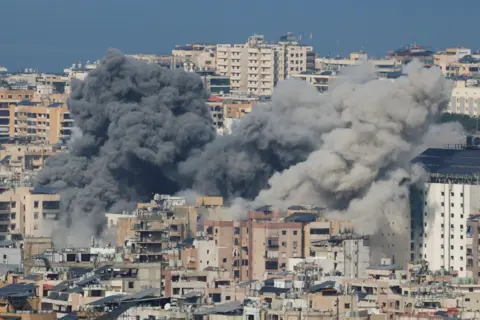
The conflict has also metastasized into the Levant, with Israel broadening its operations into Lebanon. The primary objective appears to be the targeting of Hezbollah, the powerful Iran-backed militant group. Israeli military actions have concentrated on Hezbollah strongholds in the southern suburbs of Beirut, areas in close proximity to the city’s international airport, and various locations across southern Lebanon. Wednesday’s attacks in Beirut reportedly struck a hotel, among other buildings, signaling the pervasive nature of the conflict within the Lebanese capital. These operations intensified following earlier Israeli announcements of strikes in both Iran and Lebanon, initiated after Hezbollah launched missiles at the Israeli city of Haifa earlier in the week. Prior to these strikes, Israeli officials had confirmed ground troop incursions into Lebanon, asserting the seizure of "strategic areas" to prevent further cross-border attacks on Israeli communities.
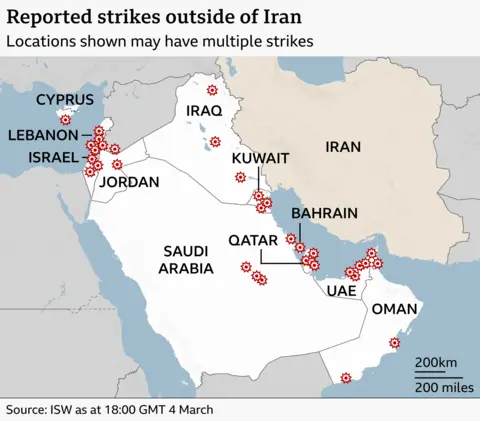
The Iranian response has been robust and geographically extensive, impacting US interests and allied nations across the wider Middle East. Iranian strikes have reportedly targeted US facilities and infrastructure in multiple Gulf states. The US consulate in Dubai and the critically important US air base at Al Udaid in Qatar, which serves as the largest American military installation in the region, were both struck. This demonstrates Iran’s capability to project power and target key American strategic assets.
In Israel, the ripple effect of the conflict was acutely felt when a missile strike on the city of Beit Shemesh on Sunday resulted in at least nine fatalities and 27 injuries, further underscoring the reciprocal nature of the violence.
Across the Arabian Peninsula, nations allied with the United States have also borne the brunt of Iranian retaliation. Saudi officials reported on Tuesday that the US Embassy in Riyadh was hit by a pair of drones, causing minor damage and igniting a small fire. A day prior, the Ras Tanura refinery, a vital asset operated by Saudi Arabia’s state oil company, Aramco, also reportedly faced a drone attack, though officials claimed two drones were intercepted.
Qatar’s Ministry of Defense announced the downing of two Iranian aircraft, seven missiles, and five drones following Iranian strikes on a major gas plant within its borders, illustrating the intense aerial engagements underway. In the United Arab Emirates (UAE), which encompasses major international hubs like Dubai and Abu Dhabi, three individuals were killed and several injured in attacks on Sunday. Notable targets included The Palm Hotel, a luxury establishment in Dubai, and Dubai International Airport, which sustained damage and wounded four people on Saturday, disrupting crucial economic and travel infrastructure.
Kuwait has also been drawn into the escalating hostilities. On Monday, the US Central Command reported that Kuwait’s military had regrettably shot down three US fighter jets in an "apparent friendly fire incident," though all six crew members safely ejected. Furthermore, the Ali Al-Salem airbase in Kuwait, a significant US military installation, was targeted by multiple ballistic missiles, which the military stated were intercepted. Kuwait’s health ministry reported one fatality on Sunday.
Neighboring Iraq also experienced Iranian aggression, with three drones reportedly downed over Irbil airport on Monday, an installation that hosts US-led coalition troops. Bahrain, a key regional ally and host to the US Navy’s Fifth Fleet, reported four people wounded by Iranian attacks. The Fifth Fleet itself was "subjected to a missile attack" on Saturday, followed by a drone strike on the US naval base on Sunday, which caused a major fire, though no casualties were reported.
Further south, Oman’s state news agency reported on Sunday that the Duqm commercial port, a burgeoning maritime hub, was targeted by two drones, resulting in injuries to one worker. Jordan, bordering Israel, also confirmed its armed forces had successfully intercepted ballistic missiles aimed at its territory, highlighting the pervasive threat across the region.
The geographical reach of the conflict has extended even beyond the immediate Middle East. On Sunday midnight, an Iranian drone crashed into RAF Akrotiri, a critical British air base in Cyprus. This incident prompted the UK’s Ministry of Defence to initiate the relocation of family members from the base, signaling the severity of the threat. The following day, a Cypriot government spokesperson confirmed that two additional drones, also directed towards RAF Akrotiri, had been intercepted. These strikes on a NATO-allied base in the Eastern Mediterranean underscore the potential for the conflict to broaden its international dimensions and involve other global powers.
The United States has signaled its resolve for a sustained engagement. President Donald Trump previously indicated that the strikes could persist for four to five weeks, adding a cautionary note that the US possesses the "capability to go far longer than that." This statement suggests a prepared, protracted conflict strategy aimed at fundamentally altering Iran’s regional influence and military capabilities. The six American military personnel killed since the conflict’s inception, as reported by US Central Command, serve as a stark reminder of the direct human cost to the United States.
The current escalation marks a perilous new chapter in the long-standing geopolitical rivalry between the United States, Israel, and Iran. Analysts suggest that the depth and breadth of these military engagements are unprecedented, moving beyond proxy skirmishes to direct confrontations that challenge established regional security paradigms. The targeting of both military and sensitive civilian infrastructure across multiple sovereign nations presents a complex web of international law implications and humanitarian concerns. The strategic objectives of the US-Israeli alliance appear to encompass a significant degradation of Iran’s conventional and unconventional military capabilities, including its nuclear infrastructure, and a weakening of its regional network of proxies. Iran, in turn, is demonstrating its capacity for asymmetrical warfare and its willingness to retaliate against US assets and allies, aiming to inflict costs and deter further aggression.
The humanitarian crisis is deepening, with civilian casualties mounting rapidly in Iran and collateral damage affecting populations across the Middle East. The disruption to critical infrastructure, including oil facilities and airports, carries significant economic ramifications for a region already prone to volatility, with potential ripple effects on global energy markets. The absence of clear diplomatic off-ramps and the escalating rhetoric suggest a prolonged period of instability. International observers are gravely concerned about the potential for miscalculation, which could trigger an even wider regional war, drawing in additional actors and exacerbating an already dire situation. The coming days and weeks will be critical in determining whether this intense phase of military confrontation can be contained, or if it will plunge the broader Middle East into an enduring, full-scale regional war with global implications.




 Aura Kasih
 Safa Marwah
 Ayu Aulia