Aura Kasih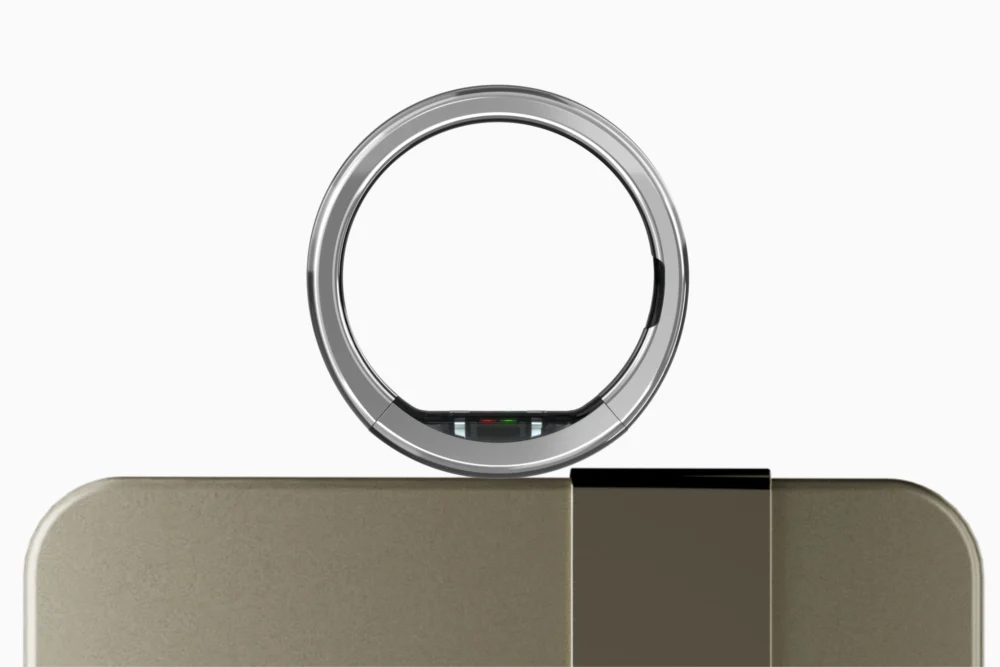
The burgeoning field of wearable health technology has a new frontrunner with the introduction of Ultrahuman’s latest flagship smart ring, the Ring Pro, boasting an impressive 15-day battery life and an integrated "biointelligence AI" platform upgrade named Jade, poised to redefine personal health monitoring.
Ultrahuman, a company rapidly establishing itself as a significant player in the wearable health and wellness sector, has significantly advanced its ecosystem with the launch of the Ring Pro, its third-generation smart ring. This new device represents a substantial leap forward in terms of user convenience and data retention, offering an extended battery life of up to two weeks on a single charge, a stark contrast to its predecessors. Furthermore, the Ring Pro is engineered to store an extensive 250 days of on-device health data, mitigating the need for frequent syncing and ensuring users always have access to their historical insights.
This extended battery performance and onboard data storage capacity address a key pain point for consumers of smart wearables, particularly those engaged in continuous health tracking. Unlike the previous Ring Air, which offered a more modest 4-6 days of battery and only a few days of offline data storage, the Ring Pro promises uninterrupted monitoring and a more comprehensive view of long-term health trends. User-reported estimates for the Ring Air’s offline storage capabilities underscore the magnitude of this upgrade.
Beyond its remarkable power efficiency, the Ring Pro has undergone a comprehensive redesign and technological enhancement. A newly engineered heart-rate sensor is at the core of these improvements, designed to deliver enhanced signal accuracy, especially during sleep and recovery periods, critical phases for understanding the body’s restorative processes. This is complemented by a significantly faster dual-core processor, enabling quicker data analysis and a more responsive user experience. Safety has also been a paramount consideration, with structural modifications allowing for easier removal from fingers in emergency situations, a thoughtful addition for a device worn constantly.
The user experience is further elevated by the inclusion of a sophisticated Pro Charging case. This accessory not only provides an additional 45 days of battery power for the ring but also serves as a long-term data repository, capable of storing up to a full year of the ring’s health information. The charging case is not merely functional; it incorporates an integrated speaker and proximity tracker, allowing users to locate their Ring Pro effortlessly through the Ultrahuman application. Wireless charging capabilities and an intuitive LED indicator for battery status ensure seamless integration into daily routines.
Aesthetically, the Ring Pro offers a range of sophisticated finishes, including gold, silver, black, and titanium, catering to diverse personal preferences. Available in a comprehensive size range from 5 to 14, the ring is designed for universal comfort and fit. Preorders for the Ring Pro commenced recently at a price point of $479, with global availability planned, with the notable exception of the United States. This geographical restriction is attributed to ongoing patent disputes with Oura, a prominent competitor in the smart ring market. Shipments for the Ring Pro are slated to commence in March.
Crucially, the launch of the Ring Pro is intrinsically linked with the debut of Jade, Ultrahuman’s revolutionary AI platform. Unlike the ring’s distribution, Jade’s rollout is inclusive of the United States, ensuring that all Ultrahuman users worldwide will benefit from its advanced capabilities. Ultrahuman proclaims Jade as "the world’s first real-time biointelligence AI," a system designed to extract profound health data insights and proactively engage in critical tasks such as breathwork guidance and atrial fibrillation (AFIB) detection. The company indicates that Jade’s potential extends far beyond its current functionalities, with future updates intended to equip it with the ability to anticipate health concerns before they manifest, seamlessly control smart home environments—such as adjusting room temperature—and even facilitate personalized meal ordering.
The overarching vision for Jade is to function as an "autonomous health agent working 24×7 to improve your life." While this ambitious objective has been articulated, Ultrahuman has yet to provide a definitive timeline for the integration of these more advanced, proactive features. Nevertheless, the introduction of Jade positions Ultrahuman at the forefront of AI-driven personal health management, moving beyond passive data collection to active, intelligent intervention and guidance.
The implications of this technological convergence are profound. The Ring Pro, with its extended battery life and robust data storage, empowers users with a continuous and comprehensive understanding of their physiological state. This is particularly valuable for individuals managing chronic conditions, athletes optimizing performance, or anyone seeking to proactively enhance their overall well-being. The ability to store 250 days of data offline eliminates the anxiety of data loss and allows for more nuanced trend analysis over extended periods.
The enhanced heart-rate sensor during sleep and recovery is a critical development. Sleep is a cornerstone of health, and accurate data during this period can reveal vital information about stress levels, cardiovascular health, and the body’s ability to recover from physical and mental exertion. By improving signal quality, Ultrahuman is providing users with more reliable insights into these fundamental aspects of their health.
The integration of a faster processor means that the Ring Pro can handle more complex algorithms and provide real-time feedback more effectively. This could translate to more immediate alerts for potential health irregularities or more responsive feedback during guided wellness exercises.
The safety feature, while seemingly minor, speaks to a commitment to user well-being beyond the scope of health monitoring. The ability for the ring to be easily removed in an emergency demonstrates a holistic approach to product design, prioritizing the wearer’s safety in all scenarios.
The Pro Charging case is more than just a power source; it’s an extension of the ring’s functionality. The additional battery life it provides further enhances the ring’s practicality, reducing the frequency of charging needs. The year-long data storage capability within the case is a significant advantage for users who value long-term health records and wish to track their progress over extended periods without relying solely on cloud-based storage. The find-my-ring feature, enabled by the speaker and proximity tracker, addresses a common concern with small, wearable devices.
The introduction of Jade as a "biointelligence AI" marks a significant paradigm shift in the smart wearable industry. Current health trackers primarily provide data; Jade promises to interpret that data and offer actionable advice. The concept of an AI that can not only detect AFIB but also guide breathwork exercises suggests a move towards integrated mental and physical health support.
The future possibilities for Jade are particularly compelling. Proactively flagging health concerns before they manifest is the holy grail of preventative medicine. If Jade can accurately predict potential health issues based on subtle physiological cues, it could revolutionize how individuals manage their health and interact with healthcare professionals. The integration with smart home functions, such as temperature control, and even food ordering, hints at a future where personal health AI becomes an integral part of daily life, seamlessly optimizing the user’s environment and lifestyle for better well-being.
However, the success of Jade will depend on several factors, including the accuracy of its algorithms, the transparency of its decision-making processes, and the trust users place in its recommendations. The development of such an advanced AI requires rigorous testing and validation to ensure it provides reliable and safe guidance.
The patent dispute with Oura highlights the competitive landscape of the smart ring market. As more companies enter this space, innovation in features, battery life, and AI capabilities will become increasingly crucial for market differentiation. Ultrahuman’s strategic move to introduce both advanced hardware and sophisticated AI simultaneously positions it as a strong contender.
In conclusion, Ultrahuman’s Ring Pro and Jade platform represent a significant advancement in wearable health technology. The combination of extended battery life, comprehensive data storage, advanced sensor technology, and a sophisticated AI promises to offer users an unprecedented level of insight and proactive support for their health and well-being. While the full realization of Jade’s ambitious capabilities remains on the horizon, its introduction signals a future where personal health monitoring is not just about data collection but about intelligent, autonomous guidance designed to optimize and enhance human life.



 Safa Marwah
 Lisa Mariana