Ayu Aulia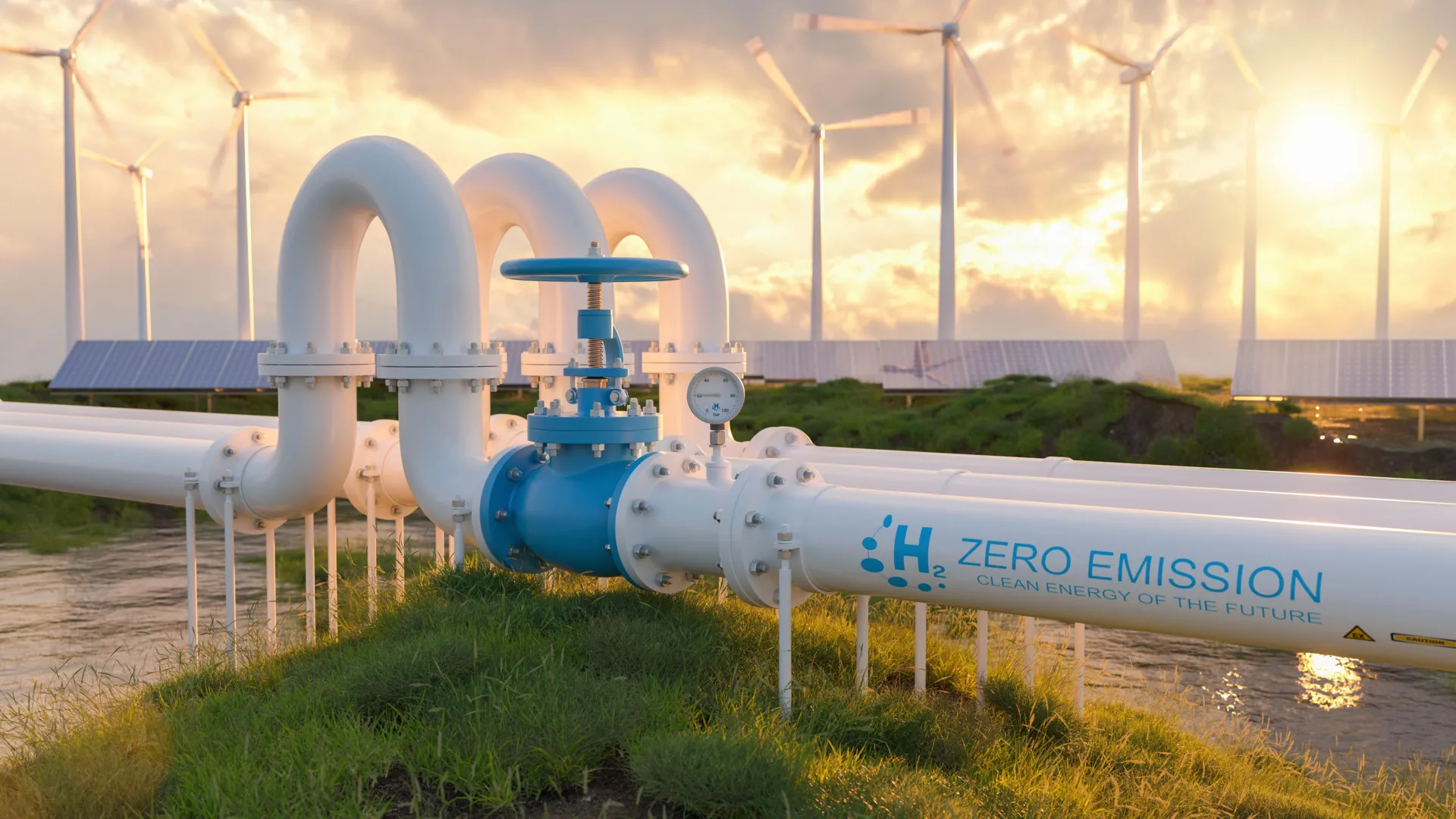
The global pursuit of a decarbonized energy future hinges significantly on the widespread adoption of green hydrogen, yet its current production methods present notable challenges in terms of both economic viability and environmental impact. While lauded as a cornerstone for transitioning away from fossil fuels, the prevailing production techniques, particularly proton exchange membrane (PEM) electrolysis, grapple with elevated costs and reliance on problematic materials. A consortium of European researchers is now spearheading an ambitious initiative to engineer a new generation of electrolysis systems, aiming to mitigate these critical issues by eliminating persistent chemical compounds and drastically reducing the need for rare, expensive metals, thereby paving the way for a more affordable and truly sustainable hydrogen economy.
Green hydrogen, produced by splitting water molecules using electricity derived from renewable sources, stands as a versatile energy carrier with immense potential to decarbonize heavy industries, long-haul transport, and grid-scale energy storage. Its appeal lies in its zero-emission profile at the point of use and its capacity to integrate intermittent renewable energy into a stable supply chain. However, the journey from concept to widespread industrial application is fraught with complexities. PEM electrolyzers, favored for their rapid response to fluctuating power inputs—a distinct advantage when coupled with wind and solar generation—are currently far more expensive to operate than conventional hydrogen production from natural gas, known as grey hydrogen. This economic disparity creates a significant barrier to market penetration, necessitating substantial policy support and technological breakthroughs to achieve cost parity.
Beyond the immediate financial concerns, the environmental integrity of green hydrogen production itself has come under scrutiny. Contemporary PEM systems are inextricably linked to per- and polyfluoroalkyl substances (PFAS), a class of synthetic chemicals often referred to as "forever chemicals" due to their exceptional persistence in the environment. These compounds are integral to the membranes within PEM electrolyzers, providing the necessary ion conductivity and chemical stability under harsh operating conditions. However, the growing body of scientific evidence highlighting their detrimental health and environmental effects—ranging from groundwater contamination to potential endocrine disruption—has prompted stringent regulatory action, most notably the European Union’s comprehensive plan to phase out their use. The irony of employing environmentally hazardous substances in the production of a "green" energy vector underscores a fundamental contradiction that demands urgent resolution for hydrogen to genuinely fulfill its clean energy promise.
Furthermore, the materials science aspect presents another formidable obstacle: the reliance on critical raw materials. PEM electrolysis predominantly utilizes iridium as a catalyst at the anode, a platinum group metal renowned for its unparalleled resistance to corrosion and its catalytic efficiency in acidic environments. While indispensable for current PEM technology, iridium is exceptionally rare, with limited global reserves concentrated in a few geographical regions, making its supply chain vulnerable to geopolitical instabilities and price volatility. Its scarcity translates directly into high capital costs for electrolyzer manufacturing, further exacerbating the economic challenges facing green hydrogen. Reducing the dependence on such strategically important and expensive materials is not merely an economic imperative but also a strategic one, aiming to secure a more resilient and independent supply chain for the burgeoning hydrogen industry.
In response to these multifaceted challenges, the EU-funded SUPREME project has emerged as a critical initiative, uniting leading research institutions and industrial partners across Europe. Over the next three years, this collaborative endeavor, spearheaded by the University of Southern Denmark and involving institutions such as Graz University of Technology (TU Graz) and other specialized entities, will embark on developing a groundbreaking PFAS-free electrolysis system. The project’s overarching goal is ambitious: to engineer a system that not only eliminates forever chemicals but also significantly enhances efficiency and drastically reduces the quantities of critical raw materials like iridium. This holistic approach aims to fundamentally transform the economic and environmental profile of green hydrogen, rendering it substantially more affordable and truly sustainable.
The strategic importance of hydrogen as a raw material in various industrial processes cannot be overstated. As Merit Bodner from the Institute of Chemical Engineering and Environmental Technology at TU Graz emphasizes, hydrogen consumption is projected to increase substantially, particularly in sectors like ammonia synthesis, methanol production, and the steel industry, where it can serve as a crucial decarbonization agent. The ability to produce green hydrogen without harmful substances and at a competitive price point with fossil-derived alternatives would represent a monumental stride towards the green transition. This economic and environmental parity would not only solidify hydrogen’s role in heavy industry but also unlock its broader potential, particularly as an efficient and scalable medium for storing surplus energy generated from intermittent renewable sources, thereby stabilizing national grids and optimizing renewable energy deployment.
A pivotal aspect of the SUPREME project involves the meticulous evaluation and integration of PFAS-free materials. TU Graz, under the guidance of Bodner’s team, is taking a leading role in this segment, systematically reviewing commercially available PFAS-free alternatives. This process involves a rigorous comparison of their performance characteristics against the established benchmarks of current industry standards. The central technical question revolves around whether these more sustainable materials can deliver the requisite durability, chemical stability, and proton conductivity essential for continuous, high-performance industrial operation without compromising safety or efficiency. The transition away from PFAS demands innovations in polymer chemistry and material science to identify new membrane architectures that can withstand the aggressive electrochemical environment within an electrolyzer while maintaining high ion transport rates.
Concurrently, the Turkish Science and Technology Council (TÜBİTAK) is concentrating its efforts on advanced membrane development. This group is dedicated to pioneering a new generation of microporous, PFAS-free membranes specifically engineered for deployment in future electrolysis systems. The development of such membranes requires intricate understanding of pore structure, material compatibility, and long-term stability under operational stress. These membranes are not merely passive separators but active components that facilitate the selective transport of ions, directly impacting the overall efficiency and lifespan of the electrolyzer. The challenge lies in creating materials that can offer comparable or superior performance to PFAS-based membranes in terms of proton conductivity, mechanical robustness, and resistance to degradation, all while adhering to strict environmental and health standards.
Another critical thrust of the project is dedicated to confronting the challenge of iridium scarcity and cost. The University of Southern Denmark, in collaboration with the British metal and catalyst company Ceimig, is at the forefront of exploring innovative methodologies to drastically reduce iridium consumption. Their research focuses on strategies that could cut iridium use by up to 75 percent, potentially through developing novel catalyst supports that enhance iridium utilization efficiency, or by designing advanced catalyst layers with optimized nanoscale structures that maximize catalytic surface area while minimizing material loading. Beyond reduction, the partners are also developing sophisticated recycling methods, aiming to recover an impressive 90 percent of the iridium that remains necessary for the system. This commitment to circular economy principles for critical raw materials is vital for ensuring the long-term sustainability and economic viability of green hydrogen production at scale, mitigating the geopolitical risks associated with concentrated supply chains.
The collaborative nature of the SUPREME project is further exemplified by the specialized contributions of additional partners. Fraunhofer ISE in Germany, a renowned research institute in solar energy, is responsible for the precise manufacturing of the membrane electrode units (MEUs). MEUs are the heart of the electrolyzer, integrating the catalyst layers and the membrane into a single, highly efficient assembly. Their expertise in advanced manufacturing techniques is crucial for producing MEUs that meet stringent performance and durability requirements. Meanwhile, the Norwegian hydrogen company Element One Energy AS (EoneE) is designing an innovative rotating electrolyzer. This novel design aims to enhance system performance by potentially improving mass transport, heat dissipation, and the removal of gas bubbles from electrode surfaces, thereby allowing for higher current densities and overall greater efficiency compared to static designs. The integration of such advanced engineering concepts with material science breakthroughs promises to yield a significantly improved generation of electrolyzer technology.
The SUPREME project is supported through the Clean Energy Transition Partnership (CETPartnership) under its 2024 joint call for research proposals, with co-funding from the European Commission (GA N°101069750). This significant financial backing underscores the strategic importance the European Union places on fostering innovation in green hydrogen technologies as a cornerstone of its broader climate and energy goals. The success of such collaborative, multi-disciplinary research initiatives is paramount for overcoming the existing technological and economic hurdles that impede the rapid scale-up of green hydrogen production.
Looking ahead, the implications of a successful SUPREME project extend far beyond the laboratory. By developing green hydrogen production systems that are both environmentally benign and economically competitive, the project stands to accelerate the global energy transition. It will enable a wider adoption of hydrogen in industries that are currently difficult to decarbonize, such as steelmaking, cement production, and chemical manufacturing, by offering a truly clean feedstock and fuel. Moreover, cleaner and cheaper green hydrogen will unlock its full potential as a flexible energy storage solution, allowing for the integration of larger shares of intermittent renewable energy into electricity grids, thereby enhancing energy security and stability.
However, the journey does not end with technological breakthroughs. The large-scale deployment of green hydrogen will necessitate significant investments in infrastructure, including pipelines, storage facilities, and refueling stations. Regulatory frameworks will need to evolve to support a burgeoning hydrogen economy, and international cooperation will be crucial for establishing global supply chains and harmonizing standards. The SUPREME project represents a vital step in addressing the fundamental technological challenges, laying the groundwork for a future where green hydrogen is not just an aspiration but a readily available, sustainable, and affordable energy solution, truly delivering on its promise for a net-zero world.



 Lisa Mariana
 Aura Kasih
 Safa Marwah