Aura Kasih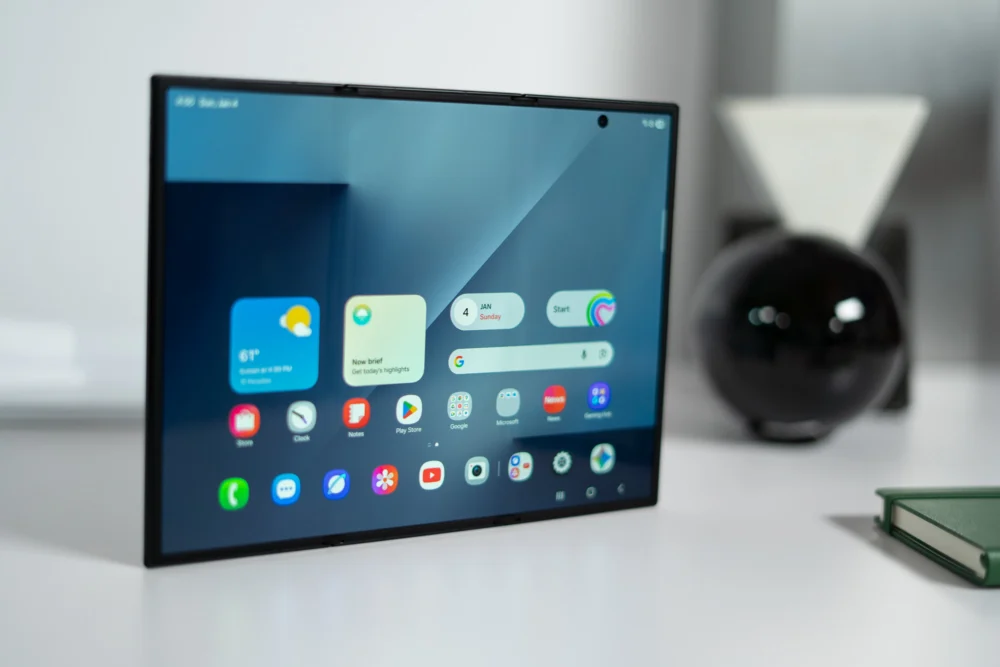
Samsung’s latest foray into the premium foldable market, the Galaxy Z TriFold, has experienced an unprecedented sell-out, with initial inventory disappearing in mere minutes. This rapid depletion of stock, observed during its recent restock, underscores a significant surge in demand for the device, or potentially highlights a deliberately constrained production strategy by the South Korean tech giant. The Galaxy Z TriFold, which uniquely unfolds into a sprawling 10-inch tablet experience, was initially launched on January 30th and, in a departure from typical smartphone releases, was exclusively available through Samsung’s direct sales channels.
The phenomenon surrounding the Galaxy Z TriFold’s swift disappearance from virtual shelves warrants a deeper examination beyond the immediate consumer reaction. This event signals a pivotal moment in the evolution of mobile technology, suggesting that the market is not only receptive but actively seeking out devices that push the boundaries of form factor and functionality. The TriFold, with its ambitious design that transforms from a conventional smartphone into a substantial tablet, represents a significant leap in Samsung’s foldable ambitions. Its ability to offer three distinct screen experiences – a compact folded state, an expanded dual-screen mode, and a fully unfurled tablet display – positions it as a unique proposition in a landscape increasingly saturated with incremental upgrades.
The initial launch of the Galaxy Z TriFold on January 30th was characterized by a highly controlled release, with availability restricted solely to Samsung’s official online store. This exclusivity, while perhaps intended to manage demand and create an aura of premium scarcity, has undoubtedly contributed to the intense competition for the device. The fact that subsequent restocks have been met with such fervent consumer engagement suggests that the allure of the TriFold extends beyond early adopters and tech enthusiasts; it is resonating with a broader audience willing to invest in a device that promises unparalleled versatility.

At a price point of $2,899.99 for the 512GB configuration, the Galaxy Z TriFold positions itself firmly in the ultra-premium segment. This price tag invites scrutiny and comparison with other high-end devices, including Samsung’s own flagship smartphones and even some laptops. While the inclusion of a generous 512GB of storage is substantial, the absence of a 1TB option at this price point might be a point of contention for some consumers, especially given the device’s ambitious functionality. However, the TriFold’s core value proposition lies not merely in its storage capacity but in its transformative capabilities. The device essentially offers a multifaceted mobile computing experience: a pocketable smartphone when folded, a dual-screen device for enhanced multitasking when partially opened, and a full-fledged 10-inch tablet for immersive content consumption and productivity when fully deployed. This tripartite functionality is a key differentiator, setting it apart from conventional single-hinge foldable phones that offer a more limited range of transformations.
The potential for the Galaxy Z TriFold to redefine mobile productivity is significant. Anecdotal evidence and early user experiences suggest that devices with expansive foldable screens can serve as potent replacements for traditional laptops, particularly when paired with external peripherals. The success of the Z Fold 7 (a hypothetical model, likely referring to an earlier iteration of the Z Fold series) as a portable computing solution when coupled with a wireless keyboard highlights the inherent advantages of larger, adaptable displays for tasks such as typing, document editing, and even light content creation. The TriFold, with its even greater screen real estate in its fully unfolded state, stands to amplify these benefits, offering a more seamless and expansive workspace that can rival that of compact laptops. This convergence of smartphone portability and tablet-like productivity is a compelling proposition for professionals, students, and anyone seeking to maximize their mobile device’s utility.
The implications of the TriFold’s rapid sell-out extend beyond consumer trends; they represent a significant development for the broader foldable phone market and for Samsung’s strategic positioning within it. The success of this highly specialized device suggests a growing appetite for innovation in device design, moving beyond iterative improvements. It also validates Samsung’s significant investment in foldable display technology and its willingness to experiment with novel form factors. The company’s sustained efforts in refining hinge mechanisms, display durability, and user interface adaptations for foldable screens are clearly paying dividends. The TriFold, in its complexity and ambitious design, serves as a testament to Samsung’s leadership in this nascent but rapidly evolving category.
The limited availability strategy, while frustrating for those who missed out, may also be a calculated move to gauge market reception and optimize production for future iterations. By controlling supply, Samsung can manage expectations, gather valuable data on consumer purchasing behavior, and refine its manufacturing processes for higher-volume production in the future. The intense demand observed during the restock indicates that there is a substantial market segment eager for such devices, and Samsung is well-positioned to capitalize on this demand. The company’s ability to execute such a challenging manufacturing process at scale will be crucial in determining the long-term success of the TriFold and its successors.

Furthermore, the performance of the Galaxy Z TriFold in the market has broader implications for the competitive landscape. Competitors are undoubtedly observing these developments closely. The success of Samsung’s innovative approach may spur increased investment and accelerated development timelines from other manufacturers looking to capture a share of the lucrative foldable market. This competitive pressure can only benefit consumers, driving further innovation and potentially leading to more diverse and affordable foldable options in the future. The "three-in-one" concept embodied by the TriFold could become a benchmark for future foldable devices, pushing the industry towards more sophisticated and versatile designs.
The question of whether the TriFold’s enhanced functionality justifies its significant price premium remains a subject of individual consumer assessment. While the device offers a unique blend of portability and expansive display capabilities, the substantial investment required means that potential buyers will weigh its benefits against their specific needs and budget constraints. For power users, mobile professionals, and technology enthusiasts who prioritize cutting-edge innovation and a versatile mobile experience, the TriFold may indeed represent a worthwhile investment. For others, the cost may be prohibitive, and the utility of its multiple forms might not outweigh the benefits of more conventional, less expensive devices.
The rapid sell-out of the Galaxy Z TriFold is more than just a news event; it’s an indicator of evolving consumer preferences and the burgeoning potential of foldable technology. As Samsung continues to refine its foldable offerings and potentially scales up production, the future of mobile devices may well be defined by their ability to adapt and transform. The TriFold’s journey from launch to sold-out status in mere minutes is a compelling narrative of innovation, demand, and the exciting, albeit exclusive, frontier of mobile computing. The company’s strategic decision to limit initial availability has seemingly amplified the desire for the device, creating a strong market signal that the foldable revolution is gaining significant momentum. This event serves as a powerful testament to Samsung’s foresight in investing heavily in this technology and its capability to translate ambitious design concepts into desirable consumer products. The challenge now lies in meeting this burgeoning demand and ensuring that the TriFold’s successors are more accessible, further solidifying the foldable category’s place in the mainstream consumer electronics market.




 Safa Marwah
 Lisa Mariana