Ayu Aulia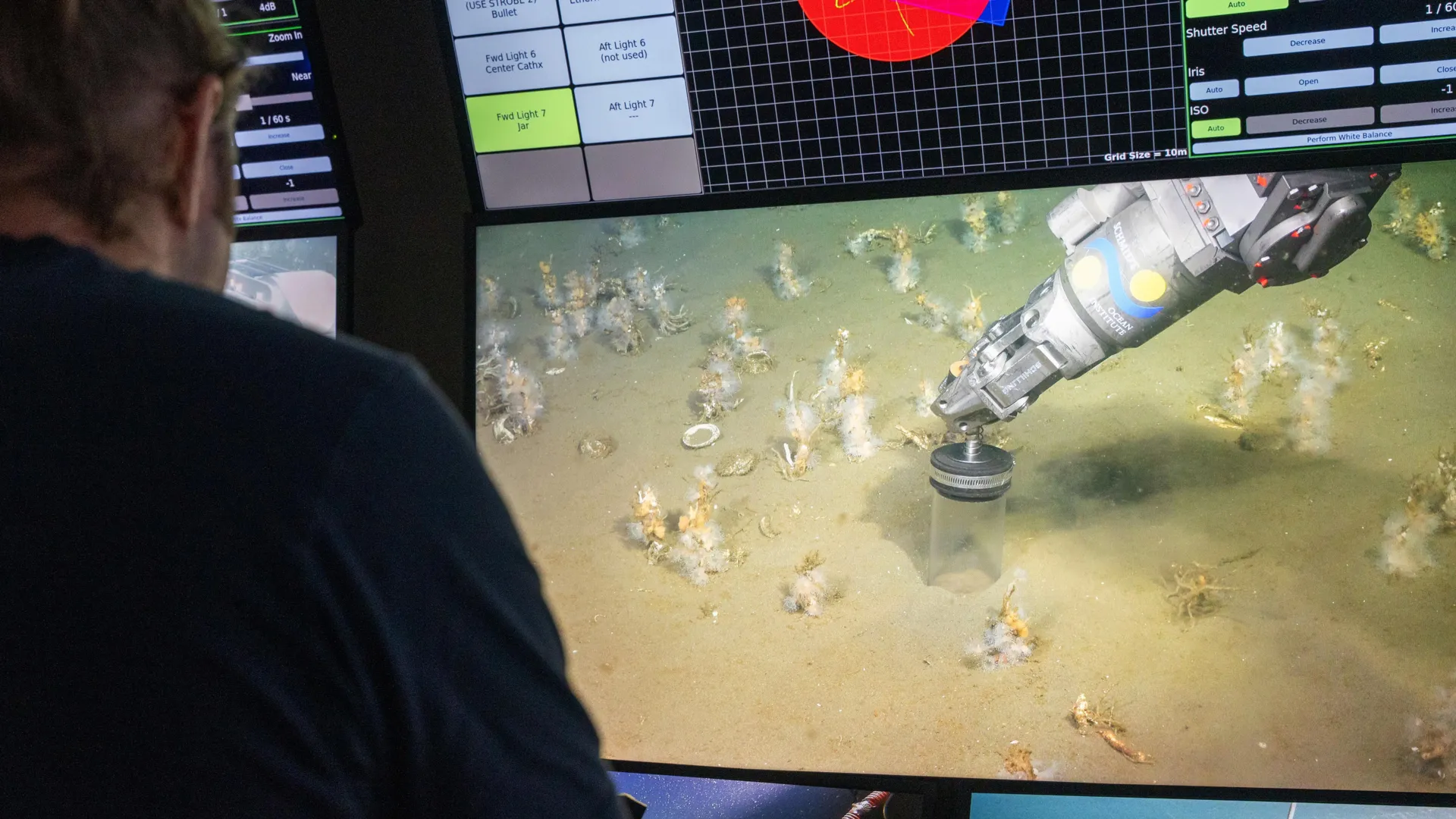
The emergence of complex biological organisms, encompassing all plants, animals, and fungi, is a pivotal event in Earth’s history, widely understood to have stemmed from a profound symbiotic union between two distinct microbial entities. This transformative merger, which ultimately gave rise to the eukaryotic domain of life, has long been shrouded in an enduring paradox: conventional wisdom held that one partner, the archaeal precursor, thrived exclusively in anoxic conditions, while its bacterial counterpart, destined to become the mitochondrion, necessitated oxygen for its survival. New groundbreaking research now offers a compelling resolution to this fundamental enigma, presenting evidence that the archaeal progenitor of complex life was, contrary to previous assumptions, adept at tolerating or even utilizing oxygen.
This seminal discovery, detailed in the prestigious journal Nature, originates from an extensive investigation into Asgard archaea, a microbial group recognized for its close phylogenetic relationship to the ancient ancestor of all eukaryotes. While a majority of identified Asgard archaea species inhabit oxygen-depleted environments such as deep-sea hydrothermal vents, the study’s findings reveal that certain lineages within this group possess the metabolic machinery to function effectively in the presence of oxygen. This revelation significantly strengthens the long-held hypothesis that the evolutionary trajectory leading to complex life unfolded within an environment where oxygen was a discernible, and perhaps crucial, factor.
The Grand Evolutionary Conundrum
For decades, the prevailing model for eukaryogenesis posited a symbiotic event where an anaerobic archaeon engulfed or was invaded by an alphaproteobacterium. This bacterial endosymbiont eventually evolved into the mitochondria, the cellular powerhouses responsible for aerobic respiration in eukaryotes. The challenge inherent in this model lay in reconciling the ecological requirements of the two presumed partners. How could an obligately anaerobic archaeon form a stable, mutually beneficial relationship with an aerobic bacterium if their fundamental environmental needs were diametrically opposed? This apparent contradiction suggested a potential bottleneck or an evolutionary leap requiring highly specific, perhaps transient, conditions that were difficult to reconstruct.
The question extended beyond mere survival to the very motivation for such a partnership. What selective pressures would drive an anaerobic organism to associate with an aerobic one? The new evidence suggests that the archaeal partner was not merely tolerating oxygen but potentially benefiting from it, which fundamentally alters the narrative of this ancient merger.
Unveiling the Asgardian Link
Asgard archaea represent a superphylum of archaea first identified through metagenomic studies of environmental samples, particularly from deep-sea sediments. Their discovery provided a crucial missing link in the tree of life, bridging the evolutionary gap between archaea and eukaryotes. Initial analyses of Asgard genomes indicated the presence of numerous eukaryotic-like proteins, reinforcing their status as the closest known prokaryotic relatives to eukaryotes. However, the environments from which these initial Asgard genomes were recovered were predominantly anoxic, leading to the inference that the ancestral eukaryote was likely an anaerobe.
The current study, led by researchers at The University of Texas at Austin, meticulously re-examines this assumption. By expanding the genomic catalogue of Asgard archaea, the team uncovered a previously underappreciated diversity within the group, specifically identifying lineages that thrive in oxygenated habitats. Dr. Brett Baker, an associate professor of marine science and integrative biology at UT, emphasized the significance of this finding: "Most Asgards alive today have been found in environments without oxygen. But it turns out that the ones most closely related to eukaryotes live in places with oxygen, such as shallow coastal sediments and floating in the water column, and they have a lot of metabolic pathways that use oxygen. That suggests that our eukaryotic ancestor likely had these processes, too." This statement fundamentally shifts the perceived ecological niche of the eukaryotic ancestor, positioning it firmly within an oxygen-rich context.
The Deep Dive into Asgardian Genomics
The methodological rigor underpinning this discovery is notable. The project began with a massive effort to extract and sequence DNA from diverse marine sediments, spearheaded by co-author Kathryn Appler during her Ph.D. research. The collaborative team ultimately assembled an astounding 13,000 new microbial genomes, processing approximately 15 terabytes of environmental DNA collected from multiple marine expeditions. This unprecedented scale of genomic sequencing dramatically expanded the known genetic diversity of Asgard archaea, nearly doubling the existing genomic data for the group.
This extensive dataset allowed researchers to construct a more refined and comprehensive phylogenetic tree for Asgard archaea. By comparing genetic similarities and differences across this expanded collection, they identified specific subgroups, such as Heimdallarchaeia, that exhibit particularly strong genetic affinity to eukaryotes. These groups, while relatively uncommon in modern environments, proved to be critical for understanding the ancestral state. As Appler noted, "These Asgard archaea are often missed by low-coverage sequencing. The massive sequencing effort and layering of sequence and structural methods enabled us to see patterns that were not visible prior to this genomic expansion." The depth and breadth of the genomic sampling were essential for uncovering these cryptic, yet evolutionarily significant, lineages.
Metabolic Adaptations and the Oxygen Imperative
Beyond simply identifying oxygen-tolerant Asgards, the research delved into the specific metabolic pathways present within these newly characterized genomes. The analysis revealed a rich repertoire of genes associated with oxygen metabolism, indicating not just passive tolerance but active utilization of oxygen for energetic purposes. This suggests that the archaeal ancestor was not merely surviving in an oxygenated world but was potentially harnessing oxygen’s reactive properties to gain an energetic advantage.
The presence of these oxygen-utilizing pathways in the lineages most closely related to eukaryotes provides a crucial bridge in the evolutionary narrative. It eliminates the ecological incompatibility previously thought to exist between the two symbiotic partners, offering a more coherent scenario for the genesis of mitochondria. If the archaeal host was already equipped to handle, and even benefit from, oxygen, the integration of an aerobic alphaproteobacterium becomes far more plausible and potentially advantageous.
Revisiting the Great Oxidation Event
These findings resonate powerfully with geological and paleontological evidence concerning Earth’s early atmospheric evolution. Approximately 2.4 to 2.1 billion years ago, the planet experienced the "Great Oxidation Event" (GOE), a dramatic period characterized by a significant increase in atmospheric oxygen concentrations. This rise, primarily driven by the photosynthetic activity of cyanobacteria, profoundly reshaped Earth’s biosphere, leading to mass extinctions of obligate anaerobes and opening up new ecological niches for oxygen-respiring organisms.
The fossil record indicates that the earliest known microfossils of eukaryotes appear within a few hundred million years following this sharp increase in oxygen levels. This temporal correlation has long suggested a causal link between oxygenation and the emergence of complex life. However, the presumed anaerobic nature of the archaeal host remained a sticking point. The current research provides the missing piece, aligning the biological capacity of the archaeal ancestor with the geological timeline of increasing oxygen. "The fact that some of the Asgards, which are our ancestors, were able to use oxygen fits in with this very well," Baker affirmed. "Oxygen appeared in the environment, and Asgards adapted to that. They found an energetic advantage to using oxygen, and then they evolved into eukaryotes." This model posits oxygen as a key selective pressure that drove the adaptation of Asgard archaea, setting the stage for the endosymbiotic event.
The Symbiotic Genesis Reimagined
The prevailing endosymbiotic model posits that eukaryotes arose when an Asgard archaeon established a symbiotic relationship with an alphaproteobacterium, which over evolutionary time became the mitochondrion. This integration of two formerly independent organisms into a single cellular entity represented one of the most significant evolutionary transitions. The new data enhances this model by providing a more compatible environmental backdrop.
If the archaeal host was already metabolically adapted to oxygen, the acquisition of an alphaproteobacterium, with its highly efficient aerobic respiration, would have offered a substantial energetic boost. This "oxygen advantage" could have been a primary driver for the initial association and subsequent integration, leading to the sophisticated energy-generating machinery characteristic of eukaryotic cells. The discovery of specific Asgard groups, like Heimdallarchaeia, that are both closely related to eukaryotes and possess oxygen-metabolizing capabilities, strengthens this revised narrative of a partnership forged in an oxygenating world.
Architects of Life: Protein Structure Analysis
To further validate their findings, the research team employed advanced computational techniques, including the artificial intelligence system AlphaFold2. This powerful AI tool is capable of predicting the three-dimensional shapes of proteins with remarkable accuracy. Since a protein’s structure is intrinsically linked to its function, analyzing the predicted shapes of Heimdallarchaeia proteins provided crucial insights into their biochemical roles.
The analysis specifically focused on Heimdallarchaeia proteins involved in energy production and oxygen metabolism, comparing their predicted structures to those found in eukaryotic cells. The results were compelling: several Heimdallarchaeia proteins exhibited striking structural similarities to their eukaryotic counterparts, especially those involved in oxygen-dependent, energy-efficient metabolic pathways. This structural concordance offers strong additional support for the hypothesis that the archaeal ancestors of complex life were not only exposed to oxygen but had already developed sophisticated molecular machinery to harness it. This level of detail, moving beyond mere genomic presence to functional inference via structural prediction, adds significant weight to the study’s conclusions.
Broader Implications for Evolutionary Biology
This research holds profound implications for our understanding of early evolutionary biology. It refines the endosymbiotic theory by resolving a long-standing paradox, presenting a more coherent and environmentally consistent pathway for eukaryogenesis. It underscores the critical role of environmental factors, particularly oxygen availability, in shaping major evolutionary transitions.
Furthermore, this study highlights the power of modern genomic techniques, combined with advanced computational biology, to uncover hidden evolutionary narratives. The ability to reconstruct the metabolic capabilities of ancient organisms from their modern descendants, even those that are difficult to culture, is revolutionizing our understanding of the tree of life. It provides a more nuanced view of prokaryotic diversity and its direct contributions to the origins of eukaryotic complexity. The findings may also influence astrobiological considerations, suggesting that the conditions for the emergence of complex life on other planets might include a pre-existing capacity for oxygen tolerance or utilization in precursor organisms.
Future Trajectories in Microbial Exploration
While this study offers a significant breakthrough, it also opens new avenues for future research. One critical next step involves the successful cultivation of these oxygen-tolerant Asgard archaea in laboratory settings. Culturing these organisms would allow for direct experimental validation of their metabolic pathways, confirming their ability to grow and thrive under various oxygen concentrations and to utilize oxygen for energy generation.
Further genomic and proteomic analyses could also reveal additional insights into the specific molecular mechanisms underlying their oxygen adaptations. Comparative studies with other Asgard lineages and various eukaryotic groups could help trace the precise evolutionary steps that led to the full integration of aerobic respiration within the eukaryotic cell. The continued exploration of microbial diversity through large-scale metagenomics, coupled with innovative AI-driven analytical tools, promises to reveal even more secrets about the ancient origins and intricate evolution of life on Earth.
This ambitious research project benefited from the contributions of numerous collaborators, including former UT researchers Xianzhe Gong (Shandong University), Pedro Leão (Radboud University), Marguerite Langwig (University of Wisconsin-Madison), and Valerie De Anda (University of Vienna). Additional support was provided by James Lingford and Chris Greening (Monash University), along with Kassiani Panagiotou and Thijs Ettema (Wageningen University). Funding for this transformative work was generously provided in part by the Gordon and Betty Moore and Simons Foundations, the National Natural Science Foundation of China, and the National Health and Medical Research Council of Australia.


 Lisa Mariana
 Aura Kasih
 Safa Marwah