Ayu Aulia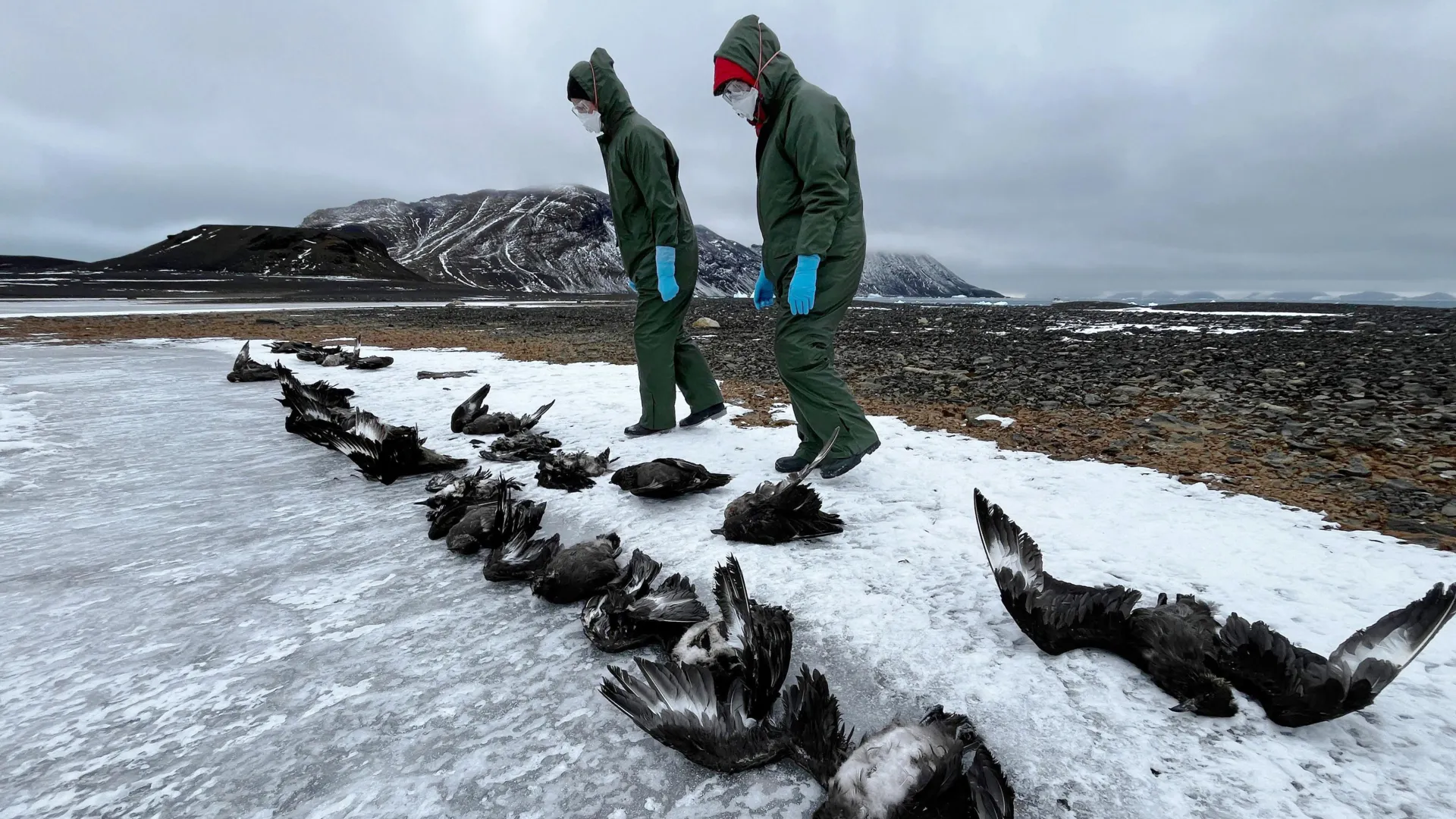
The pristine Antarctic ecosystem has recorded its inaugural substantial wildlife die-off attributed to the highly pathogenic avian influenza (HPAI) virus H5N1, with recent scientific investigations confirming the deaths of more than fifty skuas across the continent during the 2023-2024 austral summer. This grim discovery, detailed in a recent publication in Scientific Reports by a collaborative research team from Erasmus MC in The Netherlands and the University of California, Davis, signifies a critical escalation in the global H5N1 pandemic, marking its definitive establishment and devastating impact on the planet’s most isolated continental biome. The confirmation that H5N1 was the direct cause of these mortalities underscores a new and severe ecological challenge for a region already contending with profound environmental stressors.
The Pervasive Threat of Highly Pathogenic Avian Influenza
H5N1, a particularly virulent strain of avian influenza, has evolved into a formidable global health and ecological crisis since its initial emergence. First identified in 1996 within a domestic goose farm in Southeast China, the virus initially circulated predominantly within poultry populations. However, its uncontrolled proliferation within these agricultural settings provided ample opportunity for genetic mutations and adaptation, ultimately leading to its spillover into wild bird species. This pivotal shift marked the beginning of a relentless global expansion, transforming H5N1 from a regional agricultural concern into a pervasive pandemic affecting wild avian populations across continents. Its trajectory has seen it sweep through Europe, the Middle East, and Africa, subsequently crossing oceanic barriers to establish a strong foothold in North and South America, culminating in its detection in Antarctica in early 2024. The strain currently devastating Antarctic skuas is genetically linked to the lineage responsible for catastrophic mortalities among elephant seals and sea lions in Argentina, highlighting its broad host range and capacity for cross-species transmission, including to a diverse array of mammals such as dairy cows, mink, foxes, bears, and otters. Globally, the virus has been implicated in the deaths of over 400 million poultry and, critically, has demonstrated zoonotic potential, with approximately half of the nearly 1,000 reported human cases proving fatal. This underscores the virus’s inherent danger not only to wildlife but also to public health.
Antarctica’s Unique Vulnerability and the Skuas’ Ecological Role
Antarctica, long considered a bastion of untouched wilderness, presents a unique and highly vulnerable environment to novel pathogens. Its relative isolation has historically shielded its endemic wildlife from many diseases prevalent elsewhere. Consequently, Antarctic species often possess "naïve" immune systems, lacking prior exposure and thus immunity to foreign viruses. This immunological susceptibility, combined with the often-dense colonial breeding patterns of many Antarctic seabirds and mammals, creates an ideal scenario for rapid and widespread pathogen dissemination once introduced.
Skuas, large, robust brown seabirds closely related to gulls, are intrinsic components of the polar and subpolar marine ecosystems. As opportunistic predators and scavengers, they occupy a crucial niche, contributing to the health of the ecosystem by consuming carrion and playing a role in nutrient cycling. However, these very ecological behaviors—their reliance on scavenging and their migratory patterns—paradoxically elevate their risk of encountering, contracting, and subsequently disseminating highly pathogenic viruses such as H5N1 across the vast Antarctic landscape. Their scavenging habits bring them into direct contact with potentially infected carcasses, while their mobility enables them to act as biological vectors, carrying the virus across significant distances between different wildlife colonies. The observed neurological symptoms in infected birds, including twisted necks, unusual body stretching, disorientation, and impaired flight, are characteristic of severe H5N1 infection, which targets the central nervous system, leading to profound animal suffering and incapacitation.
The HPAI Australis Expedition: Unveiling the Extent of the Die-off
In response to initial detections of H5N1 in the Antarctic region, a specialized research team embarked on the HPAI Australis Expedition in March 2024, shortly after the conclusion of the skua and penguin breeding seasons. The expedition systematically surveyed wildlife populations across ten distinct sites spanning the South Shetland Islands, the northern Weddell Sea, and the Antarctic Peninsula. This comprehensive approach was critical for assessing the geographical spread and species affected by the outbreak.
During their meticulous fieldwork, scientists implemented rigorous protocols for investigating sick or deceased animals. This involved collecting tissue and environmental samples, along with conducting detailed necropsies—post-mortem examinations—to precisely ascertain the cause of death. While species such as gentoo penguins, Adélie penguins, and Antarctic fur seals were examined, H5N1 was not identified as the causative agent for mortalities within these populations during this specific investigation. This distinction is crucial, as it highlights the targeted impact observed in skuas and underscores the importance of precise diagnostic confirmation. The expedition’s findings unequivocally pinpointed skuas as the primary victims, with the virus detected at three key locations: Hope Bay, Devil Island, and most notably, Beak Island. At Beak Island, the team documented a substantial die-off of south polar skuas, where high pathogenicity avian influenza was definitively diagnosed as the cause of death for nearly all recovered carcasses. This direct confirmation of H5N1 as the proximate cause of mortality, moving beyond mere viral detection, represents a critical scientific advancement in understanding the immediate impact of the virus on Antarctic wildlife.
Broader Implications for Antarctic Biodiversity and Conservation
The confirmed H5N1 die-off in Antarctic skuas introduces an unprecedented and complex layer of threat to an ecosystem already under immense pressure. Antarctic wildlife populations face a myriad of existing challenges, including the accelerating impacts of climate change, which manifest as sea ice loss and altered food webs; increasing human activity through tourism and scientific expeditions; the risk of invasive species introductions; and localized pressures from overfishing and marine pollution. The arrival and establishment of a highly pathogenic disease like H5N1 adds a formidable new dimension to these conservation concerns.
The potential for H5N1 to spread further among Antarctica’s dense seabird colonies and marine mammal populations represents a grave ecological risk. Species such as penguins, which congregate in vast numbers during breeding seasons, or susceptible seal species, could experience catastrophic population declines if the virus were to become widespread. Given the unique adaptations and often slow reproductive rates of many Antarctic species, even localized outbreaks could have disproportionate long-term consequences for population viability and genetic diversity. Furthermore, the absence of recent, comprehensive population data for species like skuas—the last full census dating back to the 1980s, estimating around 800 breeding pairs—severely hampers accurate assessment of the demographic impact of such mortality events. Without current baseline data, quantifying the true significance of over fifty confirmed skua deaths becomes challenging, obscuring the precise scale of the ecological damage.
The Imperative for Enhanced Surveillance and a One Health Approach
The emergence of H5N1 in Antarctica underscores an urgent need for dramatically strengthened surveillance and monitoring protocols across the continent. The remoteness of the region, coupled with the rapid progression of avian influenza symptoms, necessitates proactive and sustained efforts to detect, characterize, and respond to outbreaks. This involves not only ongoing sampling and necropsy efforts but also the implementation of advanced genomic sequencing to track viral evolution and spread. Furthermore, the current data gap regarding baseline population numbers for key species must be addressed through updated censuses to enable accurate impact assessments.
The trajectory of the H5N1 pandemic, from its origins in the poultry industry to its global dissemination, fundamentally highlights the critical interconnectedness of human activity, animal health, and environmental well-being. This scenario exemplifies the core tenets of the "One Health" approach, which advocates for collaborative, multisectoral, and transdisciplinary efforts to address health threats at the human-animal-environment interface. Expert analysis confirms that human management failures allowed the virus to escape poultry farms and become entrenched in wild bird populations, making its control exceedingly difficult. Consequently, human actions are now pivotal in limiting its further spread, particularly in sensitive environments like Antarctica. This requires stringent biosecurity measures for all personnel visiting the continent, including researchers and tourists, to minimize the risk of anthropogenic virus introduction or spread. International cooperation and sustained funding for research and monitoring are indispensable to mitigate the ecological devastation wrought by this global pandemic in Antarctica and beyond. Without vigilant observation and concerted global action, the full scope of this ecological crisis in the Antarctic may remain tragically underestimated.




 Lisa Mariana
 Aura Kasih
 Safa Marwah