Ayu Aulia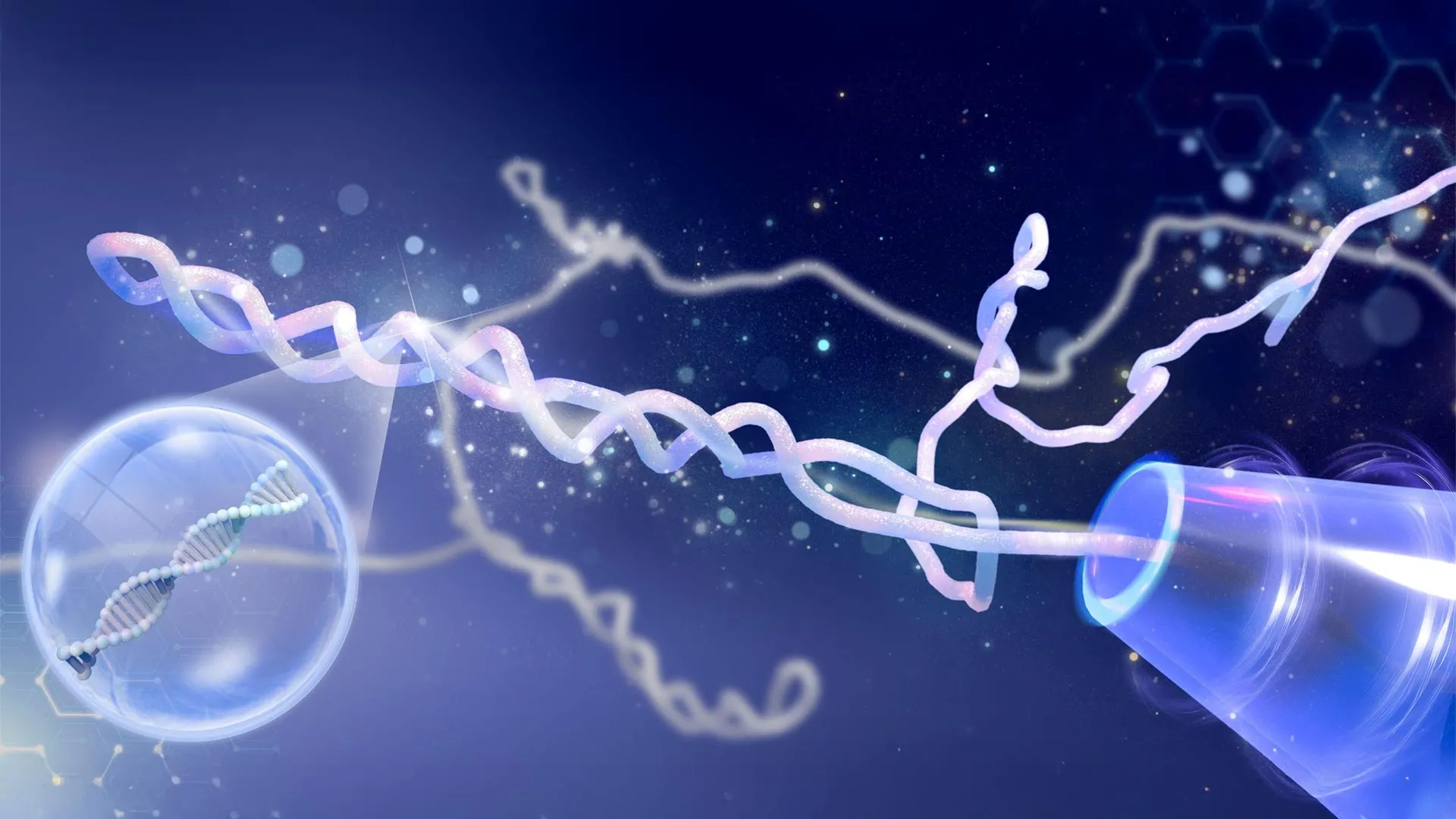
A recent breakthrough in biophysics has fundamentally reshaped our understanding of how deoxyribonucleic acid (DNA) behaves when traversing nanoscale apertures, challenging a long-held scientific assumption about the nature of signal anomalies observed during genetic sequencing and analysis. Researchers, primarily from the University of Cambridge in collaboration with international partners, have meticulously elucidated a critical, previously overlooked structural phenomenon — the formation of "plectonemes," or localized DNA supercoils — as the primary cause for complex electrical signatures, rather than the widely accepted hypothesis of true knot formation. This paradigm shift holds profound implications for advancing DNA sensing technologies, refining genomic analysis, and deepening our comprehension of biological processes involving DNA manipulation.
Nanopore technology represents a cutting-edge approach to biomolecular analysis, particularly in the realm of DNA sequencing. At its core, the method involves threading individual strands of DNA through an exceedingly minute opening, typically a protein channel embedded in a membrane or a solid-state pore fabricated in a material like silicon nitride. As the charged DNA molecule translocates through this constricted pathway, it displaces ions within the pore, generating characteristic fluctuations in the electrical current that can be precisely measured. These transient electrical signals act as a molecular fingerprint, providing real-time information about the DNA’s sequence, structure, and any modifications it might possess. The promise of nanopore sequencing lies in its potential for ultra-fast, portable, and cost-effective genetic analysis, offering a revolutionary tool for diagnostics, pathogen identification, and fundamental biological research.
For many years, a significant challenge in interpreting nanopore data revolved around deciphering complex, prolonged electrical signal patterns that deviated from the expected smooth passage of a single DNA strand. These anomalous events, characterized by sustained current blockades or highly irregular fluctuations, were almost universally attributed to the formation of physical knots within the DNA molecule. The analogy frequently employed to visualize this phenomenon was that of pulling a tangled shoelace through a narrow eyelet: any impedance or irregularity in the passage was intuitively linked to the physical entanglement of the lace itself. This conceptual framework, while seemingly logical and visually intuitive, exerted a profound influence on the design of experiments, the development of analytical algorithms, and the overall interpretation of nanopore data for several decades. Researchers hypothesized that knots, once formed, would transiently increase the effective diameter of the DNA strand, thereby altering ionic flow and generating the observed irregular electrical signatures.
The recent study, published in Physical Review X, systematically dismantles this pervasive misconception, revealing that what scientists had long interpreted as DNA knots are, in a substantial majority of cases, actually plectonemes. Unlike a true topological knot, which involves a stable, interlocked structure that cannot be undone without breaking the strand, a plectoneme is a dynamic, supercoiled structure where a segment of DNA twists around itself, akin to the coils found in an old-fashioned telephone cord. This distinction is not merely semantic; it represents a fundamental difference in the underlying biophysical mechanism and carries vastly different implications for how these structures interact with the nanopore and influence electrical signals. True knots are topologically constrained and tend to persist under tension, whereas plectonemes are dynamically formed and can uncoil if the torsional forces are relieved.
The meticulous experimental design employed by the research team provided compelling evidence for this reinterpretation. They utilized both biological (alpha-hemolysin) and solid-state (silicon nitride) nanopores, testing DNA strands of varying lengths across a broad spectrum of applied voltages. A key observation that challenged the knot hypothesis was the unexpectedly high frequency of "tangled" events – instances where the electrical signal indicated multiple sections of DNA occupying the pore simultaneously or for extended durations. This frequency far exceeded what theoretical models based purely on random knotting probability could explain. Furthermore, these "tangled" events became demonstrably more frequent as the applied voltage across the nanopore increased and as the length of the DNA strands being analyzed grew. This systematic dependence on voltage and length strongly suggested that an active, voltage-driven mechanism, rather than random entanglement, was at play.
The crucial insight emerged from understanding the role of electroosmotic flow (EOF) within the nanopore. When an electric field is applied across a nanopore, it not only drives the charged DNA molecule through but also induces the movement of the surrounding aqueous solution. This phenomenon, known as electroosmotic flow, occurs because the pore’s surface often carries an electrical charge, attracting counter-ions in the solution. The movement of these counter-ions, driven by the electric field, drags the bulk water with them. As this flowing water passes the helical DNA molecule, it exerts a subtle but persistent rotational force, or torque, on the strand. This torque is not confined to the segment of DNA directly within the pore; rather, it propagates along the entire length of the DNA molecule, much like twisting one end of a rope can cause coiling further down its length. This propagating torque causes sections of the DNA outside the nanopore to spontaneously coil and fold back on themselves, forming the plectonemic structures.
A critical difference between plectonemes and knots, highlighted by the study, lies in their dynamic behavior and signal characteristics. True knots, once formed and pulled through a narrow pore, tend to tighten under the applied force and are typically transient events, generating a relatively brief "bump" in the electrical signal before they either pass through or unravel. Plectonemes, however, are dynamic structures that can grow in size and persist for significantly longer durations. The continuous application of torque from the electroosmotic flow can maintain and even expand these supercoiled structures, leading to prolonged and distinct electrical signal patterns that are characteristic of multiple DNA segments temporarily occupying or interacting with the pore. To further validate this mechanism, the researchers employed sophisticated computer simulations that incorporated realistic physical forces and torques acting on the DNA. These simulations accurately reproduced the experimental observations, confirming that plectoneme formation is indeed a direct consequence of DNA’s ability to transmit twist along its axis.
A particularly elegant aspect of the experimental validation involved the creation and testing of "nicked" DNA. DNA molecules were deliberately introduced with single-strand breaks, or "nicks," at specific points along their length. These nicks act as topological discontinuities, effectively preventing the propagation of torsional stress (twist) beyond the break point. When these "nicked" DNA strands were subjected to nanopore translocation, the researchers observed a dramatic reduction in the frequency and duration of plectoneme-like electrical signals. This direct experimental intervention unequivocally confirmed that the ability of DNA to transmit twist along its length is absolutely essential for the formation of these supercoiled structures. This finding not only validates the proposed mechanism but also opens an intriguing avenue for future applications: the detection of DNA damage. Since nicks and other forms of strand breaks interfere with twist propagation, nanopore sensing could potentially be repurposed to identify regions of genomic instability or damage, which are critical biomarkers in disease diagnostics.
The ability to accurately differentiate between true knots and plectonemes in nanopore signals represents a significant leap forward in the precision of DNA analysis. As Professor Ulrich F. Keyser, a co-author of the study, articulated, the duration of the electrical signal becomes a key discriminator: "Knots pass through quickly, just like a quick bump, whereas plectonemes linger and create extended signals." This distinction allows for a far more nuanced interpretation of nanopore data, enabling researchers to glean richer information about the physical organization and integrity of DNA molecules. Such enhanced precision is invaluable for refining existing DNA sequencing algorithms, improving the accuracy of variant calling, and developing new diagnostic tools capable of identifying subtle changes in DNA topology that might be indicative of genetic conditions or early disease states.
Beyond the immediate realm of nanopore technology, the implications of this discovery resonate deeply within fundamental biology. DNA in living cells is not a static, linear molecule; it is constantly subjected to torsional stresses, supercoiling, and intricate topological manipulations by various cellular enzymes, such as topoisomerases. Both knots and plectonemes play crucial roles in genome organization, gene expression regulation, and DNA replication and repair processes. An improved understanding of how these structures form and behave under mechanical and electrical forces can significantly enhance our models of in-vivo DNA dynamics, providing critical insights into how cells maintain genomic stability and respond to various cellular stresses. For instance, processes like DNA compaction within the nucleus, the unwinding of the double helix during transcription, and the segregation of chromosomes during cell division all involve complex topological transformations that could be better understood through this new lens.
From a technological perspective, this research underscores the multifaceted utility of nanopores. They are not merely passive sensors but active platforms capable of dynamically manipulating biopolymers. The ability to induce and control DNA twisting via electroosmotic flow opens up possibilities for designing novel nanotechnology tools. This could include creating molecular machines that precisely coil or uncoil DNA, developing new methods for DNA compaction, or even engineering bespoke sensors that respond to specific topological states of DNA. The precision with which nanopores can now distinguish between different forms of DNA topological complexity promises to unlock new avenues for biosensing, diagnostics, and potentially even the development of advanced materials based on controlled DNA structures.
In conclusion, the correction of this decades-old scientific misconception marks a pivotal moment in biophysics and nanotechnology. By revealing the pervasive role of plectonemes in nanopore dynamics and elucidating the underlying mechanism of electroosmotic twist, this research not only refines our interpretative framework for existing technologies but also lays a robust foundation for future innovations. The ability to accurately read and manipulate the intricate topological states of DNA offers an unprecedented opportunity to deepen our understanding of life’s fundamental processes and to engineer a new generation of sophisticated tools for health, research, and advanced materials science. The journey to fully unravel the complexities of DNA behavior within nanoscale confinements has just taken a momentous step forward, promising a future of richer insights and more powerful applications.




 Lisa Mariana
 Aura Kasih
 Safa Marwah