Ayu Aulia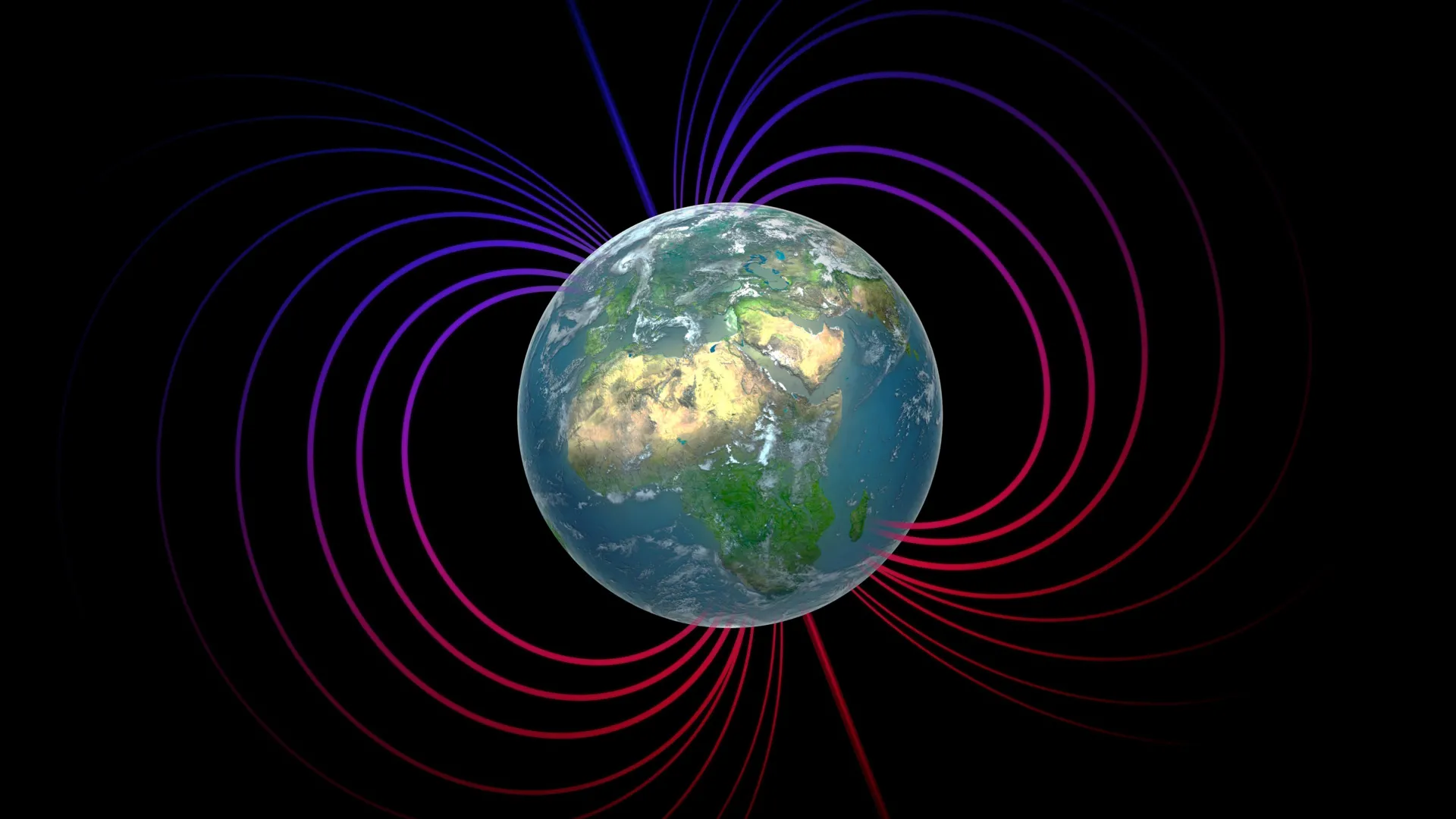
Humanity’s quest to penetrate Earth’s deepest recesses has proven remarkably more formidable than venturing into the vastness of space. While our probes and missions have traversed billions of kilometers beyond our home planet, direct terrestrial exploration has barely scratched the surface, reaching a mere dozen kilometers into the crust. This inherent limitation has fostered a significant informational void concerning the intricate dynamics and composition of Earth’s profound interior. However, groundbreaking new investigations are beginning to illuminate previously unseen complexities, particularly at the pivotal boundary between the planet’s molten outer core and its solid mantle, revealing an unexpected interplay that fundamentally shapes Earth’s protective magnetic shield.
The core-mantle boundary (CMB) stands as one of Earth’s most critical internal interfaces, a dynamic frontier where colossal geological forces converge. Located approximately 2,900 kilometers beneath the surface, this region is characterized by extreme pressures and temperatures, marking the transition from the silicate-rich mantle to the iron-nickel outer core. It is here that the planet’s internal heat engine largely operates, driving the thermal convection currents within the liquid outer core that are responsible for generating Earth’s magnetic field – a process known as the geodynamo. Understanding the physical and chemical interactions occurring at the CMB is paramount to deciphering the evolution of our planet, its climate, and the very conditions that sustain life. Despite its immense significance, direct observation remains impossible, rendering it one of the most enigmatic frontiers in geophysics.
A recent study, published in the esteemed journal Nature Geoscience, has cast unprecedented light on this veiled realm. A collaborative research endeavor, spearheaded by scientists from the University of Liverpool, has unearthed compelling palaeomagnetic evidence indicating that two colossal, intensely superheated rock formations, situated at the base of the mantle, exert a direct influence on the liquid outer core residing beneath them. These monumental structures, each comparable in scale to a continent, are strategically positioned beneath the African continent and the vast expanse of the Pacific Ocean. Their existence has been inferred through seismic tomography for decades, typically referred to as Large Low Shear Velocity Provinces (LL SVPs), but their magnetic implications had remained largely unexplored until now.
These findings fundamentally challenge previous assumptions about the passive nature of the mantle in relation to the geodynamo. The research posits that these enormous, solid yet incandescent bodies of rock – notably enveloped by a contiguous, pole-to-pole band of comparatively cooler mantle material – have been instrumental in sculpting the architecture and behavior of Earth’s magnetic field over geological timescales, potentially spanning millions of years. This suggests a more intricate and deeply interconnected system than previously modeled, where the solid lower mantle actively participates in the intricate dance of the geodynamo.
Reconstructing the nuances of ancient magnetic fields and accurately simulating the complex processes that give rise to them represents an exceptionally demanding scientific undertaking. To penetrate the mysteries of these deep-Earth features, the research team meticulously integrated vast datasets of palaeomagnetic information with sophisticated computational models of the geodynamo. Palaeomagnetism involves analyzing the faint magnetic signatures preserved within rocks as they solidified throughout Earth’s history. These fossilized magnetic records provide invaluable snapshots of the planet’s past magnetic field, capturing its intensity, direction, and polarity at various epochs. The challenge lies in accurately interpreting these faint signals, accounting for subsequent geological alterations, and compiling a cohesive global record spanning hundreds of millions of years.
The numerical models, run on powerful supercomputers, were designed to simulate the turbulent flow of liquid iron within the outer core, replicating the intricate convective patterns that give rise to the magnetic field. This computational approach allowed the scientists to reconstruct key characteristics of Earth’s magnetic behavior over an astonishing timeframe, extending back 265 million years. The sheer scale of this simulation, encompassing such immense geological durations and the complex fluid dynamics involved, necessitated an extraordinary level of computational resources and expertise, pushing the boundaries of modern scientific modeling. The successful recreation of long-term magnetic field characteristics underscores the robustness of their combined methodology.
A pivotal revelation from the study’s findings concerned the thermal characteristics of the core-mantle boundary. Contrary to simplified models that often assume a relatively uniform temperature across this interface, the results conclusively demonstrated the presence of pronounced thermal contrasts. Specifically, localized zones of intense heat were identified directly beneath the continent-sized rock structures. This uneven distribution of heat at the CMB is critical, as temperature gradients are the primary drivers of convection within the liquid outer core. Where temperatures are higher, the overlying liquid iron would also be hotter and therefore less dense, potentially influencing its buoyant ascent and circulation patterns.
The comprehensive analysis further illuminated the dual nature of Earth’s magnetic field: certain components have exhibited remarkable stability over hundreds of millions of years, hinting at deeply rooted, persistent influences, while other aspects have undergone dramatic and rapid transformations over shorter timescales. This complex interplay of stability and variability points towards a multifaceted geodynamo, sensitive to both long-term geological structures and more transient internal dynamics.
Professor Andy Biggin, a distinguished Professor of Geomagnetism at the University of Liverpool and a lead researcher on the study, articulated the profound implications of these findings. "These insights strongly suggest the existence of significant temperature variations within the rocky mantle immediately above the core," Professor Biggin explained. He elaborated that "beneath these hotter regions, the liquid iron within the core may exhibit a tendency to stagnate rather than engaging in the vigorous convective flow observed beneath cooler areas." This differential flow pattern, driven by localized thermal anomalies, provides a compelling mechanism through which the LL SVPs could directly modulate the geodynamo. Regions of stagnant flow could create localized perturbations in the magnetic field, while areas of vigorous convection would contribute to its more global and dynamic aspects.
Gaining such granular understanding of the deep Earth’s behavior over vast geological timescales significantly reinforces the scientific rationale for leveraging ancient magnetic field records. These palaeomagnetic archives become invaluable tools not only for comprehending the dynamic evolution of Earth’s deep interior but also for discerning its more stable, fundamental properties. The ability to link surface observations (magnetic records in rocks) to deep-Earth processes represents a triumph of interdisciplinary geophysics.
The ramifications of this research extend far beyond the immediate study of geomagnetism. Professor Biggin emphasized its critical importance for addressing long-standing questions pertaining to ancient continental configurations, such as the formation and subsequent fragmentation of the supercontinent Pangaea. The precise reconstruction of ancient landmasses relies heavily on accurate palaeomagnetic data, and a refined understanding of the magnetic field’s behavior improves the fidelity of these reconstructions. Furthermore, the findings carry significant implications for resolving uncertainties in ancient climate models and palaeobiology. Earth’s magnetic field acts as a vital shield against harmful solar radiation and cosmic rays, influencing atmospheric chemistry and protecting life forms. A more accurate portrayal of its past behavior allows for more precise models of radiation exposure, atmospheric escape, and climate stability throughout Earth’s history.
Critically, these revelations prompt a re-evaluation of a long-held assumption in these fields: that Earth’s magnetic field, when averaged over extended periods, could be approximated as a perfect bar magnet perfectly aligned with the planet’s rotational axis. This study strongly suggests that this simplifying assumption "may not quite be true," implying a more complex, perhaps multi-polar, average configuration over geological timescales. Such a re-assessment could necessitate revisions to a wide array of historical geological and biological models.
The research was meticulously conducted by scientists from the DEEP (Determining Earth Evolution using Palaeomagnetism) research group, an integral component of the University of Liverpool’s School of Environmental Sciences. This collaborative effort also benefited from the expertise of researchers from the University of Leeds, highlighting the inter-institutional cooperation essential for tackling such complex scientific challenges. The DEEP research group, established in 2017 with crucial funding support from the Leverhulme Trust and the Natural Environment Research Council (NERC), is dedicated to unraveling Earth’s internal dynamics by meticulously studying magnetic signals preserved in rock samples meticulously collected from diverse geological settings across the globe.
Looking ahead, this pioneering research opens numerous avenues for future investigation. Further refinement of both palaeomagnetic data collection and geodynamo modeling will be crucial. Integrating these findings with advanced seismic tomography, which maps subsurface structures using earthquake waves, could provide an even more comprehensive picture of the LL SVPs and their interactions with the core. Understanding the precise mechanisms of heat transfer across the CMB and its impact on the long-term evolution of the geodynamo will remain a central focus. This work underscores the dynamic, interconnected nature of Earth’s interior, where seemingly inert solid structures deep within the mantle can profoundly influence the planet’s most fundamental protective mechanism, continually shaping its past, present, and future. The ongoing quest to fully comprehend our planet’s hidden depths continues to reveal a world far more intricate and active than previously imagined.




 Lisa Mariana
 Aura Kasih
 Safa Marwah