Ayu Aulia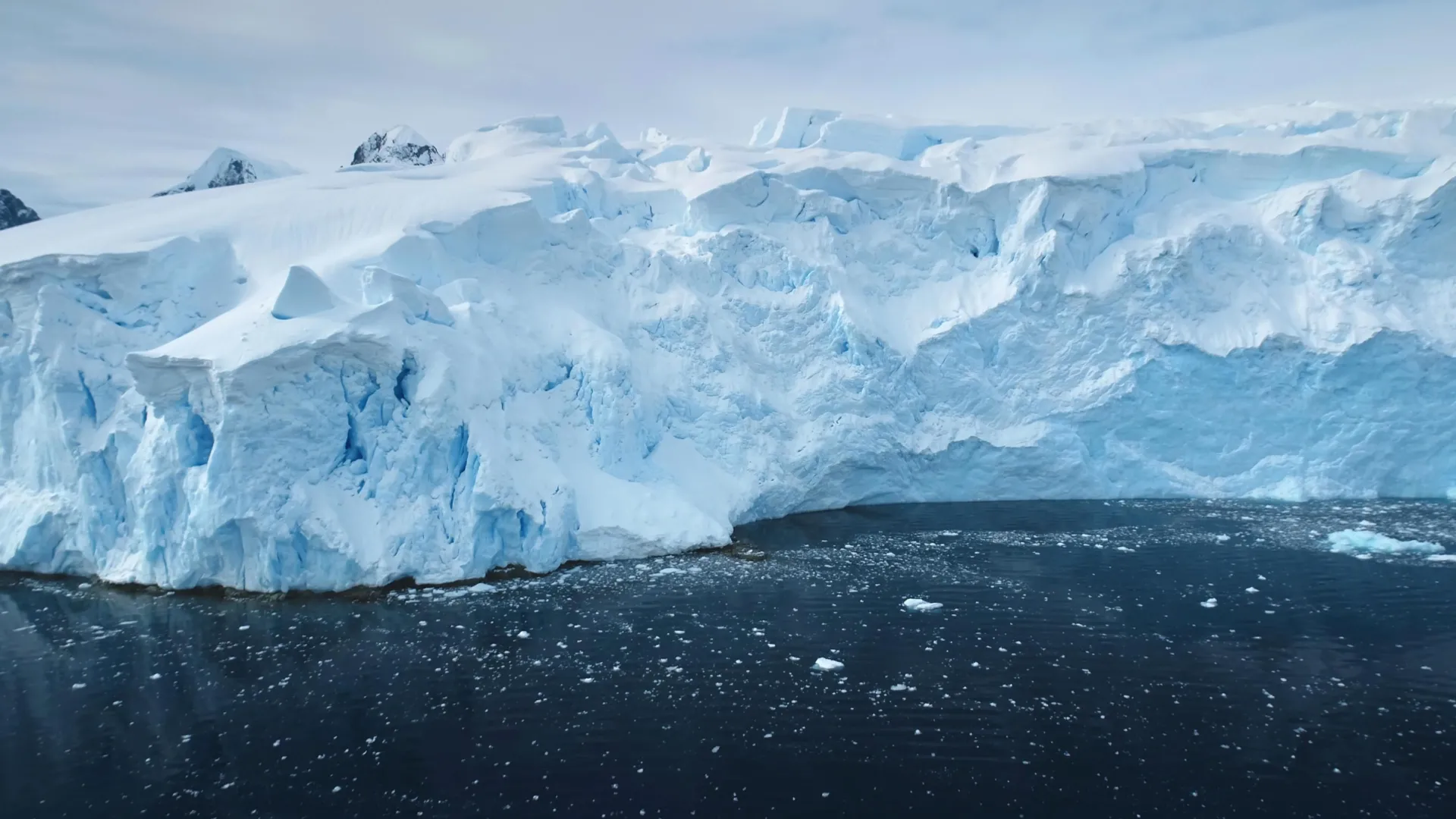
A groundbreaking investigation reveals that the accelerating melt of the West Antarctic Ice Sheet (WAIS) could critically impair the Southern Ocean’s efficacy as a crucial global carbon sink, a mechanism vital for regulating Earth’s climate.
The study, which meticulously examined paleoclimate records, uncovers a previously unrecognized dynamic between glacial activity, oceanic iron supply, and marine primary productivity. For decades, the prevailing scientific understanding posited that increased iron delivery to the Southern Ocean generally stimulated the growth of phytoplankton, thereby enhancing the oceanic uptake of atmospheric carbon dioxide. This new research, however, presents a nuanced and unexpected twist to this established paradigm, particularly concerning iron originating from the vast ice sheets of Antarctica. It suggests that the form, not merely the quantity, of iron introduced into marine environments dictates its capacity to fertilize ocean life.
At the core of this scientific re-evaluation is the analysis of sediment cores, geological archives extracted from the deep seafloor that chronicle Earth’s environmental history. Scientists focused on a sediment core retrieved in 2001 from the Pacific sector of the Southern Ocean, an area typically characterized by high nutrient levels but limited phytoplankton growth due to a scarcity of bioavailable iron – a region often referred to as a high-nutrient, low-chlorophyll (HNLC) zone. The layers within this core provided a chronological record of West Antarctic ice dynamics and corresponding shifts in marine biogeochemistry over vast timescales, including multiple glacial and interglacial cycles.
During these investigations, researchers observed a distinct correlation: periods marked by significant ice discharge from the West Antarctic Ice Sheet, evidenced by increased concentrations of ice-rafted debris in the sediment, coincided with elevated levels of iron in the oceanic record. Counterintuitively, these iron-rich episodes did not translate into a surge in marine algae growth, a finding that directly challenged the long-held assumption of a direct, positive relationship between iron supply and primary productivity in these waters. This discrepancy pointed towards a fundamental difference in the nature of the iron being supplied.
Lead author Torben Struve, a researcher at the University of Oldenburg, elaborated on this unexpected outcome, stating that "Ordinarily, an augmented influx of iron into the Southern Ocean would be expected to invigorate algal blooms, subsequently boosting the ocean’s absorption of atmospheric carbon dioxide." The absence of such a boost necessitated a deeper investigation into the chemical characteristics of the iron itself.
The Enigma of Bioavailability: Why More Iron Didn’t Mean More Algae
The research team meticulously traced this unexpected phenomenon to the inherent chemical properties of the iron-rich sediment released by the disintegrating icebergs. Their detailed analysis indicated that a substantial portion of the iron delivered into the ocean during periods of enhanced ice loss was in a highly "weathered" state. Chemical weathering is a geological process where rocks and minerals undergo decomposition due to exposure to water, oxygen, and acids over extended periods. This process significantly alters the mineralogical and chemical composition of the iron compounds, often rendering them less soluble and therefore less accessible for biological uptake.
During past warm intervals, when the West Antarctic Ice Sheet experienced more pronounced melting and iceberg calving, the iron-bearing sediment introduced into the ocean had often undergone extensive chemical alteration beneath the ice sheet or within the subglacial environment. This heavily weathered iron, characterized by its poor solubility, proved largely unusable by marine algae. Consequently, despite a greater total input of iron into the Southern Ocean, the biological pump – the process by which marine organisms draw carbon dioxide from the atmosphere and transport it to the deep ocean – remained largely unenhanced. This crucial distinction underscores that it is not merely the quantity of iron, but its chemical form and bioavailability, that governs its impact on marine ecosystems and carbon cycling.
Revisiting the Southern Ocean’s Role in Carbon Sequestration
The Southern Ocean plays an outsized role in the global carbon cycle, accounting for a substantial fraction of the total oceanic uptake of anthropogenic carbon dioxide. Its cold, nutrient-rich waters are a biological powerhouse, yet primary productivity in large sectors is consistently limited by the availability of trace elements, primarily iron. Understanding how this critical region responds to climate perturbations, particularly those affecting the input of limiting nutrients, is paramount for accurate climate projections.
Previous paleoclimate studies, focusing primarily on regions north of the Antarctic Polar Front, have highlighted the importance of iron delivered by wind-borne dust during glacial periods. Strong westerly winds would transport vast quantities of iron-rich dust from arid continental landmasses, such as Patagonia and Australia, into the Southern Ocean. This atmospheric deposition, particularly in the iron-limited waters, acted as a powerful fertilizer, stimulating widespread algal blooms. These expanded algal populations, through photosynthesis, would draw down significant amounts of carbon dioxide from the atmosphere, effectively strengthening global cooling trends at the onset of ice ages. This mechanism is considered a critical feedback loop in glacial-interglacial climate oscillations.
The new study, however, redirects focus to the waters south of the Antarctic Polar Front, a dynamic oceanographic boundary where cold Antarctic waters converge with warmer subantarctic waters. In this distinct region, the sediment core evidence unequivocally demonstrated that the highest iron inputs occurred during warmer interglacial intervals, rather than during the colder glacial periods. Furthermore, the size and geological composition of the sediment particles definitively identified the primary source of this iron as icebergs calved from the West Antarctic Ice Sheet, rather than aeolian dust. This geographical and temporal shift in iron source and its associated bioavailability represents a significant departure from previously accepted models of Southern Ocean iron fertilization.
Co-author Gisela Winckler, a professor at the Columbia Climate School and a geochemist at the Lamont-Doherty Earth Observatory, emphasized the dynamic nature of oceanic carbon absorption, stating, "This reminds us that the ocean’s ability to absorb carbon isn’t fixed; it’s a dynamic process influenced by a complex interplay of physical and biogeochemical factors that can change significantly over time."
Insights from Past Ice Sheet Dynamics
Beyond its implications for carbon cycling, the research also offers invaluable insights into the historical sensitivity of the West Antarctic Ice Sheet to past warming trends. The WAIS is recognized as one of the most vulnerable components of Earth’s cryosphere, with substantial portions grounded below sea level, making it susceptible to marine ice sheet instability. Understanding its past behavior under warmer conditions is crucial for predicting its future trajectory.
Struve highlighted that several recent investigations suggest extensive retreat and destabilization of the WAIS during the last interglacial period, approximately 130,000 years ago. During this epoch, global average temperatures were comparable to, or even slightly higher than, those observed today, making it a critical analogue for future climate scenarios. "Our results also strongly suggest that a substantial volume of ice was lost from West Antarctica during that period," Struve confirmed.
As the massive ice sheet, which in some areas reached thicknesses of several kilometers, underwent fragmentation and retreat, it generated an immense number of icebergs. These colossal icebergs, acting as geological bulldozers, scraped vast quantities of sediment from the bedrock beneath the ice. As they drifted northward into warmer waters, they melted, releasing this scraped sediment, including the weathered iron, into the ocean. The sedimentary record clearly indicates periods of exceptionally high iceberg activity towards the end of glacial periods and during peak interglacial warmth, corroborating the connection between ice sheet retreat and the delivery of weathered materials.
The Critical Importance of Iron’s Chemical Form
The core message emanating from this study is the paramount importance of the chemical speciation of iron in oceanic biogeochemistry. "What truly matters here is not merely the total quantity of iron introduced into the marine environment, but crucially, the specific chemical form it adopts," Winckler underscored. "These findings unequivocally demonstrate that iron delivered by icebergs can possess significantly lower bioavailability than scientists had previously assumed, thereby fundamentally altering our conceptual understanding of carbon uptake dynamics in the Southern Ocean."
The researchers hypothesize that beneath the vast expanse of the West Antarctic Ice Sheet lies a substratum composed of exceptionally ancient, heavily weathered rock. Each time the ice sheet underwent a period of retreat during past interglacial warming, the heightened activity of calving icebergs served as an efficient conveyor belt, transporting substantial quantities of these heavily altered, poorly soluble mineral particles into the adjacent South Pacific. Despite this substantial, albeit chemically inert, iron input, the capacity for marine algal growth remained constrained, failing to trigger the expected increase in carbon sequestration. "We were genuinely astonished by this observation because, in this particular region of the Southern Ocean, the overarching quantity of iron input was evidently not the primary determinant of algal proliferation," Struve remarked.
Implications for Future Climate Change and Global Carbon Budgets
As the trajectory of anthropogenic global warming continues its upward trend, the planet faces the increasing likelihood of recreating environmental conditions akin to those observed during the last interglacial period. The West Antarctic Ice Sheet is already exhibiting signs of significant thinning and retreat in several sectors, driven by warming ocean waters impinging on its marine-terminating glaciers.
While a near-term catastrophic collapse of the entire ice sheet is not considered imminent, as Struve noted, "Based on current observations, a rapid, wholesale collapse of the ice sheet is not projected in the immediate future, yet we are clearly witnessing an ongoing process of thinning and retreat in key areas." Should this retreat persist and accelerate, it would invariably lead to an increased rate of erosion of the ancient, weathered rock layers beneath the ice by glaciers and icebergs. This enhanced delivery of poorly bioavailable iron into the Southern Ocean would likely reduce the region’s capacity to absorb atmospheric carbon dioxide, particularly in the Pacific sector, compared to its current efficiency.
This potential reduction in the Southern Ocean’s carbon sink strength represents a critical positive feedback mechanism within the climate system. A weakened oceanic carbon uptake would mean that a larger fraction of anthropogenic carbon dioxide remains in the atmosphere, further intensifying the greenhouse effect and accelerating global warming. This could, in turn, drive further WAIS melt, creating a dangerous self-perpetuating cycle.
The findings necessitate a re-evaluation of current climate models, particularly those that incorporate oceanic carbon cycle feedback loops. The assumption of a uniformly positive response of marine productivity to increased iron supply, irrespective of its source or chemical form, may lead to an overestimation of the ocean’s future capacity to mitigate climate change. Future research must focus on better constraining the extent of these weathered subglacial iron reserves, understanding the precise mechanisms of iron solubilization and bioavailability under various environmental conditions, and assessing the global applicability of this finding beyond the specific region studied. This deeper understanding is essential for refining projections of Earth’s future climate state and for informing effective climate mitigation strategies.




 Lisa Mariana
 Aura Kasih
 Safa Marwah