Ayu Aulia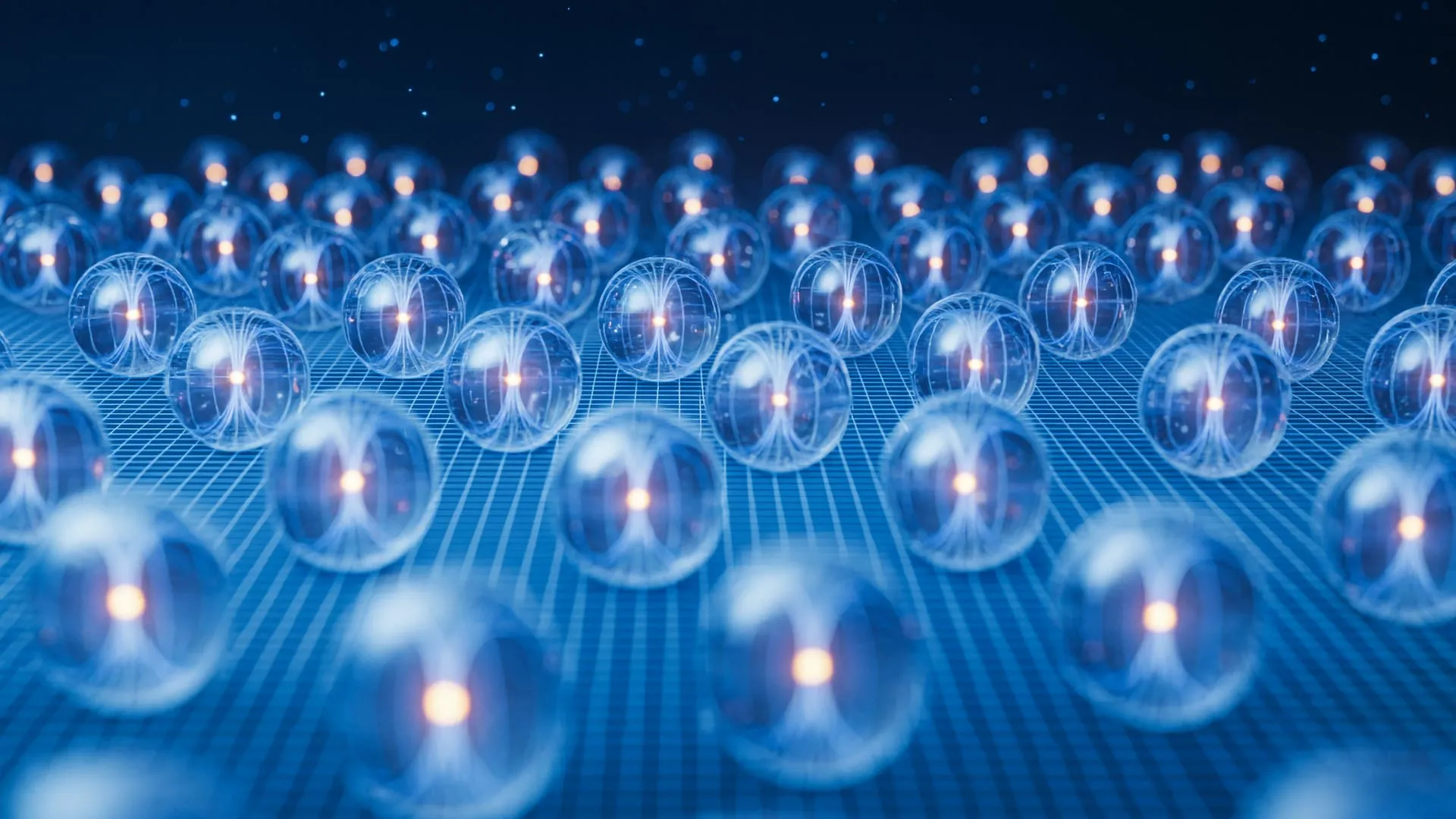
After decades of incremental progress, the formidable challenge of constructing scalable, powerful quantum computers appears to be yielding to innovative engineering, with recent breakthroughs signaling a viable pathway toward achieving unprecedented computational capabilities. These advanced machines are anticipated to revolutionize problem-solving by drastically compressing calculation times, transforming complex tasks that would conventionally consume millennia into operations completed within mere hours.
The foundational challenge in quantum computing lies in efficiently extracting information from the delicate quantum bits, or qubits, that form the computational core. Traditional methods often encounter significant bottlenecks, limiting scalability and speed. However, a pioneering research initiative spearheaded by physicists at Stanford University has introduced a novel optical cavity design engineered to capture individual photons – the fundamental constituents of light – with exceptional efficiency. These photons are emitted by single atoms, which serve as the physical embodiment of qubits, storing and processing quantum information. Crucially, this advanced approach marks a significant departure from prior limitations, enabling the simultaneous collection of data from an entire array of qubits, a critical step towards building truly large-scale quantum systems.
The Intricacies of Qubit Readout: A Persistent Bottleneck
Quantum computers derive their immense potential from principles of quantum mechanics, such as superposition and entanglement, allowing them to process vast amounts of information in ways classical computers cannot. A qubit, unlike a classical bit that can only exist as a 0 or a 1, can simultaneously represent 0, 1, or a superposition of both states. This quantum parallelism underpins the speed advantage of quantum algorithms for specific problem sets. Yet, harnessing this power requires a robust and rapid method for "reading out" the final quantum state of the qubits without disturbing their fragile coherence – the property that allows them to maintain their quantum properties.
The difficulty in qubit readout stems from several inherent physical challenges. Atoms, frequently employed as qubits due to their stable quantum states, emit light spontaneously and isotropically, meaning photons are radiated in all directions. This uncontrolled emission makes it incredibly challenging to collect the photons efficiently and direct them toward a detector. Furthermore, the act of measurement itself can cause the qubit to "collapse" from its superposition into a definite classical state, necessitating swift and minimally invasive techniques. Prior attempts to address this often involved serial readout processes, where qubits are measured one by one, or relied on less efficient light collection, both of which severely impede the overall computational speed and the ability to scale up to the millions of qubits required for practical, error-corrected quantum computing.
A New Paradigm in Light-Matter Interaction: Microlens-Enhanced Optical Cavities
The research, detailed in a recent publication in the journal Nature, describes a sophisticated system comprising 40 individual optical cavities, each precisely engineered to house a single atom qubit. Beyond this working demonstration, the team also developed a larger proof-of-concept prototype featuring over 500 cavities, pointing towards a pragmatic strategy for constructing quantum computing networks capable of accommodating as many as a million qubits.
Dr. Jon Simon, the senior author of the study and an associate professor of physics and applied physics at Stanford, emphasized the imperative for rapid information extraction from quantum bits. "To build a functional quantum computer, the ability to quickly read out information from quantum bits is paramount," Dr. Simon stated. "Until now, a scalable and practical method for achieving this has been elusive, primarily because atoms do not emit light rapidly enough, and when they do, it disperses indiscriminately. An optical cavity provides a mechanism to efficiently direct emitted light along a specific path, and we have now devised a way to integrate each individual atom within a quantum computer with its own dedicated cavity."
Optical cavities operate on the principle of trapping light between highly reflective surfaces, causing photons to repeatedly bounce back and forth. This resonance effect dramatically increases the interaction time between light and matter. In traditional cavity quantum electrodynamics (QED) setups, the goal is to enhance the coupling between an atom and the optical field, thereby controlling the atom’s emission properties. However, applying this principle to individual atoms has historically been problematic due to their minuscule size and near-transparency, making it difficult to achieve sufficiently strong light-matter interaction.
The Stanford team’s innovation lies in a radical redesign of the optical cavity architecture. Instead of relying solely on numerous reflections within a conventional Fabry-Pérot resonator, they introduced precisely fabricated microlenses directly into each cavity. These miniature lenses serve to tightly focus the light onto the single atom contained within. This ingenious modification significantly enhances the light-atom coupling strength, even with fewer overall light bounces. The result is a far more effective mechanism for extracting quantum information from the atom, mitigating the issues of slow emission and omnidirectional light loss.
Dr. Adam Shaw, a Stanford Science Fellow and the study’s first author, articulated the transformative potential of this new design. "We have engineered an entirely new class of cavity architecture, moving beyond the traditional two-mirror configuration," Dr. Shaw explained. "Our expectation is that this advancement will enable the development of dramatically faster, distributed quantum computers capable of communicating with significantly elevated data rates." This architectural shift represents a critical stride in overcoming the physical limitations that have long hampered quantum computing scalability.
Bridging the Chasm: Quantum vs. Classical Computation
To fully appreciate the significance of this technological leap, it is essential to understand the fundamental distinctions between classical and quantum computing. Classical computers, the ubiquitous machines of our digital age, process information using binary bits, which can only exist in one of two definite states: 0 or 1. Every calculation, no matter how complex, is broken down into a series of these binary operations.
Quantum computers, in stark contrast, harness the peculiar laws of quantum mechanics to process information. Their operational units, qubits, exploit quantum phenomena like superposition and entanglement. Superposition allows a qubit to exist in a combination of 0 and 1 simultaneously, exponentially increasing the amount of information it can represent. Entanglement, a phenomenon where two or more qubits become inextricably linked, means the state of one instantly influences the others, regardless of distance. These properties enable quantum systems to explore multiple computational paths concurrently, offering a profound advantage for specific problem classes.
Dr. Simon elaborates on this paradigm shift: "A classical computer must sequentially examine possibilities one after another to arrive at the correct solution. A quantum computer, however, operates more like noise-canceling headphones, simultaneously comparing numerous combinations of answers, amplifying the correct ones while effectively suppressing the incorrect ones." This inherent parallelism, fueled by the ability to read out information efficiently from many qubits at once, is what promises to unlock solutions to problems currently intractable for even the most powerful classical supercomputers.
The Road Ahead: Scaling to Quantum Supercomputers
The journey from proof-of-concept to fully functional, large-scale quantum computers is arduous, requiring millions of stable, interconnected qubits to demonstrably outperform today’s most advanced supercomputers. Dr. Simon posits that achieving this scale will necessitate the formation of extensive networks of individual quantum computers. The parallel, light-based interface pioneered in this study provides a robust and efficient foundation for such an ambitious scaling endeavor.
The current research successfully demonstrated a functional array of 40 cavities and presented a system with over 500 cavities in a conceptual prototype. The immediate objective for the research team is to expand this capacity to tens of thousands of cavities. Looking further into the future, the vision encompasses the creation of quantum data centers, where distinct quantum computers are seamlessly linked via these cavity-based network interfaces, culminating in the realization of full-scale quantum supercomputers. This networked architecture addresses not only the sheer number of qubits required but also the challenge of distributing quantum information across a wider computational fabric, laying the groundwork for a quantum internet.
Broader Scientific and Technological Ramifications
While significant engineering challenges persist, the potential societal and scientific benefits of large-scale quantum computers are immense and far-reaching. In materials science and chemical synthesis, quantum simulations could lead to breakthroughs in designing novel materials with unprecedented properties, such as high-temperature superconductors or highly efficient catalysts. This could revolutionize drug discovery, allowing for the precise modeling of molecular interactions and accelerating the development of new therapeutics. In the realm of cybersecurity, quantum computers pose a theoretical threat to current encryption standards through algorithms like Shor’s, simultaneously driving the development of quantum-resistant cryptographic solutions.
Beyond computation, the ability to efficiently collect and manipulate light at the single-photon level, as demonstrated by these cavity arrays, holds profound implications for other scientific disciplines. Enhanced light-matter interaction can dramatically improve the sensitivity and resolution of biosensing technologies, leading to more accurate disease diagnostics and deeper insights into biological processes. In microscopy, these advancements could enable scientists to image cellular and molecular structures with unprecedented clarity. Furthermore, quantum networks could contribute to astronomy by facilitating quantum-enhanced interferometry, allowing optical telescopes to achieve resolutions far beyond their classical limits, potentially enabling the direct observation and characterization of exoplanets orbiting distant stars.
Dr. Shaw summarized this expansive potential: "As our understanding of how to manipulate light at the single-particle level deepens, I believe it will fundamentally transform our capacity to perceive and interact with the world around us." This sentiment underscores the revolutionary scope of quantum photonics, extending its influence beyond computational prowess into the very fabric of scientific inquiry and technological innovation.
This research was made possible through the collaborative efforts of numerous institutions and individuals. Dr. Simon holds the Joan Reinhart Professorship in Physics & Applied Physics, and Dr. Shaw is recognized as both a Felix Bloch Fellow and an Urbanek-Chodorow Fellow. Additional key contributors from Stanford include Dr. David Schuster, the Joan Reinhart Professor of Applied Physics, alongside doctoral students Anna Soper, Danial Shadmany, and Da-Yeon Koh. Further collaborative contributions came from researchers affiliated with Stony Brook University, the University of Chicago, Harvard University, and Montana State University. The project received critical financial support from the National Science Foundation, the Air Force Office of Scientific Research, the Army Research Office, the Hertz Foundation, and the U.S. Department of Defense. It is also noted that Matt Jaffe of Montana State University and Dr. Simon serve as consultants to and hold stock options in Atom Computing, a company in the quantum computing sector. Furthermore, a patent pertaining to the innovative resonator geometry utilized in this work is held by Shadmany, Jaffe, Schuster, Simon, and Aishwarya Kumar of Stony Brook.
In conclusion, the development of microlens-integrated optical cavities for highly efficient and parallel qubit readout represents a pivotal moment in quantum computing research. By addressing a long-standing bottleneck in quantum information extraction, this technology significantly accelerates the trajectory toward building fault-tolerant, million-qubit quantum computers. While considerable engineering challenges remain, the clear pathway demonstrated by this research offers a compelling vision for a future where quantum systems transcend current computational limits, ushering in an era of transformative advancements across science, technology, and society.




 Lisa Mariana
 Aura Kasih
 Safa Marwah