Aura Kasih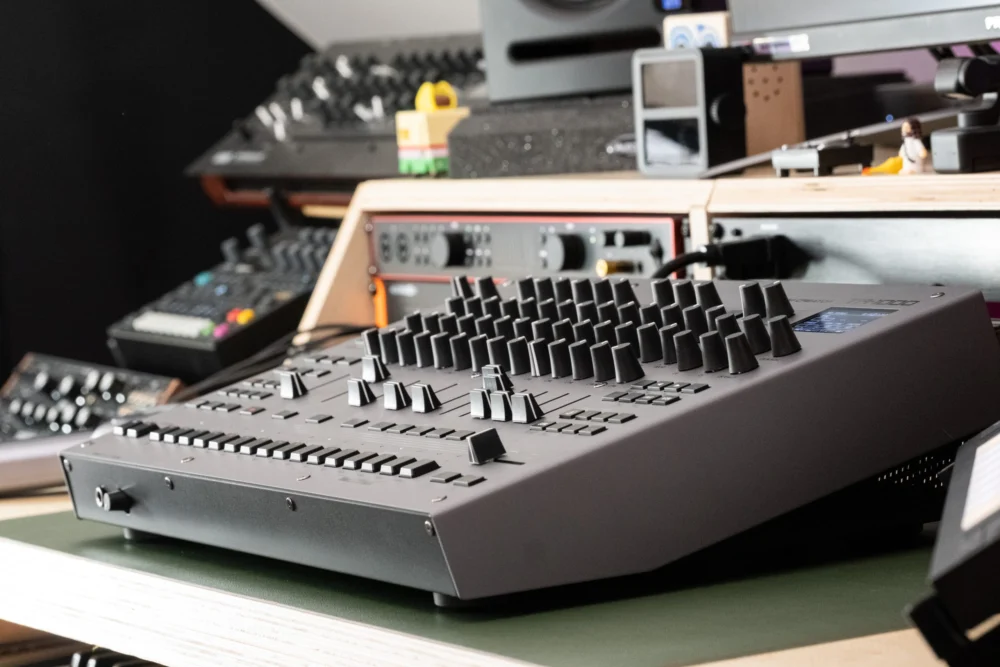
After a protracted anticipation period, Roland has finally responded to a persistent demand from the music production community by unveiling a true analog successor to the legendary TR-808 drum machine, a device whose sonic imprint is indelibly woven into the fabric of modern music. The distinctive character of the 808, particularly its iconic kick drum, has permeated countless genres, rendering its influence virtually immeasurable. This new instrument, the TR-1000, represents not merely a revival but a significant expansion of Roland’s storied legacy in rhythmic sound generation.
The TR-1000 transcends a simple reimagining of classic analog circuits. Roland has integrated a comprehensive suite of digital synthesis and sampling capabilities, encompassing FM synthesis, PCM sample playback, and an onboard sampler equipped with advanced looping and chopping functionalities. This multifaceted approach allows for an unprecedented level of sonic exploration, further augmented by an extensive collection of built-in effects. The ability to layer sounds, coupled with a sophisticated modern sequencer featuring probability, automation, and microtiming controls, positions the TR-1000 as an exceptionally potent creative tool. However, this extensive feature set is accompanied by a considerable price tag and a learning curve that reflects its advanced nature.
A Legacy Reimagined: The Genesis of the TR-1000
The TR-808, released in 1980, was initially a commercial disappointment, failing to capture the imagination of contemporary musicians who favored the more realistic sounds of digital sampling machines that were beginning to emerge. However, its distinctive analog character, particularly its booming kick drum, resonating snare, and crisp hi-hats, found an unexpected home in emerging hip-hop, electro, and early electronic dance music. Producers discovered that the 808’s sounds, while artificial, possessed a unique punch and presence that cut through mixes with unparalleled authority. This serendipitous adoption cemented the TR-808’s status as a foundational element of modern music production, its influence becoming a defining characteristic of countless hit records across diverse genres.

Roland’s approach with the TR-1000 acknowledges this profound impact while simultaneously pushing the boundaries of what a drum machine can be. The decision to prioritize authentic analog emulations of the TR-808 and TR-909—instruments that represent distinct yet equally influential sonic philosophies—is a testament to Roland’s commitment to its heritage. The TR-909, with its punchy digital snares and crisp cymbals, offered a different but equally vital palette for genres like house and techno. By incorporating both, Roland provides producers with the definitive building blocks of decades of electronic music.
Beyond the Analog Core: A Digital Universe Within
The TR-1000’s true innovation lies in its seamless integration of analog warmth with cutting-edge digital technologies. The inclusion of FM synthesis opens up a vast sonic landscape, allowing for the creation of metallic textures, percussive bells, and evolving tonal elements that extend far beyond traditional drum sounds. This capability transforms the TR-1000 from a mere drum machine into a versatile sound design workstation, capable of generating complex rhythmic and melodic textures.
The built-in sampler with looping and chopping features further amplifies its creative potential. Producers can now capture external audio, manipulate it with precision, and seamlessly integrate it into their rhythmic compositions. This functionality mirrors the workflows of modern digital audio workstations (DAWs) but within a dedicated hardware instrument, offering a more immediate and tactile experience. The ability to slice and recontextualize audio samples in real-time adds a dynamic layer to live performance and studio production, enabling the creation of intricate rhythmic patterns and unexpected sonic juxtapositions.
An Interface of Substance: Design and Ergonomics

Roland’s design philosophy for the TR-1000 reflects a mature understanding of user interaction within a complex electronic instrument. Eschewing the sometimes overly stylized or utilitarian aesthetics of previous offerings, the TR-1000 adopts a robust and purposeful design. Its industrial, almost brutalist aesthetic, characterized by a stark gray and black color scheme, conveys a sense of gravitas and dedication to professional use. The layout is meticulously organized, featuring 16 substantial step sequencer keys that offer satisfying tactile feedback, alongside an array of firm sliders and numerous knobs dedicated to individual channel control and parameter manipulation. This emphasis on hands-on control minimizes the need for extensive menu diving, allowing for intuitive beat creation and real-time performance adjustments.
The dedicated controls for tuning and decay on each sound are particularly noteworthy, enabling immediate sculpting of the iconic TR-808 kick drum into a deep, resonant bassline or a tight, percussive thud. While some parameter controls are generically labeled (e.g., CTRL 1, CTRL 2), the integrated screen on the upper right panel provides clear visual feedback, indicating the specific function being adjusted. This thoughtful design ensures that even with its extensive feature set, the TR-1000 remains accessible and conducive to creative flow.
Navigating Complexity: The Learning Curve and the Price of Power
The sheer breadth of features packed into the TR-1000 inevitably presents a significant learning curve. While basic beat programming is straightforward for those familiar with step sequencers, mastering the more advanced functionalities, such as the intricate sampling and sequencing options, requires dedicated exploration. Roland’s user interface, while improved in recent years, can still present challenges when navigating complex workflows. Features like sample looping and time-stretching, while powerful, are not always immediately intuitive and can be buried within multi-function menus and button combinations.
This complexity, coupled with the TR-1000’s premium price point of $2,699.99, positions it as an investment for serious producers and musicians. For those who primarily seek the iconic analog sounds of the 808 and 909 without delving into the more advanced digital features, more affordable alternatives exist, including Roland’s own AIRA series and a plethora of sample packs. However, for the discerning user who values authentic analog circuitry and desires a comprehensive instrument capable of both retro sonic replication and forward-thinking sound design, the TR-1000 offers an unparalleled proposition.

The Analog Heartbeat: The Timeless Appeal of Classic Drum Sounds
The core appeal of the TR-1000 lies in its authentic analog drum circuits, meticulously recreating the sonic signatures of the TR-808 and TR-909. These are not mere digital emulations but genuine analog recreations that capture the warmth, punch, and unique character of the originals. The ability to tune the 808 kick drum to play as a bassline, a technique popularized in modern music, is a significant enhancement that goes beyond the capabilities of the original hardware. This flexibility allows producers to imbue their tracks with the characteristic 808 low-end while retaining melodic control.
The inclusion of an analog filter and drive section further enhances the sonic sculpting capabilities. These elements provide crucial tonal shaping and saturation, allowing producers to blend disparate sounds into a cohesive whole and add the desirable grit and character that defines many classic electronic music productions. The ability to push the drive to the brink of fuzz while maintaining the powerful impact of the kick drum offers a compelling sonic sweet spot, ideal for jamming and performance.
Digital Dexterity: The Power of Emulation and Beyond
Roland’s Analog Circuit Behavior (ACB) technology, employed in the TR-1000’s digital emulations, is remarkably convincing. The distinction between the true analog circuits and their ACB counterparts is often subtle, making it difficult for even experienced ears to discern the difference in blind tests. This technological prowess extends to emulations of other classic Roland machines, such as the TR-606 and CR-78. While the TR-1000’s primary focus is on the 808 and 909, the inclusion of these additional emulations broadens its sonic palette considerably, offering access to the more lo-fi and characterful sounds that have also played a significant role in electronic music history.

The integration of these diverse sound generation methods—true analog, FM synthesis, PCM samples, and ACB emulations—creates a powerful synergy. Producers can layer an authentic analog 808 kick with a meticulously crafted digital kick, or use the FM synthesis to create unique percussive textures that complement the classic Roland sounds. This layered approach allows for the creation of complex, dynamic drum patterns that are both rooted in history and firmly planted in the present.
Performance and Workflow: A New Paradigm for Beat Creation
The TR-1000 redefines the drum machine as a performance instrument. Its extensive hands-on controls encourage a more interactive approach to beat creation. The step sequencer, with its pattern variations and fill capabilities, facilitates the development of dynamic and evolving rhythmic sequences. The "Step Loop" function, a standout feature inspired by Elektron’s Octatrack, allows for unprecedented real-time manipulation of patterns. This allows users to create intricate, on-the-fly fills and rhythmic variations by repeating specific steps or combinations of steps, transforming fill creation from a static programming task into an active performance element.
The "Morph" slider is another significant performance tool. It enables the seamless blending between two distinct sets of parameter configurations for all sounds, allowing for dramatic shifts in timbre and intensity within a performance. This feature, combined with the tactile nature of the controls, encourages producers to treat the TR-1000 not merely as a beat-generating backdrop but as a dynamic and expressive musical instrument.
Conclusion: The Apex of Drum Machine Innovation

The Roland TR-1000 represents a significant milestone in the evolution of drum machines. It successfully marries the revered sonic legacy of the TR-808 and TR-909 with a comprehensive array of modern synthesis, sampling, and sequencing technologies. While its advanced feature set and premium price point may initially seem daunting, the TR-1000 offers unparalleled creative potential for those willing to invest the time and resources. Its robust build quality, intuitive interface for core functions, and groundbreaking performance features solidify its position as an ultimate drum machine, capable of inspiring generations of musicians and producers. The TR-1000 is not just a tribute to the past; it is a powerful instrument designed to shape the future of rhythm.



 Lisa Mariana
 Safa Marwah
 Ayu Aulia