
 Lisa Mariana
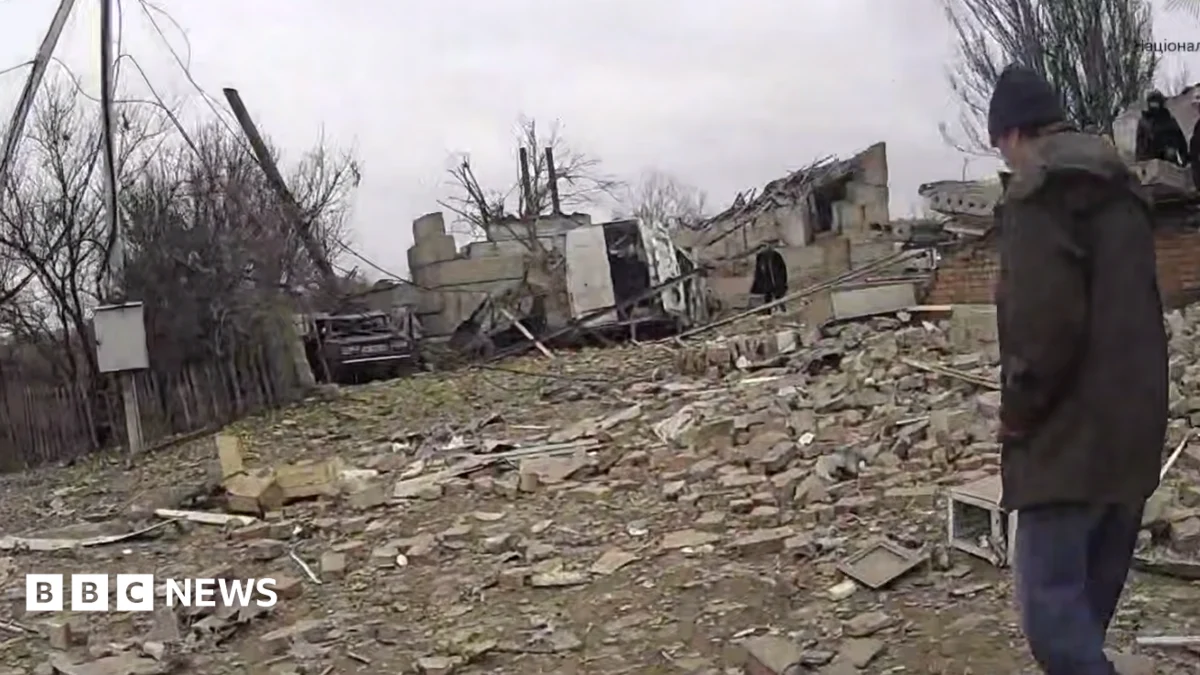
A recent forensic analysis of body camera footage released by Ukrainian authorities provides stark evidence of a deliberate "double-tap" aerial bombardment against a civilian target in the Zaporizhzhia region, exposing the relentless and potentially criminal evolution of Russia’s military tactics amidst a complex and increasingly volatile diplomatic environment. The harrowing video, disseminated by Ukraine’s national police, meticulously documents the immediate aftermath of an initial aerial strike on a village in the Komyshuvakha district, capturing widespread devastation and the palpable shock of local inhabitants as they navigated a landscape scarred by the initial explosion, only to be subjected to a subsequent, targeted attack on a designated civilian shelter.
The visual evidence begins by immersing the viewer in a scene of profound destruction. Severely compromised structures stand as skeletal remnants against a backdrop of scattered debris, bearing testament to the force of the initial impact. Residents, their faces etched with disbelief and fear, are depicted surveying the wreckage, their immediate priority shifting from shock to survival. Crucially, the recording then captures the chilling premonition of further danger. The crackle of a two-way radio breaks through the ambient sounds of the aftermath, broadcasting an urgent warning from a military official regarding additional glide bombs being directed towards Komyshuvakha. This crucial interjection serves as a harbinger of the ensuing catastrophe.
In a race against time, police officers on the ground are seen urgently directing civilians towards a fortified underground shelter, reportedly situated at least two floors beneath the surface, a standard protective measure against conventional munitions. The footage shows residents hurrying towards this presumed sanctuary. However, mere seconds after their entry, the recording abruptly ceases, a stark and chilling indicator of the shelter itself being directly hit by the subsequent strike. Ukrainian officials have since confirmed that this shelter was in close proximity to a local school, which had been repurposed as a vital hub for the distribution of humanitarian aid, underscoring the deliberate targeting of infrastructure critical for civilian survival. Independent verification by reputable investigative journalists has corroborated the authenticity and location of the video, aligning it with other footage documenting the aftermath of the Monday attack in Komyshuvakha.
The incident at Komyshuvakha represents a particularly egregious manifestation of the "double-tap" tactic, a strategy with profound implications under international humanitarian law. In military parlance, a "double-tap" strike involves an initial attack on a target, followed by a secondary strike aimed at the emergency responders, medical personnel, or civilians attempting to assist the wounded or clear the scene. This method is designed not only to maximize casualties but also to deter and impede rescue efforts, sow widespread terror, and undermine the societal fabric of the targeted community. Such tactics are widely condemned by international legal frameworks, specifically the Geneva Conventions and customary international humanitarian law, which strictly prohibit attacks on civilians, civilian objects, and personnel involved in humanitarian or medical assistance. Targeting individuals or infrastructure providing aid constitutes a grave breach, potentially amounting to a war crime.
The psychological impact of such a strategy is immense. It transforms spaces of sanctuary and assistance into zones of extreme peril, eroding trust in safety measures and paralyzing the instinct to help. For first responders – police, emergency services, and medical personnel – it elevates their already perilous duties to an existential risk, deliberately making them targets. This calculated brutality aims to demoralize not only the direct victims but also the broader population, fostering a pervasive sense of vulnerability and helplessness. While not a new tactic in modern warfare, its application in Ukraine against a humanitarian aid point signals a concerning escalation in the deliberate targeting of civilian support networks, a pattern that has drawn parallels to other conflicts where similar tactics have been employed to break civilian resilience.
A key element in the Komyshuvakha attack is the reported use of "glide bombs." These weapons, typically older Soviet-era FAB bombs fitted with satellite navigation and foldable wings (such as the UMPK kit), represent a significant shift in Russia’s aerial assault capabilities. By converting unguided "dumb bombs" into precision-guided munitions with an extended stand-off range, Russia can launch these weapons from aircraft operating outside the immediate reach of many Ukrainian short-to-medium range air defense systems. This strategy reduces risk to Russian aircraft while delivering substantial destructive power. The increasing reliance on glide bombs highlights a tactical adaptation by Moscow, likely driven by a combination of factors including the depletion of its precision missile stockpiles, the cost-effectiveness of converting older ordnance, and a desire to maintain aerial pressure on Ukrainian positions and infrastructure without exposing valuable air assets to advanced Western-supplied air defenses. However, their deployment against civilian areas, particularly those involved in humanitarian operations, further underscores a disregard for the principles of distinction and proportionality enshrined in international law.
President Volodymyr Zelensky’s impassioned response to the Komyshuvakha incident underscored the gravity of the situation. In a social media post, he revealed that a total of "nine aerial bombs were dropped by the Russians," specifying that the initial strikes targeted "people who came to receive humanitarian aid," followed by attacks on "rescuers and police officers who arrived at the scene." Zelensky’s forceful condemnation positioned the incident squarely within the broader context of what he described as "thousands" of war crimes committed by Russia, lamenting the "very little reaction from the world to this insane attack." This sentiment reflects a growing frustration within Kyiv regarding the perceived international apathy or insufficient response to what Ukraine views as systematic and deliberate atrocities. The Ukrainian State Emergency Service (DSNS) further released video evidence showcasing the enormous crater left by the attack, visually corroborating the immense destructive power unleashed on the community.
The international community’s reaction, or lack thereof, to such incidents presents a complex dilemma. While many nations have unequivocally condemned Russia’s full-scale invasion and provided substantial support to Ukraine, the continuous stream of alleged war crimes often elicits a generalized condemnation rather than specific, robust responses to individual atrocities. This could be attributed to a combination of factors: the sheer volume of incidents, a degree of conflict fatigue, the limitations of international legal mechanisms, and geopolitical considerations that prioritize broader strategic stability over immediate punitive action for every documented transgression. Organizations such as the International Criminal Court (ICC) have initiated investigations into alleged war crimes in Ukraine, issuing arrest warrants for high-ranking Russian officials. However, the path to accountability is arduous, protracted, and fraught with political and logistical challenges, particularly when the perpetrator state does not recognize the court’s jurisdiction or cooperates with investigations.
Beyond the immediate battlefield horrors, Wednesday saw a flurry of diplomatic activity signaling Ukraine’s multifaceted approach to navigating the conflict and securing its future. President Zelensky, currently on an unannounced visit to Spain, revealed an extensive ninety-minute discussion with Steve Witkoff and Jared Kushner, envoys associated with former US President Donald Trump. This significant engagement precedes trilateral negotiations involving Ukraine, Russia, and the United States, scheduled for November 10-11 in Abu Dhabi. The participation of envoys linked to Trump, a figure whose stance on the Ukraine conflict has been subject to varying interpretations, introduces a unique dynamic into these discussions. While the precise agenda remains undisclosed, the involvement of such figures suggests an exploration of potential pathways to de-escalation or a negotiated settlement, even as analysts temper expectations for any major breakthroughs, citing the fundamental disagreements between the belligerents and Russia’s continued maximalist demands. The resumption of these trilateral talks, suspended since February, comes at a critical juncture, particularly as Moscow has intensified its offensive operations, exploiting a period when Kyiv’s Western-supplied interceptor stockpiles for missile defense have reportedly dwindled.
Concurrently, Zelensky’s team engaged in a "meaningful" series of meetings in Brussels, involving a broad coalition of international stakeholders including representatives from the United States, the European Union, France, Britain, Germany, NATO, and the World Bank. The initial focus of these high-level discussions revolved around "post-war reconstruction," a testament to Ukraine’s forward-looking vision despite the ongoing conflict. This strategic planning underscores a long-term commitment from key Western allies to not only support Ukraine’s immediate defense but also to lay the groundwork for its eventual recovery and integration into the Euro-Atlantic community. The Brussels consultations were slated to continue, with subsequent discussions planned for Thursday specifically addressing "security guarantees" for Ukraine. This aspect is paramount for Kyiv, which seeks robust assurances for its future sovereignty and territorial integrity, especially given the complexities surrounding its aspirations for NATO membership and the persistent threat posed by Russia. The nature and scope of these "security guarantees" will be a critical determinant of Ukraine’s long-term stability and its ability to deter future aggression.
The double-tap strike in Komyshuvakha, coupled with these intense diplomatic maneuvers, paints a vivid picture of a conflict at a critical inflection point. The targeting of humanitarian aid points and emergency responders represents a severe escalation in the brutalization of civilian populations, challenging the international community’s capacity and will to enforce established norms of warfare. Simultaneously, the diplomatic track, though fraught with low expectations for immediate breakthroughs, signifies persistent efforts to explore potential avenues for de-escalation or a future settlement. The convergence of intensified military aggression, particularly through the deployment of glide bombs, with complex multi-lateral negotiations underscores the multifaceted nature of this protracted conflict. Ukraine’s resilience hinges not only on its battlefield prowess but also on its ability to sustain international support, secure robust security guarantees, and lay the groundwork for a comprehensive post-war recovery, all while navigating a global landscape increasingly strained by geopolitical rivalries and humanitarian crises. The trajectory of the conflict in the coming months will likely be shaped by the interplay of these military realities, diplomatic engagements, and the unwavering commitment of Ukraine’s international partners.


 Aura Kasih

 Ayu Aulia