
 Lisa Mariana
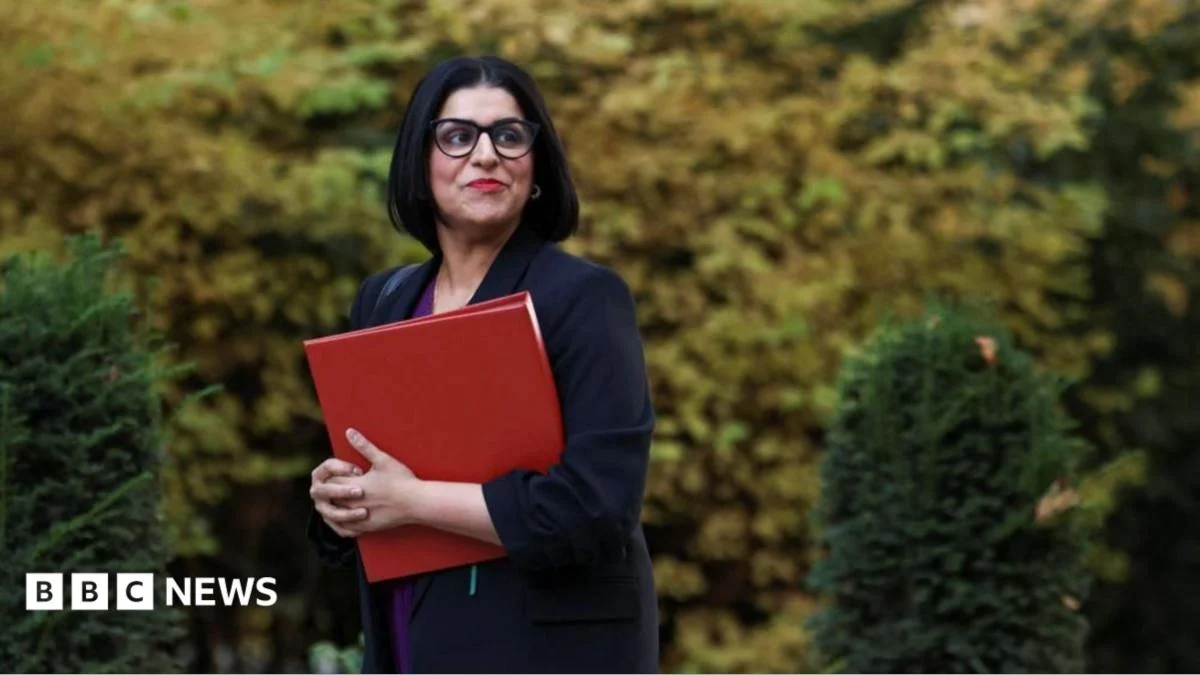
In a significant policy adjustment, the government has revised its controversial proposals concerning the pathway to permanent residency for foreign care workers already contributing to the United Kingdom’s vital social care sector. This recalibration by Home Secretary Shabana Mahmood notably retracts earlier plans that would have compelled these essential workers to endure an extended waiting period of up to 15 years before qualifying for indefinite leave to remain (ILR).
The initial policy framework, unveiled by Ms. Mahmood, had aimed to extend the standard qualifying period for ILR from five years to a decade for the majority of migrants, with specific cohorts facing an even more protracted 15-year wait. This move was presented as a measure to manage burgeoning net migration figures and ensure that settlement was a thoroughly "earned" privilege rather than an automatic entitlement. However, the retrospective application of these proposed changes, impacting individuals already living and working in the UK under previous immigration rules, ignited a considerable internal dissent within the ruling party and fierce criticism from opposition benches.
Responding to this considerable backlash, particularly from several prominent Members of Parliament, the Home Secretary has now refined the policy. Under the updated provisions, foreign care workers earning an annual salary of at least £25,000, and who arrived in the UK prior to May 2025, will now continue to be eligible for permanent settlement after the original five-year residency period. This adjustment seeks to balance the government’s stated aim of controlling immigration numbers with the recognition of the critical role played by these workers, particularly in the aftermath of the global pandemic.
Indefinite Leave to Remain, commonly referred to as settlement, confers upon an individual the fundamental right to reside, pursue employment, and undertake educational opportunities within the UK without temporal restrictions. It also enables eligibility for certain public benefits, should the individual meet the stipulated criteria, and serves as a prerequisite for applying for British citizenship. The significance of ILR extends beyond mere residency; it provides stability, fosters long-term integration, and allows individuals to plan their futures and contribute fully to society.
The genesis of the original, more stringent settlement proposals can be traced back to last November, when Ms. Mahmood articulated her intent to delay the conferral of settlement status. This announcement was a direct response to mounting concerns regarding the escalating number of individuals approaching eligibility for permanent residency. These concerns were exacerbated by unprecedented post-Brexit net migration figures recorded under the preceding administration, a phenomenon colloquially termed the "Boriswave," which saw a substantial increase in the UK’s population attributed to international arrivals. The Home Office’s own data underscored this trend, indicating that net migration added an estimated 2.6 million individuals to the UK population between 2021 and 2024. Projections from the department further suggest that between 2026 and 2030, approximately 1.3 million to 2.2 million people are expected to settle in the UK, with the central estimate now standing at 1.9 million.
When directly questioned regarding whether the policy revision constituted a "U-turn" on her earlier pronouncements, Ms. Mahmood firmly refuted the characterization. She maintained that while the path for care workers had been adjusted, a substantial cohort of approximately 500,000 individuals within the UK would still face extended waiting periods beyond the initial five years for settlement. She reiterated her stance that settlement should be an earned privilege and asserted that the revised framework offered a "fair resolution" for care sector professionals.
The retrospective nature of the initial proposals had drawn particularly sharp condemnation. Housing Secretary Angela Rayner had publicly stated that such an approach would "change the goalposts" for individuals who had made life-altering decisions based on existing immigration frameworks. Concurrently, a chorus of voices from within the party described the retrospective application as "un-British" and issued stark warnings regarding its potential to exacerbate the UK’s already precarious skills shortages, most notably within the critically understaffed care sector. These concerns highlighted the ethical dimensions of altering conditions for individuals already contributing to the national economy and public services.
Addressing the House of Commons, Ms. Mahmood reiterated the government’s philosophical underpinning for immigration policy: that settlement "should not be automatic, it should be earned." She detailed the refined parameters: individuals earning less than £50,000 per annum would generally be placed on a 10-year pathway to settlement status, unless specific exemptions applied. Crucially, she affirmed that the government would uphold a five-year settlement pathway for care workers who had "answered our call when we needed them" during and after the Covid-19 pandemic. Specifically, those earning £25,000 annually and working in the social care sector, fulfilling the conditions of their initial visa, would retain their existing five-year route to permanent residency. For care workers who did not meet these specific visa conditions, the option to apply for a subsequent five-year visa, followed by a subsequent application for settlement, would remain available.
From an economic perspective, Ms. Mahmood posited that the government’s reforms were designed to encourage "net contributors" to enter and remain in the country. She further stated that the Department for Work and Pensions projected these reforms would lead to a reduction in the national benefits expenditure by "billions of pounds." The original iterations of the policy, as announced last year, were estimated to delay permanent residency for an astonishing 799,000 individuals. Under the Monday-announced revisions, this figure is now projected to decrease to 517,000, still representing a substantial number of people whose lives will be significantly impacted by the prolonged uncertainty. The personal toll of these policy shifts was starkly illustrated by the experience of Ashfak Juned, a Bangladeshi chef in Birmingham, who recounted his distress upon learning his wait for settled status would extend until 2033 under the previous proposals.
Certain groups, however, will see their settlement pathways remain unaltered under the updated framework. These include Hong Kong British Nationals Overseas, members of the armed forces, individuals demonstrating a clear British connection, and those on specific legacy routes, such as the Windrush scheme. This differentiation underscores the government’s intent to apply a more targeted approach to immigration categories deemed of particular national interest or historical obligation.
The broader implications of the government’s immigration stance were not lost on various stakeholders. Imran Hussain of the Refugee Council voiced strong criticism regarding proposed plans that would mandate a 30-year waiting period for ILR for individuals who had arrived in the UK irregularly or via small boats and who were not engaged in work or study. He described such provisions as "unfair and unworkable," advocating instead for expeditious and high-quality asylum decisions, enabling recognized refugees to rebuild their lives and contribute, while those without a right to remain could be assisted to depart with dignity.
The political ramifications of the policy reversal were immediate and pronounced. Shadow Home Secretary Chris Philp, representing the opposition, characterized the changes as a "U-turn" forced by dissent within the government ranks and what he termed the "Labour open borders left." He asserted that Ms. Mahmood was "no longer running the government’s immigration policy," suggesting a loss of control over the agenda. Mr. Philp highlighted Home Office calculations from March, which estimated that 196,000 care workers and their adult dependants could settle between 2026 and 2030, incurring a projected lifetime cost of £9.5 billion to taxpayers. He directly attributed this figure to the "cost of today’s U-turn." However, his criticism was swiftly countered by Sir Edward Leigh, the longest-serving male MP in the Commons, who reminded his colleague of the "Boriswave" phenomenon under Conservative stewardship, during which net migration reached unprecedented levels, peaking at nearly one million in 2023. "Some of us don’t have amnesia," Sir Edward pointedly remarked, implicitly deflecting blame for high migration figures.
From the Liberal Democrat perspective, home affairs spokesman Max Wilkinson declared the government’s reforms to be "unravelling." He argued that framing immigration solely through the lens of raw numbers and images of small boat arrivals was "degrading this nation’s ability to have the informed national discussion that we need," calling for a more nuanced and comprehensive debate. Nigel Farage, leader of Reform UK, was equally condemnatory, alleging that Ms. Mahmood had "shown her true colours" and had "U-turned at the first sign of trouble from her left wing Labour colleagues." He further amplified the cost argument, claiming that more than 200,000 immigrants arriving on Health and Care visas would be eligible for British citizenship before the next election, potentially costing taxpayers £50 billion over their lifetimes. Mr. Farage vowed that, if in power, his party would review the citizenship of all those arriving on care visas from today and extend the qualifying period for citizenship to a minimum of 10 years. Green Party MP Siân Berry, meanwhile, characterized Ms. Mahmood’s policies as creating a "new obstacle course of hoops and barriers" for migrants residing in the UK.
Amidst the political rhetoric, analytical institutions offered a different perspective on the economic contribution of migrants. The Institute for Public Policy Research (IPPR) think tank, on Monday, published estimates indicating that skilled workers and their dependants, who are currently set to settle in the UK under existing rules, are collectively expected to make a net lifetime contribution of approximately £115 billion through the taxes they pay. This figure stands in stark contrast to the Home Office’s focus on potential benefits costs, underscoring a fundamental divergence in how the economic impact of immigration is quantified and presented.
The policy reversal on care worker settlement highlights the intricate challenges inherent in contemporary immigration governance. It reflects the tension between political imperatives to control overall migration numbers, the ethical considerations of retrospective policy application, and the pragmatic necessity of sustaining critical public services like social care, which heavily rely on foreign labour. The episode also underscores the dynamic and often contentious nature of immigration debates within the UK, where economic analyses, humanitarian concerns, and national sovereignty narratives continually intersect. As the government navigates these complex currents, the stability and long-term planning for both migrants and vital sectors remain subject to ongoing scrutiny and potential further adjustments. The Home Secretary’s decision, while addressing an immediate political and ethical pressure point, is unlikely to be the final word on the future trajectory of UK immigration policy.




 Aura Kasih

 Ayu Aulia