Aura Kasih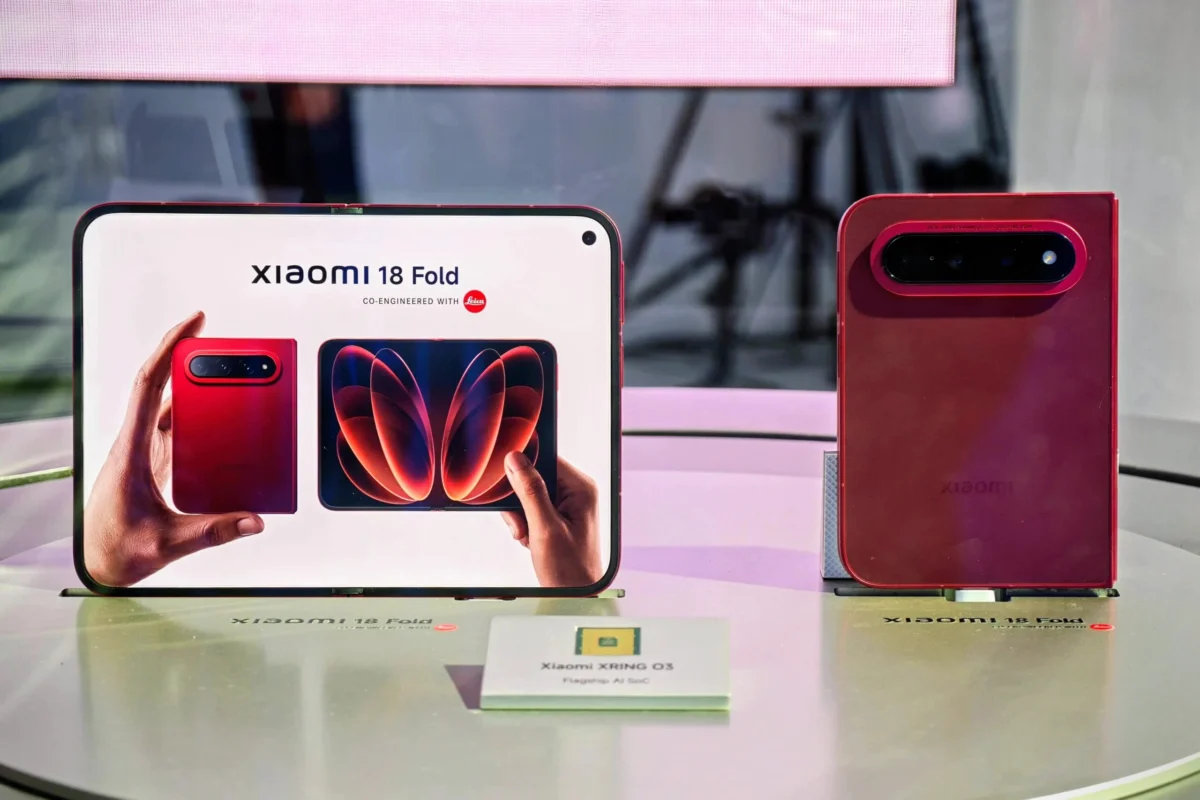
A groundbreaking British technology, initially making its debut in China, is set to redefine the landscape of mobile gaming, promising PC-caliber graphics and performance on handheld devices. The recently launched Xiaomi 18 Fold, equipped with the innovative Arm Mali G2-Ultra NX graphics processor integrated into its bespoke Xring O3 chip, marks a significant milestone after five years of dedicated development by Arm. This new GPU boasts an embedded AI gaming graphics accelerator, a feature that could fundamentally alter how mobile games are conceived and experienced.
This technological leap mirrors the strategic advancements pioneered by Nvidia, bringing sophisticated graphics capabilities traditionally found on personal computers to the ubiquitous smartphone. The implications are far-reaching: mobile games may soon exhibit enhanced performance, render at higher resolutions, and feature more advanced lighting techniques, all while maintaining or even improving power efficiency. The persistent issue of "jagged edges" or aliasing, often seen in mobile adaptations of visually demanding games, could become a relic of the past. Crucially, these advancements are not slated to remain exclusive to the Chinese market; the chips, devices, and ultimately the games leveraging this technology are already on a global trajectory.
Chris Bergey, EVP of Edge AI at Arm, articulated the expansive vision for this technology in a recent interview, stating, "You will be able to buy it; you will be able to get it in phones next year, you will be able to get it in other types of larger screen devices, whether that be tablets or Chromebooks." While specific device partnerships remain under wraps, Bergey hinted at potential integration into future Googlebooks, suggesting a broad ecosystem adoption. He further emphasized the anticipated impact, proclaiming, "We think it’s going to be huge."

Beyond Raw Power: The AI-Driven Graphics Revolution
The Arm Mali G2-Ultra NX presents a dual-faceted evolution. On one hand, it offers a substantial generational leap in raw graphical processing power, reportedly delivering an 85% performance increase over its predecessor in Xiaomi devices and a 14% uplift over Arm’s prior flagship for conventional gaming tasks. However, the true paradigm shift lies in its AI-native capabilities, which unlock a suite of hardware-accelerated graphical techniques strikingly similar to Nvidia’s Deep Learning Super Sampling (DLSS). These include AI-driven upscaling, which intelligently reconstructs higher-resolution images from lower-resolution inputs, and frame generation, where artificial intelligence interpolates new frames between existing ones to create a smoother visual flow. The technology even extends to ray reconstruction, a sophisticated technique for enhancing the realism of lighting and reflections, akin to advancements seen in Nvidia’s DLSS 4.5.
Arm collectively refers to these capabilities as "neural graphics." While the term might evoke associations with facial enhancement or advanced light manipulation as seen in some PC applications, the immediate focus for mobile is on augmenting performance and visual fidelity through intelligent rendering. Bergey clarified, "This really is about bringing Tensor-like capabilities into the GPU shader."
The primary benefit of these neural graphics techniques is a significant boost in rendering speed. Arm claims that when "Neural Super Sampling," "Neural Frame Rate Upscaling," and "Neural Denoising" are employed concurrently, the potential for framerate improvement can be as high as fourfold. This dramatic increase stems from the AI offloading a portion of the rendering workload. By intelligently inferring and generating pixels and frames, the GPU is required to compute fewer individual graphical elements.

It is important to note that a fourfold increase in framerate does not necessarily translate to a fourfold perceived speed improvement in gameplay. A significant portion of this gain is attributed to frame generation, a technology that, across platforms like PC, often introduces a degree of latency as a trade-off for increased fluidity.
The phased rollout of these advanced features is anticipated. Bergey indicated that initial game integrations will primarily focus on super-sampling, with frame generation expected to become available in early 2027, followed shortly thereafter by denoising capabilities. When combined, these techniques promise to enable mobile devices to render complex experiences, as demonstrated by the "Neural Dawn" technology demo, with unprecedented efficiency. Bergey projects that this could translate to sustained 1080p, 60 frames per second gameplay for up to three hours on a single charge, a significant improvement from the approximately 30 minutes achievable with previous generations of mobile hardware for comparable workloads.
The Xiaomi Pad 9 Pro Max tablet, leveraging the same Xring O3 chip but benefiting from a larger battery, display, and thermal dissipation surface area, showcases even more impressive performance metrics. Xiaomi has demonstrated the tablet rendering games at a remarkable 3.2K resolution at 120 frames per second.
Power efficiency remains a critical design consideration. Bergey confirmed that entire phones incorporating these new chips will consume no more than 2.5 watts, with the GPU itself allocated a mere 1.5 watts. This level of power draw is crucial for enabling sustained, high-fidelity gaming sessions without overheating or rapid battery depletion. The modularity of the technology allows manufacturers to opt for lower power configurations to extend battery life for everyday use, underscoring its versatility. Bergey stressed that this is not an overclocking solution for niche gaming devices but a mainstream integration. "This is about AI replacing traditional rendering; anywhere you can use it, you will use it," he asserted, highlighting the broad applicability of neural graphics beyond gaming.

The reach of this technology extends beyond the flagship segment. Arm has indicated that while the Mali G2-Ultra NX is targeted at premium smartphones, the underlying neural graphics capabilities will be accessible across "Premium and Pro configurations," thereby democratizing advanced graphical features for a wider array of mobile devices.
A Wider Ecosystem Embrace: The Shifting Tides of Mobile Graphics
Arm’s initiative to bring PC-centric graphical enhancements to mobile is not an isolated endeavor. The gaming industry is witnessing a broader trend towards leveraging advanced rendering techniques on mobile platforms. For instance, the developers behind the visually striking "Stellar Blade" recently announced their intention to achieve 60fps performance on the upcoming Nintendo Switch 2, utilizing a combination of Nvidia’s DLSS and AMD’s frame generation technologies. The Switch 2, notably, also features an Arm-based processor, albeit paired with a custom Nvidia GPU, underscoring the cross-platform appeal and potential of these AI-driven graphics solutions.
The successful implementation of Arm’s neural graphics technology, much like its PC counterparts from Nvidia, AMD, and Intel, will necessitate integration by game developers into their titles. However, the widespread availability of tools within prominent game engines such as Unreal Engine and Unity is expected to streamline this process. Bergey acknowledged that this is not a universal toggle that gamers can activate on any existing game; rather, it requires deliberate adoption by game creators.

Several titles have already been confirmed to harness the power of Arm’s new graphics accelerator. "Where Winds Meet," "Infinity Nikki," and "Arena Breakout: Infinite" are among the initial games slated to benefit from these advancements. Bergey indicated that further game announcements are forthcoming in the coming weeks, though specific details remain under embargo. This burgeoning ecosystem of supported games will be instrumental in showcasing the tangible benefits of neural graphics to a global audience, solidifying Arm’s position at the forefront of mobile visual innovation.




 Safa Marwah
 Ayu Aulia