 Aura Kasih
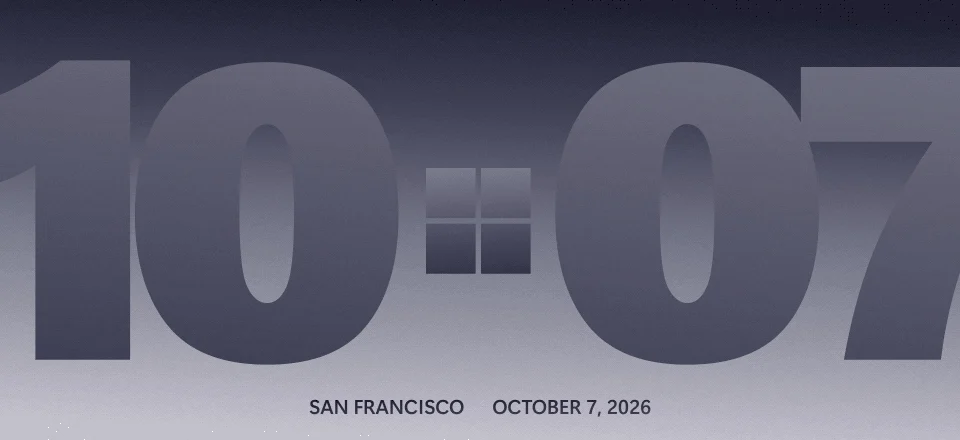
Redmond, WA – Microsoft is poised to unveil its strategic vision for the future of personal computing at a pivotal event scheduled for October 7th, signaling a significant shift towards the deep integration of artificial intelligence within its Windows operating system and Surface hardware ecosystem. This highly anticipated gathering, set to take place in San Francisco, marks a crucial moment for the tech giant as it charts the course for the next generation of PCs, with a particular emphasis on the transformative power of "local AI."
The company’s decision to host this event, its first major Windows-focused announcement in over two years, underscores the accelerating pace of technological evolution and Microsoft’s commitment to staying at the forefront. The agenda explicitly highlights a "conversation on how local AI will shape the next chapter of the PC," a phrase that suggests a profound reimagining of user interaction, productivity, and device capabilities. This focus on on-device AI processing, rather than solely relying on cloud-based solutions, indicates a strategic move towards enhanced privacy, reduced latency, and more responsive computing experiences.
The presence of key leadership, including Microsoft CEO Satya Nadella and Pavan Davuluri, the head of Windows and Surface, signifies the strategic importance of this announcement. Their participation, alongside that of Nvidia CEO Jensen Huang, strongly suggests that the event will heavily feature advancements in AI-accelerated hardware, potentially centering on the much-discussed "RTX Spark PCs." This collaboration with Nvidia, a leader in AI chip technology, points towards a deliberate effort to equip future PCs with specialized processing power tailored for complex AI workloads. The implications for Microsoft’s own hardware line are considerable, with speculation mounting that this event could serve as the platform for revealing pricing and availability details for the rumored Surface Laptop Ultra, a device anticipated to embody these new AI-centric capabilities.
Microsoft’s last significant Windows hardware reveal, a major event in May of the preceding year, introduced a new wave of Copilot Plus PCs powered by Arm architecture and solidified its renewed partnership with Qualcomm. This earlier announcement already laid the groundwork for more efficient and intelligent computing. However, the upcoming October event appears poised to elevate this initiative, moving beyond specialized chip architectures to a more pervasive AI integration across the entire Windows experience. The previous major Windows announcement, the unveiling of Windows 11 in June 2021, focused on a significant visual and functional overhaul of the operating system. In contrast, the October 7th event is expected to delve deeper into the underlying intelligence that will power future software and hardware interactions, rather than a wholesale operating system redesign.

The emphasis on "local AI" is a critical distinction. While cloud-based AI services have become commonplace, processing AI tasks directly on a user’s device offers several distinct advantages. Firstly, it enhances user privacy by keeping sensitive data within the confines of the device, mitigating the risks associated with transmitting personal information to external servers. Secondly, local AI processing can significantly reduce latency, enabling real-time responses and more fluid interactions, which is particularly crucial for applications demanding immediate feedback, such as advanced creative tools or immersive gaming. Furthermore, it reduces reliance on constant internet connectivity, making AI-powered features accessible even in offline environments. This strategic pivot aligns with a broader trend in the technology industry towards edge computing, where data processing occurs closer to the source of generation.
The inclusion of Nvidia’s CEO is particularly telling. Nvidia’s dominance in the field of Artificial Intelligence, particularly through its Graphics Processing Units (GPUs), has been instrumental in the advancement of AI research and development. The integration of their cutting-edge AI hardware into personal computers could unlock unprecedented levels of performance for AI-driven tasks. This could translate to faster and more sophisticated image and video editing, advanced natural language processing for more intelligent virtual assistants, accelerated machine learning for personalized user experiences, and enhanced capabilities for creative professionals and developers. The potential for AI to democratize complex computational tasks, making them accessible to a wider audience, is immense.
The "RTX Spark PCs" concept, if indeed a focus, suggests a new tier of personal computing devices specifically designed and optimized for AI workloads. These machines would likely feature specialized AI accelerators, potentially integrated within the CPU or GPU, that are far more efficient at handling AI algorithms than traditional processors. This could lead to a significant leap in performance for AI-dependent applications, potentially redefining what is considered a "powerful" PC. The implications for software development are also profound. Developers will have a new, robust platform upon which to build innovative AI-powered applications, pushing the boundaries of what is currently possible.
For Microsoft, this event represents a strategic opportunity to solidify its position as a leader in the AI revolution. By integrating AI deeply into Windows and its Surface hardware, the company aims to create a seamless and intelligent computing experience that anticipates user needs and enhances productivity. The success of this strategy will hinge on several factors, including the performance and accessibility of the new AI hardware, the intuitiveness of the AI-powered software features, and the ability of Microsoft to clearly articulate the tangible benefits to consumers and businesses alike.
The timing of this announcement is also significant. As the world increasingly relies on digital technologies for work, education, and personal life, the demand for more intelligent and efficient computing solutions is at an all-time high. Microsoft’s proactive approach to integrating local AI into the PC landscape positions it to capitalize on this demand and shape the future trajectory of the industry. The event promises to be a crucial indicator of Microsoft’s long-term strategy and its commitment to delivering PCs that are not just tools, but intelligent partners in our digital lives. The anticipation surrounding this October 7th event is palpable, as the technology sector eagerly awaits Microsoft’s pronouncements on the next evolutionary step of the personal computer.

 Safa Marwah

 Ayu Aulia