
 Ayu Aulia
The relentless pursuit of robust quantum computing has been significantly bolstered by a breakthrough from researchers at the Harvard John A. Paulson School of Engineering and Applied Sciences (SEAS), who have pioneered a novel methodology for shielding fragile quantum information utilizing precisely controlled mechanical vibrations, often conceptualized as microscopic sound waves. This innovation directly addresses one of the most formidable challenges in quantum information science: preserving the delicate quantum state of qubits from environmental interference, a phenomenon known as decoherence. By harnessing these minute acoustic phenomena, the Harvard team has unveiled a pathway towards more stable, integrated, and potentially scalable quantum architectures, opening new vistas for the development of compact quantum networks and versatile hybrid quantum systems.
The foundational premise of quantum computing rests upon the manipulation of quantum bits, or qubits, which, unlike classical bits, can exist in superpositions of states and become quantum mechanically entangled. This inherent quantum nature grants them the potential to perform calculations intractable for even the most powerful conventional supercomputers. However, the very properties that imbue qubits with their extraordinary computational power also render them exceptionally susceptible to external disturbances. Even the slightest interaction with their surroundings—be it stray electromagnetic fields, thermal fluctuations, or material imperfections—can cause a qubit to lose its quantum coherence, collapsing its superposition into a definite classical state. This "decoherence" is the principal adversary in the race to build fault-tolerant quantum computers, effectively erasing the computational advantage before meaningful operations can be completed.
For decades, the scientific community has grappled with strategies to mitigate decoherence. Conventional techniques often involve isolating qubits in cryogenic environments, employing sophisticated error-correction codes, or utilizing pulsed electromagnetic fields (such as microwaves) to decouple the qubit from its noisy environment for brief periods. While these methods have yielded considerable progress, they often introduce their own complexities, demanding intricate experimental setups, imposing significant overheads, or proving incompatible with the stringent requirements for miniaturization and integration necessary for practical quantum systems. The vision for future quantum technologies includes dense arrays of qubits integrated onto chips, communicating efficiently to form quantum networks, and hybrid systems leveraging the strengths of different qubit modalities. Current decoherence protection schemes frequently present bottlenecks for these aspirations, particularly when seeking to combine robust qubit protection with efficient inter-qubit communication.
A promising, albeit less explored, avenue for quantum information transfer and manipulation involves the use of phonons. These are quantized units of mechanical vibration, analogous to photons for light. While photons have been the traditional choice for transmitting quantum information over distances, especially in optical fiber networks, phonons offer a compelling set of advantages for on-chip applications. At comparable frequencies, phonons possess significantly shorter wavelengths than photons, a property that allows for the fabrication of much smaller and more densely packed components within integrated circuits. This geometric advantage is critical for scaling quantum processors and building compact quantum networks where information needs to be routed efficiently between many nodes on a single chip. Furthermore, phonons exhibit strong interactions with various solid-state quantum systems, including electron spins and nuclear spins, as well as with electromagnetic fields. This versatility makes them particularly attractive for constructing hybrid quantum systems, where different types of qubits—each with unique strengths and weaknesses—can be combined and interconnected to form more powerful and robust computing platforms. For instance, a phonon could act as a mediator, coherently linking a spin qubit optimized for memory with a superconducting qubit optimized for fast processing.
The Lončar lab at Harvard SEAS has been at the forefront of exploring the potential of these phononic systems. Their prior work has included the development of "phononic cavities," specialized microstructures designed to trap and enhance mechanical vibrations, thereby intensifying the interaction between these phonons and the quantum information stored in a qubit’s electron spin. This strong interaction is crucial for efficient information transfer and manipulation. However, integrating qubits into such phononic cavities traditionally presented a Catch-22: while the cavities facilitated strong phonon-qubit coupling, they often made the qubit more susceptible to environmental noise, thus hindering its coherence time. Conventional microwave-based decoupling techniques, which typically rely on driving the qubit into and out of specific states, proved largely ineffective within the continuously vibrating environment of a phononic cavity. This fundamental incompatibility represented a significant barrier to realizing the full potential of phonon-mediated quantum systems.
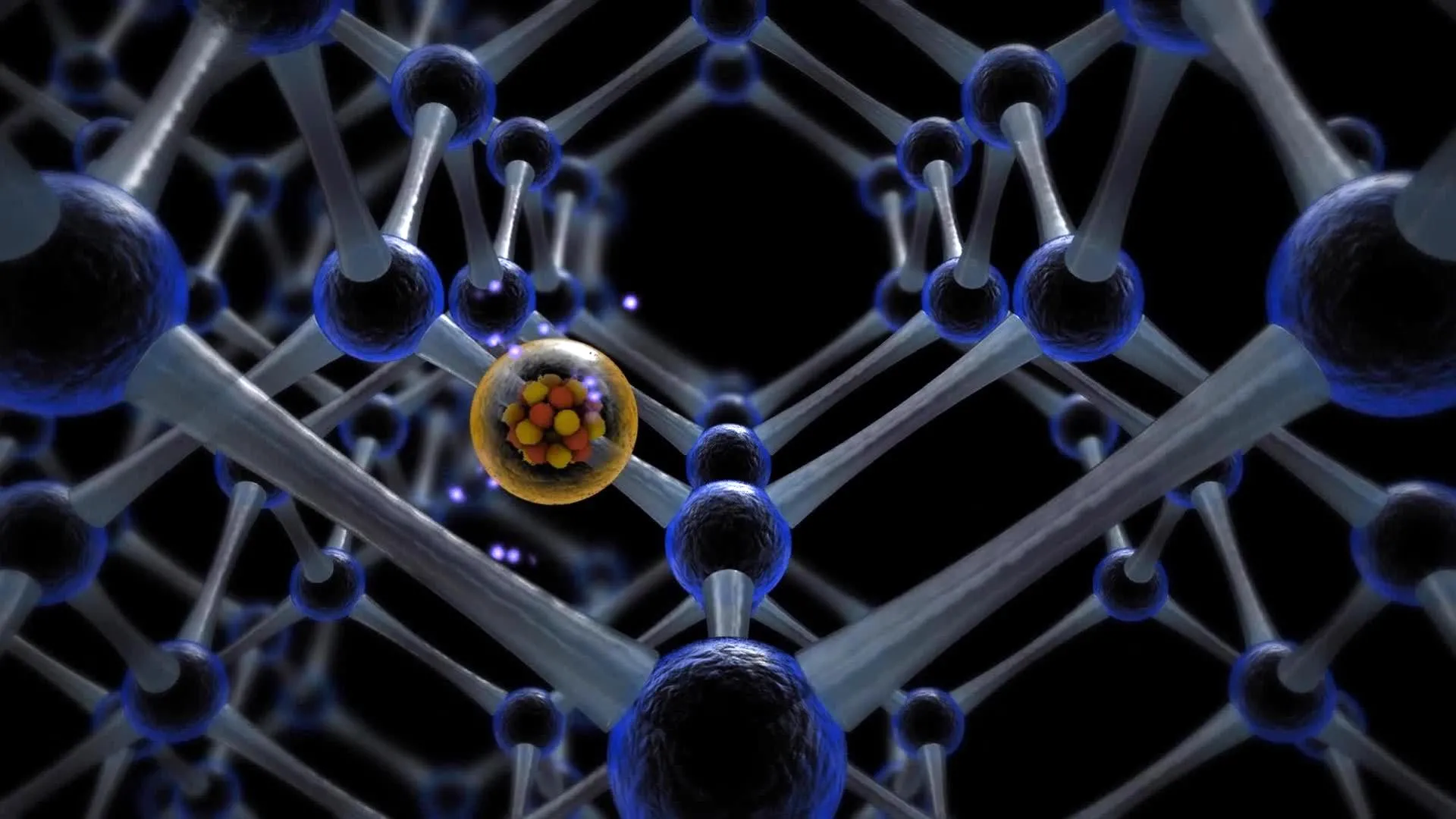
The recent breakthrough by the SEAS team directly confronts and resolves this critical challenge through an ingenious approach they term "all-mechanical coherence protection." Instead of relying on external microwave pulses, the researchers devised a method to continuously apply a mechanical driving field—a constant stream of phonons—to a specific type of qubit: a silicon-vacancy (SiV) spin embedded in a diamond lattice. This continuous mechanical "dressing" fundamentally alters the qubit’s quantum state, transforming it into what is known as a "dressed qubit." In this "dressed" state, the qubit effectively wears a continuous acoustic cloak, making it inherently less sensitive to the low-frequency noise that typically pervades its surroundings and causes decoherence.
The elegance of this solution lies in its intrinsic compatibility with the very structures designed for phonon interaction. Because the protection mechanism itself is entirely mechanical and continuous, it can operate seamlessly within the phononic cavities that are essential for strong phonon-qubit coupling and efficient information transfer. This provides phonons with a powerful dual functionality: they can not only serve as the conduits for transporting quantum information between different nodes of a quantum network but also simultaneously act as the protective shield, safeguarding that information from environmental degradation. As Eliza Cornell, a key researcher in the project, articulated, the innovation solves two concurrent problems: achieving strong interaction with phonons and maintaining long coherence times, both essential for practical quantum applications.
The experimental validation of this "all-mechanical coherence protection" yielded tangible and encouraging results. By implementing this novel technique, the research team successfully extended the coherence time of the silicon-vacancy spin qubit by approximately a factor of three. While a threefold increase might appear modest in isolation, its significance lies in demonstrating a viable and compatible method for preserving quantum coherence within a phononic architecture—a feat previously considered highly problematic. This quantitative improvement provides compelling evidence that continuous-wave mechanical noise suppression is an effective strategy for enhancing quantum memory in real-world devices, thereby cementing the role of microscopic sound waves as a potentially indispensable tool for engineering more reliable, compact, and efficient quantum systems. The robust performance of the silicon-vacancy center in diamond, known for its optical addressability and spin coherence, further solidifies its position as a promising candidate for solid-state quantum computing, especially when coupled with this new mechanical protection scheme.
The implications of this research for the future landscape of quantum computing architectures are profound and far-reaching. Firstly, for compact quantum networks, the ability to use phonons for both information transfer and protection, combined with their short wavelengths, promises unprecedented levels of integration and miniaturization. Future quantum processors could feature densely packed arrays of qubits communicating via integrated phononic waveguides, eliminating the need for bulky external interconnects and facilitating rapid, low-loss information exchange across the chip. This represents a significant step towards realizing scalable, on-chip quantum internet nodes.
Secondly, the enhanced versatility of phonons makes this breakthrough particularly impactful for hybrid quantum systems. The ability of phonons to interact strongly with diverse solid-state spins and electromagnetic fields, now combined with an all-mechanical protection mechanism, simplifies the challenge of interfacing disparate qubit technologies. Imagine a system where robust memory qubits (like spin qubits in diamond) are linked via phonons to fast-processing qubits (like superconducting circuits). This phononic interface, now capable of self-protection, could enable the creation of powerful heterogeneous quantum computers that leverage the optimal characteristics of each qubit type, overcoming the limitations inherent in single-platform approaches. This modularity could accelerate the development of specialized quantum hardware for different computational tasks.
Looking ahead, while this research marks a pivotal advance, several challenges and opportunities remain. Scaling this technology to a large number of interacting qubits will require further engineering prowess, including optimizing phononic waveguide design, minimizing fabrication imperfections, and developing precise control mechanisms for individual dressed qubits. Exploring whether this "dressing" technique can be applied to other types of solid-state qubits and integrated with other quantum error correction strategies will also be crucial. Furthermore, the energetic cost of continuously driving the mechanical field needs careful consideration for long-term power efficiency in large-scale systems. However, the fundamental demonstration that mechanical fields can effectively shield quantum information while simultaneously facilitating its transport opens up entirely new avenues for quantum device engineering. The ongoing efforts by the Harvard Office of Technology Development to pursue patent protection and commercialization underscore the tangible potential of these innovations to transition from fundamental research to practical quantum technologies.
In conclusion, the development of all-mechanical coherence protection at Harvard SEAS represents a significant conceptual and experimental leap in the quest for practical quantum computing. By transforming tiny mechanical vibrations into a dual-purpose tool—both an efficient carrier of quantum information and a robust guardian against environmental noise—researchers have unlocked a powerful new paradigm for designing stable, compact, and versatile quantum systems. This breakthrough not only extends the operational lifetime of delicate qubits but also paves the way for the integrated, hybrid quantum architectures that are essential for realizing the full transformative potential of quantum computation and communication. The symphony of microscopic sound waves may very well be the key to harmonizing the intricate demands of quantum mechanics with the engineering realities of advanced computing.




 Aura Kasih
 Safa Marwah

 Lisa Mariana