Ayu Aulia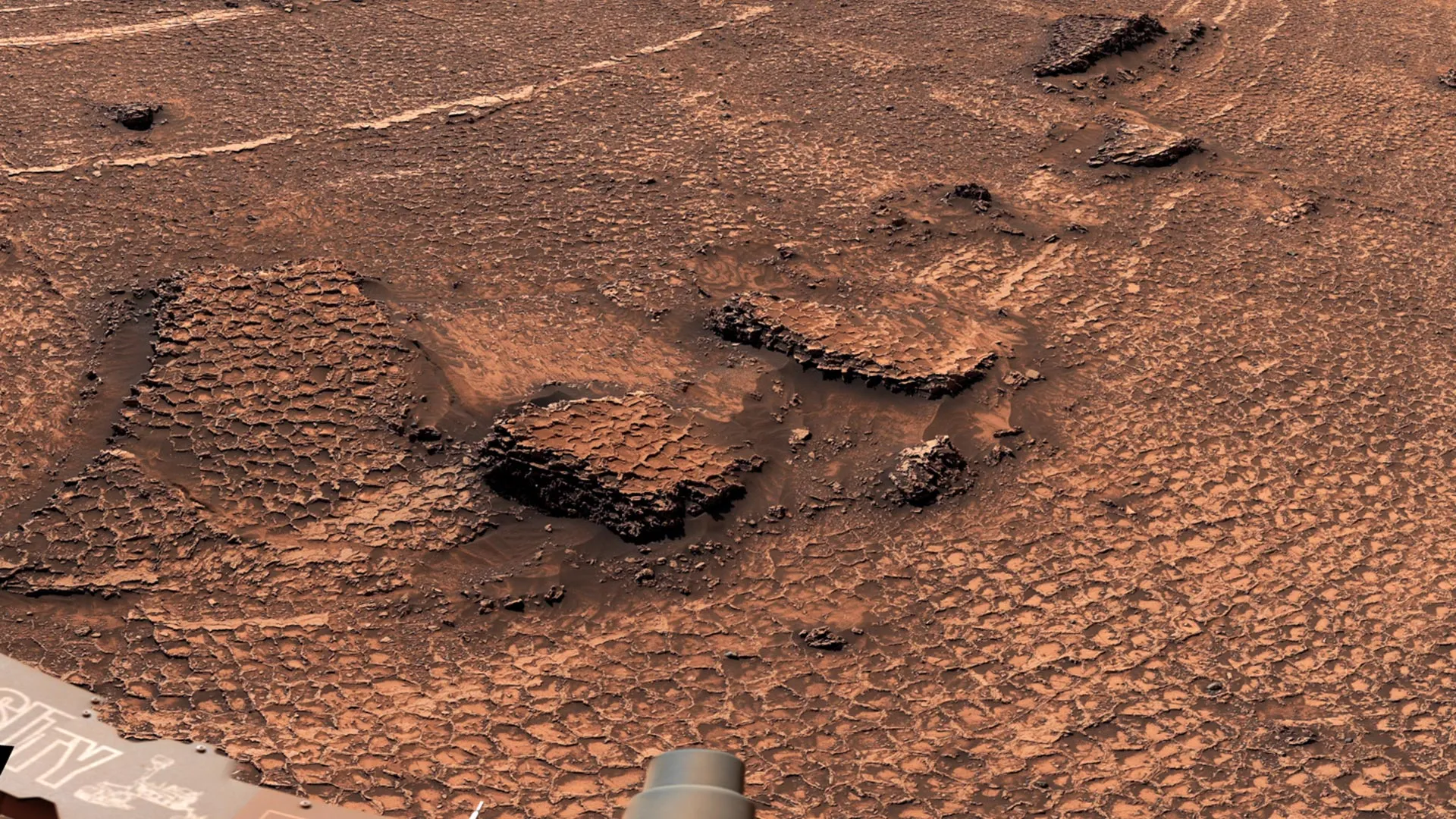
NASA’s venerable Curiosity rover has recently unveiled an unprecedented geological spectacle on the Martian surface, encountering a vast expanse of intricate, honeycomb-like polygonal patterns while traversing a region within Gale Crater known as "Valle Grande," offering critical new insights into the planet’s dynamic geological history. The robot’s latest imagery reveals the ground meticulously patterned with these striking geometric features, each typically spanning approximately 4 to 8 centimeters (1.5 to 3 inches) across, signifying a scale and density of such formations previously unobserved during the rover’s extensive exploration. This discovery marks a significant moment in the mission, presenting scientists with a fresh enigma regarding the processes that have shaped the Red Planet’s ancient landscapes.
While the Curiosity mission has, on occasion, documented isolated clusters of similar polygonal geometries, the sheer magnitude and continuous nature of the field now visible within Valle Grande represent a departure from previous findings. This expansive network of interconnected polygons stretches across the Martian terrain, extending beyond the visual horizon of the rover’s cameras, indicating a pervasive geological phenomenon rather than a localized anomaly. The full scope of these formations was meticulously captured in a comprehensive 360-degree panoramic mosaic compiled from images taken on June 19 and 20, corresponding to the 4,930th and 4,931st Martian days, or sols, of the mission.
Adding another layer of intrigue, these distinctive patterns are not confined solely to the valley floor but also ascend the slopes of a prominent nearby topographical feature, a butte informally designated "Miraflores." This elevated formation, rising approximately 6 meters (20 feet) above the surrounding landscape, is characterized by a thick cap of sandy deposits, suggesting a complex interplay of geological forces including deposition, erosion, and the subsequent formation of these polygonal structures. The visual impact of this widespread patterning has captivated the scientific team. Ashwin Vasavada, the project scientist for the Curiosity mission at NASA’s Jet Propulsion Laboratory in Southern California, articulated the team’s profound reaction, stating, "We’ve seen a lot of fascinating landscapes through Curiosity’s eyes, but this sea of polygons took our breath away. We measured their shapes and chemistry carefully and are hopeful there are clues in the data as to how these features formed." This sentiment underscores the scientific excitement and the meticulous analytical approach being applied to this novel discovery.
Deciphering the Geomorphological Enigma
The precise mechanisms responsible for the genesis of these Martian honeycomb patterns remain a subject of intensive scientific investigation. Terrestrial analogues suggest a variety of processes can sculpt such geometric forms, each carrying distinct implications for the environmental conditions prevalent at the time of their formation. Prior observations by Curiosity have confirmed that some smaller-scale polygonal fractures originated from the desiccation of ancient mud, a process familiar on Earth where drying clay-rich sediments contract and crack into characteristic patterns. However, the expansive nature and specific morphology of the Valle Grande polygons suggest the potential involvement of more complex or alternative geological processes.
One prominent hypothesis centers on repeated cycles of thermal expansion and contraction. On Mars, extreme diurnal temperature swings, particularly in regions with permafrost or subsurface ice, can induce significant stresses within the regolith. As surface materials warm, they expand, and as they cool, they contract. Over eons, this continuous stress can fracture the ground into geometrically regular patterns, often hexagonal, as this shape represents an efficient way to relieve tension in a uniformly stressed plane. Such processes are observed in periglacial environments on Earth, where freeze-thaw cycles drive the formation of patterned ground. Given Mars’ historical and current conditions, characterized by subsurface ice and significant temperature variations, this mechanism presents a plausible explanation.
Another compelling theory involves compressive forces exerted on subsurface sediments. When water-saturated sediments become buried under subsequent layers of material, the increasing overburden pressure can expel interstitial water. This dewatering process, coupled with compaction and diagenesis (the physical and chemical changes occurring during sediment lithification), can lead to the formation of polygonal patterns as the material consolidates and hardens. Furthermore, the precipitation of minerals within these fracture networks could subsequently enhance and preserve these structures. The chemical composition of the materials forming the polygons, currently being analyzed by Curiosity’s onboard instruments, will be crucial in distinguishing between these various hypotheses. Scientists are meticulously studying the newly acquired data, including high-resolution imagery and spectroscopic readings, to ascertain which of these processes, or potentially a synergistic combination thereof, was instrumental in shaping the remarkable landscape observed in Valle Grande.
Curiosity’s Enduring Legacy: Over a Decade of Discovery
The discovery of this extensive polygonal field represents the latest in a long succession of unexpected and groundbreaking findings made by the Curiosity rover since its historic landing on Mars on August 5, 2012. For over a decade, this mobile scientific laboratory has been systematically exploring Gale Crater and the lower slopes of Mount Sharp, transforming humanity’s understanding of Mars’ ancient habitability. The mission’s primary objective was to assess whether Mars ever possessed environmental conditions capable of supporting microbial life, and in this regard, Curiosity has delivered unequivocally positive results.
Throughout its protracted journey across the Martian surface, the rover has encountered a diverse array of geological phenomena that have consistently challenged and expanded scientific paradigms. These include the identification of unique sulfur crystals, the discovery of reflective meteorites, and numerous other unusual geological features indicative of complex past processes. Crucially, Curiosity has provided compelling evidence that ancient Mars was not the arid wasteland it largely appears to be today but rather a planet that once harbored abundant liquid water, essential chemical building blocks, and energy sources that could have sustained microbial ecosystems.
Ancient Water, Organic Chemistry, and the Search for Life
Billions of years ago, the landscape within Gale Crater, particularly the lower foothills of Mount Sharp—a towering 5-kilometer-tall (3-mile-tall) central peak that Curiosity has been ascending since 2014—was characterized by the presence of numerous lakes and fluvial systems. The rover has meticulously uncovered incontrovertible geological and chemical traces left behind by this ancient wetter period. Among its most significant findings are the detection of carbon-based organic molecules embedded within sedimentary rocks. These molecules, considered fundamental precursors to complex biological compounds like RNA and DNA, which are indispensable for carrying genetic information in terrestrial life, represent direct evidence of the chemical ingredients necessary for life’s emergence.
The scientific community acknowledges that while the presence of these organic molecules is profoundly significant, their origin remains an open question. It is currently impossible to definitively determine whether these carbon compounds were produced through biological processes (i.e., remnants of ancient Martian life) or through abiotic geological processes (i.e., non-biological chemical reactions). Both explanations remain scientifically viable. Nevertheless, this discovery powerfully reaffirms that ancient Mars possessed a robust suite of chemical ingredients and environmental conditions conducive to the genesis and sustenance of life, marking a monumental step forward in astrobiological research.
Implications for Martian Paleoclimate and Future Exploration
The comprehensive analysis of the newly discovered polygonal patterns holds significant implications for refining our understanding of Mars’ paleoclimate and geological evolution. Depending on their formation mechanism, these features can serve as invaluable proxies for past environmental conditions. If formed by desiccation, they indicate periods of wet-dry cycles, potentially pointing to fluctuating lake levels or seasonal precipitation. If thermal contraction is the dominant mechanism, it suggests sustained periods of significant temperature variations and potentially the presence of subsurface ice. The chemical analysis of the materials forming these polygons, including any mineral infills, can further constrain the types of fluids present and the geochemical environment at the time of their formation.
Such insights are not merely academic; they directly inform future astrobiological investigations and mission planning. Understanding the past distribution and behavior of water, the stability of subsurface ice, and the potential for preserving biosignatures in different geological contexts is paramount for designing subsequent missions, such as the Mars Sample Return campaign. Identifying areas where ancient water-rock interactions were prevalent and where specific geological processes might have protected delicate organic molecules from radiation and degradation becomes critical for selecting optimal sample collection sites. The ongoing data acquisition from Curiosity, managed by Caltech’s Jet Propulsion Laboratory, which built the rover and leads the mission for NASA’s Science Mission Directorate, continues to provide foundational knowledge for the broader Mars Exploration Program.
The Path Forward in Martian Science
The ongoing exploration by the Curiosity rover continues to underscore the dynamic and complex nature of Mars’ geological and climatic history. The discovery of the extensive honeycomb landscape in Valle Grande is a testament to the planet’s capacity for surprise and the enduring value of long-duration robotic missions. As scientists meticulously pore over the high-resolution imagery, spectroscopic data, and chemical analyses from Curiosity’s advanced suite of instruments, they move closer to unraveling the precise formation mechanisms of these enigmatic polygons. Each new discovery, each piece of data, contributes to a more nuanced and complete picture of Mars, guiding the scientific community in its ultimate quest to understand whether life ever emerged beyond Earth and what conditions might be necessary for it to thrive elsewhere in the cosmos. The Curiosity mission, now in its second decade, remains a cornerstone of humanity’s ambitious endeavor to unlock the secrets of our neighboring planet.




 Aura Kasih
 Safa Marwah