Lisa Mariana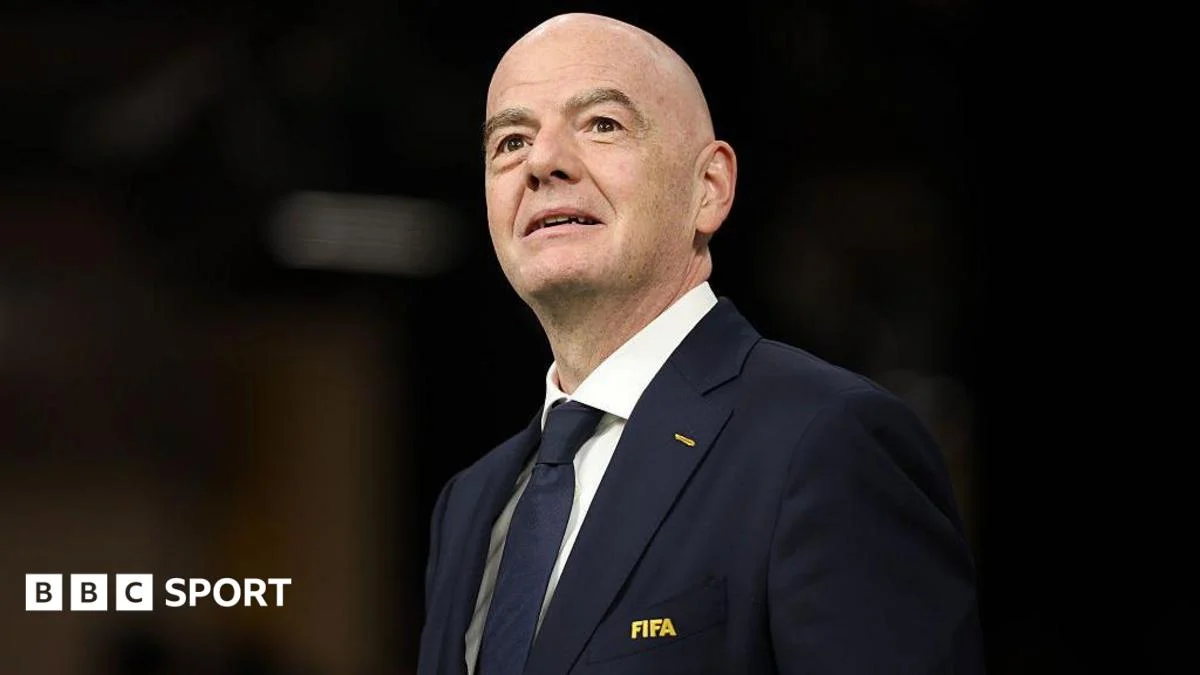
The International Federation of Association Football (FIFA) President, Gianni Infantino, has successfully navigated a significant challenge to his leadership, securing the unequivocal backing of the organization’s executive management board during a critical meeting held in Rabat, Morocco, on Wednesday. This decisive show of support comes on the heels of intense criticism directed at Infantino’s ambitious, albeit ultimately shelved, proposal to divest substantial commercial and event operations to external private investment entities.
The controversy stemmed from a multi-billion dollar proposition that sought to establish a new joint venture, provisionally dubbed "FIFA Forward Enterprise," with a consortium of private investors. This enterprise was envisioned to oversee and commercialize revamped versions of FIFA’s flagship tournaments, most notably an expanded 24-team Club World Cup and a novel global Nations League. Reports at the time indicated an offer in the region of $25 billion over a 12-year period, primarily from a Japanese-led investment group, SoftBank, which aimed to inject substantial capital into FIFA’s financial coffers. Proponents of the scheme argued it would unlock unprecedented revenue streams, allowing FIFA to dramatically increase funding to member associations globally and elevate the stature of its competitions. However, the audacious nature of the deal, its perceived lack of transparency, and the potential for private interests to exert undue influence over football’s governance quickly ignited a firestorm of opposition.
Foremost among the dissenting voices was the Union of European Football Associations (UEFA), European football’s powerful governing body. UEFA, through its leadership, issued a strongly worded statement just days prior to the Rabat meeting, publicly declaring a profound loss of confidence in President Infantino. The European body lambasted the proposed commercial venture as a "shabby, back room, opaque deal," expressing serious reservations about the process by which it was conceived and presented. UEFA’s concerns were manifold, centering on the potential for the new global competitions to cannibalize existing club and national team tournaments, disrupt the established international match calendar, and erode the financial autonomy of confederations and national associations. The specter of commercial entities dictating the future direction of the sport, rather than its democratically elected custodians, was a deeply unsettling prospect for many within the European football establishment.
The dissent, however, was not confined to external bodies. Significant internal opposition also emerged from within FIFA itself, a development particularly alarming given the organization’s recent history of governance scandals. Mattias Grofstrom, FIFA’s Secretary General, a key figure within the organization’s administrative structure, articulated his profound disquiet in an internal memo circulated to FIFA staff. He characterized the unfolding situation as "a sad and reproachable series of events," a rare public display of internal discord at such a senior level. Grofstrom’s memo underscored the deep divisions and anxieties that the proposed commercial restructuring had engendered within FIFA’s own ranks, raising questions about internal communication, strategic alignment, and the overall coherence of the organization’s leadership. Such internal criticism from a high-ranking official suggested a crisis of confidence extending beyond external stakeholders.
The backdrop to this escalating tension is FIFA’s complex journey since the corruption scandals that engulfed the organization prior to Infantino’s election in 2016. Infantino ascended to the presidency on a platform of reform, transparency, and good governance, promising to restore credibility and stability to a tarnished institution. His mandate was explicitly to steer FIFA towards a new era, free from the cronyism and financial impropriety that had defined previous administrations. The proposed $25 billion deal, while ostensibly aimed at financial enhancement, was viewed by many critics as a potential regression to opaque decision-making processes and an excessive commercialization that could compromise the integrity of the sport, thus directly contradicting the very principles upon which Infantino was elected. This created an immediate perception of hypocrisy and a betrayal of his reformist agenda, fueling the intensity of the backlash.
The management board meeting in Rabat, therefore, represented a pivotal moment for Infantino’s presidency. Held at FIFA’s Africa office, the location itself carried symbolic weight, underscoring FIFA’s global reach and its efforts to engage with all confederations. The primary objective of the meeting was to address the widespread criticism head-on, reassure skeptical stakeholders, and re-establish a unified front within the organization. While the precise details of the discussions remain confidential, it is evident that a concerted effort was made to mend fences and consolidate support around the incumbent president. The unanimous reaffirmation of "full support" for Infantino by Grofstrom and the entire management board in a subsequent statement indicates that the internal schism, at least superficially, has been resolved, or at minimum, contained. This resolution suggests either a significant concession by Infantino, a powerful display of political maneuvering, or a strategic necessity recognized by the board to present a united front in the face of external scrutiny. The "sad and reproachable series of events" had seemingly been brought to a temporary close, with the leadership circle closing ranks around the president.
The implications of this outcome are far-reaching. For Infantino, surviving this significant challenge undoubtedly strengthens his immediate position, demonstrating his capacity to weather storms and secure internal consensus. It suggests that despite the intense pressure, his allies within the executive framework remained steadfast, preferring stability over further internal upheaval. This consolidation of power could embolden him to pursue other strategic initiatives, albeit likely with a greater emphasis on transparency and stakeholder engagement moving forward. However, the episode also underscores the precarious balance between commercial ambition and the fundamental ethos of football governance. The criticism, particularly from UEFA, will likely not dissipate entirely, and the underlying tensions regarding the international match calendar, the distribution of wealth, and the future of global competitions will persist.
For FIFA as an institution, the controversy serves as a stark reminder of the enduring demand for robust governance, ethical conduct, and genuine transparency. The era of unchecked power and clandestine dealings, which characterized previous FIFA regimes, is increasingly untenable in the modern sporting landscape. Stakeholders, from powerful confederations to grassroots organizations and even fan groups, are more vocal and better organized in demanding accountability. The aborted $25 billion deal, while financially alluring, exposed a continued vulnerability within FIFA’s decision-making processes to accusations of opacity. Moving forward, any major strategic shift, especially one involving such significant commercial interests, will necessitate broader consultation, clearer communication, and a more inclusive approach to gain legitimacy and widespread acceptance. The incident, therefore, may inadvertently serve as a catalyst for genuine reform in how FIFA approaches its commercial future, pushing it towards a more collaborative and open model.
The ongoing power dynamics between FIFA and its confederations, particularly UEFA, remain a central theme in global football governance. The European body, representing a significant portion of the sport’s financial and sporting power, will continue to assert its influence, ensuring that any global initiatives do not undermine its own interests or those of its member associations. This inherent tension, often characterized as a geopolitical struggle within football, is a constant feature of the landscape. The resolution of the immediate crisis in Rabat does not erase these structural tensions but merely postpones their next manifestation.
Looking ahead, Infantino’s administration will likely need to redouble its efforts to rebuild trust and demonstrate its commitment to the reform agenda it initially championed. This may involve a more cautious and consultative approach to commercial ventures, prioritizing consensus-building over swift, high-stakes deals. The focus will inevitably shift to the implementation of existing projects, such as the expansion of the World Cup to 48 teams, and ensuring that future financial strategies are perceived as equitable and transparent. The "more to follow" from the original brief implies that this is an evolving narrative, suggesting that while the immediate leadership crisis has been averted, the broader challenges facing FIFA regarding its commercial direction, governance standards, and relationship with key stakeholders are far from resolved. The path forward for FIFA and its president will demand a delicate balance of ambition, diplomacy, and unwavering commitment to the principles of good governance if the organization is to truly move beyond its checkered past and secure a credible future for global football.



 Aura Kasih
 Safa Marwah
 Ayu Aulia