Lisa Mariana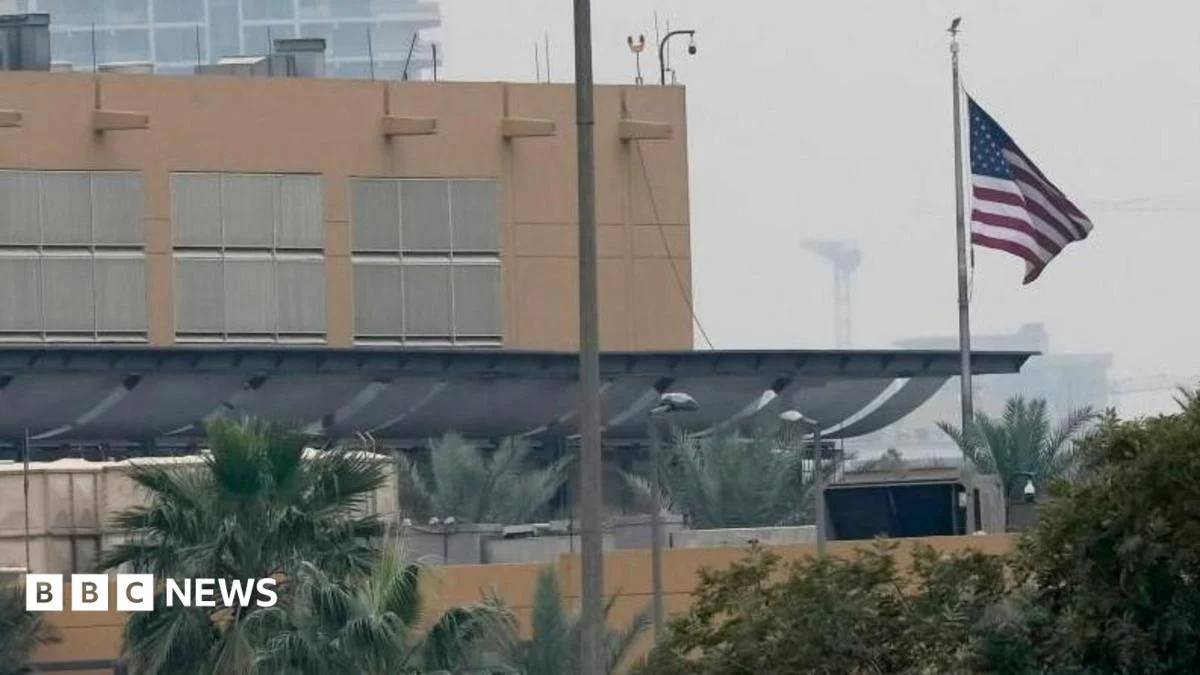
The United States government has issued a comprehensive and urgent travel advisory, urging its nationals throughout the Middle East to heighten vigilance and prepare for potential departure, as geopolitical friction intensifies across the volatile region, with reports suggesting imminent and significant military actions against Iran. This latest directive underscores a profound concern within Washington regarding the rapidly deteriorating security landscape, signaling a potential new phase of confrontation in an already fraught environment. The advisory, disseminated through various diplomatic channels, comes amidst a backdrop of escalating rhetoric and recent military exchanges, prompting a re-evaluation of security postures for American citizens and interests abroad.
The State Department’s recent security alert serves as a stark indicator of the perceived threat level. It explicitly highlights that U.S. diplomatic facilities, even those beyond the immediate Middle Eastern perimeter, have been previously targeted. Furthermore, the advisory articulates a grave concern that Iran and its network of allied groups may extend their reach to target other American interests overseas or locations associated with the United States and its citizens globally. This expansive threat assessment suggests that the potential for conflict is not confined to a single geographical area but could manifest across diverse international locations, demanding a global recalibration of security measures for American entities.
This latest warning follows a period of persistent and often unannounced escalations between Washington and Tehran. The longstanding animosity, exacerbated by the U.S. withdrawal from the Joint Comprehensive Plan of Action (JCPOA) in 2018 and the subsequent imposition of a "maximum pressure" campaign, has consistently fueled a dangerous cycle of provocation and retaliation. The current advisory represents a culmination of these simmering tensions, signaling a shift from reactive measures to proactive preparation for a potentially broader conflict. The strategic importance of the Middle East, a nexus of global energy supplies and critical shipping lanes, magnifies the stakes involved, transforming localized incidents into matters of international concern with far-reaching economic and political ramifications.
From Tehran’s perspective, the United States is the primary instigator of regional instability. Iranian officials have vociferously accused Washington of escalating tensions, delivering stern warnings that any regional state perceived as cooperating with the U.S. in military actions would inevitably be "engulfed by the flames of war." This rhetoric, characteristic of Iran’s deterrence strategy, aims to dissuade neighboring countries from offering logistical or strategic support to potential American military operations. Such pronouncements reflect Iran’s deeply ingrained belief in its regional influence and its willingness to leverage proxy forces and asymmetric warfare capabilities to counter perceived threats to its security and strategic interests. The historical context of foreign intervention in the region further informs Iran’s defensive posture, framing its actions as necessary responses to external pressures.
The specifics of the security alert issued on a recent Saturday were unequivocal: "Americans currently in the Middle East should exercise caution and heightened vigilance and should be prepared for flight cancellations, periodic airspace closures, and potential travel disruptions." More critically, it advised, "Americans in the region should consider departing, or be prepared to depart should there be escalation. Americans outside the Middle East should seriously reconsider travel to and through the region." This comprehensive guidance goes beyond a mere warning, providing actionable advice that suggests the potential for significant disruption to civilian movement and infrastructure. The mention of airspace closures, in particular, points to a scenario where military operations could severely impact civilian air travel, mirroring past regional conflicts.
In a unified display of diplomatic concern, U.S. embassies across a broad swathe of the Middle East — including Bahrain, Iraq, Israel, Jordan, Kuwait, Lebanon, Oman, Qatar, Saudi Arabia, and the United Arab Emirates — concurrently reposted the security alert. This coordinated action, warning specifically of "unexpected escalation," underscores the widespread nature of the threat perception and the unified front presented by American diplomatic missions in the region. These countries represent a diverse geopolitical landscape, ranging from staunch U.S. allies hosting significant American military presences to states with more complex relationships, yet all are considered potential flashpoints in an expanded conflict. The inclusion of Israel in this list, a country often perceived as a direct target of Iranian proxies, further highlights the integrated nature of the security concerns.
Adding to the gravity of the situation are recent reports from U.S. media outlets, citing unnamed American officials, suggesting that President Donald Trump might be poised to order fresh, intense strikes against Iran as early as the upcoming weekend. These reports indicate that the U.S. and Israel are reportedly planning what could constitute one of the most severe bombing campaigns to date, specifically targeting critical energy infrastructure within Iran. Multiple sources, including CBS News, a media partner of the BBC in America, revealed that this aggressive plan was discussed during a cabinet meeting on Friday. Intriguingly, some White House aides, particularly those focused on political ramifications, reportedly expressed strong opposition to the proposed strikes, signaling internal divisions within the administration regarding the optimal course of action. This internal dissent highlights the complex calculus involved in such a high-stakes decision, weighing military effectiveness against potential political fallout and the risk of uncontrolled escalation.
President Trump’s public pronouncements have also contributed to the atmosphere of imminent confrontation. During the cabinet meeting, with reporters still present, he was heard declaring, "We’ll be hitting them [Iranians] very hard. At some point, they’re going to say, ‘We just can’t take it anymore.’" Such assertive rhetoric, while intended to project strength and resolve, simultaneously raises the specter of an unyielding approach that leaves little room for de-escalation through diplomatic channels. The explicit public declaration of intent to inflict severe damage signals a departure from more covert or restrained responses, potentially locking both sides into a dangerous tit-for-tat dynamic where each action demands an even stronger counter-action.
This looming threat of new strikes follows a recent "heavy wave" of U.S. military actions against Iran, launched in retaliation for attempted ballistic missile attacks on American forces. The U.S. Central Command (Centcom) confirmed that it had struck "dozens" of targets belonging to Iran’s Islamic Revolutionary Guard Corps (IRGC) in response to Tehran’s firing on U.S. bases in Jordan and targeting ships in the strategically vital Strait of Hormuz. These retaliatory strikes, while framed as defensive measures, have been met with their own tragic consequences. Iranian state media reported that these U.S. strikes resulted in the deaths of three individuals, including a two-year-old child, underscoring the grim human cost of military confrontations, even those intended to be limited in scope.
The current conflict dynamics have shown a concerning expansion this week, following a period of relative calm. Notably, the first publicly announced joint U.S.-Saudi strikes targeting Iranian proxies in Iraq marked a significant development, indicating a broader coalition against Iranian influence and a widening of the geographic scope of operations. This cooperation between Washington and Riyadh in Iraq, a country grappling with its own internal political complexities and a delicate balance of regional influences, signifies a more concerted effort to counter Iran’s proxy network.
Washington and Tehran have been locked in a relentless cycle of escalating strikes and counter-strikes since a fragile ceasefire, initially established in April to pause the conflict, collapsed dramatically in June. This period has seen the United States employing economic blockades against Iranian ports and conducting targeted bombings of Iranian sites, aiming to cripple Iran’s economic and military capabilities. In response, Iran has deployed an array of missiles and drones against U.S. assets located in various countries across the Middle East, while also targeting international shipping in the Strait of Hormuz, a critical global oil shipping route through which a significant portion of the world’s petroleum supply passes. These actions illustrate an asymmetric warfare strategy from Iran, leveraging its missile and drone capabilities, alongside its proxy networks, to challenge American military superiority and disrupt vital economic lifelines. The initial U.S. and Israeli strikes against Iran commenced on February 28, setting the stage for the current prolonged period of intense confrontation.
The implications of a further escalation are profound, extending beyond military engagements. Economically, a full-scale conflict in the Strait of Hormuz could trigger a global energy crisis, sending oil prices soaring and disrupting supply chains worldwide. Politically, it risks destabilizing an already volatile region, potentially drawing in other regional and international actors, creating a multi-front conflict with unpredictable outcomes. Humanitarian concerns are also paramount, with the potential for mass displacement, civilian casualties, and a worsening of existing crises in countries like Iraq, Syria, and Yemen, where Iranian proxies are already deeply entrenched.
From an analytical perspective, the current situation represents a critical juncture. The internal debate within the U.S. administration, coupled with President Trump’s public pronouncements, suggests a tension between a desire for decisive military action and an awareness of the complex political and strategic repercussions. The involvement of Israel, a key U.S. ally with its own deep-seated security concerns regarding Iran, adds another layer of complexity, intertwining two distinct strategic imperatives. The absence of effective international mediation further exacerbates the crisis, as no clear diplomatic off-ramp appears to be actively pursued by either side.
Looking ahead, the trajectory of this conflict remains highly uncertain. Scenarios range from a limited, punitive strike aimed at deterring further Iranian aggression, to a broader, sustained military campaign with the potential to fundamentally alter the geopolitical landscape of the Middle East. The decisions made in the coming days and weeks will undoubtedly have lasting consequences, not only for the United States and Iran but for global stability and the future of international relations. The advisory to American citizens serves as a tangible manifestation of this uncertainty, a stark reminder that the region stands on the precipice of a potentially transformative and perilous escalation. The world watches with bated breath, hoping for a de-escalation that currently appears elusive amidst the rising tides of confrontation.




 Aura Kasih
 Safa Marwah
 Ayu Aulia