Ayu Aulia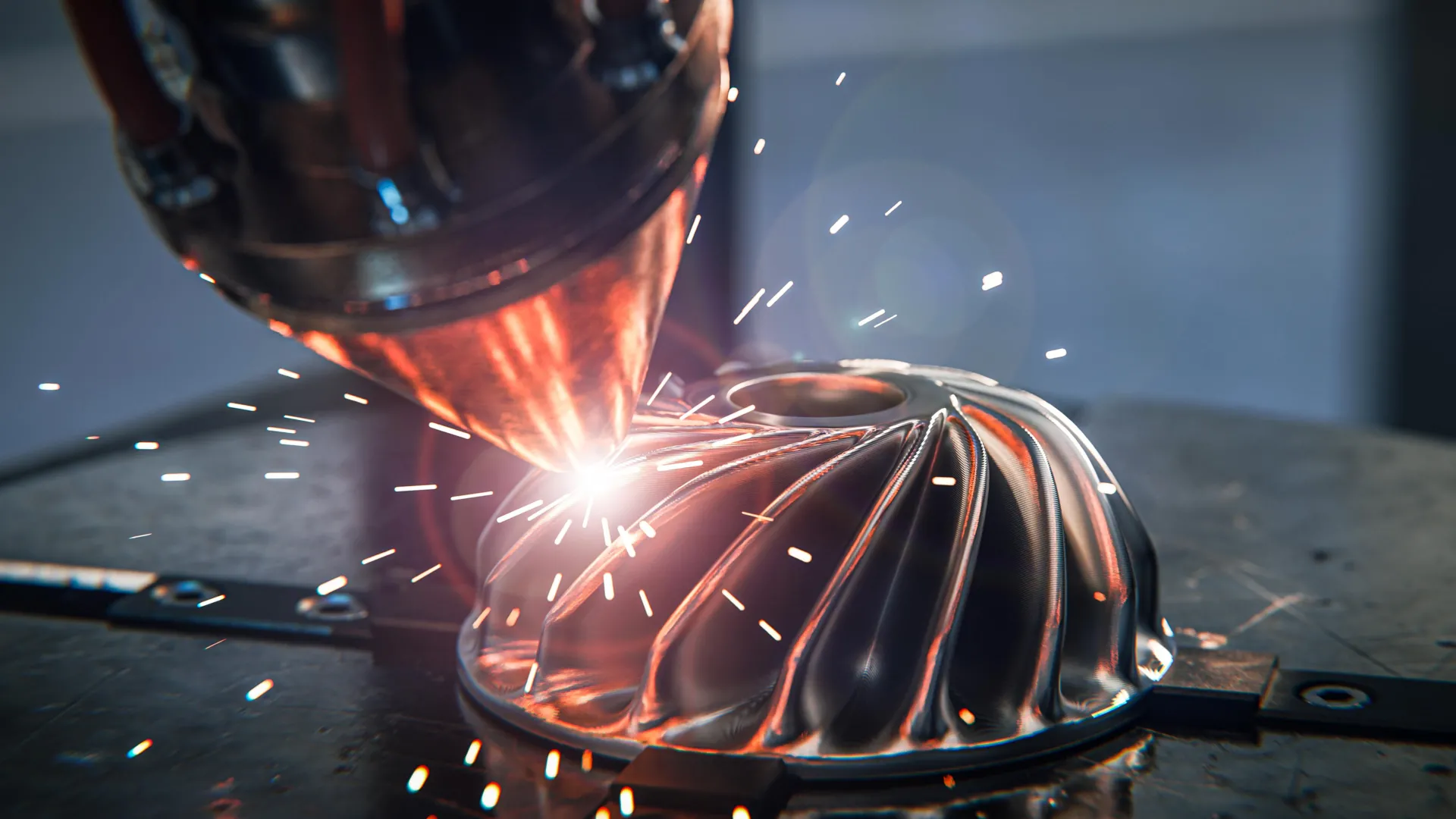
Groundbreaking research has demonstrated the transformative potential of artificial intelligence in accelerating advanced materials development, specifically identifying a highly efficient and cost-effective methodology for the three-dimensional printing of a critical NASA-developed alloy. This innovative approach circumvented the need for exhaustive manual experimentation across a search space of over one hundred million potential operational parameters, heralding a new era for accessible, high-performance manufacturing processes. The implications extend far beyond a single material, promising to democratize access to sophisticated fabrication techniques and catalyze discovery across a spectrum of scientific and engineering disciplines.
The material at the heart of this innovation is GRCop-42, an advanced copper-chromium-niobium alloy engineered by the National Aeronautics and Space Administration (NASA). Its unique properties—exceptional thermal conductivity coupled with remarkable strength retention at extreme temperatures—make it indispensable for applications within highly demanding thermal environments, such as liquid rocket engine combustion chambers and other critical aerospace components. In these environments, the ability to efficiently dissipate heat while enduring immense structural loads is paramount to operational integrity and safety. Traditional manufacturing methods often struggle with the complex geometries and intricate internal structures required for optimal performance in these components, making additive manufacturing, or 3D printing, a highly desirable alternative.
However, despite its promise, the additive manufacturing of GRCop-42 has historically presented significant challenges. The process typically necessitates substantial laser power and energy inputs to achieve the desired material properties and structural integrity. This requirement limits its fabrication to highly specialized, high-wattage industrial printers, which represent a significant capital investment and operational expense. Attempts to print GRCop-42 using the lower laser power common in more widely available commercial additive manufacturing equipment have, until now, largely proven unsuccessful, resulting in material defects, compromised mechanical properties, or outright failure of the print. The sheer number of variables involved in optimizing a laser powder bed fusion process—including laser power, scan speed, layer thickness, hatch spacing, and preheating temperatures—creates a combinatorial explosion of possible settings. Manually testing even a fraction of these configurations is an economically and logistically prohibitive undertaking. Each experimental print consumes costly specialized material, demands dedicated access to high-end machinery, and requires extensive post-print characterization, which can take several days per sample and incur substantial analytical costs. This intractable search space, estimated at over 100 million unique parameter combinations, has been a formidable barrier to wider adoption.
Addressing this formidable challenge, pioneering investigations have leveraged advanced computational algorithms, specifically in the realm of machine learning, to navigate this complex parameter landscape. Researchers initiated their efforts by feeding the AI model data from a limited set of 37 previously unsuccessful printing configurations. This initial dataset, though small and consisting solely of failures, provided the foundational knowledge for the algorithm to begin constructing a probabilistic model. The AI system was designed to estimate the likelihood of success for any given untested combination of printing parameters. Crucially, the model did not merely focus on selecting the most seemingly promising configurations. Instead, it employed an active learning strategy that balanced two critical objectives: "exploitation" (testing configurations with high predicted success probabilities) and "exploration" (probing less certain regions of the search space to gather new information that could enhance the model’s predictive accuracy). This iterative feedback loop, where experimental results informed and refined the AI’s subsequent recommendations, proved to be the cornerstone of its efficiency.
The practical execution involved a close collaboration between computational scientists and materials engineers. The AI model would recommend small batches of new printing configurations, which were then physically implemented by materials science teams. The resultant samples underwent rigorous evaluation, and the outcomes—whether successful or not—were meticulously fed back into the AI system. This continuous learning cycle allowed the model to rapidly improve its understanding of the material’s printing behavior. The efficiency of this approach was remarkable: over a three-month period, the team conducted a mere 40 experiments in total. Within this highly constrained experimental budget, the AI successfully identified six distinct printing configurations that yielded viable GRCop-42 parts across various laser power levels. Most notably, for the first time, a successful print of GRCop-42 was achieved using a laser power of just 500 watts—a significant reduction from the high-wattage systems previously deemed essential. This achievement marks a pivotal step towards making GRCop-42 printable on a much broader range of commercial additive manufacturing equipment.
The implications of printing GRCop-42 with lower laser power are multifaceted and profound. Economically, it translates directly into reduced energy consumption during the printing process, which lowers operational costs. It also mitigates wear and tear on expensive printing equipment, extending the lifespan of critical components and reducing maintenance expenditures. Furthermore, the ability to utilize less specialized, lower-power machines significantly decreases the capital investment required for adopting GRCop-42 additive manufacturing. This cost reduction is a critical factor in "democratizing" access to this high-performance alloy. Universities, smaller research laboratories, and burgeoning startups, which typically lack the substantial budgets for ultra-high-power specialized printing systems, can now potentially engage in GRCop-42 research and development. This expanded accessibility is poised to accelerate innovation, fostering a broader ecosystem of researchers and engineers exploring new applications and optimizing existing designs for this critical material. Moreover, it could bolster supply chain resilience for aerospace components, enabling a more distributed and diversified manufacturing base rather than reliance on a few highly specialized facilities.
Beyond the immediate benefits for GRCop-42, the AI-guided methodology represents a powerful paradigm shift for materials science and engineering. The underlying framework is highly adaptable and can be readily applied to optimize the additive manufacturing processes for a wide array of other complex metal alloys, including nickel superalloys, titanium alloys, and high-entropy alloys, each presenting its own unique processing challenges. The principles of efficient search and iterative learning are not confined to laser powder bed fusion; they can be extended to other additive manufacturing techniques and even to entirely different scientific domains where experimental exploration is costly and the search space is vast.
Consider, for instance, the field of drug discovery. Here, scientists navigate an enormous chemical space of potential molecular compounds, searching for those with specific therapeutic properties while avoiding toxicity. Each synthesis and biological assay can be time-consuming and expensive, mirroring the challenges faced in material printing. An AI-driven approach could efficiently guide the selection of candidate molecules for synthesis and testing, dramatically accelerating the identification of lead compounds and optimizing drug development pipelines. Similarly, in the development of new catalysts, battery materials, or quantum computing substrates, where the precise atomic arrangements or compositional ratios dictate performance, AI can guide experimental design with unprecedented efficiency, transforming the pace of scientific discovery.
The success of this endeavor underscores the growing synergy between artificial intelligence and empirical science. It highlights how computational intelligence can act as a sophisticated guide, drastically reducing the number of physical experiments required, thereby saving significant time, resources, and material. While the initial investment in developing and training such AI models is substantial, the long-term returns in accelerated discovery and cost reduction are poised to be immense. Future research will likely focus on further refining these AI models, incorporating more complex material physics into their predictive capabilities, and integrating them with advanced simulation techniques to create even more robust and predictive digital twins of manufacturing processes. As AI continues to mature, its role in materials design, process optimization, and scientific discovery is set to become increasingly central, ushering in an era where technological bottlenecks are overcome not by brute-force experimentation, but by intelligent, data-driven exploration. This fusion of computational prowess and materials expertise is poised to reshape the landscape of advanced manufacturing and scientific innovation for decades to come.




 Lisa Mariana
 Aura Kasih
 Safa Marwah