Ayu Aulia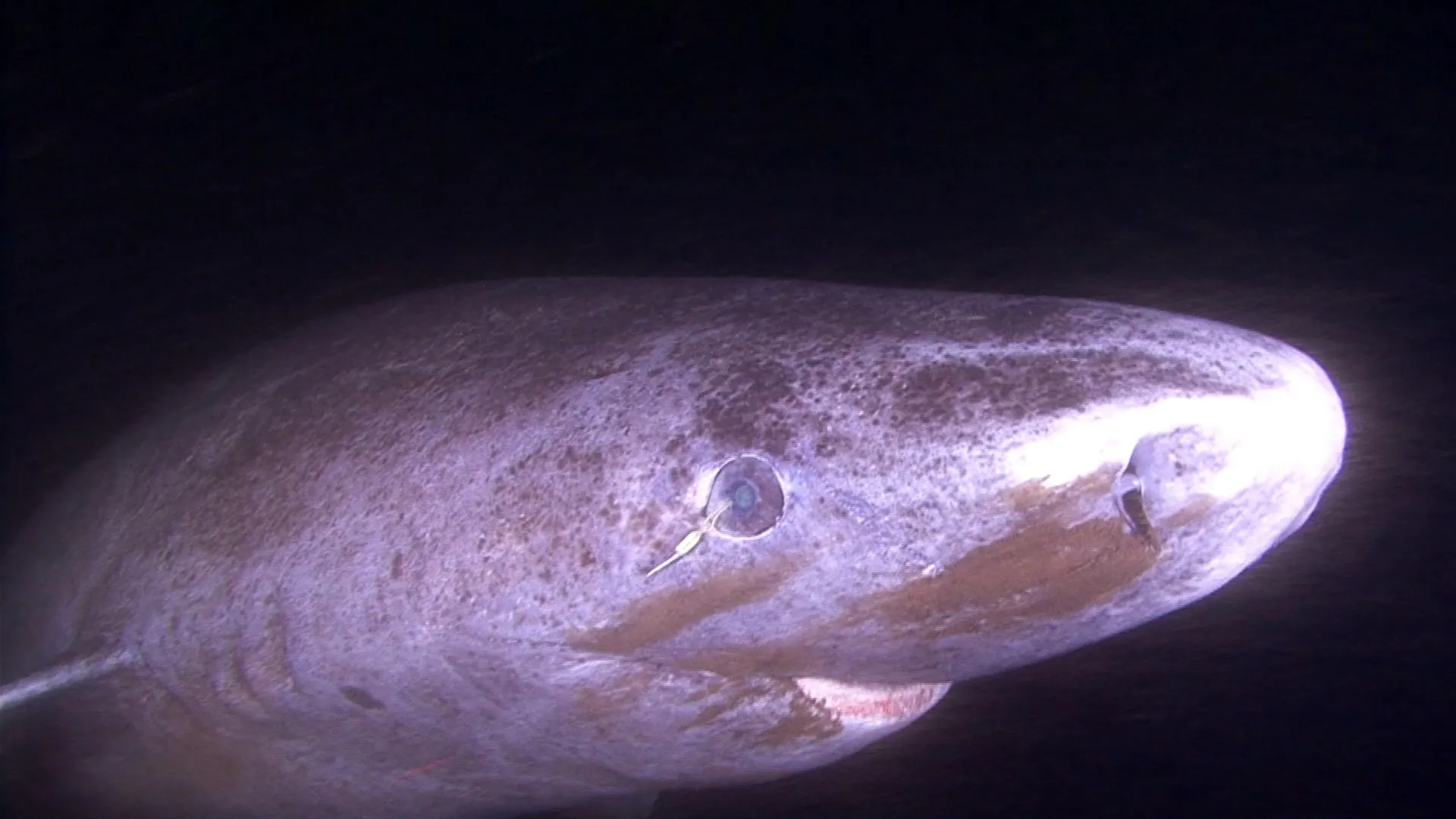
A groundbreaking study into the Greenland shark, the longest-living vertebrate known to science, is challenging long-held assumptions about vision in extreme environments and offering unprecedented insights into biological longevity. New research indicates that, contrary to previous hypotheses of functional blindness, these enigmatic deep-sea dwellers possess highly adapted visual systems capable of enduring for centuries without significant age-related degradation, potentially holding keys to understanding and mitigating human ocular senescence.
The Greenland shark (Somniosus microcephalus) stands as a biological marvel, with individuals documented to live for up to 400 years in the frigid, abyssal waters of the Arctic and North Atlantic. Its formidable lifespan, exceeding that of any other known vertebrate, has long fascinated scientists, prompting investigations into its unique physiological adaptations. Historically, the shark’s vision has been a subject of considerable debate. With its thick, gray body, small head, and short, rounded snout, the Greenland shark’s eyes often appear cloudy, frequently hosting parasitic copepods directly attached to the cornea. Coupled with its habitat in perpetually dark, murky environments, these factors led many researchers to speculate that the species might be functionally blind, relying primarily on other senses for navigation and predation.
However, recent investigations spearheaded by Dorota Skowronska-Krawczyk, an associate professor of physiology and biophysics at the University of California, Irvine, are presenting a dramatically different perspective. Observing footage of a Greenland shark, Skowronska-Krawczyk noted subtle ocular movements, indicating the animal’s ability to track light—a crucial observation that ignited a deeper inquiry into the shark’s visual capabilities. This initial insight served as the catalyst for a comprehensive study that now fundamentally redefines our understanding of vision in this ancient predator.
Published in Nature Communications, the research, co-authored by Walter Salzburger and Lily G. Fogg from the University of Basel, Switzerland, who provided critical evolutionary analysis, posits that the Greenland shark’s eyes are not only functional but also possess extraordinary mechanisms that protect them from the ravages of time. The findings suggest the presence of a robust DNA repair mechanism that effectively safeguards retinal integrity, preventing the typical cellular degeneration associated with extreme age. Furthermore, their visual systems exhibit specialized adaptations, finely tuned to the exceptionally low light levels characteristic of their deep Arctic habitat. This dual resilience—against aging and environmental extremes—places the Greenland shark’s vision in a category of its own.
Skowronska-Krawczyk’s research is rooted in a broader interest in the molecular processes underlying age-related eye diseases and the general impact of aging on visual acuity. Her specific fascination with Greenland sharks began after encountering a pivotal 2016 study published in Science by John Fleng Steffensen, which highlighted the prevalence of ocular parasites. The prevailing evolutionary principle dictates that an organ, if redundant, tends to atrophy or disappear over evolutionary timescales. The persistent presence and observed mobility of the Greenland shark’s eyes, despite the parasites and darkness, strongly suggested that these organs retained functional significance. This dissonance between observation and prevailing theory spurred the detailed investigation into the shark’s visual system.
To conduct this unprecedented study, researchers meticulously collected Greenland shark specimens between 2020 and 2024. These specimens were obtained using scientific long lines near the University of Copenhagen’s Arctic Station on Disko Island, Greenland, a region critical for accessing these elusive deep-sea creatures. Collaborators included John Fleng Steffensen, a professor of marine biology at the University of Copenhagen; Peter G. Bushnell, a professor at Indiana University South Bend; and Richard W. Brill of the Virginia Institute of Marine Science. Upon capture, the sharks’ eyes were carefully dissected and preserved in a fixative solution, ensuring their structural and molecular integrity for subsequent laboratory analysis.
The arrival of these preserved specimens at the UC Irvine laboratory marked a significant moment for the research team. Emily Tom, a Ph.D. student and physician-scientist in training within Skowronska-Krawczyk’s laboratory, recounted the experience of receiving a 200-year-old eyeball. The sheer scale of the organ, described as "baseball-sized" in contrast to the typical "papaya seed-sized" mouse eyeballs commonly used in vision research, presented unique methodological challenges. Handling such large, centuries-old biological tissue required extreme precision; temperature control was paramount to prevent deterioration, necessitating careful defrosting and meticulous laboratory protocols to maintain sample integrity throughout the analytical process. The demanding nature of working with such unique and delicate samples underscored the team’s dedication and expertise.
Tom spearheaded the histological and vision-specific analyses of the ocular tissue. Her painstaking examination revealed a remarkable absence of cellular degradation or death within the retina—a finding that profoundly challenged expectations for an animal of such advanced age. Furthermore, the analyses confirmed that rhodopsin, a critical photoreceptive protein essential for vision in dim light, remained highly active within the shark retina. Crucially, this rhodopsin was found to be specifically tuned to detect blue light, a highly strategic adaptation for an animal inhabiting depths where only blue wavelengths of sunlight can penetrate. This specialized tuning maximizes the shark’s ability to perceive its surroundings in the perpetually twilight conditions of its deep-sea habitat, further reinforcing the conclusion that its vision is not only functional but exquisitely adapted.
The implications of these findings extend far beyond the biology of a single species. The absence of retinal cell death and the sustained activity of key visual proteins in a creature living for centuries suggests the presence of exceptionally potent protective and regenerative mechanisms. These mechanisms likely involve highly efficient DNA repair pathways, robust antioxidant systems to combat oxidative stress, and superior cellular waste removal processes that collectively prevent the accumulation of molecular damage typically associated with aging. Understanding these specific molecular and cellular strategies could revolutionize our approach to human aging and age-related diseases.
For Skowronska-Krawczyk, the research opens a promising avenue for investigating how the Greenland shark’s eyes maintain their health over such vast timescales. This understanding could, in turn, lead to the development of novel strategies for preventing or treating age-related vision loss in humans, including debilitating conditions such as macular degeneration and glaucoma. By elucidating the fundamental biological principles that confer such extreme ocular longevity, scientists may identify new therapeutic targets or preventive interventions. The research also contributes significantly to broader questions in evolutionary biology, particularly regarding the persistence and adaptation of complex organs under extreme environmental pressures and over immense geological timeframes. It forces a re-evaluation of the "use it or lose it" paradigm in evolution, demonstrating that even in challenging conditions, a finely tuned and highly protected sensory organ can endure.
The future trajectory of this groundbreaking research, however, faces the persistent challenge of securing sustained funding. Skowronska-Krawczyk expressed concerns about the stability of federal research support, yet remains resolute in the belief that the scientific community will "prevail." The profound discoveries emerging from the study of the Greenland shark underscore the critical importance of investing in fundamental biological research. Such investigations into extraordinary species often yield unforeseen insights with transformative potential for human health and our understanding of life itself. The collaborative spirit and pioneering efforts of the research team exemplify the pursuit of knowledge at its forefront, revealing new biological rules and mechanisms that could reshape scientific paradigms for generations to come. The study of this ancient, deep-sea sentinel is not merely about understanding a shark; it is about unlocking the universal secrets of longevity and the resilience of life.




 Lisa Mariana
 Aura Kasih
 Safa Marwah