Lisa Mariana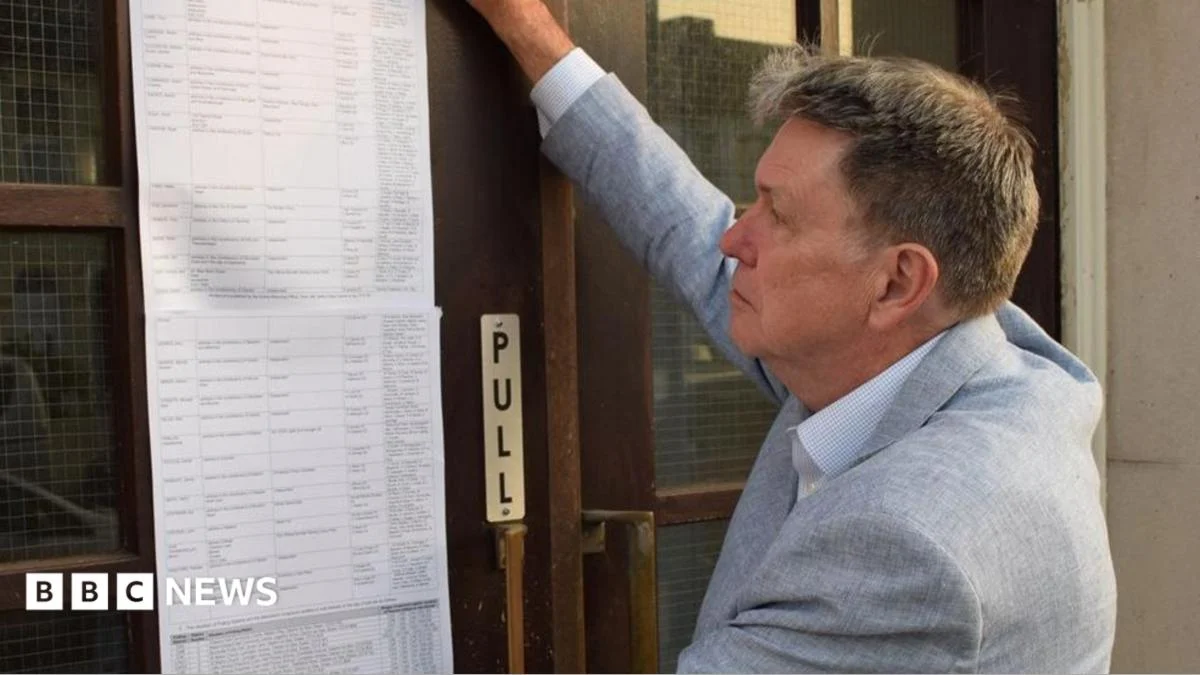
The forthcoming by-election in the Clacton constituency has drawn an extraordinary 34 candidates, establishing a modern electoral record and offering a stark illustration of the current volatile state of British politics. This electoral surge was precipitated by the mid-term resignation of Nigel Farage, who is now seeking re-election under the banner of Reform UK, following a period of intense scrutiny concerning his personal financial affairs and a parliamentary inquiry. The sheer volume of contenders, which includes a significant proportion of independent hopefuls and several representatives from satirical political entities, alongside the notable absence of nominees from the United Kingdom’s principal Westminster parties, underscores a unique electoral dynamic set to unfold when constituents cast their votes on August 13th.
The Clacton constituency, situated on the Essex coast, has historically been a significant barometer for shifts in the national political mood, particularly concerning Eurosceptic sentiment. Its political landscape is distinctive, having previously elected Mr. Farage under the UK Independence Party (UKIP) banner in 2014, making him the party’s first elected Member of Parliament. This history imbues the current contest with an additional layer of intrigue, as Mr. Farage seeks to reclaim a seat that has become synonymous with his populist brand of politics. His decision to resign on July 7th, thereby triggering the by-election, was a calculated political manoeuvre. While ostensibly prompted by escalating public and parliamentary examination of his financial dealings, including allegations of undeclared income and potential breaches of parliamentary rules, the resignation also provides Mr. Farage with a platform to re-energize his political movement, Reform UK, ahead of an anticipated general election. The rapid declaration of his intent to re-contest the seat suggests a strategic gambit to solidify his personal mandate and to elevate Reform UK’s national profile by demonstrating its electoral viability in a constituency where he commands significant personal loyalty.
The logistical and administrative implications of managing a ballot with 34 distinct candidates are considerable for the local electoral authorities. Tendring District Council, responsible for overseeing the election, has confirmed that this figure represents the highest number of candidates ever to stand in a by-election in contemporary British history. This surpasses the previous record of 26 candidates, which occurred during the Haltemprice and Howden by-election in July 2008. That particular contest was initiated by the then-Shadow Home Secretary, Sir David Davis, who resigned from his Conservative seat in protest against the Labour government’s proposed extension of detention without charge for terror suspects. Similar to the current situation in Clacton, the mainstream political parties notably refrained from fielding candidates against Sir David, effectively turning the by-election into a de facto referendum on civil liberties.
A critical analytical distinction between the Haltemprice and Howden precedent and the current Clacton contest lies in the underlying motivations and broader political contexts. Sir David Davis’s resignation was a principled stand on a specific civil liberties issue, framed as a challenge to what he perceived as an erosion of fundamental rights. The by-election was, therefore, a highly focused debate on a single policy area, with the abstention of major parties serving to amplify its singular message. In contrast, Mr. Farage’s resignation, while ostensibly linked to personal conduct, is more broadly interpreted as a strategic power play aimed at bolstering Reform UK’s position within a fragmented and increasingly volatile national political landscape. The Clacton by-election is less about a single policy point and more about personality, party identity, and the broader disaffection with established political institutions.
The composition of the candidate list provides valuable insights into the current state of public engagement and political expression. The presence of 20 independent candidates is particularly noteworthy. This substantial cohort typically comprises individuals driven by diverse motivations: some may be local community activists advocating for specific issues, others might be single-issue campaigners seeking a platform for their causes, while a significant portion often consists of individuals expressing profound dissatisfaction with the established political order. Their collective presence, while unlikely to result in an electoral victory for any single independent, can significantly fragment the vote share. This fragmentation can dilute the support for more established contenders, making it more challenging to predict the outcome and potentially enabling a candidate to win with a smaller proportion of the overall vote. The phenomenon of a large independent contingent often signals a deeper public distrust in traditional party politics and a desire for alternative voices that are perceived as less constrained by party lines or ideological orthodoxy.
Furthermore, the inclusion of several "joke" or satirical candidates, notably three from the Monster Raving Loony Party, serves a dual purpose. On one hand, it highlights the open and accessible nature of the British electoral system, allowing for a wide spectrum of participation. On the other, it can be interpreted as a form of protest, a symbolic act of mocking the seriousness of the political process itself, or simply a means of injecting levity into what can often be a staid affair. The Monster Raving Loony Party, with its long history of fielding candidates in general and by-elections, uses humour and outlandish policies to draw attention to perceived absurdities in mainstream politics and to advocate for often surprisingly sensible, albeit whimsically presented, reforms. While their electoral impact is minimal, their consistent presence underscores a certain vein of British political culture that values satire and a degree of irreverence towards authority.
The strategic decision by the United Kingdom’s main Westminster parties – the Conservative Party, the Labour Party, and the Liberal Democrats – to abstain from fielding candidates in Clacton is a critical aspect requiring detailed analysis. This collective non-participation reflects a complex calculus designed to mitigate potential political damage. For the Conservative Party, directly challenging Mr. Farage in Clacton would present a no-win scenario. A defeat would be a significant blow, further eroding their support base and validating Reform UK’s appeal among right-leaning voters. Even a victory, while unlikely given Mr. Farage’s local popularity, could be seen as a pyrrhic one, diverting resources from other crucial electoral battles. By abstaining, the Conservatives avoid a direct confrontation that could further galvanise Reform UK and potentially exacerbate internal party divisions over strategy towards the populist right. Similarly, for Labour and the Liberal Democrats, contesting the seat would likely be a futile exercise in a constituency where their support is traditionally low and Mr. Farage’s brand of politics is deeply entrenched. Their abstention allows them to focus resources on more winnable seats and prevents them from inadvertently legitimising Mr. Farage or Reform UK by engaging in a direct electoral contest that they are unlikely to win. This collective abstention, while seemingly a retreat, is a sophisticated tactical manoeuvre aimed at depoliticising the by-election from a national party perspective, allowing it to be framed more as a local referendum on Mr. Farage himself rather than a broader test of mainstream party strength.
The implications of this unprecedented electoral contest extend far beyond the Clacton constituency itself. For Reform UK, a strong victory for Mr. Farage would be a significant morale booster and a powerful validation of their political project. It would provide tangible evidence of their ability to convert national polling figures into actual electoral success, intensifying pressure on the Conservative Party and potentially reshaping the dynamics of the upcoming general election. Such a victory would likely embolden Reform UK to expand its campaigning efforts and could encourage further defections or endorsements from disaffected figures within the Conservative Party. Conversely, a weaker-than-expected performance, even if Mr. Farage secures a win, could temper expectations and force a re-evaluation of Reform UK’s broader electoral strategy.
For the mainstream parties, the Clacton by-election, despite their non-participation, will serve as an invaluable case study. The turnout, the margin of Mr. Farage’s victory, and the aggregate vote share garnered by the independents and fringe candidates will all be meticulously analysed. These metrics will offer insights into the prevailing mood of the electorate, the extent of anti-establishment sentiment, and the effectiveness of populist messaging. The by-election’s outcome could influence how major parties position themselves on issues such as immigration, national sovereignty, and economic policy, particularly in constituencies where Reform UK is perceived as a significant threat.
Looking ahead, the Clacton by-election on August 13th is more than just a local contest; it is a microcosm of the profound shifts occurring within British politics. The record number of candidates reflects a deepening fragmentation of the political landscape, where traditional party loyalties are increasingly eroded, and individual personalities or protest movements gain traction. It highlights the challenges facing established parties in an era of heightened public cynicism and a proliferation of alternative voices. The outcome will not only determine the parliamentary representative for Clacton but will also provide crucial indicators regarding the trajectory of Reform UK, the resilience of populist movements, and the broader health of democratic engagement in a nation grappling with profound political and social transformations. The eyes of the political establishment will be fixed on Clacton, not merely for the result, but for the deeper insights it offers into the evolving nature of British electoral dynamics.


 Aura Kasih
 Safa Marwah
 Ayu Aulia