Ayu Aulia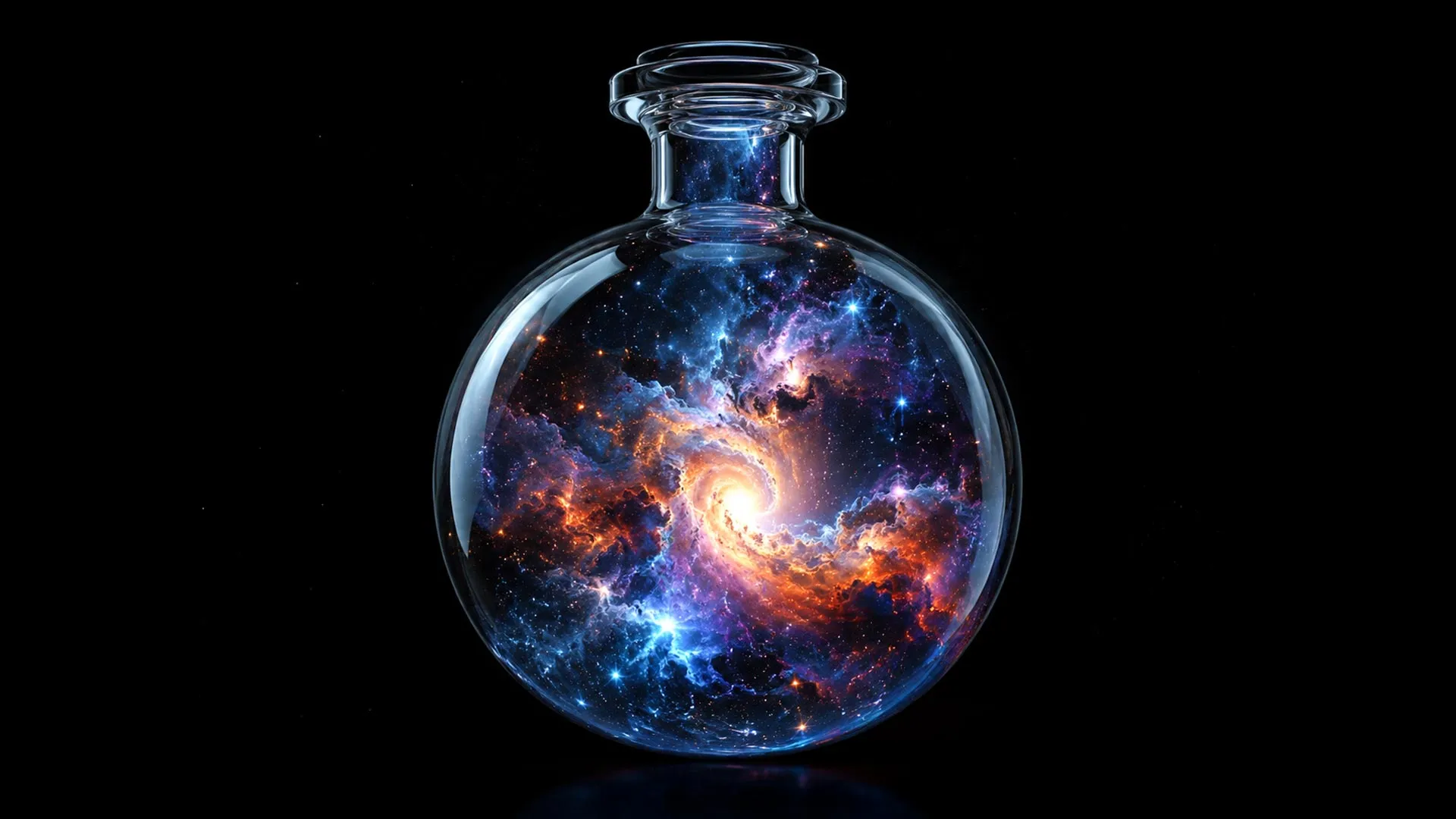
In a groundbreaking scientific endeavor, researchers in Sydney have successfully engineered interstellar dust within a controlled laboratory environment, providing unprecedented insights into the potential formation pathways of essential biomolecules before the genesis of Earth itself. This pioneering work meticulously recreates the extreme conditions found in cosmic nurseries and stellar remnants, allowing scientists to observe the genesis of complex organic compounds that are fundamental to life’s architecture. The findings offer a tangible link between astrophysical phenomena and the earliest stages of prebiotic chemistry, bridging the vast chasm between cosmic evolution and biological beginnings.
The ambitious project, spearheaded by a doctoral candidate in materials and plasma physics, involved a precise combination of gases—nitrogen, carbon dioxide, and acetylene—chosen to mimic the chemical milieu of interstellar space, particularly regions influenced by nascent stars or the powerful explosions of supernovae. These gases were then subjected to an intense electrical discharge, simulating the high-energy environments where cosmic dust grains are known to form. The result was the spontaneous creation of carbon-rich particles remarkably similar to the primordial material ubiquitous in interstellar clouds and preserved within comets, asteroids, and meteorites that traverse our solar system.
This innovative research not only validates existing astrophysical models of dust formation but also provides a novel experimental platform for exploring the intricate chemical evolution of the universe. By bringing a sliver of the cosmos into the laboratory, scientists can meticulously investigate processes that are otherwise observable only through indirect astronomical methods. The work, recently detailed in The Astrophysical Journal of the American Astronomical Society, marks a significant step forward in astrobiology, offering a controlled window into the cosmic origins of the building blocks of life.
A key revelation from the synthetic cosmic dust is its molecular composition: a complex arrangement of carbon, hydrogen, oxygen, and nitrogen, collectively known as CHON molecules. These elements constitute the foundational backbone of all known organic substances crucial for biological systems, including amino acids, nucleobases, and sugars. The presence of these intricate CHON compounds within the laboratory-generated dust underscores the hypothesis that the essential chemical ingredients for life may have been forged in the deep reaches of space, long before any planetary bodies coalesced.
The lead researcher articulated the profound implications of this laboratory achievement, highlighting the newfound ability to bypass the arduous wait for extraterrestrial samples to arrive on Earth. Instead, analogous environments can be constructed and manipulated in the lab, enabling scientists to "reverse engineer" the structural and chemical history of cosmic material using advanced spectroscopic techniques. This capacity offers unparalleled insight into the formation mechanisms of carbonaceous cosmic dust within the turbulent plasma emanating from aging giant stars or within the dense nebulae where new stars are born, and how these environments might distribute the very molecules vital for life across the galaxy. The experience, as described, is akin to compressing a vast cosmic expanse into a single, observable vessel.
In the harsh vacuum of space, cosmic dust grains are constantly bombarded by energetic ions and electrons. These relentless impacts serve as catalysts, initiating a cascade of chemical reactions that progressively build more complex molecular structures from simpler precursors. Astronomers typically identify and categorize different types of cosmic dust by analyzing the unique infrared light signatures they emit or absorb. These spectral "fingerprints" act as molecular barcodes, allowing researchers to deduce the precise chemical architecture of distant interstellar material. Crucially, the laboratory-synthesized dust samples exhibited infrared signatures that precisely matched those observed in astronomical data, providing compelling evidence that the experimental setup faithfully reproduces the fundamental physical and chemical processes occurring in genuine cosmic environments. This congruence validates the experimental approach and strengthens the reliability of the findings as a representation of astrophysical reality.
The question of how life first emerged on Earth remains one of science’s most enduring and profound mysteries. Contemporary research explores various hypotheses, including the in situ formation of organic molecules on the nascent planet, their extraterrestrial delivery via comets and meteorites, or a synergistic combination of both processes during the early tumultuous stages of our solar system’s formation. Geological and astrophysical evidence suggests that between approximately 4.56 billion and 3.5 billion years ago, Earth underwent a period of intense bombardment by meteorites, micrometeorites, and interplanetary dust particles originating from asteroids and comets. Scientists widely postulate that these celestial impacts were instrumental in depositing vast quantities of organic material onto the Earth’s surface, potentially seeding the planet with the necessary ingredients for abiogenesis.
However, the precise origins of this extraterrestrial organic material and the specific chemical pathways that led to its formation have remained largely speculative. While it is generally accepted that covalently bonded carbon and hydrogen—key components of organic matter—originate in the outer envelopes of evolved stars, in the aftermath of high-energy events like supernovae, and within the diffuse interstellar medium, the exact conditions and sequences of reactions leading to the complex organic structures observed in cosmic dust and meteorites have been elusive. This laboratory investigation seeks to illuminate these specific chemical pathways, providing a clearer understanding of how CHON elements are incorporated into the intricate molecular architectures vital for life.
The experimental setup designed by the researchers, including Professor David McKenzie, involved creating a near-perfect vacuum within specialized glass tubes to simulate the extreme emptiness of space. Following evacuation, a carefully measured mixture of nitrogen, carbon dioxide, and acetylene was introduced. For approximately an hour, this gaseous blend was subjected to a powerful electrical potential of around 10,000 volts, generating a specific form of plasma known as a glow discharge. This intense energy input efficiently fragmented the original gas molecules, breaking them down into their constituent atoms and smaller molecular radicals. These highly reactive fragments then spontaneously recombined, forming progressively larger and more complex chemical structures. Over time, the newly synthesized material settled onto silicon chips strategically placed within the tubes, forming a thin, dark coating of dust. In some instances, the collected particles shimmered, resembling minute, sparkling fragments of authentic cosmic material, a visual testament to the success of the cosmic recreation.
Professor McKenzie emphasized that producing this cosmic dust within a terrestrial laboratory provides an invaluable advantage: direct access to conditions that are otherwise exceedingly difficult or impossible to examine firsthand in the vastness of space. This experimental control allows researchers to systematically vary parameters such as the intensity of ion impacts and ambient temperatures, which are critical factors influencing dust formation in interstellar clouds. Understanding these microenvironments within cosmic dust clouds is paramount, as they are considered prime locales for life-relevant chemistry to unfold. Furthermore, this laboratory approach significantly aids in deciphering the complex history encoded within meteorite and asteroid fragments. Each fragment’s unique chemical signature serves as a geological record of its journey through space, documenting the thermal, radiative, and impact events it endured. Experiments like this furnish scientists with a crucial Rosetta Stone, enabling them to interpret these ancient cosmic records with greater precision.
Beyond elucidating the formation mechanisms of life-related molecules, a significant future application of this research lies in the development of a comprehensive database. The team plans to systematically assemble a detailed library of infrared fingerprints generated by various types of laboratory-synthesized cosmic dust, each produced under slightly different simulated cosmic conditions. This invaluable database would serve as a critical reference tool for astronomers. By comparing the observed infrared signatures from distant star-forming regions, the remnants of dead stars, or planetary nebulae with the meticulously cataloged lab data, astronomers could precisely identify where specific forms of dust are being produced. This matching process would enable researchers to reconstruct the intricate physical and chemical processes occurring in these remote astrophysical environments with unprecedented accuracy.
Moreover, such a detailed fingerprint library would profoundly enhance scientists’ ability to interpret the complex histories preserved within meteorites and asteroid fragments recovered on Earth. The chemical composition and structural characteristics of these extraterrestrial samples often bear the imprints of the temperatures they experienced, the radiation they absorbed, and the particle impacts they sustained throughout their journeys across the cosmos. By correlating these features with the controlled conditions under which specific dust types are synthesized in the lab, scientists can more accurately reconstruct the lifecycle and evolutionary pathways of these primordial materials. This integrated approach, combining laboratory synthesis with astronomical observation and meteoritic analysis, offers a holistic framework for understanding the profound interplay between cosmic chemistry and the emergence of life.
The successful reproduction of cosmic chemistry within the confines of a laboratory bottle represents a new and powerful paradigm for investigating fundamental processes occurring deep within stellar environments and the interstellar medium. This innovative methodology promises to illuminate some of the most ancient and foundational chemical steps that ultimately converged to facilitate the emergence of life on Earth. The interdisciplinary nature of this research, bridging physics, chemistry, and astrobiology, underscores the interconnectedness of scientific inquiry in unraveling the universe’s most profound mysteries. The recognition of this work, including an award for best presentation at the international Annual Meeting of the Meteoritical Society, further highlights its significant contribution to the scientific community’s quest to understand our cosmic origins. This research was made possible through support from the University of Sydney node of Microscopy Australia and received crucial funding from the Australian Research Council, with the authors reporting no competing interests.


 Aura Kasih
 Safa Marwah