Aura Kasih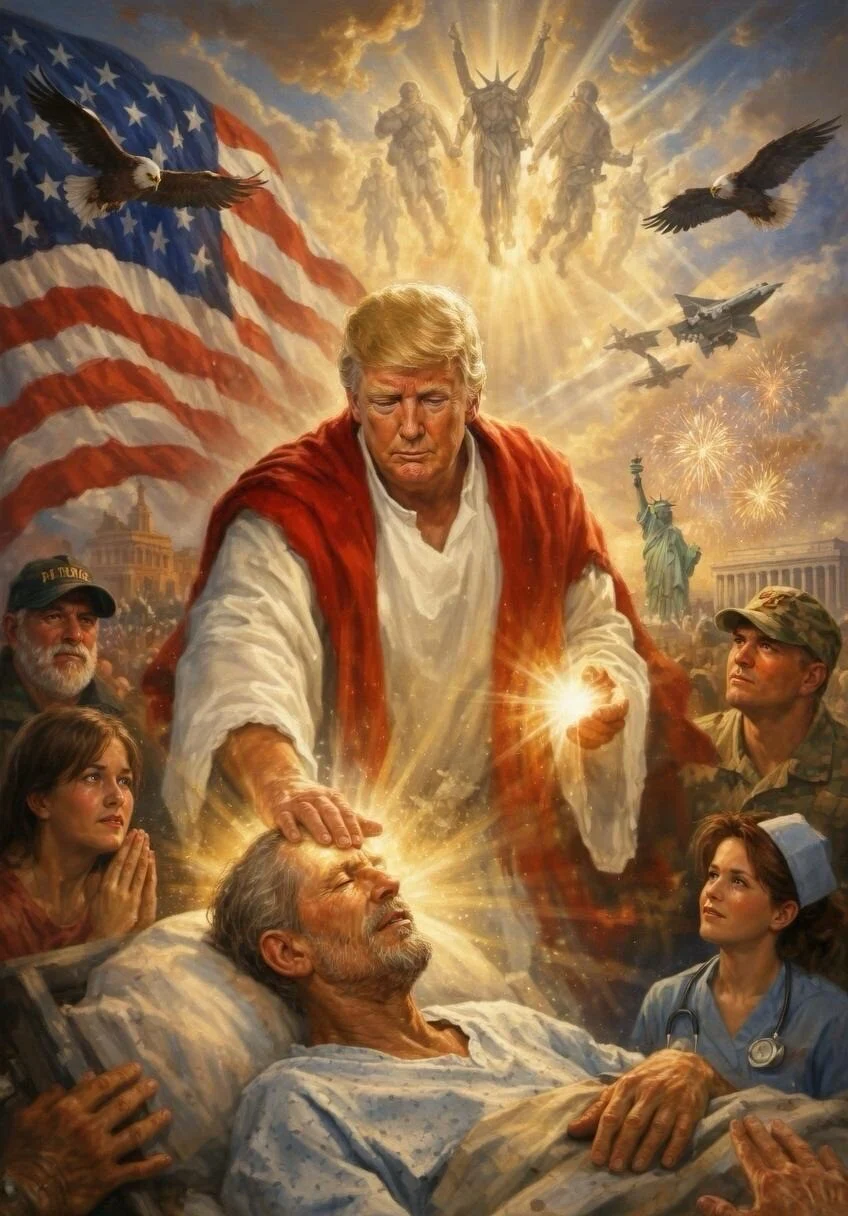
The recent proliferation of AI-generated imagery depicting Donald Trump in messianic roles, particularly as Jesus Christ, has ignited a fervent debate about the intersection of artificial intelligence, political strategy, and religious symbolism, pushing the boundaries of acceptable discourse and raising profound questions about the manipulation of public perception. This phenomenon, observed through increasingly sophisticated AI tools, has moved beyond mere visual novelty to become a potent, albeit controversial, element of contemporary political communication, particularly within certain segments of the electorate. The emergence of these digitally fabricated icons signals a new frontier in how political figures leverage cultural and spiritual narratives to solidify support and project an image of divine endorsement, a tactic that carries significant implications for both political campaigning and the broader societal understanding of religious iconography.

The controversy surrounding these AI-generated images escalated with Donald Trump’s dissemination of a depiction portraying him as Jesus Christ, complete with a halo and surrounded by adoring figures, actively engaged in acts of healing. This particular instance, amplified by its posting on the social media platform Truth Social, occurred shortly after Trump’s critical remarks regarding Pope Leo XIV, creating a jarring juxtaposition that drew sharp criticism from various quarters. The visual narrative presented in the AI artwork, showing Trump as a benevolent, divinely appointed figure, stands in stark contrast to the critical commentary it elicited. Conservative commentator Rod Dreher, in remarks to The Wall Street Journal, articulated a sentiment shared by many observers, stating, "Not saying Trump is the Antichrist. But he’s radiating the spirit of Antichrist, no question." This stark assessment highlights the disquieting resonance of such imagery, particularly among those who view it as a perversion of religious devotion for political gain. Trump’s own explanation, offered to reporters while accepting a food delivery, that he believed the image depicted him as a doctor, underscores the often opaque and subjective nature of the intent behind such digital creations, or perhaps, a strategic ambiguity designed to deflect criticism while still benefiting from the visual association.
Further scrutiny of the AI-generated artwork has revealed a complex digital lineage, indicating that the images are not spontaneously generated but rather curated and, in some cases, subtly manipulated. An analysis by X user S2_Underground uncovered that a precursor to the widely circulated image had initially been posted by a MAGA influencer named Nick Adams in February. By the time it reached Trump’s platform, the image had undergone several significant alterations. The most striking transformation involved a figure in the clouds morphing into a demonic, spiky-headed entity, a detail that quickly captured the attention of social media users and fueled interpretations of the artwork’s darker undertones. Beyond this prominent alteration, a closer examination revealed a host of other subtle but significant changes. The American flag depicted in the artwork incorporated more stars than its predecessor, the fighter jets appeared slightly distorted, and the background architecture seemed rendered with less clarity. Crucially, the facial expressions of the individuals within the image, including Trump’s own, shifted from a more benevolent or determined cast to one that appeared more anxious or fearful. Compounding these changes, a hat bearing the word "VETERAN" in the original image was altered into a symbol that observers interpreted as a coded or offensive reference, further complicating the narrative and intent behind the AI-generated content. These modifications suggest a deliberate process of refinement, aimed at amplifying specific visual cues or emotional responses within the target audience, a sophisticated application of AI in the realm of political messaging.

The evolution of these AI-generated images raises critical questions about the control and provenance of digital content within political campaigns. While Trump asserted that he believed the image depicted him as a doctor, the discovery of its prior iteration by a MAGA influencer, coupled with the subsequent alterations, suggests a more intricate process than a simple accidental repost. It is widely understood that political figures, particularly those with significant social media followings, maintain a degree of control over the content that appears on their platforms. The history of Trump’s public communications is replete with instances where his advisors struggled to moderate or prevent him from posting or reposting material he encountered independently. This pattern suggests that the decision to share the AI-generated image, and potentially the impetus for its alteration, likely originated from within Trump’s immediate sphere of influence or was directly sanctioned by him. The temporary removal of the image from his Truth Social account, a rare occurrence for content posted by Trump, further underscores the sensitivity and controversy surrounding the artwork. However, the subsequent re-emergence of similar AI-generated imagery, such as a depiction of Trump and Jesus embracing in front of an American flag, posted with the caption, "The Radical Left Lunatics might not like this, but I think it is quite nice!!!," indicates a persistent strategy to integrate such visuals into his political narrative, regardless of potential backlash. This suggests a calculated decision to embrace controversial imagery, framing it as a defiant stance against perceived political opposition and a testament to the perceived divine favor bestowed upon his movement.
The strategic deployment of AI-generated religious iconography in political campaigns represents a significant departure from traditional forms of political messaging. It taps into deep-seated cultural and spiritual beliefs, aiming to forge an emotional and symbolic connection with voters that transcends policy debates and ideological differences. The ability of AI to rapidly produce and disseminate visually compelling content allows for a constant stream of curated narratives, capable of shaping public perception and reinforcing specific political ideologies. This approach, however, is not without its ethical and societal ramifications. The conflation of a political figure with divine entities risks trivializing religious tenets and exploiting the faith of believers for partisan advantage. Furthermore, the sophisticated manipulation of AI imagery blurs the lines between authenticity and fabrication, making it increasingly challenging for the public to discern truth from manufactured reality. As AI technology continues to advance, its application in political discourse is likely to become more pervasive and sophisticated, necessitating a critical examination of its impact on democratic processes and the integrity of public information.

The increasing reliance on AI-generated content within political spheres also raises concerns about the erosion of traditional journalistic gatekeeping. As individuals and campaigns gain the ability to bypass established media channels and directly disseminate their own narratives, the role of independent media in providing context, verification, and critical analysis becomes even more paramount. The speed at which AI-generated content can be created and spread poses a significant challenge to fact-checking efforts and can overwhelm efforts to counter misinformation. This dynamic underscores the need for enhanced media literacy among the public and a robust ecosystem of credible news organizations capable of scrutinizing and contextualizing the information that circulates in the digital realm.
The phenomenon of AI-generated Trump-Jesus imagery is not an isolated incident but rather indicative of a broader trend where artificial intelligence is being harnessed to augment and, at times, distort political communication. This trend has implications far beyond the immediate political context, touching upon the very nature of truth, belief, and the manipulation of symbolic language in the digital age. As AI capabilities continue to expand, the ethical frameworks and societal norms governing its use in public discourse will require constant re-evaluation and adaptation. The challenge lies in harnessing the potential of AI for positive societal advancement while mitigating its capacity for manipulation and the erosion of informed public dialogue. The future of political communication, and indeed the integrity of our shared understanding of reality, may hinge on our ability to navigate this complex and rapidly evolving technological landscape with critical awareness and ethical vigilance. The ongoing integration of AI into political messaging demands a sophisticated understanding of its capabilities and a proactive approach to safeguarding democratic principles against its potential misuse.


 Lisa Mariana
 Safa Marwah
 Ayu Aulia