Aura Kasih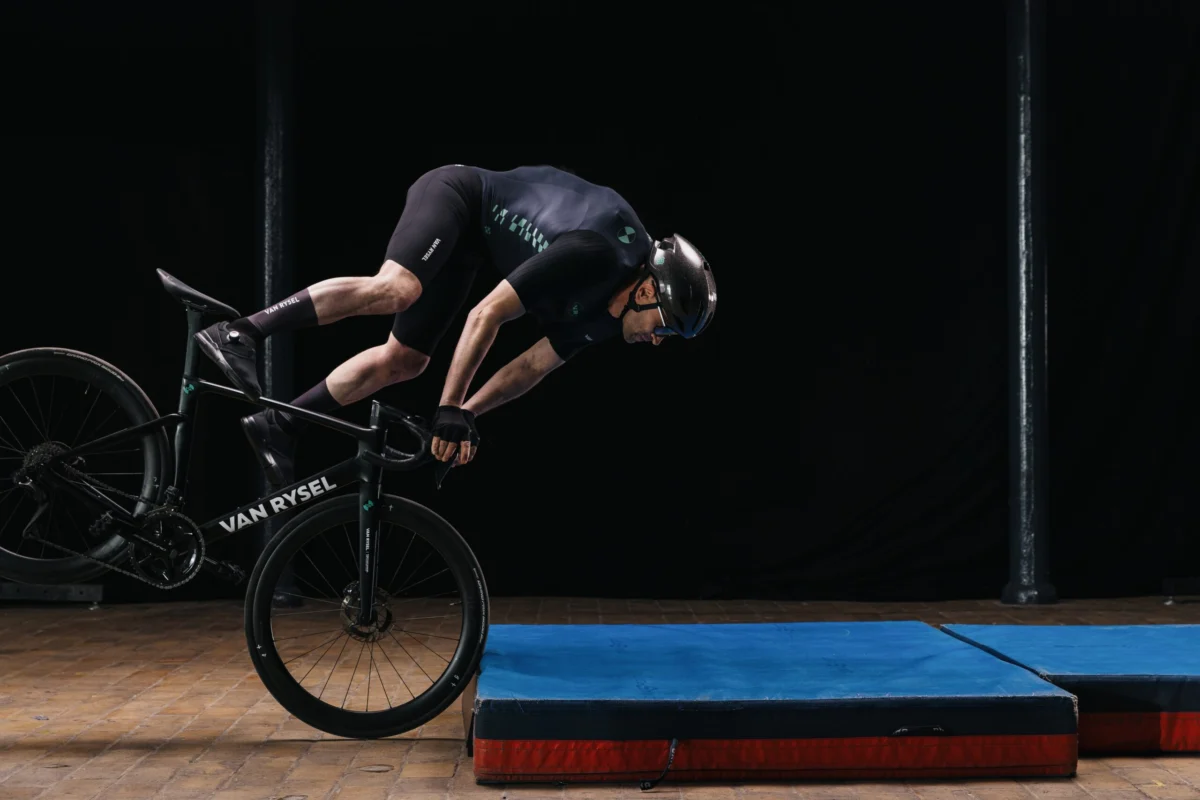
A groundbreaking advancement in personal protective equipment for cyclists is on the cusp of market introduction, promising a significant enhancement in rider safety through a seamlessly integrated airbag system. Developed by Van Rysel in collaboration with In&motion, a specialist in airbag technology, this innovative solution eschews cumbersome external attachments for a sophisticated design embedded directly within performance-oriented cycling apparel. This pioneering approach aims to provide a new paradigm of protection, moving beyond traditional safety measures to safeguard a more comprehensive area of the rider’s body.
The genesis of this cutting-edge technology can be traced to the increasing speeds and competitive pressures within professional road cycling. In February, the Union Cycliste Internationale (UCI), the sport’s international governing body, issued a formal call for innovative safety gear designed to mitigate the risks associated with high-velocity cycling. This initiative underscored a growing recognition within the sport that existing safety protocols might be insufficient to address the evolving demands of modern competitive cycling. Van Rysel’s integrated airbag system appears to be a direct and potent response to this urgent call for enhanced rider protection.
Currently undergoing its final validation phase, this advanced airbag system is poised for potential deployment in professional races. Its design prioritizes both efficacy and rider comfort, boasting a total weight of approximately 700 grams, with the airbag components themselves accounting for around 500 grams. This weight is notably lighter than airbag systems employed in high-speed motorsports like MotoGP, a testament to the miniaturization and efficiency achieved by the In&motion and Van Rysel teams. Crucially, the system’s rapid deployment mechanism mirrors the life-saving speed of its motorsport counterparts. Upon detection of a critical impact event by its sophisticated algorithm, the airbag inflates in an astonishing 60 milliseconds, providing immediate cushioning and support to vulnerable areas of the rider’s anatomy.
The skinsuit itself is engineered with a dual focus on aerodynamic efficiency and thermal regulation, critical considerations for performance cyclists. The material selection emphasizes abrasion resistance, a vital feature designed to minimize the severity of road rash and other superficial injuries that commonly occur during falls. The protective coverage of the integrated airbag extends to crucial upper body regions not typically shielded by a helmet, specifically targeting the central torso, the cervical spine, and the entire spinal column. While this initial iteration focuses on these key areas, future development is anticipated to explore the expansion of protective coverage to encompass a wider range of the rider’s body.
Jocelyn Bar, product manager at Van Rysel, articulated the profound motivation behind this project, stating, "Behind every race number, there’s a human being, and sadly, it is still widely accepted that a rider can lose everything in a fraction of a second due to a crash. What helmets represented 20 years ago, we think airbags can represent today, but now, we’re looking beyond the head; we need to protect as much of the body as we can." This statement powerfully encapsulates the transformative potential of this technology, drawing a parallel to the fundamental shift in safety consciousness that helmets brought to cycling two decades ago. The ambition is clear: to extend that same level of life-altering protection to a broader spectrum of the cyclist’s physique.
The development of integrated airbag technology for cyclists represents a significant leap forward in personal protective equipment, moving beyond the traditional reliance on passive safety measures. For decades, helmets have been the primary safeguard against head trauma, a crucial but ultimately limited form of protection. The inherent risks of cycling, particularly at higher speeds and in competitive environments, extend far beyond the head. Falls can result in severe injuries to the torso, spine, and limbs, leading to long-term disability and compromising a rider’s ability to continue their passion or profession. The Van Rysel system directly addresses this critical gap by offering active protection that deploys precisely when it is most needed.

The integration of airbag technology into a skinsuit presents a unique set of engineering challenges. Unlike bulky, standalone airbag vests, the system must be exceptionally lightweight, flexible, and unobtrusive to avoid impeding a cyclist’s performance or comfort. Aerodynamics are paramount in professional cycling, and any added bulk or disruption to the rider’s profile could result in a significant performance disadvantage. Furthermore, the materials used must be durable enough to withstand the rigors of professional racing, including exposure to various weather conditions and potential abrasion from falls. The development of advanced, lightweight textiles that can accommodate the airbag’s inflation mechanism while maintaining breathability and flexibility is a testament to the sophisticated material science involved.
The impact detection algorithm is the intellectual core of this system. It must be capable of distinguishing between normal riding movements, minor bumps, and genuine crash scenarios with an exceptionally high degree of accuracy. False deployments, while potentially offering some minor cushioning, could be disruptive and costly. Conversely, a failure to deploy during a serious accident would render the system ineffective. The development of such an algorithm requires extensive data analysis from a multitude of riding scenarios, including countless hours of real-world testing. Machine learning and advanced sensor fusion techniques are likely employed to achieve the required precision and responsiveness, ensuring that the airbag inflates only when a critical threshold of force and impact is detected.
The collaboration between Van Rysel, a brand associated with performance cycling gear, and In&motion, a specialist in airbag systems, is a strategic alignment of expertise. Van Rysel brings an intimate understanding of the demands and nuances of cycling apparel, from fit and fabric to aerodynamic considerations. In&motion, on the other hand, possesses the specialized knowledge in sensor technology, inflation systems, and algorithm development necessary to create a reliable and effective airbag. This synergy allows for the creation of a product that is not only technologically advanced but also tailored specifically to the unique requirements of cyclists.
The potential implications of this technology for professional cycling are far-reaching. For riders, it offers a tangible reduction in the fear of serious injury, potentially allowing them to push their limits with greater confidence. For teams and sponsors, it represents an investment in rider well-being, enhancing the sport’s reputation for safety and care. The UCI’s proactive stance in seeking such innovations further solidifies the sport’s commitment to prioritizing athlete safety. As this technology matures and becomes more widely adopted, it could also influence the design of future cycling apparel across all levels of the sport, from amateur enthusiasts to everyday commuters.
Beyond professional racing, the consumer market represents a significant opportunity for this integrated airbag technology. While professional cyclists operate under stringent performance demands, recreational cyclists and commuters also face considerable risks on the road. The prospect of a sleek, unobtrusive airbag system integrated into everyday cycling attire could dramatically increase the appeal of cycling for those who may have previously been deterred by safety concerns. The successful transition from professional-grade equipment to consumer-friendly products will depend on factors such as cost, ease of use, maintenance, and regulatory approval.
The future trajectory of integrated airbag technology in cycling is likely to involve several key areas of development. Firstly, expanding the protective coverage to include limbs, such as the shoulders and hips, could offer even greater comprehensive safety. Secondly, advancements in battery technology and sensor miniaturization will likely lead to lighter and more discreet systems. Thirdly, the cost of production will need to decrease to make this technology accessible to a wider range of cyclists. Finally, ongoing research into the biomechanics of cycling crashes will continue to inform the design and optimization of these protective systems.
The introduction of this sleek, wearable airbag system signifies more than just a new piece of equipment; it represents a paradigm shift in how we approach cyclist safety. By embedding advanced protective technology directly into performance apparel, Van Rysel and In&motion are paving the way for a future where the thrill of cycling can be pursued with an unprecedented level of confidence and security. As the technology moves from prototype to product, its impact on the sport and the broader cycling community is anticipated to be profound and enduring, setting a new benchmark for what is possible in rider protection.




 Safa Marwah
 Ayu Aulia
 Lisa Mariana