Aura Kasih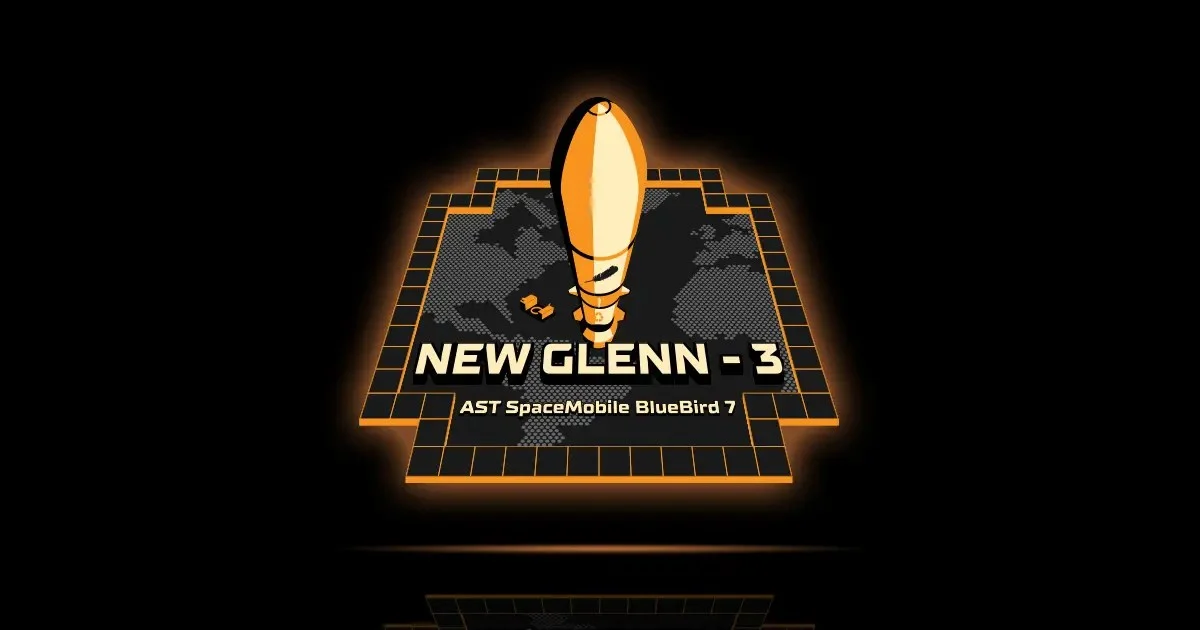
This weekend marks a pivotal moment in the evolution of global communication, as a significant technological undertaking is set to launch into low Earth orbit, promising to redefine the boundaries of mobile connectivity. The mission, spearheaded by Blue Origin, will deploy a groundbreaking satellite, essentially a colossal cell tower designed to bridge the persistent digital divide by providing seamless 4G and 5G services directly to terrestrial mobile devices. This launch is not merely a testament to advanced engineering but a strategic move that could fundamentally alter the competitive landscape of satellite internet and mobile communication.
The impending launch carries with it the first-stage booster from Blue Origin’s second New Glenn mission, a crucial demonstration of the company’s commitment to reusable launch technology. The successful recovery and reuse of this booster are paramount to Blue Origin’s ambitious plans to significantly reduce the cost of accessing space. This reusability is the very engine that has propelled SpaceX to its current dominant position in the orbital launch market, enabling the rapid deployment of its Starlink constellation. For Amazon, Blue Origin’s parent company, a reliable and cost-effective reusable launch system is an indispensable asset for accelerating its own satellite deployment initiatives.
Amazon’s Project Kuiper, its ambitious satellite internet constellation, has faced considerable challenges in its rollout. To date, only a fraction of the planned satellites have been deployed, a pace that falls considerably short of its competitors. In the same twelve-month period that saw SpaceX launch over 1,500 Starlink satellites, Amazon’s efforts have been constrained to a mere 241 deployments. This disparity highlights the critical need for Amazon to achieve operational parity in launch cadence, a goal that hinges directly on the success and efficiency of Blue Origin’s New Glenn program. The ability to consistently and affordably deliver satellites to orbit is no longer a secondary concern but a primary determinant of success in the burgeoning space-based internet industry.
The payload for this significant mission is AST SpaceMobile’s BlueBird 7 satellite, a testament to a different approach to building a global communication network. While companies like Amazon and SpaceX are pursuing a strategy of deploying thousands of smaller satellites to blanket the Earth, AST SpaceMobile is focusing on a more concentrated deployment of fewer, but significantly more powerful, satellites. BlueBird 7 is a marvel of engineering, featuring a colossal 2,400-square-foot phased-array antenna. This expansive antenna array represents the largest commercial communications array ever positioned in low Earth orbit, effectively functioning as a direct space-based cell tower. This mission will see the deployment of the second "Block 2" next-generation satellite from AST SpaceMobile, underscoring the company’s steady progress towards its network objectives.
The implications of BlueBird 7’s capabilities are profound. Designed to deliver broadband internet speeds exceeding 120 Mbps, the satellite will transmit 4G and 5G signals directly to standard smartphones already in consumers’ hands. This eliminates the need for specialized user terminals, a significant hurdle for previous satellite internet ventures. AST SpaceMobile’s roadmap is aggressive, with projections indicating the launch of 45 to 60 satellites by the close of 2026. Once fully operational, expected sometime this year, AST SpaceMobile will enter a competitive arena that is rapidly heating up.

The direct-to-device satellite communication market is poised for intense competition. AST SpaceMobile will be vying for market share against established players and nascent technologies. Starlink’s direct-to-cell service, already in operation through a partnership with T-Mobile in the United States, represents a significant challenge. Furthermore, Amazon’s recent acquisition of Globalstar’s satellite network positions it to offer similar lifeline connectivity, enabling iPhones and Apple Watches to maintain communication in areas devoid of terrestrial cellular coverage. This strategic move by Amazon suggests a multi-pronged approach to securing its position in the satellite communications ecosystem.
The Blue Origin New Glenn NG-3 mission is scheduled for a launch window commencing at 6:45 AM and concluding at 8:45 AM on Sunday, April 19th. The successful execution of this launch is not merely about placing a satellite into orbit; it is about validating Blue Origin’s reusable launch capabilities, a critical step in its long-term strategy to compete in the commercial space sector. The ability to reliably launch and recover heavy-lift rockets at a competitive price point is essential for Blue Origin to secure its share of the lucrative satellite deployment market.
The broader context of this launch extends beyond the immediate commercial interests of Blue Origin and AST SpaceMobile. The development of robust, space-based communication networks has the potential to revolutionize connectivity for billions worldwide. For regions with underdeveloped terrestrial infrastructure, satellite internet offers a viable path to digital inclusion, fostering economic growth, improving access to education and healthcare, and enhancing emergency response capabilities. The ability to provide reliable mobile broadband directly to existing devices democratizes access to the digital world in a way that has not been previously possible.
The technical challenges involved in establishing such a network are considerable. The sheer scale of the BlueBird 7 antenna necessitates complex deployment mechanisms and precise orbital maneuvering. Maintaining signal integrity over vast distances and through atmospheric interference requires sophisticated signal processing and advanced antenna technology. Furthermore, the long-term sustainability of these constellations, including managing space debris and ensuring orbital slot allocation, presents ongoing regulatory and operational challenges.
However, the potential rewards are immense. A truly global, ubiquitous mobile broadband network could transform industries, from agriculture and logistics to disaster relief and remote sensing. It could empower individuals and communities previously disconnected from the digital age, fostering innovation and creating new opportunities. The competitive dynamic between companies like Blue Origin, SpaceX, and Amazon, alongside emerging players like AST SpaceMobile, is driving rapid innovation and technological advancement in this field.
The success of this weekend’s launch will have ripple effects across the aerospace and telecommunications industries. For Blue Origin, it represents a crucial validation of its heavy-lift launch capabilities and a step towards realizing its vision of a more accessible space. For AST SpaceMobile, it is a significant milestone in its quest to build a disruptive satellite-based mobile network. The ensuing competition and innovation are likely to accelerate the timeline for achieving truly global, seamless connectivity, ushering in a new era where the "No Service" indicator on our mobile devices becomes an artifact of the past. The ongoing race to dominate the orbital communications landscape is entering a thrilling new phase, with this weekend’s launch serving as a potent indicator of the future trajectory of global connectivity. The implications of this technological leap extend far beyond mere convenience; they represent a fundamental shift in how humanity will interact with information and each other on a planetary scale.




 Safa Marwah
 Ayu Aulia