Lisa Mariana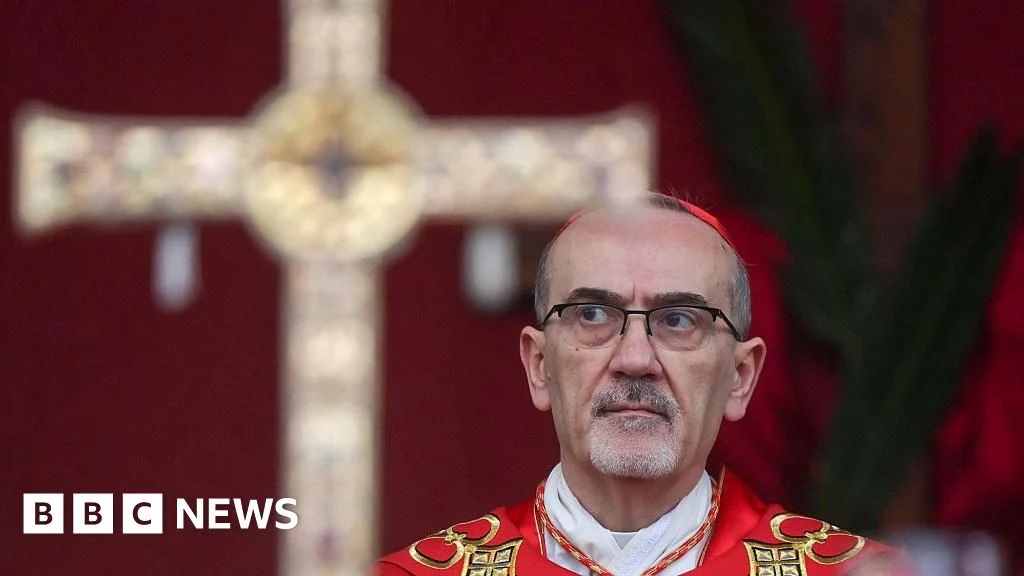
The preeminent Catholic dignitary in Jerusalem faced an unprecedented temporary obstruction by Israeli security forces from accessing the venerated Church of the Holy Sepulchre on Palm Sunday, triggering immediate international consternation and raising profound questions regarding religious liberty amidst escalating regional hostilities. Cardinal Pierbattista Pizzaballa, the Latin Patriarch of Jerusalem, along with Reverend Francesco Ielpo, encountered a barrier preventing their entry to the holiest site in Christianity, where they had intended to conduct a solemn service marking the commencement of Holy Week. This incident, initially justified by Israeli authorities on grounds of heightened security risks emanating from recent Iranian military actions, rapidly evolved into a significant diplomatic flashpoint before an eleventh-hour reversal by the Israeli Prime Minister.
The events unfolded on a sacred day for Christians globally, commemorating Jesus Christ’s triumphal entry into Jerusalem. For centuries, the Latin Patriarch has led or participated in Palm Sunday observances at the Church of the Holy Sepulchre, revered as the location of Christ’s crucifixion, burial, and resurrection. Church officials expressed profound dismay, noting that such a denial of access for the Patriarch on this significant occasion was unparalleled in modern history. The traditional Palm Sunday procession, which typically draws large crowds, had already been curtailed due to pre-existing restrictions on public gatherings, a measure accepted by the religious community in light of the prevailing security climate. However, the blocking of a private, essential religious ceremony for the senior cleric proved to be a far more contentious issue.
Initially, Israeli security personnel asserted that the decision stemmed from critical safety concerns following a series of missile strikes attributed to Iran, which had reportedly impacted areas in close proximity to Jerusalem’s Old City. Prime Minister Benjamin Netanyahu’s office cited these broader regional dangers, including the ongoing military engagement involving the United States and Israel against Iran since late February, as the rationale for the stringent security posture. He clarified that sites sacred to all Abrahamic faiths within Jerusalem’s Old City had been designated as high-risk zones, with some allegedly having been directly targeted or narrowly missed by projectile fragments. This justification, however, failed to assuage the immediate wave of international criticism that followed the initial reports.
The diplomatic fallout was swift and severe. Ambassador Mike Huckabee, the United States envoy to Israel, characterized the preventative action as an "unjustified overreach," expressing difficulty in comprehending or validating the decision, especially given that the clergymen were attempting to enter for a private devotional act rather than a large public gathering. His comments underscored the gravity with which Washington viewed any perceived infringement on religious freedom in Jerusalem, a city of immense symbolic importance to a vast global population.
Echoing similar sentiments, European leaders voiced their strong disapproval. Italian Prime Minister Giorgia Meloni condemned the obstruction as an affront not merely to the faithful but to all communities globally that uphold the principle of religious freedom. Italy’s Foreign Minister, Antonio Tajani, summoned Israel’s ambassador to Rome, demanding a comprehensive explanation for the incident. French President Emmanuel Macron added his voice to the chorus of censure, highlighting the event as part of a "troubling escalation in violations of the established status of Holy Places in Jerusalem." Macron emphatically reiterated the fundamental necessity of guaranteeing the liberty to conduct religious rites for adherents of all faiths in the Holy City. From the Vatican, Pope Leo XIV, in his Sunday address, offered a poignant tribute to Christians across the Middle East, acknowledging their suffering amidst ongoing conflicts and lamenting their inability to fully observe the sacred rituals of Holy Week.
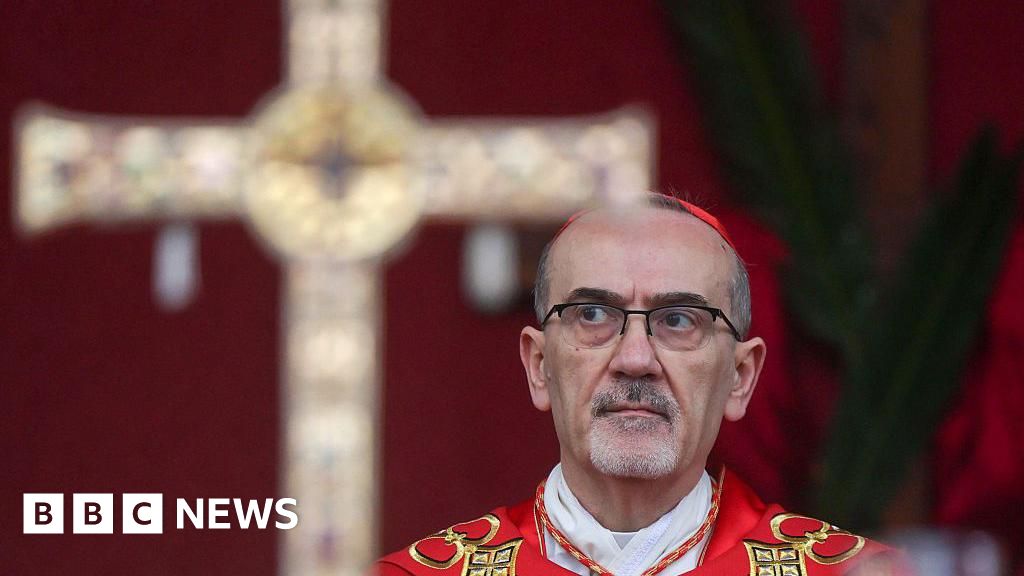
The Latin Patriarchate itself issued a forceful statement, articulating its deep concern over the "grave precedent" set by the incident. The statement contended that the decision was "hasty, fundamentally flawed, and tainted by improper considerations," representing a significant deviation from fundamental principles of reasonableness, freedom of worship, and respect for the long-standing "Status Quo" arrangements governing the holy sites. The Patriarchate emphasized its diligent adherence to all imposed security directives since the onset of the broader regional conflict, asserting that the Palm Sunday denial constituted a "manifestly unreasonable and grossly disproportionate measure" given their cooperative stance and the nature of the planned ceremony. Cardinal Pizzaballa later clarified that he had sought only a "brief and small private ceremony" and did not intend to provoke a confrontation, emphasizing the need for clarity on how to balance safety with the undeniable right to prayer in the days ahead.
In a dramatic turn late on Sunday, Prime Minister Netanyahu, following intense diplomatic pressure and internal deliberations, announced a reversal of the decision. He issued directives to relevant authorities to grant Cardinal Pizzaballa "full and immediate access" to the Church of the Holy Sepulchre, enabling him to conduct services as desired. Israeli President Isaac Herzog also engaged directly with Cardinal Pizzaballa, conveying his "profound regret" over the "unfortunate incident" and reaffirming Israel’s steadfast commitment to religious freedom for all faiths and to preserving the sacred "Status Quo" at Jerusalem’s holy sites. Ambassador Huckabee subsequently acknowledged and welcomed the Israeli government’s corrective actions and its pledges to facilitate further Holy Week observances.
This incident casts a spotlight on the delicate and often contentious governance of Jerusalem’s religious sites, particularly under the framework of the "Status Quo." This complex, uncodified arrangement, largely inherited from Ottoman times and formally recognized in international law, governs the shared ownership and access rights of various Christian denominations to the Church of the Holy Sepulchre and other sacred locations. Any perceived alteration or violation of this Status Quo is fraught with profound religious, political, and diplomatic implications, often escalating into international disputes. The Latin Patriarchate, as a primary custodian under this arrangement, views any restriction on its traditional observances as a direct challenge to its established rights and the broader principle of religious liberty.
The confluence of heightened geopolitical tensions, particularly the reported US-Israel-Iran conflict, with the deeply sensitive issue of religious freedom in Jerusalem, created a volatile situation. While Israeli authorities maintain a legitimate concern for public safety in a region prone to conflict, the blanket denial of access for a leading religious figure to a private ceremony within a hallowed space raised critical questions about proportionality and discretion. Critics argued that security measures, while necessary, must be carefully calibrated to avoid impinging upon fundamental human rights, including the freedom of worship, especially in a city whose spiritual significance resonates globally. The swift international outcry underscores the broad recognition that Jerusalem is not merely a political battleground but a spiritual homeland for billions, demanding exceptional care in managing its religious affairs.
Looking forward, this episode, despite its rapid resolution, highlights the enduring fragility of inter-religious relations and the "Status Quo" in Jerusalem, especially during periods of regional instability. The need for continuous, clear communication and mutual understanding between Israeli authorities and religious leaders in Jerusalem remains paramount. The incident serves as a stark reminder that any perceived deviation from established norms governing access to holy sites carries significant risk of international condemnation and can undermine Israel’s stated commitment to religious pluralism. While the immediate crisis was averted, the underlying tensions persist, necessitating ongoing vigilance and dialogue to prevent similar occurrences and ensure that the spiritual life of Jerusalem can proceed unimpeded, even amidst geopolitical turbulence. The global community will undoubtedly continue to monitor developments, asserting the universal right to religious practice in one of the world’s most spiritually potent cities.



 Aura Kasih
 Safa Marwah
 Ayu Aulia