
 Aura Kasih
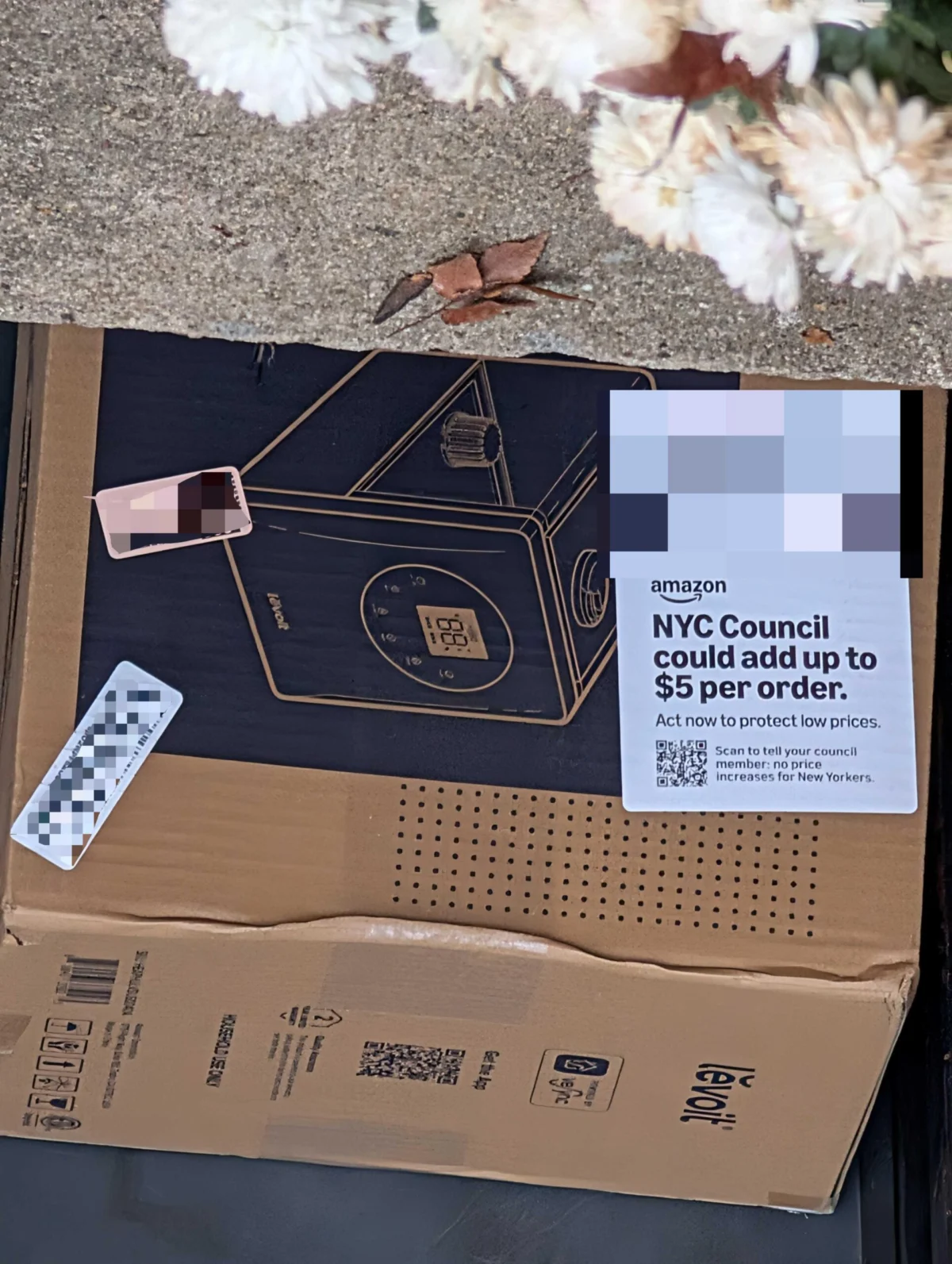
A contentious battle between e-commerce giant Amazon and the New York City Council has reached a new front, as the company is now affixing prominent warnings to shipping labels distributed within the city, directly informing consumers that proposed legislation could increase the cost of their orders by as much as $5. This latest maneuver is part of Amazon’s broader effort to counter the Delivery Protection Act, a bill that aims to overhaul how packages are delivered within the five boroughs by mandating stricter regulations for third-party delivery services and independent contractors.
The core of the Delivery Protection Act centers on a fundamental shift in the operational model of last-mile delivery in New York City. Currently, Amazon, like many other major online retailers, relies heavily on a network of third-party logistics companies and a substantial contingent of independent contractors to fulfill its vast delivery needs. This model often allows for flexibility and potentially lower operational costs. However, critics argue that it can lead to precarious working conditions for drivers, lack of benefits, and an uneven playing field for traditional delivery companies that adhere to more stringent labor laws and licensing requirements.
The proposed legislation seeks to address these concerns by requiring last-mile delivery firms that operate warehouses within the city to obtain official licenses. Furthermore, it mandates that these licensed entities must directly employ their delivery personnel, rather than classifying them as independent contractors. This would necessitate providing employees with benefits, minimum wage guarantees, and potentially other protections typically afforded to W-2 employees. The intent, according to proponents of the bill, is to foster a more stable and equitable delivery ecosystem, ensuring fair labor practices and a more responsible approach to urban logistics.
Amazon’s response to this regulatory push has been multifaceted and increasingly visible. Prior to the shipping label campaign, the company initiated a digital awareness offensive, deploying alerts within its mobile application and on its website. These notifications, designed to capture the attention of New York City shoppers, explicitly stated: "Attention NYC Council could add up to $5 per order." The extension of this message to physical shipping labels represents a significant escalation, bringing the perceived financial implications of the legislation directly into the homes of consumers, on the very packages they have ordered.
The company’s public stance, articulated through its corporate communications, is that the Delivery Protection Act, if enacted, would inevitably lead to increased operational expenses. These costs, Amazon asserts, would be passed on to consumers in the form of higher delivery fees and potentially slower service. The company has also dangled the specter of relocating its warehousing operations outside of the city’s boundaries, a move that could have significant economic repercussions for New York. Amazon’s argument hinges on the premise that the proposed regulations are economically punitive and would disrupt the convenience and affordability that consumers have come to expect from their online shopping experiences.
However, this narrative is met with strong opposition from a coalition of labor unions, city officials, and community advocates. These stakeholders contend that Amazon’s claims are an attempt to intimidate both the public and the City Council, framing the company’s actions as a display of corporate power and a disregard for the well-being of delivery workers and the broader community. Council Speaker Julie Menin and Mayor Zohran Mamdani have publicly characterized Amazon’s tactics as an effort to "threaten New Yorkers and intimidate this City Council" and have pointed to the company’s immense market capitalization, which hovers near $3 trillion, as evidence that its concerns about marginal cost increases are disingenuous. They argue that Amazon, with its vast financial resources, can absorb the costs associated with compliance without significantly impacting consumers or its profitability.

The debate over the Delivery Protection Act and Amazon’s aggressive opposition touches upon several critical themes shaping the modern economy, particularly in urban environments. Firstly, it highlights the ongoing tension between the traditional labor model and the rise of the gig economy. The independent contractor model, while offering flexibility for platforms and some workers, has increasingly come under scrutiny for its potential to erode worker protections and benefits. New York City, a densely populated and economically vital hub, is a particularly important testing ground for these evolving labor dynamics.
Secondly, the situation underscores the significant influence that large corporations can wield in shaping public policy. Amazon’s ability to disseminate its message directly to millions of consumers through its platform and now via physical shipments demonstrates a powerful capacity to influence public opinion and political discourse. This raises questions about the fairness of the regulatory process when confronted with the immense marketing and communication resources of multinational corporations.
Thirdly, the conflict delves into the complexities of urban logistics and the environmental and social impact of e-commerce. The proliferation of delivery vehicles contributes to traffic congestion, air pollution, and noise pollution in city centers. Regulations like the Delivery Protection Act can be seen as an attempt to create a more sustainable and less disruptive delivery infrastructure, but they also face resistance from companies that have optimized their operations for speed and cost efficiency, often at the expense of broader urban well-being.
From an economic perspective, the potential implications of the Delivery Protection Act and Amazon’s response are far-reaching. If the bill passes and Amazon follows through on its threats to relocate, it could lead to job losses and a reduction in tax revenue for the city. However, proponents argue that the long-term benefits of a more stable and equitable delivery workforce, coupled with potential improvements in urban quality of life, could outweigh these short-term economic losses. The success of such legislation often depends on careful calibration to balance economic realities with social objectives.
The debate also raises questions about the definition of "essential services" in a digital age. E-commerce has become an indispensable part of daily life for many New Yorkers, providing access to goods and services that might otherwise be difficult to obtain. However, the infrastructure that supports this convenience is not without its costs, both economic and societal. The Delivery Protection Act represents an attempt to internalize some of those costs and ensure that the benefits of this essential service are shared more equitably.
Looking ahead, the outcome of this legislative battle could set a precedent for other major cities grappling with similar issues. The strategies employed by both Amazon and its opponents will likely be studied and potentially emulated elsewhere. The success of the Delivery Protection Act will depend not only on its passage through the City Council but also on its ability to withstand legal challenges and its practical implementation. Amazon’s willingness to continue its public campaign, utilizing increasingly direct methods like shipping label warnings, suggests that the company views this as a high-stakes issue that warrants an aggressive and sustained response.
The intricate interplay between corporate power, labor rights, and urban governance is on full display in this New York City saga. As the debate continues, consumers are being directly engaged, albeit through a carefully curated message from Amazon, in a decision that will shape the future of commerce and employment in one of the world’s most important metropolitan areas. The coming weeks and months will be critical in determining whether New York City opts to prioritize worker protections and a more regulated delivery system, or if the economic pressures and the influence of powerful corporate entities will prevail. The resolution of this conflict will offer valuable insights into the evolving relationship between technology, labor, and urban development in the 21st century.




 Safa Marwah

 Ayu Aulia



 Lisa Mariana
