
 Lisa Mariana
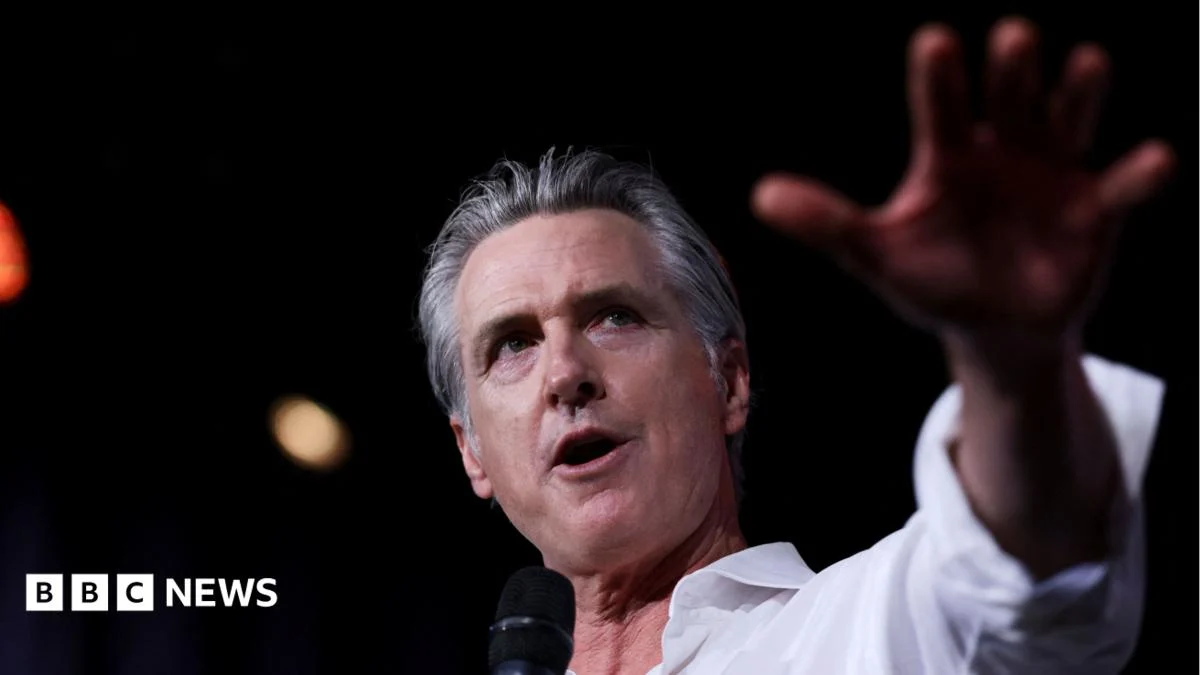
In a landmark exercise of executive clemency, California Governor Gavin Newsom has enacted a sweeping commutation of all 548 death sentences within the state’s correctional system, reclassifying them to life imprisonment without the possibility of parole. This unprecedented executive order, issued in the final phase of his gubernatorial tenure, fundamentally reshapes the landscape of capital punishment in the nation’s most populous state and ignites a renewed debate on justice, ethics, and the role of the state in administering lethal punishment. The governor’s decision marks a significant departure from decades of legal precedent and societal discourse surrounding the ultimate penalty, effectively dismantling California’s death row, which has long been the largest in the Western Hemisphere.
Governor Newsom articulated his rationale for this momentous action in an extensive letter accompanying the executive order. He emphasized a profound personal and philosophical evolution over his nearly three decades in public service, leading him to conclude that "state-sanctioned killing is incompatible with California’s values, undermines the foundations of our legal system, and diminishes each of us." The governor asserted that the state’s system for administering the death penalty is fundamentally flawed and has proven to be a "failure by every measure." He cited its inability to be applied fairly and its inherent risk of convicting innocent individuals, thereby compromising the integrity of the justice system. Newsom’s declaration underscored a moral imperative, stating that while many Californians rightly believe perpetrators of heinous crimes deserve severe retribution, "the state cannot morally kill them." He positioned life without the possibility of parole as the most stringent and ethically enforceable punishment available to the state, offering both accountability for grave offenses and a principled stance against capital punishment.
This sweeping commutation, though historic in its scale, builds upon earlier actions taken by Governor Newsom to halt executions in California. In 2019, he issued an executive order imposing a moratorium on the death penalty, a move that immediately spared the lives of the then-737 individuals on death row. That prior action also ordered the dismantling of the state’s execution chamber at San Quentin State Prison, citing the "immoral, unethical, and costly" nature of capital punishment. The current clemency order represents a definitive escalation of that earlier policy, permanently altering the legal status of every individual awaiting execution. Historically, California has grappled with the implementation of capital punishment since its reinstatement by voters in 1978. Despite having the largest death row population, the state has executed only 13 inmates since that time, with the last execution occurring in 2006. This protracted period without executions, coupled with extensive and costly appeals processes, had effectively rendered the death penalty a de facto life sentence for most condemned individuals, albeit one fraught with the psychological burden of impending execution and the continued expenditure of vast public resources.
The legal foundation for Governor Newsom’s action rests firmly on his constitutional clemency authority. As the chief executive, the governor possesses the power to grant pardons, commutations, and reprieves. Commutation, in this context, reduces a sentence to a less severe one, in this case, from death to life imprisonment without parole. This executive power is distinct from legislative repeal, which would require an act of the state legislature and likely a vote by the populace, given that the death penalty was reinstated by voter initiative. Newsom acknowledged the potential for public anger and pain resulting from his decision, particularly among victims’ families who may feel that justice is being subverted. He expressed that the weight of this decision would "always weigh heavily" on him, accepting full personal responsibility for its impact and asserting that he alone would bear the responsibility for each execution if they were to proceed. His commitment, he stated, was to follow his conscience for the welfare of the State of California, a constitutional duty he deemed paramount.
Beyond the ethical and moral considerations, the governor’s decision carries significant practical implications, particularly concerning the state’s fiscal health and judicial efficiency. Experts have long highlighted the exorbitant costs associated with maintaining California’s death penalty system. These costs stem from a multitude of factors, including prolonged and complex appeals processes, specialized legal counsel for indigent defendants, additional security measures for death row inmates, and the construction and maintenance of execution facilities. Studies have consistently indicated that housing and prosecuting death row inmates costs millions of dollars more per prisoner than life imprisonment cases. By commuting these sentences to life without parole, California stands to save substantial amounts of taxpayer money annually, redirecting resources that would otherwise be consumed by endless litigation and the unique administrative burdens of capital punishment. While the exact figures vary, estimates have often placed the additional cost of a single death penalty case, from trial through appeals, into the tens of millions of dollars over the lifetime of the inmate. The shift to life without parole, while still a significant expenditure, streamlines the legal process and eliminates the specialized costs associated with the death sentence itself.
The commutation also introduces a new dynamic into the lives of the now-former death row inmates. While their sentences are reduced, the imposition of "life without the possibility of parole" signifies that they will spend the remainder of their natural lives incarcerated, without any prospect of release. This designation is intended to ensure public safety while aligning with the governor’s ethical stance. For the victims and their families, the decision presents a complex emotional landscape. Newsom acknowledged this sensitivity, expressing hope that by allowing "these offenders [to] die in obscurity," society can "forever remember and honor the victims." This statement reflects an attempt to shift the focus from the protracted legal battles and public attention often surrounding death penalty cases to a more private and enduring remembrance of those who suffered. However, for many, the finality of an execution provides a form of closure that a life sentence, even without parole, may not offer.
Politically, Governor Newsom’s action is likely to be scrutinized through the lens of his national aspirations. As the Democratic leader of the largest state, and with his term limits approaching, Newsom is frequently mentioned as a potential contender for the presidency in 2028. This bold move positions him firmly within the progressive wing of the Democratic Party, aligning with growing calls for criminal justice reform and the abolition of capital punishment among a significant portion of the electorate. While it could bolster his support among progressive voters and human rights advocates, it also risks alienating more moderate or conservative segments of the population who remain staunch supporters of the death penalty. The timing of the decision, as he approaches the conclusion of his governorship, allows him to cement a legacy on a highly contentious issue without facing immediate electoral repercussions, though the long-term political ramifications for any future campaigns remain to be seen. His successor will inherit a state without a functioning death row, a significant departure from the status quo of previous administrations.
California’s decision stands in stark contrast to the federal approach to capital punishment under certain administrations. Under former President Donald Trump, a vocal proponent of the death penalty, the federal government ended a nearly two-decade moratorium on federal executions. During his first term, Trump oversaw 13 federal executions over a six-month period, marking a significant increase in the use of federal capital punishment. While the federal moratorium was reinstated under President Joe Biden, Trump’s subsequent executive order upon the commencement of his second term in 2025, which aimed to re-institute federal executions, highlighted the deep ideological divide on this issue at the national level. Though no federal executions have been carried out since that order, the power to prosecute capital crimes and order executions remains with both the federal government and individual state authorities, leading to a patchwork of policies across the United States. While some states have outright abolished the death penalty, others continue to retain it, albeit with varying degrees of implementation. California’s move adds significant weight to the growing movement towards abolition, particularly given its historical prominence in housing death row inmates.
The implications of Governor Newsom’s sweeping clemency extend beyond California’s borders, sending a powerful message to other states and potentially influencing the broader national and international discourse on capital punishment. It underscores the ongoing evolution of legal and ethical perspectives on the death penalty, even in jurisdictions that have historically retained it. This monumental executive action not only redefines justice for hundreds of individuals but also firmly establishes Governor Newsom’s legacy as a leader who fundamentally challenged the moral and practical efficacy of state-sanctioned killing, setting a precedent that will undoubtedly resonate in legal, political, and social spheres for years to come.


 Aura Kasih


 Ayu Aulia