
 Lisa Mariana
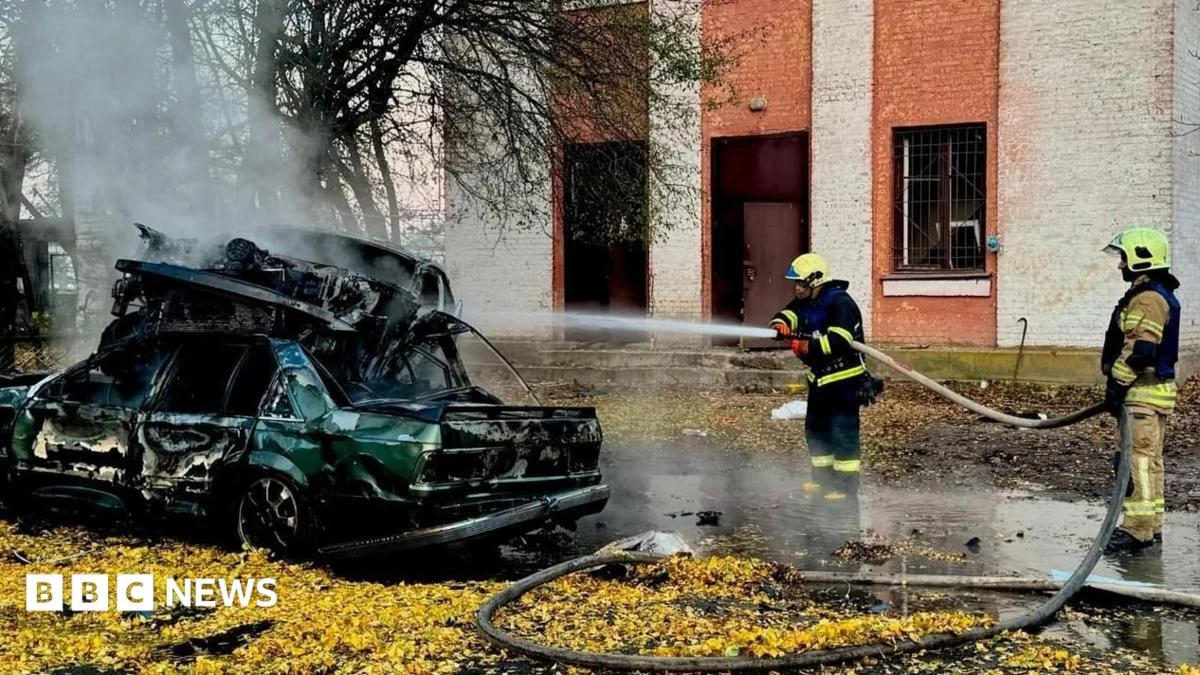
The tenuous humanitarian pause that had facilitated civilian egress from the Russian-occupied town of Oleshky, situated on the eastern bank of the Dnipro River in Ukraine’s Kherson Oblast, concluded late Sunday, coinciding with a pronounced surge in Russian aerial assaults that severed power connections for hundreds of thousands of Ukrainian residents across multiple regions. This dual development underscores the relentless and multifaceted nature of the ongoing conflict, characterized by a persistent targeting of civilian infrastructure and a fluctuating landscape of localized agreements amidst widespread hostilities. The expiration of the Oleshky ceasefire, which had offered a brief respite from the immediate dangers of the front lines, leaves the civilian population once again vulnerable to the direct impact of military operations, while the intensified bombardment of critical energy facilities plunges vast swathes of the country into darkness, exacerbating an already dire humanitarian situation as winter approaches.
The localized ceasefire in the vicinity of Oleshky, a town strategically positioned across from the regional capital of Kherson, had been a rare occurrence in a conflict marked by incessant fighting. Instituted just days prior, the truce permitted a limited window for civilians to evacuate the Russian-controlled settlement, which has been under significant pressure since Ukrainian forces liberated the western bank of the Dnipro in late 2022. While the cessation of hostilities held strictly within the designated humanitarian corridor, enabling a temporary reduction in immediate risk for those fleeing, military engagements persisted unabated across other sectors of the expansive front line. The conclusion of this fragile agreement at 22:59 Ukrainian time on Sunday night (21:00 GMT) inevitably raises concerns for the remaining population in Oleshky and the broader left-bank Kherson region, signaling a potential resumption of full-scale military activities without the protective umbrella of a humanitarian corridor. Such localized truces, often informal or tacit, highlight the complex and fragmented nature of the conflict, where humanitarian imperatives occasionally intersect with military realities, albeit fleetingly. The absence of a broader, internationally brokered ceasefire mechanism means that such pauses remain isolated exceptions rather than systemic safeguards, leaving populations exposed to the unpredictable ebb and flow of combat.
Concurrently with the expiry of the Oleshky truce, Ukraine experienced a significant escalation in Russian aerial attacks, primarily targeting its vital energy infrastructure. President Volodymyr Zelensky reported a substantial barrage on Saturday night, which impacted power grids in at least four distinct regions. This coordinated assault plunged hundreds of thousands of homes into darkness, representing a deliberate strategy to degrade Ukraine’s national resilience and inflict severe hardship upon its civilian populace. While emergency repair crews worked tirelessly throughout Sunday to restore essential services, some connections remained disrupted, illustrating the profound and lingering effects of such destructive strikes. The Dnipropetrovsk region, for instance, saw most services reconnected by early evening, yet over 60,000 customers continued to endure power outages, underscoring the scale of the damage and the immense logistical challenges involved in grid stabilization. These attacks are not isolated incidents but rather a continuation of a systematic campaign initiated by Russia in late 2022, aimed at crippling Ukraine’s energy sector and undermining civilian morale, particularly as colder months approach.
The strategic rationale behind Russia’s persistent targeting of energy infrastructure is multi-faceted. From a military perspective, it aims to hinder the logistics and operational capabilities of the Ukrainian armed forces, although Ukraine has demonstrated remarkable adaptability in maintaining military functions despite widespread blackouts. More significantly, these attacks serve as a tool of psychological warfare, intended to erode public support for the government, sow discord, and force Ukraine into concessions by making daily life unbearable. The disruption of electricity inevitably leads to interruptions in water supply, heating, and communications, creating cascading humanitarian crises that strain emergency services and civil administration. In the capital city of Kyiv, residents have become accustomed to frequent, scheduled power cuts, known as rolling blackouts, which can last for extended periods throughout the day, significantly impacting economic activity, public services, and the overall quality of life. This strategy seeks to transform the everyday existence of millions into a continuous struggle for basic necessities, thereby increasing pressure on the Ukrainian leadership.
The human toll of these intensified strikes remains tragically high. In the Vinnytsia region, an overnight strike claimed the lives of two individuals, including a 13-year-old girl, serving as a stark reminder of the indiscriminate nature of modern warfare and its devastating impact on non-combatants. Such incidents underscore the urgent need for robust air defense capabilities to protect civilian lives and critical infrastructure. The consistent targeting of populated areas and vital civilian facilities raises serious questions regarding adherence to international humanitarian law and the principles of distinction and proportionality. Each civilian casualty, particularly that of a child, not only represents an individual tragedy but also reinforces the narrative of systematic aggression against the Ukrainian people, fueling international condemnation and calls for accountability.
Amidst the barrage of Russian strikes, Ukraine has continued to conduct its own counter-offensive operations, both on the front lines and against strategic targets within Russian territory. President Zelensky confirmed a successful Ukrainian strike on a major missile fuel production facility in Russia’s Rostov region. This operation reportedly caused a significant fire and inflicted damage on four separate production units. Such deep-strike capabilities demonstrate Ukraine’s evolving capacity to project force beyond its borders, targeting elements of Russia’s military-industrial complex that directly support its ongoing aggression. The destruction or disruption of a missile fuel producer could potentially impact Russia’s ability to manufacture, maintain, or deploy certain types of missiles, thereby influencing the pace and intensity of future aerial attacks on Ukraine. These retaliatory strikes, often executed using unmanned aerial vehicles (UAVs) or specialized long-range assets, serve to complicate Russia’s logistical planning, force the diversion of resources for homeland defense, and signal Ukraine’s determination to contest the conflict across all domains.
The cumulative effect of these relentless attacks on Ukraine’s energy infrastructure has necessitated the implementation of emergency power cuts across the entire country. These measures, designed to prevent a complete collapse of the national grid, represent a severe imposition on daily life. Even as dedicated repair teams work around the clock, often under hazardous conditions, the scale of the damage frequently outstrips the pace of restoration. The sustained nature of Russia’s campaign means that as one facility is repaired, another is targeted, creating a perpetual cycle of destruction and reconstruction. This war of attrition against essential services demands immense national resources and international assistance to maintain functionality and prevent a humanitarian catastrophe, especially as winter temperatures begin to fall across the region.
Ukrainian President Volodymyr Zelensky, in a recent social media address, highlighted the "extremely high" intensity of Russian strikes over the preceding week. He explicitly stated that Russia was "trying to take maximum advantage of the shortage of ballistic missile interceptors" available to Ukraine. This observation underscores a critical vulnerability in Ukraine’s defense posture, particularly against sophisticated ballistic missiles that are notoriously difficult to intercept. These weapons, often launched from land-based systems or strategic aircraft, travel at hypersonic speeds and follow unpredictable trajectories, requiring advanced air defense systems for effective neutralization. Zelensky reiterated Ukraine’s daily communication with key international partners, including the United States and European allies, emphasizing the urgent requirement for additional Patriot missile systems. He described Patriot as "the only effective weapon for downing Russia’s deadly ballistic missiles," a sentiment echoed by numerous military analysts.
The plea for Patriot missiles is not new, but its renewed urgency reflects the escalating threat landscape. While Ukraine has received various air defense systems from its Western partners, including NASAMS, IRIS-T, and older Soviet-era systems adapted for modern combat, the Patriot system remains unparalleled in its capability to counter high-velocity ballistic threats. The scarcity of these advanced systems globally, coupled with their high cost and the extensive training required for their operation, presents a significant challenge for rapid deployment. Western nations face a complex balancing act: supporting Ukraine’s immediate defense needs while maintaining their own strategic reserves and navigating domestic political considerations. Zelensky expressed gratitude for the support received to date and for longer-term commitments, yet his call for "more immediate aid" highlights the critical gap between current provisions and the overwhelming demands of the battlefield. The ongoing debate within the international community about the scale and speed of military assistance, particularly regarding sophisticated air defense assets, will significantly influence Ukraine’s ability to protect its population and critical infrastructure against the relentless Russian aerial assault.
Looking ahead, the expiration of the Oleshky ceasefire and the intensified energy infrastructure attacks signal a hardening of the conflict dynamics. The humanitarian consequences of prolonged power and water disruptions, especially during winter, could be catastrophic, potentially leading to further internal displacement and a severe public health crisis. The ability of Ukraine to withstand these assaults hinges critically on its capacity to repair damaged infrastructure rapidly and, more importantly, to acquire sufficient advanced air defense systems to deter or neutralize incoming threats. The effectiveness of Ukrainian counter-strikes, such as the one in Rostov, while significant, cannot fully mitigate the impact of widespread infrastructural damage. The conflict, therefore, continues to evolve into a grueling war of attrition, where national resilience, technological superiority in defense, and unwavering international support remain paramount for Ukraine’s survival and its long-term security. The geopolitical implications of this sustained aggression against civilian targets are far-reaching, reinforcing the imperative for a robust and unified international response to uphold humanitarian principles and international law.



 Aura Kasih


 Safa Marwah
