
 Lisa Mariana
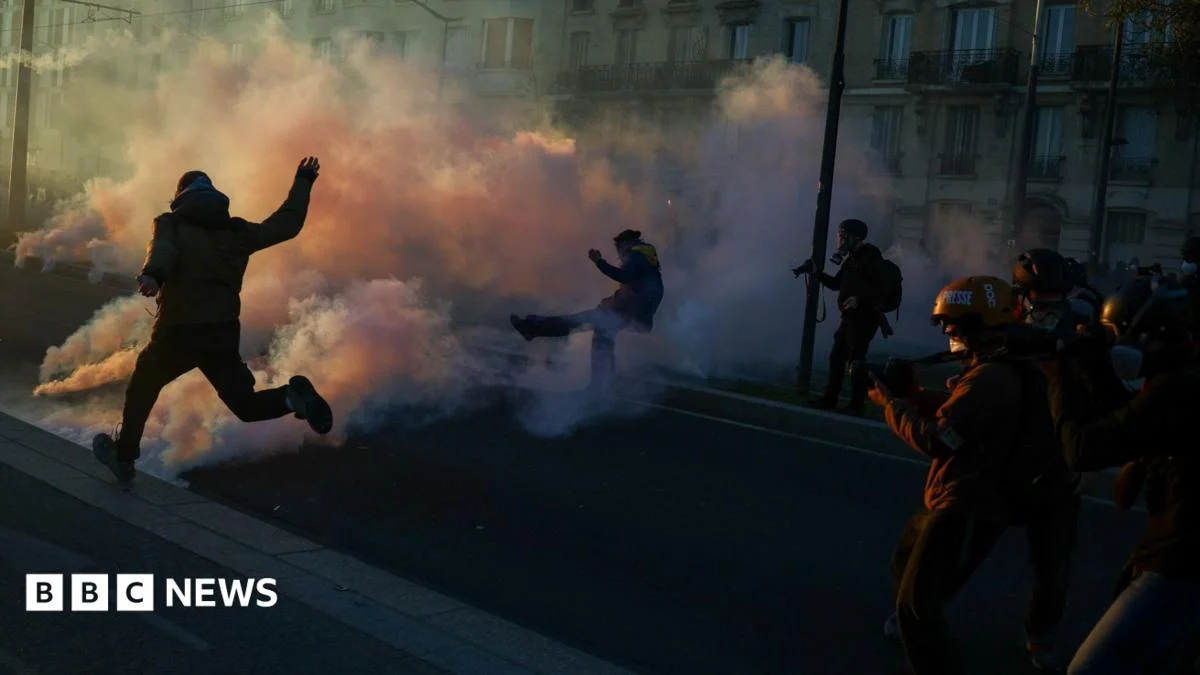
France experienced a third consecutive weekend of nationwide unrest as protestors clashed with law enforcement, particularly on the periphery of Paris, amid persistent public discontent over economic strain and the perceived inadequacy of public provisions. The demonstrations, characterized by the deployment of tear gas and significant police intervention, underscored a deepening chasm between a segment of the populace and the governing administration. Preliminary figures released by the Interior Ministry indicated a substantial turnout of over 320,000 individuals participating in demonstrations across the country, leading to at least 290 arrests as authorities intensified efforts to manage public order. In the capital, an estimated 70,000 individuals joined the protest, marking a significant mobilization despite extensive preventative measures implemented by security forces to avert a recurrence of the widespread violence, property damage, and opportunistic looting that marred previous demonstrations.
The latest wave of civil disturbances unfolded against a backdrop of meticulously planned security operations. Law enforcement agencies, having learned from the severe disruption and destruction witnessed two weeks prior, deployed an augmented police presence and adopted more proactive crowd control strategies. These preparations included pre-emptive street closures, enhanced surveillance capabilities, and the strategic positioning of specialized riot control units. Despite these measures, pockets of confrontation erupted, primarily in areas bordering central Paris, as protesters, many expressing profound frustration, attempted to circumvent police cordons or engaged directly with security personnel. The use of tear gas, a standard tactic in French crowd control, was observed in multiple instances, creating chaotic scenes and further inflaming tensions between demonstrators and the state apparatus.
The roots of the current discontent are multifaceted, primarily stemming from a pervasive sense of economic hardship and a perceived decline in the quality and accessibility of essential public services. Inflation, a global phenomenon exacerbated by geopolitical events and supply chain disruptions, has significantly eroded purchasing power for many French households. Soaring energy prices, increased food costs, and stagnant real wages have collectively imposed substantial financial pressure on a large segment of the population, particularly those on fixed incomes or in precarious employment. This economic squeeze fuels widespread anxiety about the future and a sense of being increasingly marginalized by broader economic trends.
Beyond the immediate economic grievances, a deep-seated frustration with the state of public services permeates the protest movement. Concerns range from underfunded healthcare systems, leading to longer waiting times and reduced access to care, to perceived shortcomings in the education sector, and inadequate public transport infrastructure, particularly in suburban and rural areas. These issues are often framed by protesters as a direct consequence of governmental austerity measures or misplaced priorities, fostering a belief that the social contract is being progressively undermined. The convergence of these economic and social grievances has created a fertile ground for popular mobilization, transcending traditional political affiliations and drawing participants from diverse socio-economic backgrounds.
France has a rich and often tumultuous history of social protest, with citizens frequently taking to the streets to voice dissent and demand change. From the revolutionary upheavals of centuries past to the more recent gilets jaunes (yellow vests) movement, student demonstrations, and widespread opposition to pension reforms, public demonstrations are a deeply ingrained feature of the nation’s political landscape. This historical context suggests that the current unrest is not an isolated phenomenon but rather a manifestation of recurring societal tensions. The current government, like its predecessors, faces the challenge of navigating these deeply entrenched traditions of public expression while simultaneously attempting to implement reforms and maintain national stability. The memory of the gilets jaunes movement, in particular, which saw prolonged and at times violent clashes, looms large over the current situation, informing both protester tactics and government responses.
The government’s strategy for managing these protests reflects a delicate balancing act between upholding public order and safeguarding the constitutional right to demonstrate. The "extensive preparations" noted by authorities involved a multi-pronged approach. Intelligence gathering was intensified to anticipate potential flashpoints and the movements of protest groups. On the ground, a substantial deployment of police and gendarmerie units aimed to cordon off sensitive areas, prevent access to government buildings and commercial districts, and rapidly disperse unauthorized gatherings. The tactical use of mobile units allowed for swift responses to emerging confrontations. The rationale behind such robust interventions, according to official statements, is primarily to prevent property damage, protect citizens and businesses, and maintain the integrity of public spaces, especially in light of the significant looting and vandalism witnessed in prior weeks. However, these assertive tactics also risk escalating tensions and drawing accusations of excessive force from civil liberties groups and protest sympathizers.
From an expert analytical perspective, the recurring nature of these protests signals more profound structural issues within French society and its political economy. Economists point to the challenges of adapting to globalization, the uneven distribution of wealth, and the difficulties in reforming a historically centralized and heavily regulated economy. Sociologists observe a growing sense of disenfranchisement among segments of the population who feel their voices are not heard by the political establishment, leading to a breakdown of trust in democratic institutions. Political scientists analyze how these movements challenge the efficacy of traditional political parties and trade unions, with spontaneous, digitally organized protests often bypassing established channels of representation. The current demonstrations can be viewed as symptoms of a broader crisis of legitimacy, where the government’s capacity to deliver on its promises and address fundamental societal grievances is increasingly questioned.
The economic implications of prolonged unrest are significant. While the immediate impact on national GDP may be marginal, sustained demonstrations and associated disruptions can deter tourism, particularly in major urban centers like Paris, which relies heavily on international visitors. Business confidence can be eroded, potentially leading to delayed investments and reduced consumer spending. For smaller businesses directly affected by closures or property damage, the consequences can be devastating. Moreover, the cost of deploying large numbers of security personnel and repairing damaged infrastructure places an additional burden on public finances, diverting resources that could otherwise be allocated to improving public services or stimulating economic growth.
Looking ahead, the trajectory of these protests remains uncertain, contingent on a confluence of factors. The government faces immense pressure to articulate a compelling vision and implement policies that genuinely address the underlying causes of discontent. A failure to do so risks further alienation and potentially an intensification of protest activity. Conversely, overly repressive tactics could backfire, galvanizing greater opposition and drawing international condemnation. Potential de-escalation could arise from a combination of factors: genuine dialogue and concessions from the government, a shift in public sentiment away from confrontation, or simply the exhaustion of the protest movement itself. However, without addressing the fundamental issues of economic inequality and the quality of public services, the potential for future eruptions of social unrest will persist.
The current demonstrations in France are not merely isolated incidents of public disorder; they are a powerful barometer of deep-seated societal frustrations. They underscore the ongoing challenge for contemporary democracies to reconcile economic realities with social expectations, to ensure equitable access to public services, and to foster a sense of inclusion among all citizens. The outcome of this period of unrest will not only shape France’s domestic political landscape but could also offer broader lessons for other European nations grappling with similar socio-economic pressures and the imperative to maintain social cohesion in an era of rapid change and economic uncertainty. The coming weeks will be crucial in determining whether the current cycle of confrontation gives way to constructive engagement or escalates into a more profound crisis of governance.



 Aura Kasih

 Safa Marwah