
 Aura Kasih
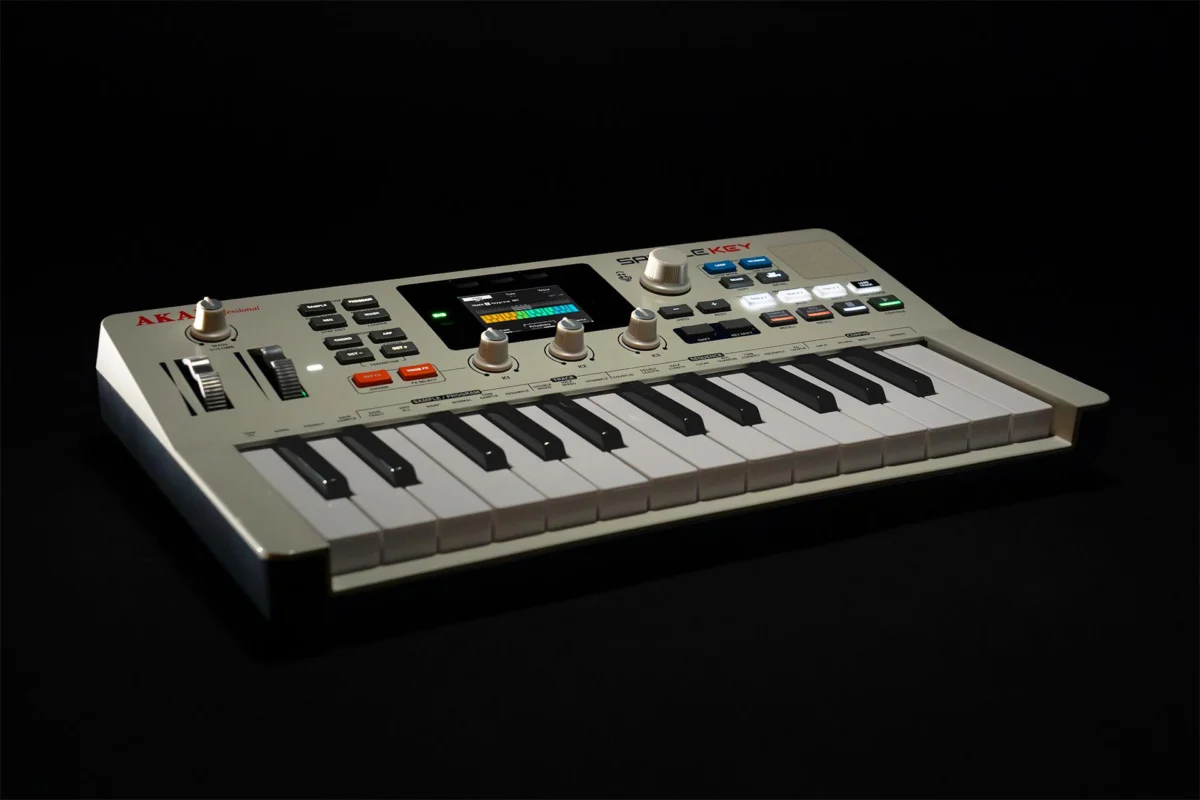
Akai has officially pulled back the curtain on its highly anticipated MPC Sample Key, a groundbreaking instrument that promises to redefine sample-based music production through its innovative features and a commitment to open-source development. While details regarding its official release date and pricing remain under wraps, exclusive imagery obtained by this publication provides an unprecedented look into the device’s robust capabilities and its strategic departure from its predecessor, signaling a significant evolution in Akai’s renowned MPC lineage.
The MPC lineage has long been a cornerstone of hip-hop and electronic music production, establishing itself as an indispensable tool for beatmakers and producers worldwide. The introduction of the MPC Sample Key represents a strategic expansion of this legacy, moving beyond the established paradigm of drum sequencing to embrace a more melodic and harmonically focused approach to sample manipulation. This pivot is evident in the Sample Key’s refined control layout and the deliberate omission of certain features that characterized its predecessor, the MPC Sample.
A key differentiator for the MPC Sample Key lies in its explicit design for pitched sample playback. While retaining the intuitive three context-sensitive encoders and a prominent main encoder, the Sample Key eschews the "chop" button, a staple for breaking down drum breaks on the MPC Sample. This suggests a fundamental shift in the instrument’s intended application, moving away from the granular manipulation of percussive elements towards a more expressive and tonal exploration of sampled audio.
Further reinforcing this melodic focus are the dedicated pitch and modulation wheels, a feature conspicuously absent from the original MPC Sample. These additions empower musicians to imbue their sampled material with nuanced vibrato and dynamic pitch bends, essential for crafting compelling lead lines and expressive textures. The inclusion of dedicated octave range buttons further enhances the keyboard’s versatility, allowing users to easily navigate and manipulate the pitch of their samples across a broad spectrum. The presence of buttons labeled "chord" and "arp" strongly indicates the integration of advanced harmonizing and pattern generation capabilities. A chord mode would enable users to trigger complex harmonic voicings with single key presses, while an arpeggiator would allow for the creation of intricate melodic sequences derived from sampled notes. These features, while potentially adaptable for rhythmic experimentation, are fundamentally geared towards melodic and bassline creation, underscoring the Sample Key’s departure from purely percussive workflows.
The implications of these feature sets are significant. The ability to easily access and manipulate chords and arpeggiated patterns from sampled sounds opens up a vast sonic palette for producers. Imagine triggering complex synth pads derived from vocal snippets, or creating intricate basslines from sampled instrument phrases. This functionality democratizes sophisticated melodic and harmonic arrangement, making it accessible to a wider range of users, regardless of their formal music theory background. The strategic replacement of the chop function with these melodic tools signifies Akai’s clear intention to position the Sample Key as a primary instrument for melodic composition and performance, rather than solely a drum machine.

Another intriguing addition is the presence of a dedicated looper function. This feature suggests a strong emphasis on live performance and real-time sound layering. Producers can envisage building complex sonic tapestries by looping and manipulating sampled phrases on the fly, creating dynamic and evolving performances. This capability aligns with the growing trend of incorporating hardware samplers into live electronic music setups, offering a tactile and immediate way to interact with and transform audio.
The departure from the "Flex Beat" effects found on the original MPC Sample in favor of a new effect dubbed "Swarm" hints at Akai’s commitment to sonic innovation. While the precise nature of "Swarm" remains to be fully elucidated, its introduction suggests the development of novel audio processing algorithms designed to complement the Sample Key’s melodic and textural capabilities. This could encompass anything from unique chorus and flanger variations to entirely new forms of sound manipulation that encourage experimental sound design.
Echoing the all-in-one philosophy of its predecessor, the MPC Sample Key retains the integrated microphone and speaker, facilitating immediate and unhindered music creation. This design choice ensures that users can begin sampling, sequencing, and performing without the need for external peripherals, promoting spontaneity and portability. While the rear panel configurations are not yet fully detailed, the front panel’s connectivity options strongly suggest the inclusion of CV (Control Voltage) outputs. This is a crucial development for users invested in modular synthesis, enabling seamless integration with Eurorack and other modular systems. The ability to send and receive CV signals allows the Sample Key to act as a central controller for an entire modular setup, bridging the gap between sample-based production and the experimental world of analog synthesis.
Perhaps the most significant aspect of Akai’s announcement, however, is its commitment to open-sourcing the Sample Key’s software. This decision is a powerful endorsement of the vibrant and innovative music hardware hacking community. By providing open access to the device’s firmware and software architecture, Akai is inviting developers and enthusiasts to explore, modify, and extend the Sample Key’s functionality. This approach fosters a collaborative ecosystem where users can contribute to the instrument’s evolution, developing custom features, alternative workflows, and entirely new sonic possibilities that Akai itself might not have envisioned.
The implications of an open-source approach are far-reaching. For the modding community, it represents an unprecedented opportunity to delve into the inner workings of a professional-grade music instrument. This could lead to the development of specialized plugins, advanced sequencing modes, custom effect algorithms, and even entirely new operating system functionalities. For Akai, it cultivates a loyal and engaged user base, fostering a sense of ownership and shared development. It also provides invaluable feedback and ideas that can inform future product development, creating a virtuous cycle of innovation. Furthermore, open-sourcing can democratize access to advanced music production tools, allowing users to tailor the instrument to their specific creative needs, potentially lowering the barrier to entry for complex sound design and composition.
The MPC Sample Key’s strategic positioning as a melodic and harmonically oriented instrument, coupled with its open-source software commitment, signals a forward-thinking approach from Akai. It acknowledges the evolving landscape of music production, where the lines between hardware and software, traditional instruments and digital tools, are increasingly blurred. By embracing a philosophy of user-driven innovation, Akai is not just releasing a new product; it is fostering a creative platform designed to empower musicians and push the boundaries of what is possible in sample-based music creation. The anticipation surrounding its launch is palpable, and the potential for this instrument to inspire a new generation of sonic explorers is immense. The MPC Sample Key is poised to become a testament to Akai’s enduring legacy and its commitment to the future of music technology.



 Lisa Mariana