Aura Kasih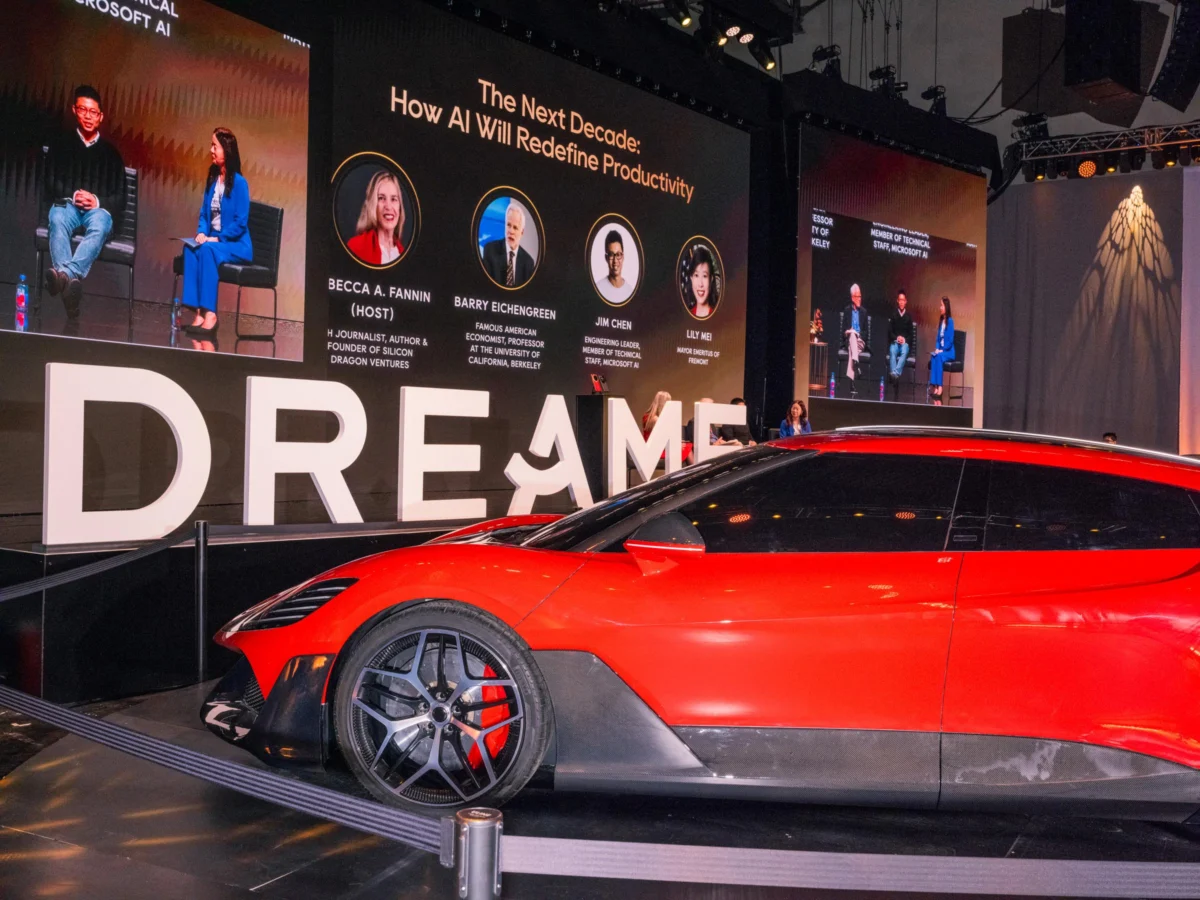
A once-hyped venture by Chinese consumer electronics giant Dreame, aimed at revolutionizing personal transportation with a rocket-assisted electric vehicle, has reportedly been dismantled due to a significant drying up of government funding, signaling a harsh recalibration of the company’s ambitious diversification strategy.
In a significant strategic pivot, Dreame, a company that rapidly ascended to global prominence through its advanced vacuum cleaner technology, has reportedly shuttered its ambitious automotive division, codenamed "Project Starry Sky." This dramatic turn of events, detailed by industry observers, marks the end of a bold, albeit ultimately unrealized, bid to enter the highly competitive and capital-intensive automotive market. The project, which at its zenith reportedly employed over a thousand individuals, is now largely defunct, with only essential administrative and legal personnel remaining to oversee its formal dissolution.
Dreame’s official statement on the matter described the move as a "recent adjustment to certain operations that were in the exploratory phase." The company intends to re-focus its resources on four core business pillars: smart home solutions, outdoor and garden equipment, smart mobility infrastructure, and embodied artificial intelligence. This recalibration underscores a broader shift in the company’s strategic priorities, moving away from the high-risk, high-reward pursuit of a novel vehicle concept towards more established or adjacent technological domains.
The abrupt halt to Project Starry Sky is intrinsically linked to recent policy shifts within China’s regulatory landscape. The Chinese government, in an effort to exert greater control and oversight over its burgeoning $3.4 trillion private fund industry, has implemented new rules that have cast a critical eye on the financial practices of large conglomerates. Dreame, having aggressively expanded beyond its core vacuum cleaner business into a sprawling network of nearly a thousand affiliated ventures—spanning smartphones, robotics, and notably, automobiles—found itself under increased scrutiny. Much of this rapid diversification was reportedly underwritten by government capital, and Beijing’s renewed focus on financial accountability has evidently curtailed the open-ended funding that previously fueled such expansive growth. This governmental re-evaluation of investment priorities is not unique to Dreame and reflects a wider trend of increased fiscal prudence and strategic alignment within China’s tech sector.
Earlier in the year, Dreame had generated considerable buzz and anticipation at a San Francisco technology exposition with the unveiling of the "Nebula Next 01 Jet Edition." This concept vehicle was presented as a paradigm of future automotive engineering, boasting an audacious claim of achieving a 0 to 60 mph acceleration in an astonishing 0.9 seconds, purportedly facilitated by integrated rocket boosters. The vehicle was also showcased with advanced technological specifications, including a novel sulfide-based solid-state battery with an exceptional energy density exceeding 450 Wh/kg, and an estimated range of over 550 kilometers (approximately 341.7 miles). The company further asserted that its proprietary booster technology could generate a staggering 100 kilonewtons of thrust, painting a picture of a vehicle that transcended conventional performance benchmarks.
However, the spectacular claims surrounding the Nebula Next 01 Jet Edition quickly attracted skepticism from industry analysts and engineers. Fundamental questions arose regarding the practical feasibility and physical limitations of achieving such extreme acceleration figures in a production-ready passenger vehicle. Reports from former employees, as cited by industry publications, revealed that the concept vehicle displayed at the San Francisco event was, in essence, a facade. It reportedly lacked a functional chassis and was remotely operated to simulate performance during demonstrations, a revelation that exposed the significant chasm between the company’s marketing narrative and the actual engineering reality. While concept cars often exist in a realm of idealized design rather than immediate production readiness, the extent of the purported deception surrounding the Nebula Next 01 has raised significant concerns about the company’s transparency and product development integrity.

The demise of Dreame’s rocket-car dream echoes cautionary tales from other ambitious ventures in the electric vehicle space, particularly those with similar patterns of rapid, seemingly unfunded expansion. The trajectory of Faraday Future, another Chinese-backed enterprise with grand aspirations for electric and autonomous vehicles, offers a striking parallel. Nearly a decade prior, Faraday Future encountered severe financial and operational hurdles, exacerbated by accusations of misleading public demonstrations, including the alleged remote operation of self-driving vehicles during public events. These parallels suggest a recurring challenge for companies attempting to disrupt established industries through bold, often unsubstantiated, technological pronouncements without a robust foundation of engineering and financial stability.
The strategic rationale behind Dreame’s initial foray into automotive development, particularly with a focus on such an extreme performance concept, warrants examination. Companies often explore adjacent technological fields to leverage existing R&D capabilities, diversify revenue streams, and enhance brand prestige. For Dreame, a leader in smart home appliances with a strong foundation in battery technology and motor engineering, the automotive sector might have appeared a logical, albeit ambitious, extension. The allure of the electric vehicle market, driven by global trends towards sustainability and advanced mobility, is undeniable. Furthermore, the prospect of developing a halo product, like the Nebula Next 01, could serve as a powerful marketing tool to signal technological prowess and attract further investment and talent across the entire organization.
The development of a concept vehicle, even one as speculative as the rocket-boosted car, requires substantial investment in research and development, prototyping, and talent acquisition. Dreame’s "Project Starry Sky" would have necessitated expertise in areas such as advanced battery chemistry, high-performance electric powertrains, sophisticated chassis design, vehicle dynamics, safety engineering, and sophisticated software integration for autonomous driving capabilities. The sheer ambition of integrating rocket propulsion into a consumer vehicle, while conceptually intriguing, presents formidable engineering challenges related to thermal management, safety, regulatory compliance, and long-term durability, all of which would demand exceptionally high levels of investment and innovation.
The shift in government funding priorities in China is a critical contextual factor. Beijing’s industrial policy has historically played a significant role in nurturing emerging technologies and strategic industries. However, this support has also been subject to periodic adjustments as the government seeks to optimize resource allocation, promote sustainable growth, and mitigate financial risks. The tightening of regulations around private funds and increased scrutiny of investment practices suggest a move towards more disciplined and outcome-oriented support for technological ventures. For companies like Dreame, which benefited from earlier phases of more expansive, potentially less stringent, government backing, this regulatory shift represents a significant challenge. It necessitates a demonstrable path to profitability and market viability, rather than reliance on continued capital infusion for exploratory projects.
The implications of Dreame’s automotive project’s termination extend beyond the company itself. It serves as a stark reminder of the immense capital, technical expertise, and regulatory navigation required to succeed in the automotive industry, particularly in the rapidly evolving electric vehicle sector. The barriers to entry remain exceptionally high, and even well-funded companies with strong technological foundations can falter when faced with the complexities of vehicle design, manufacturing, supply chain management, and global market penetration.
Dreame’s stated intention to focus on "smart mobility" moving forward, rather than full vehicle production, suggests a more pragmatic approach to its automotive ambitions. This could encompass the development of components, software solutions, charging infrastructure, or mobility services, areas where the company’s existing technological strengths might be more readily applicable and less capital-intensive to develop. The embodied AI pillar also points towards a continued interest in advanced robotics and intelligent systems, which could find applications in future mobility solutions or other advanced technology sectors.
The narrative of Dreame’s rocket-car dream is ultimately one of ambition meeting economic reality. While the company’s initial foray into the automotive space was marked by a bold vision and impressive conceptualization, the withdrawal of critical funding has brought that vision to a premature end. The future trajectory of Dreame will depend on its ability to effectively pivot its resources and expertise towards its redefined core business areas, learning from the challenges and lessons of its ambitious, albeit ultimately unfulfilled, automotive aspirations. The industry will be watching to see if the company can translate its proven success in consumer electronics into sustained leadership in its chosen new frontiers.




 Lisa Mariana
 Safa Marwah
 Ayu Aulia