Lisa Mariana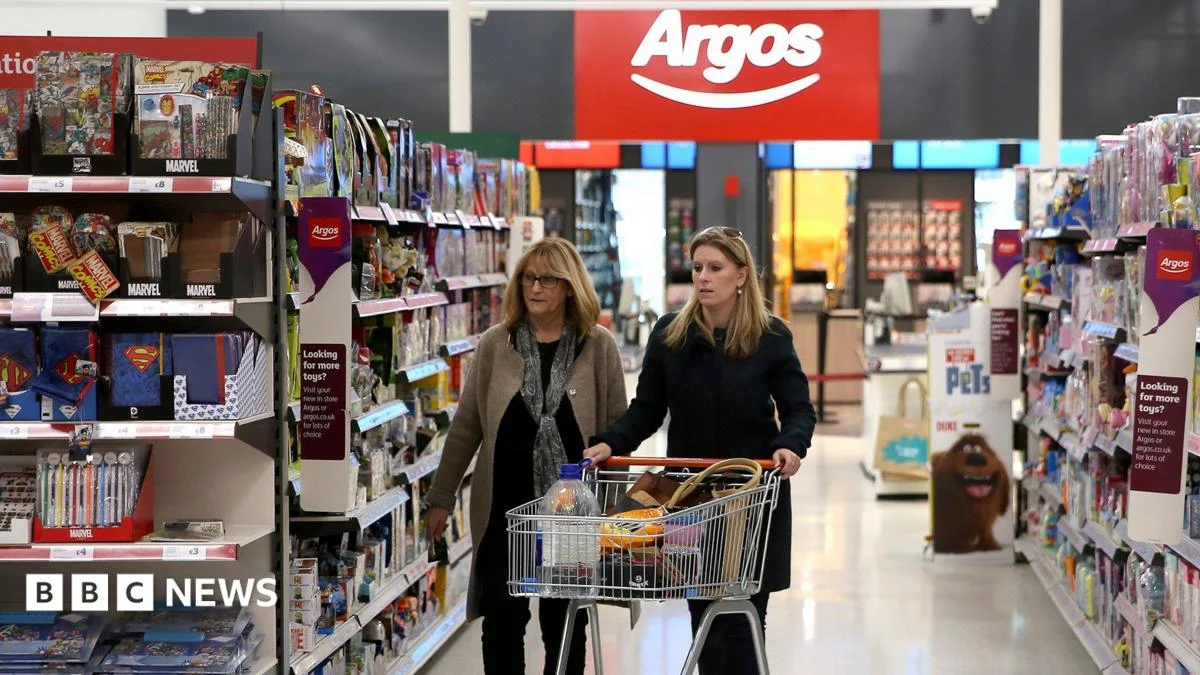
J Sainsbury plc, the prominent UK supermarket giant, has finalized an agreement to offload its general merchandise subsidiary, Argos, for a sum of £120 million, marking a decisive strategic pivot towards its foundational food retail enterprise. This significant divestment to Swift Partners, a newly formed entity led by former Co-operative Group executive Richard Pennycook, aims to streamline Sainsbury’s portfolio while promising operational continuity for Argos customers, employees, and suppliers, ensuring no immediate disruption to its widespread retail presence or customer offerings.
The transaction, valued at £120 million, represents a calculated move by Sainsbury’s to divest an asset that, despite its brand recognition, has been perceived as a non-core element within its broader grocery-centric strategy. Swift Partners, specifically established for this acquisition, brings together a consortium of investors with considerable retail experience, spearheaded by Richard Pennycook, whose track record includes steering the Co-operative Group through significant transformations. The completion of this intricate deal is anticipated by February of the upcoming year, paving the way for a new chapter in Argos’s nearly five-decade history.
For Sainsbury’s, this divestment is the culmination of a protracted strategic review and a clear signal of its intensified focus on its core food business amidst a fiercely competitive grocery landscape. The supermarket chain had acquired Argos, along with Habitat and other retail brands under the Home Retail Group, in a substantial £1.4 billion deal in 2016. At the time, the rationale was to leverage Argos’s extensive distribution network and digital capabilities to enhance Sainsbury’s omnichannel retail strategy. However, over time, the integration proved challenging, and Argos’s performance metrics often lagged behind expectations, prompting Sainsbury’s to re-evaluate its long-term viability within the group. This recent sale follows an earlier divestment in 2024, where Sainsbury’s sold Argos financial services, which manages the Argos card, for approximately £720 million, further indicating a gradual disaggregation of the acquired Home Retail Group assets. Prior attempts to offload parts of Argos also surfaced, including discussions with Chinese online retailer JD.com last September, which ultimately did not materialize, underscoring the complex nature of finding a suitable buyer for a brand of Argos’s scale and operational model.
Under its new stewardship, Argos is poised to maintain its existing operational footprint and customer propositions. Swift Partners has committed to a "business as usual" approach for Argos customers, employees, and its supply chain partners. This commitment translates into several key continuities: Argos will continue to operate its popular shop-in-shop format within Sainsbury’s supermarkets, Habitat products will remain available through Argos channels, and the widely utilized Nectar loyalty points scheme will continue to be integrated across both Argos and Sainsbury’s platforms. Sainsbury’s chief executive, Simon Robert, explicitly affirmed these points, emphasizing the importance of a seamless transition for all stakeholders. Crucially, the nearly 14,000 employees currently working for Argos are expected to transfer to Swift Partners as part of the acquisition, providing a degree of stability and continuity for its substantial workforce.
Richard Pennycook, representing Swift Partners, has articulated a strong belief in Argos’s inherent potential and future prospects. His vision encompasses significant investment and a commitment to building upon the brand’s existing progress. He highlighted the potential for expanding Argos’s physical presence, including the possibility of opening new standalone stores. Intriguingly, Pennycook also did not dismiss the notion of reintroducing the iconic Argos print catalogue, a feature that, though discontinued, holds considerable nostalgic value for generations of British consumers. This suggests a nuanced approach that seeks to blend modern retail strategies with elements that resonate deeply with the brand’s heritage.
Argos, founded in 1973, holds a unique place in the British retail landscape. It pioneered a distinctive shopping model where customers would browse a substantial catalogue – famously dubbed the "laminated book of dreams" by comedian Bill Bailey – and place orders for products that were then retrieved from in-store warehouses. This model, revolutionary for its time, provided immediate gratification for a vast array of general merchandise. While the physical catalogue has since been replaced by an online presence and in-store digital tablets, its legacy endures. Today, Argos operates an extensive network across the UK, comprising 667 stores. Of these, 201 function as traditional standalone retail units, while a significant 466 are integrated within Sainsbury’s supermarkets, leveraging shared footfall and operational synergies. Furthermore, Argos boasts over 450 collection points, underscoring its broad accessibility and robust click-and-collect capabilities.
Retail analysts have largely welcomed Sainsbury’s decision to divest Argos, viewing it as a strategic rationalization. Clive Black, a prominent retail analyst, has long questioned the fundamental alignment between Argos’s general merchandise offering and Sainsbury’s core grocery business, describing the supermarket group’s efforts to divest Argos as "challenging and prolonged." He characterized Argos as a "suboptimal performer from a financial perspective" within the Sainsbury’s portfolio, suggesting that its distinct operational model and product categories created a strategic divergence that hindered overall group performance. Catherine Shuttleworth, another respected retail analyst, echoed this sentiment, arguing that Sainsbury’s primary focus on its supermarket arm inevitably led to Argos being "distracted" and not receiving the dedicated attention required for optimal growth. However, under new, dedicated ownership, Shuttleworth sees substantial potential for Argos to evolve into a "really digital-first business" capable of challenging established online retail giants, including Amazon, in the competitive e-commerce arena. This perspective highlights the opportunity for Argos to flourish with a management team solely focused on its development and innovation.
Financially, Sainsbury’s latest results for the first three months of the current year indicated a mixed performance. While group-wide sales experienced a modest increase of 3.1%, sales specifically attributable to Argos saw a slight dip of 0.5%. This divergence in performance further supports the strategic rationale for separating the two entities, allowing Sainsbury’s to concentrate resources on its stronger performing segments and Argos to pursue its own growth trajectory without the constraints of a diversified parent company.
From a labor perspective, the announcement has naturally generated a degree of uncertainty among Argos employees. Bally Auluk, national officer at Usdaw, the union representing Argos workers, acknowledged these concerns. However, he also expressed a cautious welcome for Swift Partners’ commitment to maintaining Argos’s existing operational model, which includes "store in stores, standalone stores and local fulfilment centres." This commitment is crucial for safeguarding jobs and ensuring the continuity of service that customers have come to expect.
In the broader context of the UK retail sector, this transaction reflects an ongoing trend of major retailers streamlining their portfolios to enhance efficiency and focus on core competencies. The challenges posed by evolving consumer habits, the rise of e-commerce, and persistent inflationary pressures have compelled companies to make difficult strategic choices. For Sainsbury’s, shedding Argos allows for a sharper focus on grocery innovation, price competitiveness, and supply chain optimization – critical elements in a fiercely contested market. For Argos, under the leadership of Swift Partners and Richard Pennycook, this marks an opportunity for rejuvenation and strategic repositioning, potentially leveraging its unique heritage and widespread physical and digital presence to carve out a distinct and competitive niche in the modern retail landscape. The coming years will reveal whether this strategic realignment proves to be a catalyst for sustained growth and profitability for both entities.


 Aura Kasih
 Safa Marwah