Safa Marwah
Microsoft has initiated a significant overhaul of its Windows Insider Program, fundamentally redesigning the experience for early adopters and developers as part of a strategic imperative to enhance the stability and user satisfaction with the Windows 11 operating system. This comprehensive restructuring aims to address long-standing concerns regarding the program’s complexity and the efficacy of feedback integration, signaling a pivotal shift towards a more transparent and responsive development paradigm.
The Windows Insider Program (WIP), established as a crucial conduit for public beta testing, has historically allowed millions of users to engage with preliminary builds of Windows, offering invaluable insights and bug reports to Microsoft’s engineering teams. However, the program’s evolution over recent years, particularly in the context of Windows 11’s development cycle, led to a perceived disconnect between tester contributions and tangible improvements in the final product. This culminated in widespread feedback that the program, despite its potential, often failed to translate community input into a consistently refined and reliable user experience, contributing to a broader narrative of instability surrounding the latest iteration of the operating system.
The Genesis of Discontent: Navigating a Labyrinthine Feedback System
For a considerable period, the operational framework of the Windows Insider Program faced mounting criticism for its convoluted structure and opaque feature rollout mechanisms. What began as a relatively straightforward system, designed to gather early telemetry and feedback, gradually transformed into a multi-tiered channel architecture that, rather than clarifying the development pipeline, introduced layers of ambiguity for participants. This complexity was exacerbated by Microsoft’s internal "Controlled Feature Rollout" (CFR) system, a methodology designed to gradually introduce new functionalities to subsets of users to mitigate risk and gather targeted data. While strategically sound from an engineering perspective, CFR often left Insiders in a state of bewilderment.
Testers frequently reported the frustration of encountering announcements for exciting new features, only to discover that these functionalities were inaccessible on their own updated systems, despite being enrolled in what they believed were the most advanced testing channels. This disparity fostered a sense of disillusionment, as the promise of cutting-edge access often evaporated into a fragmented and inconsistent experience. The principal architect overseeing the Windows Update experience at Microsoft candidly acknowledged this frustration, highlighting it as the "single biggest frustration" voiced by the Insider community. The necessity for advanced users to resort to unofficial, third-party utilities, such as ViveTool, to manually activate hidden features underscored the systemic inefficiencies and the chasm between user expectation and program reality. Such workarounds, while demonstrating the community’s dedication, were antithetical to the seamless, collaborative testing environment the program was intended to foster.
The proliferation of multiple channels—initially Rings, later transitioned to Channels mirroring the Chromium browser’s development branches (Dev, Beta, Canary, Release Preview)—intended to categorize builds by stability and development stage, paradoxically led to confusion. Users struggled to discern which channel genuinely offered the earliest, most experimental features versus those closer to release. This lack of clarity not only diluted the quality of targeted feedback but also diminished the overall engagement of the Insider community, as the incentive to participate waned when the direct impact of one’s contributions seemed attenuated. The program’s inability to consistently deliver on the promise of an early, transparent look at Windows’ future became a significant impediment to its stated goals of enhancing reliability and user satisfaction.
A New Blueprint: Simplicity, Transparency, and Direct Engagement
In response to these systemic challenges and the vocal feedback from its dedicated community, Microsoft has embarked on a fundamental redesign of the Windows Insider Program. The cornerstone of this revitalization is a profound simplification of the channel structure, transitioning from a multifaceted system to a more intuitive two-tiered approach. This strategic pivot is underpinned by a commitment to enhanced transparency and a more direct, predictable engagement model for testers.

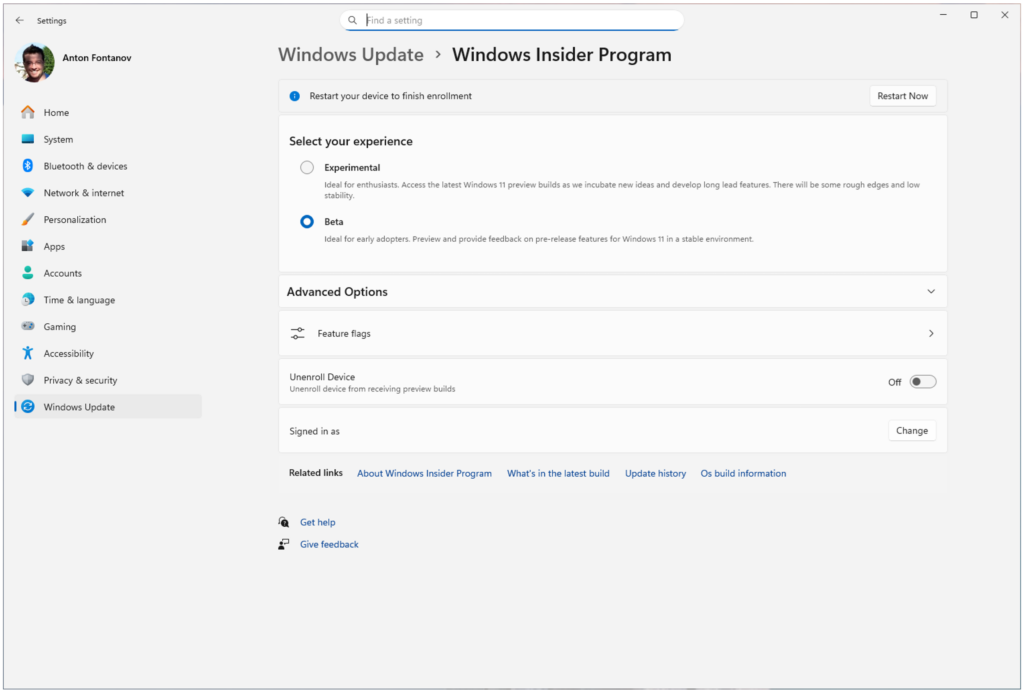
The newly introduced channels are designated as ‘Experimental’ and ‘Beta’, each serving a distinct purpose within the development lifecycle. The ‘Experimental’ channel is positioned as the vanguard of innovation, effectively superseding the previous Dev and Canary channels. Its nomenclature explicitly communicates its purpose: to provide access to the earliest, most exploratory builds of Windows, which may contain highly unstable features, proof-of-concept functionalities, or components that may never ultimately ship in a production release. This channel is tailored for highly technical users, developers, and enthusiasts who possess a deep understanding of software development nuances and are willing to tolerate significant instability in pursuit of glimpsing the bleeding edge of Windows innovation. The expectation in this channel is that feedback will be crucial in shaping the fundamental direction of nascent features, even if the features themselves are highly volatile.
Complementing the Experimental channel is the refined ‘Beta’ channel, an evolution of its predecessor, designed for a broader cohort of early adopters. This channel will host builds that are considerably more stable than those in the Experimental branch, featuring functionalities that are nearing completion and are on a clearer path towards eventual public release. A significant policy change within the Beta channel is the complete cessation of gradual feature rollouts. This means that any new features detailed in the release notes for a Beta build will be immediately accessible to all participants in that channel. This commitment directly addresses one of the most significant pain points identified by the Insider community, ensuring that testers in the Beta channel receive a consistent and complete experience, thereby facilitating more comprehensive and reliable feedback on features slated for imminent integration into stable Windows releases.
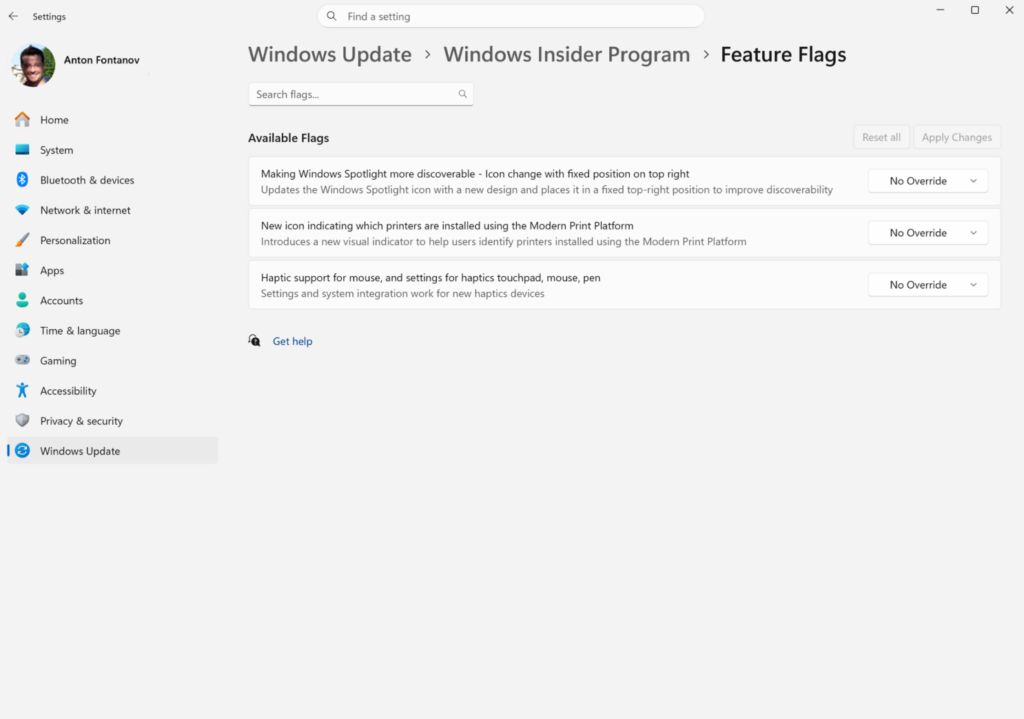
While the Beta channel promises immediate access to announced features, the Experimental channel will continue to employ a more nuanced approach. Here, some features will be available out-of-the-box, while others will remain behind ‘feature flags’—internal toggles that control the visibility and activation of specific functionalities. Crucially, Microsoft has introduced a user-friendly mechanism within the Windows Settings interface that empowers Insiders in the Experimental channel to manually toggle these feature flags. This level of granular control, accessible via "Windows Insider Program Settings > Feature flags," represents a significant stride towards user agency, allowing testers to proactively engage with specific experimental functionalities, such as new haptic feedback features for a mouse, without waiting for an automated rollout. This approach marries the necessity of controlled testing with the demand for greater transparency and user involvement, fostering a more interactive and less frustrating experimental environment.
Strategic Rationale and Broader Implications
The comprehensive overhaul of the Windows Insider Program is not merely a tactical adjustment but a strategic imperative driven by several key objectives. Foremost among these is Microsoft’s explicit ambition to elevate the perceived and actual reliability of Windows 11. Persistent concerns regarding system stability, performance inconsistencies, and the introduction of new features that sometimes felt unpolished have impacted user confidence and potentially slowed adoption rates. By streamlining the feedback loop and ensuring that tester input is more directly and transparently integrated into the development process, Microsoft aims to cultivate a more robust and dependable operating system.
This new structure is poised to significantly impact Microsoft’s internal development cycle. By clearly delineating between highly experimental, potentially ephemeral features (Experimental channel) and more mature, release-candidate functionalities (Beta channel), engineering teams can receive more targeted and actionable feedback. This clarity should facilitate a more agile development methodology, allowing for quicker iteration on nascent ideas without destabilizing builds closer to release, while simultaneously ensuring that features nearing public deployment undergo rigorous and comprehensive testing by a broad, engaged community. The elimination of gradual rollouts in the Beta channel, while potentially exposing a wider user base to early bugs, signifies a bold commitment to transparency and may ultimately accelerate the identification and remediation of critical issues.
From a user engagement perspective, this simplification is expected to reinvigorate the Windows Insider community. By removing the ambiguity and frustration previously associated with the program, Microsoft aims to attract and retain a more dedicated and satisfied cohort of testers. The ability to directly control experimental features through toggles provides a tangible sense of agency, transforming passive recipients of builds into active participants in the development narrative. This renewed engagement is vital, as a robust and diverse testing community provides an unparalleled source of real-world usage data and scenario validation that internal testing alone cannot replicate.
Moreover, the revamped program implicitly addresses the broader competitive landscape. In an era where operating systems are increasingly delivered as services with continuous updates, the efficiency and perceived quality of beta programs are critical differentiators. By improving its Insider Program, Microsoft aligns itself with best practices observed in other major software ecosystems, such as Google’s Chrome or Apple’s iOS public betas, where clear communication and effective feedback mechanisms are paramount. This move is a clear signal that Microsoft is prioritizing user-centric development and is committed to fostering a more collaborative relationship with its most dedicated users.
Phased Implementation and Future Trajectories
The transition to the new two-channel system is being meticulously rolled out in phases, ensuring a smooth migration for the millions of existing Windows Insiders. Initially, users previously enrolled in the Dev Channel are being transitioned to the new Experimental channel. For those Dev users who may not immediately observe the updated user interface, a manual activation option is provided within the Windows Insider Program Settings, allowing them to proactively embrace the new experience.
The migration strategy also accounts for the nuances of the former Canary channel. Users who were on the Canary 28000 series builds are being moved to a specific branch within the Experimental channel, designated as "Experimental (26H1)." Concurrently, participants who had opted for the more advanced Canary 29500 series updates are being directed to "Experimental (Future Platforms)." These distinct branches within the Experimental channel signify Microsoft’s strategic foresight, allowing for parallel development tracks for features targeting different future platform iterations, thus enabling highly specialized testing for next-generation Windows technologies.
Insiders currently within the Beta Channel will seamlessly transition to the new, enhanced Beta experience. Microsoft acknowledges that minor feature adjustments might occur during this transition, a standard practice in large-scale software migrations. For those Beta users who wish to retain access to the most cutting-edge experimental features during this transition period, a recommendation has been issued to voluntarily migrate to the Dev channel before the official transition, as the Dev channel is the direct precursor to the new Experimental channel. This proactive guidance underscores Microsoft’s commitment to minimizing disruption and maximizing choice for its most dedicated testers.
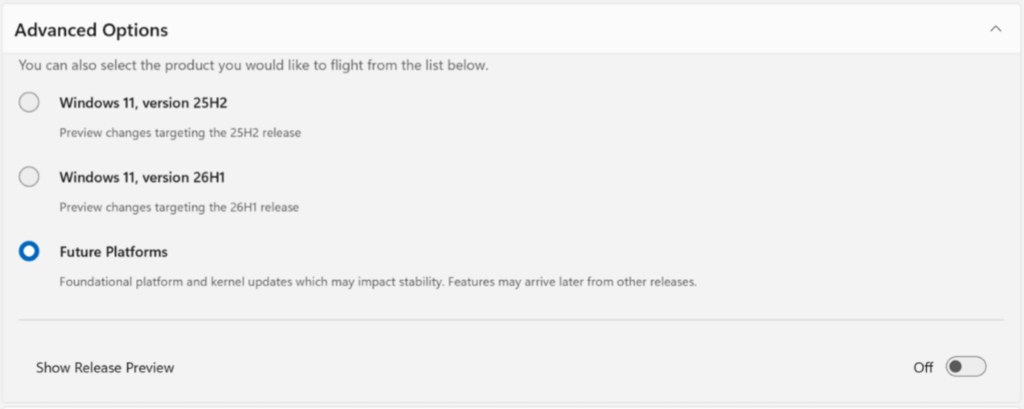
Accompanying this significant program restructuring, Microsoft has concurrently begun shipping new builds across the updated channels. These include Build 26220.8283 for the Beta channel, Build 26300.8289 for the primary Experimental channel, Build 28020.1873 for Experimental 26H1, and Build 29576.1000 for Experimental Future Platforms. Notably, these initial deployments incorporate early access to a revamped Windows Update experience, providing users with enhanced controls to pause updates and, critically, avoid forced system reboots—a long-requested feature that further exemplifies Microsoft’s responsiveness to user feedback.
Looking ahead, the long-term implications of this revamped program are substantial for the trajectory of Windows 11 and subsequent operating system releases. This move solidifies Windows’ identity as a continuously evolving service, where user feedback is intended to be a foundational element of its ongoing refinement. The clearer distinction between experimental and beta stages, coupled with greater transparency, is expected to foster a healthier ecosystem where innovation can flourish without compromising core stability. While challenges remain in managing user expectations and ensuring consistent communication, this strategic pivot signifies Microsoft’s renewed commitment to building a more reliable, user-centric, and ultimately, more compelling Windows experience for the future.




 Aura Kasih
 Ayu Aulia