
 Aura Kasih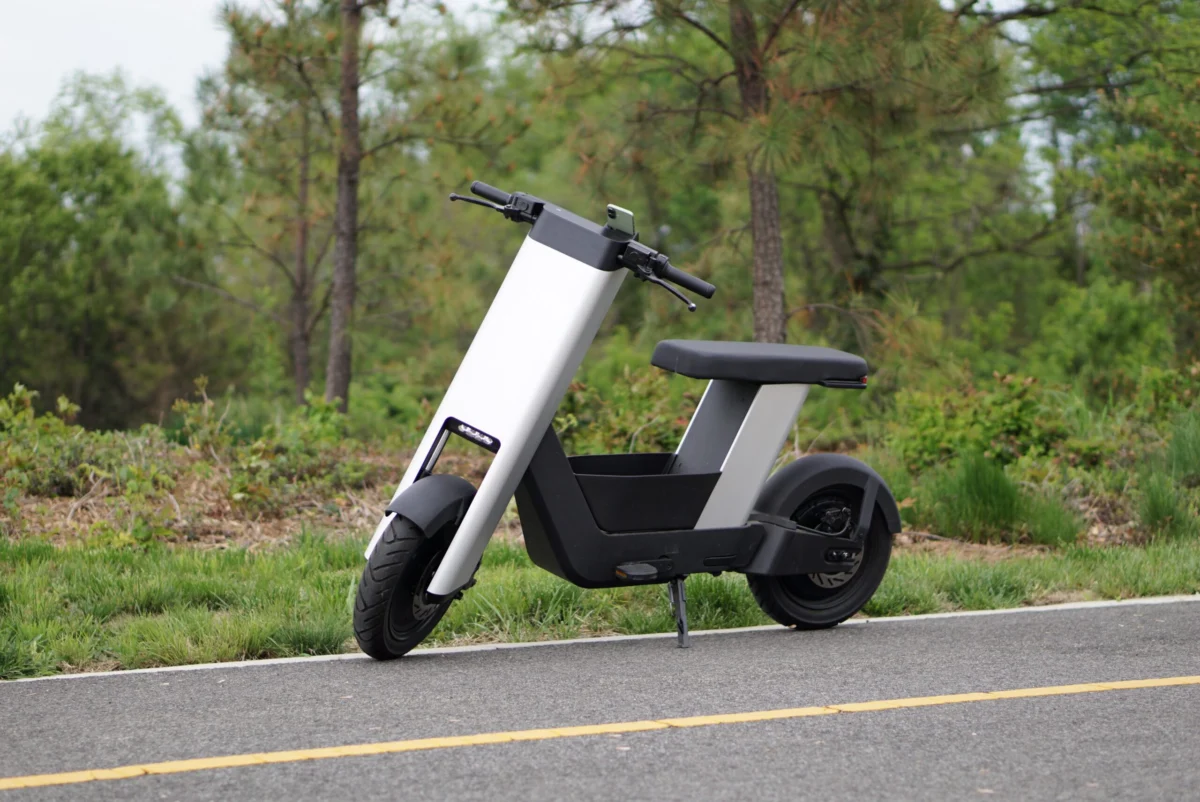
Infinite Machine has unveiled the Olto, a groundbreaking $3,495 electric vehicle that blurs the lines between e-bike, moped, and scooter, positioning itself as a compelling alternative to traditional automobiles for short-to-medium distance urban travel. This innovative machine, with its substantial weight and impressive power, challenges conventional definitions of personal transport and offers a glimpse into the future of sustainable city commuting.
The Olto’s existence marks a significant development in the burgeoning sector of personal electric vehicles, a category increasingly populated by devices aiming to alleviate the inefficiencies of car ownership for everyday errands. While equipped with pedals, the Olto’s design and performance characteristics immediately signal its departure from the traditional bicycle. Weighing in at a considerable 175 pounds, the inclusion of pedals feels more like a regulatory nod than a practical necessity. During testing, the author found the pedals largely superfluous, the vehicle’s robust electric motor providing ample propulsion without requiring human effort. The sheer mass of the Olto, combined with its effortless acceleration, allows it to comfortably exceed the speeds of conventional bicycles and even keep pace with, or surpass, slow-moving vehicular traffic. This performance capability raises questions about its classification and legal standing in various jurisdictions, particularly concerning its placement within dedicated bicycle lanes.
Infinite Machine, a New York-based startup, has engineered the Olto to address a common urban dilemma: the "in-between" journey. These are trips that are too far to walk comfortably but too short to justify the hassle and expense of using a car, including finding parking. The Olto’s design philosophy centers on making these frequent, short-haul commutes as seamless and efficient as possible. It occupies a unique niche, drawing inspiration from cargo bikes in its potential utility, but surpassing them in speed and convenience. The experience of operating the Olto has been described as exceptionally fun, suggesting a successful fusion of utility and enjoyment in its design.

The proliferation of short-distance transportation solutions has been a defining trend of the past decade. From the ubiquity of ride-share scooters to the persistent allure of hoverboards and even the nostalgic return of Heelys for adults, consumers have consistently sought more agile and less burdensome ways to navigate their immediate surroundings. The Olto enters this competitive landscape not as a mere iteration, but as a significant leap forward, offering a more refined and substantial solution. Its spacious seating and responsive throttle provide a comfortable and engaging ride, transforming a 20-minute walk into a mere few minutes of travel.
A key advantage of the Olto is its parking flexibility. Its considerable size and weight, coupled with integrated anti-theft systems, make it less of a target for opportunistic theft, allowing users to leave it unsecured in many situations. Operation is initiated via an NFC-capable card or through the intuitive Infinite Machine mobile application. The app’s proximity-based activation feature, which automatically starts the vehicle as the rider approaches, further enhances the sense of effortless integration into daily routines. This blend of advanced technology and user-centric design contributes to an overall experience that feels remarkably streamlined and modern.
The Olto’s operational framework is designed with regulatory compliance in mind, offering multiple riding modes that correspond to various legal classifications of electric vehicles. Users are prompted during setup to input their location, allowing the Infinite Machine app to dynamically adjust the vehicle’s performance parameters to adhere to local laws. These modes typically range from a restricted 15 mph "Limited" mode, suitable for most bicycle-friendly areas, to faster "Class 2" and "Class 3" settings, which can reach up to 20 mph and 28 mph respectively. A "Unlocked" mode, intended exclusively for private property, provides the vehicle’s full, unrestricted power. This adaptive approach acknowledges the complex and often inconsistent regulatory landscape surrounding electric mobility devices across different states and municipalities.
The practical implications of these performance modes are profound. The Olto’s ability to navigate urban environments at speeds comparable to or exceeding light vehicular traffic significantly reduces travel times for common errands. A journey that might take 40 minutes by bicycle, as indicated by navigation apps, can be completed in under 30 minutes on the Olto, even in congested areas. While the adoption of a motorcycle-style helmet is recommended for safety, especially when operating at higher speeds, the overall experience of traversing urban landscapes with newfound speed and efficiency is undeniably transformative.

The vehicle is powered by a substantial 1,200Wh battery, offering an advertised range of approximately 40 miles on a single charge. This range is subject to variation based on the selected riding mode and the intensity of use; engaging the vehicle’s maximum performance capabilities can deplete the battery considerably faster. Recharging the battery, whether by plugging the entire vehicle in or removing the battery for separate charging, takes several hours, positioning the Olto as a vehicle that is best charged overnight rather than on-demand. The sheer size of the battery underscores the vehicle’s power and range, but also highlights the commitment required for its upkeep. The prospect of pedaling the Olto with a depleted battery is, by all accounts, a formidable undertaking.
The Olto represents a scaled-down iteration of Infinite Machine’s debut product, the P1, a visually distinctive electric moped. The company’s foundation, established by brothers Joe and Eddie Cohen, who transitioned from software development, is evident in the sophisticated and user-friendly mobile application that underpins many of the Olto’s functionalities. This software-centric approach is indicative of Infinite Machine’s broader ambition to develop a diverse portfolio of electric vehicles, leveraging modular technology that can be adapted for both smaller and larger platforms. Their strategy of commencing with familiar vehicle archetypes like the Olto and P1 suggests a pragmatic path to market penetration.
The striking aesthetic of Infinite Machine’s vehicles, particularly the silver Olto, has frequently drawn comparisons to Tesla’s Cybertruck. This resemblance stems from the shared use of angular, metallic bodywork and an industrial exoskeleton design language. However, this comparison, while visually apparent, may not fully capture the Olto’s refined execution. If the Cybertruck represents an ambitious, albeit polarizing, vision, the Olto can be seen as a more successful and practical realization of a similar design ethos, miniaturized for personal urban mobility. It is a design that is not universally appealing but possesses a distinct character that resonates with a specific user base.
Infinite Machine has integrated several thoughtful design elements into the Olto, though some exhibit a degree of complexity. The pedals, for instance, are primarily intended as footrests, a design choice that prioritizes convenience over functionality. While they can be engaged for propulsion, this process is described as somewhat intricate. Similarly, the retractable passenger foot pegs, while a useful addition for carrying a second rider, can be challenging to re-secure and may interfere with pedal rotation when deployed. These features highlight the Olto’s identity as a vehicle where traditional bicycle components are adapted to serve a different purpose, underscoring its distinct classification.

The handlebars are equipped with a comprehensive suite of controls, including turn signals. However, the sensitive horn placement can lead to accidental activation, a minor design quirk that requires user adaptation. Practical storage solutions are provided in the form of hooks on the rear of the vehicle for bags, though the integrated footwell offers ample space for smaller cargo, negating the need for extensive hauling capabilities. The absence of a cup holder is a notable omission for a vehicle designed for everyday utility.
When evaluated as a compact electric motorcycle, the Olto demonstrates impressive agility and speed. Its ability to execute sharp turns at high velocities, coupled with an exceptionally responsive throttle, allows for rapid acceleration and dynamic maneuverability. However, when compared to a conventional bicycle, its weight presents a significant challenge. Maneuvering the Olto over curbs or making rapid directional adjustments, as one might with a lighter bicycle, is not feasible. The Olto cannot be easily lifted or transported, such as into a car or up a flight of stairs, distinguishing it sharply from even the most robust cargo e-bikes, which retain a greater degree of malleability. While the Olto may surpass most e-bikes in comfort, luxury, and speed, this enhanced performance comes at the cost of traditional bicycle-like versatility.
The success of the Olto could indeed generate debate within the cycling community, which is already grappling with the increasing prevalence of electric assistance. Nevertheless, the Olto represents a compelling advancement in the realm of personal electric vehicles. It offers a more comfortable, relaxed, and indeed, car-like experience than many other micromobility solutions. The vehicle’s fundamental objective is not to mimic a bicycle, but to provide a viable and appealing alternative to car ownership for daily commutes. For the author, the Olto successfully fulfilled this role, facilitating a wider range of journeys more efficiently than anticipated. Its dominance within the bike lane, while potentially contentious, is a testament to its performance and utility, offering a glimpse into a future where personal electric transport reshapes urban mobility.



 Safa Marwah
 Lisa Mariana

 Ayu Aulia