Safa Marwah
A sophisticated and persistent cyber campaign attributed to state-sponsored Iranian threat groups has significantly amplified the risk profile for critical infrastructure within the United States, with recent intelligence highlighting the alarming exposure of nearly 4,000 internet-accessible industrial control devices to potential malicious exploitation. This targeted aggression underscores a growing strategic imperative for adversaries to disrupt, degrade, or compromise the operational technology (OT) networks underpinning vital national services, presenting an urgent challenge to cybersecurity resilience and national security.
Recent assessments from multiple U.S. federal agencies have illuminated a concerted effort by Iranian-linked advanced persistent threat (APT) groups to infiltrate industrial control systems (ICS), particularly focusing on programmable logic controllers (PLCs) manufactured by Rockwell Automation and its Allen-Bradley brand. This campaign, which commenced as early as March 2026, has been identified as a direct contributor to operational disruptions and substantial financial losses across various U.S. critical infrastructure sectors. The heightened activity is widely interpreted as a retaliatory measure, likely in direct response to escalating geopolitical tensions and perceived hostilities between Iran, the United States, and Israel, signaling a dangerous expansion of cyber warfare into critical national assets.
Analysis of the malicious activity has revealed that these Iranian-affiliated APT campaigns successfully extracted project files from compromised devices and manipulated data displayed on Human-Machine Interfaces (HMIs) and Supervisory Control and Data Acquisition (SCADA) systems. Such intrusions are profoundly concerning, as they can lead to unauthorized control over industrial processes, false data readings that could induce incorrect operational decisions, or even physical damage to machinery and infrastructure. The ability to manipulate core operational parameters represents a significant escalation in the potential impact of cyberattacks, moving beyond mere data theft to direct operational interference.
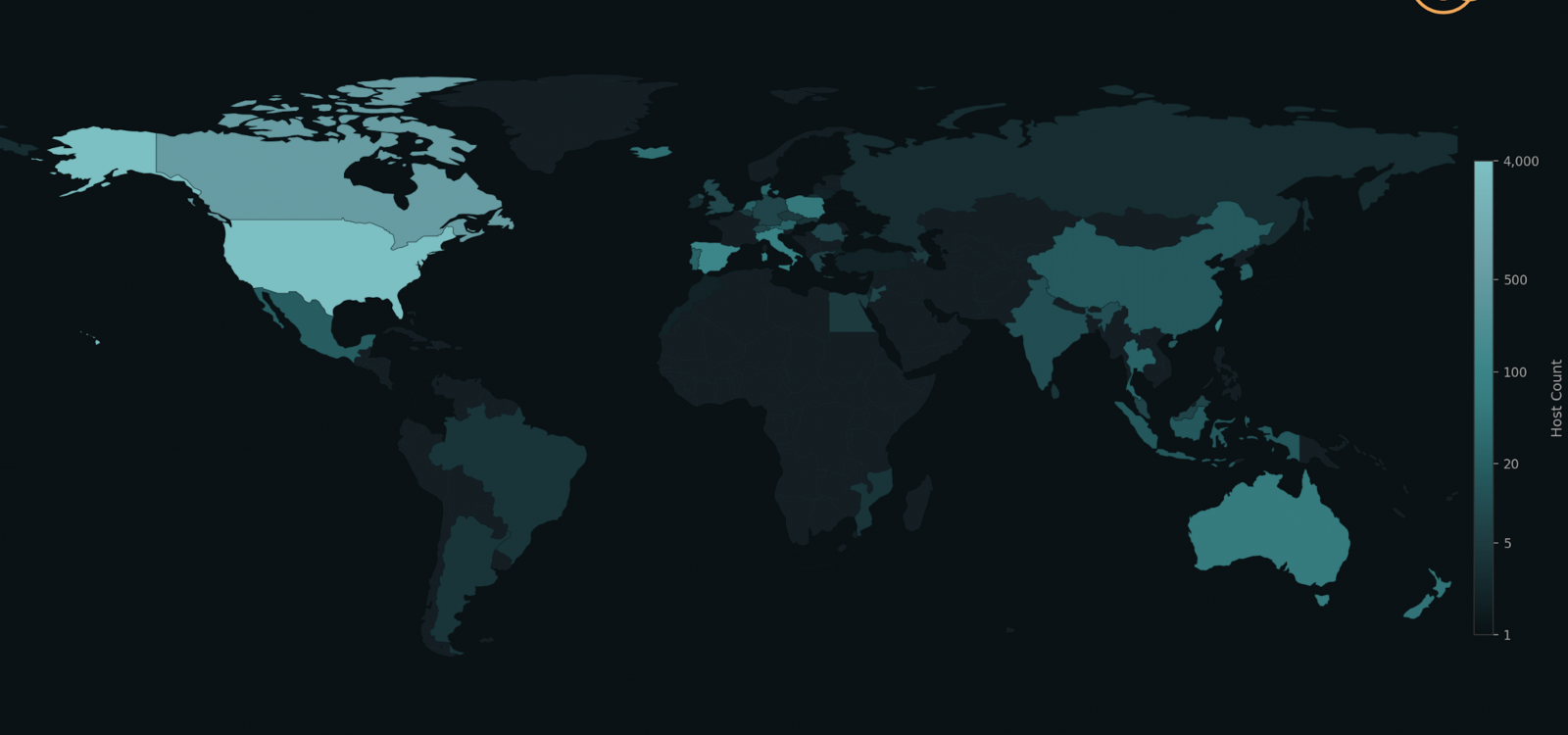
Further investigations by cybersecurity intelligence firms have quantified the alarming scale of this vulnerability. One such firm identified over 5,200 internet-exposed industrial control systems globally that actively respond to EtherNet/IP (EIP) protocols and self-identify as Rockwell Automation/Allen-Bradley devices. A staggering 74.6% of these vulnerable systems, equating to 3,891 hosts, are located within the United States. A substantial portion of these U.S. exposures reside on cellular carrier Autonomous System Numbers (ASNs), indicating that these are frequently field-deployed devices connected via cellular modems. This particular detail is critical, as field-deployed devices often operate in less secure environments, potentially outside the traditional corporate network perimeter, and may receive less stringent security oversight or patching.
The targeting of PLCs, such as those made by Rockwell Automation, is not coincidental. PLCs are the foundational building blocks of industrial automation, acting as the "brains" that control everything from manufacturing lines and power grids to water treatment plants and transportation systems. They execute precise instructions based on sensor inputs and are critical for ensuring the safe, efficient, and reliable operation of industrial processes. Historically, these systems were often isolated within "air-gapped" operational technology networks, assumed to be physically separated from the internet and conventional IT networks. However, the relentless drive for efficiency, remote management, and IT/OT convergence has increasingly blurred these lines, leading to a proliferation of internet-exposed devices.
The inherent design of many legacy PLCs prioritizes reliability and functionality over robust cybersecurity. They often lack sophisticated authentication mechanisms, encryption capabilities, or efficient patch management processes. Their long operational lifespans mean that many devices in use today were designed decades ago, predating the modern cyber threat landscape. When these critical components are exposed to the public internet without adequate protective measures, they become prime targets for state-sponsored actors seeking to achieve strategic objectives. A successful compromise can lead to severe consequences, including equipment malfunction, safety incidents for personnel, environmental damage, widespread service outages, and significant economic disruption for affected organizations and broader society.
This current campaign against Rockwell Automation PLCs is not an isolated incident but rather follows a pattern of escalating Iranian cyber activity against U.S. critical infrastructure. Approximately three years prior, a threat group known as CyberAv3ngers, reportedly affiliated with the Iranian Government’s Islamic Revolutionary Guard Corps (IRGC), launched a series of disruptive attacks targeting vulnerabilities in Unitronics operational technology (OT) systems located in the U.S. Between November 2023 and January 2024, CyberAv3ngers successfully compromised at least 75 Unitronics PLC devices. Alarmingly, half of these intrusions affected critical Water and Wastewater Systems (WWS) networks across the United States, demonstrating a clear intent to target sectors with direct public health and safety implications. These attacks often involved defacement or manipulation of HMI screens, causing alarm and demonstrating the attackers’ capability to interfere with essential services.
More recently, the Handala hacktivist group, which intelligence agencies have linked to Iran’s Ministry of Intelligence and Security, executed a large-scale data wiping attack against Stryker, a major U.S. medical technology giant. This operation resulted in the destruction of data on approximately 80,000 devices within Stryker’s network, including employee mobile devices and company-managed personal computers. While different in nature from the PLC attacks, targeting IT systems rather than OT, this incident further underscores the breadth and destructive potential of Iranian state-sponsored cyber operations, highlighting a willingness to inflict widespread disruption and financial damage across various critical sectors.

The evolution of Iranian cyber capabilities and their strategic application reflects a growing sophistication. Initial Iranian cyber efforts were often characterized by less precise, disruptive attacks, such as the infamous Shamoon wiper malware. However, over the past decade, Iranian APT groups have refined their tactics, techniques, and procedures (TTPs), moving towards more targeted espionage, reconnaissance, and disruptive operations against critical infrastructure. Their motivations are multifaceted, encompassing intelligence gathering, financial gain, political influence, and, crucially, strategic retaliation or deterrence in response to perceived threats or actions from adversaries. This makes their cyber activities a key component of Iran’s asymmetric warfare doctrine, allowing them to project power and exert influence without direct military confrontation.
In the face of these persistent and evolving threats, robust defensive measures are imperative for network defenders and critical infrastructure operators. The primary recommendation is to eliminate or severely restrict the direct exposure of PLCs and other OT devices to the public internet. This includes implementing stringent network segmentation, utilizing industrial demilitarized zones (IDZs) or secure gateways, and deploying robust firewalls to strictly control traffic flows between IT and OT networks, as well as between OT networks and the internet. Where remote access is essential, it must be facilitated through secure, authenticated VPN connections with multi-factor authentication (MFA).
Continuous monitoring of OT network logs for any signs of anomalous or malicious activity is crucial. This involves not only looking for known indicators of compromise but also establishing baselines for normal network behavior and identifying deviations. Specific attention should be paid to suspicious traffic originating from overseas hosting providers or unexpected connections on standard OT ports (e.g., EtherNet/IP). Furthermore, organizations must enforce MFA for all access to OT networks and privileged accounts, significantly reducing the risk of unauthorized access through stolen credentials.
Maintaining the security posture of PLC devices also necessitates regular patching and updates, despite the operational challenges often associated with patching critical OT systems. A comprehensive vulnerability management program tailored for OT environments is essential. Additionally, the principle of least privilege should be applied rigorously: all unused services, ports, and authentication methods on PLCs and other OT devices must be disabled to minimize the attack surface. Implementing a "security by design" philosophy, integrating cybersecurity considerations from the initial planning and deployment phases of industrial systems, is paramount for long-term resilience.
Looking ahead, the geopolitical landscape suggests that cyber skirmishes involving state actors will likely intensify, with critical infrastructure remaining a prime target. The inherent vulnerabilities of legacy OT systems, coupled with the increasing interconnectedness of modern industrial environments, present a persistent challenge. To effectively counter these threats, a collaborative approach is necessary, involving robust information sharing between government agencies and private industry, continuous investment in advanced threat detection and response capabilities, and the cultivation of a skilled cybersecurity workforce. Proactive threat intelligence, coupled with adaptive security architectures that can evolve with the adversary, will be fundamental to safeguarding the integrity and continuity of essential services against sophisticated state-sponsored cyber campaigns. The imperative for critical infrastructure owners and operators to fortify their defenses has never been more urgent.



 Lisa Mariana
 Aura Kasih