Aura Kasih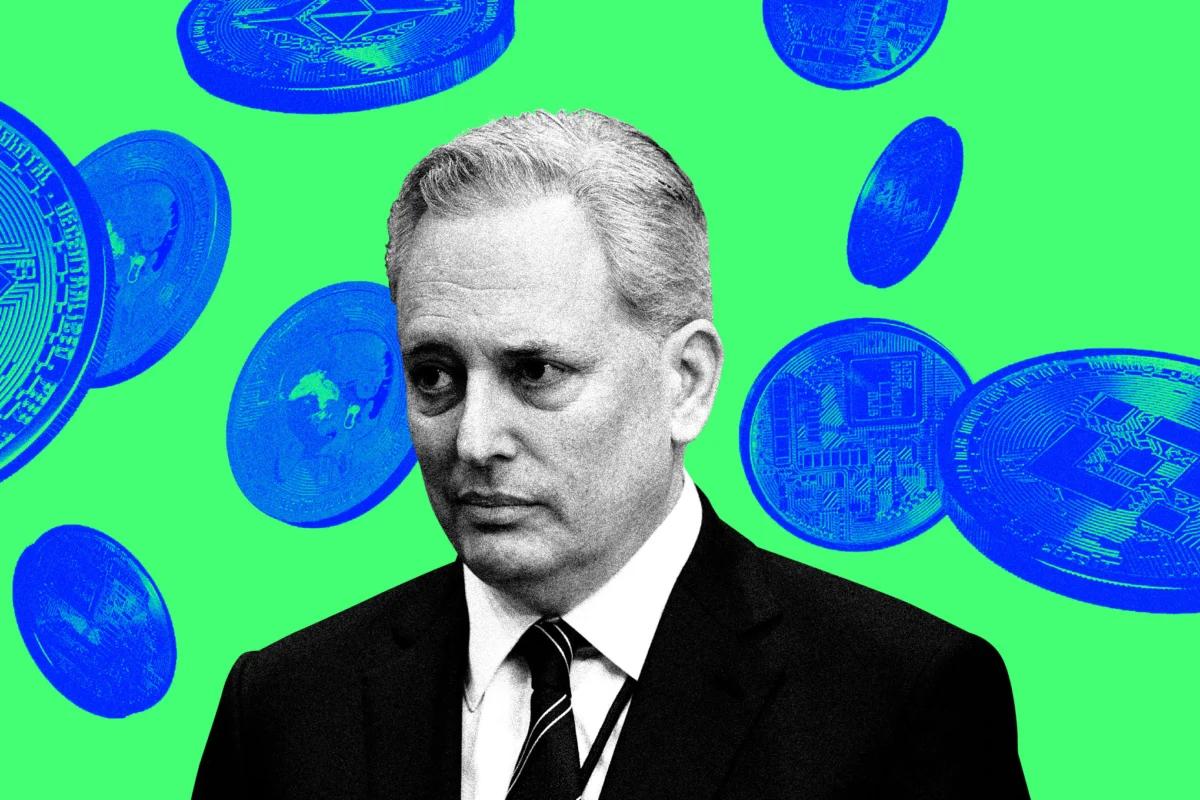
Venture capitalist and prominent tech figure David Sacks has concluded his tenure as a special government employee within the White House, stepping down from his influential position as President Trump’s Special Advisor on Artificial Intelligence and Cryptocurrency. This transition marks a significant shift in the administration’s direct engagement with the technology sector, particularly in the critical domains of AI policy and digital asset regulation.
Sacks, a well-known Silicon Valley investor and entrepreneur, had served as a crucial bridge between the burgeoning tech industry and the executive branch, playing a pivotal role in the formulation and advocacy of the administration’s ambitious AI policy agenda. His unique status as a Special Government Employee (SGE) permitted him to concurrently hold private sector interests and serve the government, a arrangement typically capped at 130 days. The recent revelation that Sacks has reached this temporal limit on his SGE appointment raises questions about the duration and nature of his direct involvement in shaping White House technological directives.
In a recent broadcast interview discussing the administration’s proposed AI legislative framework, Sacks confirmed his departure from the special advisor role, stating he had "used up that time." He indicated a pivot in his engagement, announcing he would now concentrate his efforts on co-chairing the President’s Council of Advisors on Science and Technology (PCAST). This move suggests a strategic recalibration of his advisory capacity, shifting from direct policy implementation to a more deliberative and broad-ranging consultative function.
The announcement of Sacks’s transition coincides with recent appointments to PCAST, a body designed to provide expert advice to the President on matters of science and technology. The expanded council includes a distinguished roster of tech luminaries, such as Mark Zuckerberg, Marc Andreessen, Jensen Huang, and Sergey Brin, signaling the administration’s continued emphasis on leveraging top-tier private sector expertise. Michael Kratsios, the head of the White House Office of Science and Technology Policy, will share the co-chair responsibilities with Sacks, underscoring the council’s strategic importance.
Speaking about his new role on PCAST, Sacks articulated a vision for a more expansive advisory scope. He expressed his anticipation of contributing recommendations not solely on AI but also on a wider array of emerging technological fields. Clarifying the operational parameters of his PCAST position, Sacks emphasized that its primary function is to offer counsel to the President and the executive offices, focusing on studying critical issues and formulating strategic recommendations rather than direct coordination with federal agencies. This distinction highlights a shift from an active policy architect to a strategic advisor, providing a more indirect but potentially far-reaching influence.
During his tenure as the administration’s AI and crypto czar, Sacks, who had previously organized significant fundraising events for President Trump, possessed direct access to the Oval Office and exerted considerable influence over the White House’s technological policy direction. His assertive approach to policy development, however, reportedly led the Trump administration into several contentious political arenas. For instance, his attempts to implement a broad prohibition on state-level AI legislation, both through congressional efforts and subsequently via executive order, reportedly alienated segments of the Republican base, including governors and populist factions. Critics argued that this strategy complicated the pursuit of simpler policy objectives, such as child safety measures, and potentially politicized initiatives that could have garnered broader support.
Some observers contend that Sacks’s aggressive policy advocacy may have inadvertently undermined the administration’s populist appeal. Michael Toscano, executive director for the conservative Institute for Family Studies, commented that Sacks’s approach "failed to get preemption," and "pressed the White House into a culture war against its own voters." Toscano further suggested that Sacks’s tenure was a "political disaster" and that he was "perhaps singularly responsible for the White House losing its populist bona fides." This critical perspective underscores the complexities of navigating the intersection of technology policy and political populism.
Furthermore, Sacks’s public commentary on foreign policy, particularly his suggestion on his podcast that President Trump needed to find an "off-ramp" from the escalating tensions with Iran, generated controversy within Trump’s political circle. Such public divergence from the administration’s established foreign policy stance, especially in a high-stakes geopolitical context, can be perceived as problematic for appointees tasked with maintaining unified messaging and advancing presidential objectives.
The practice of reassigning or demoting controversial appointees rather than outright dismissals has been observed in President Trump’s second administration. This approach allows the administration to distance itself from politically damaging figures or situations while maintaining a semblance of continuity or offering alternative roles. For example, Mike Waltz, previously the National Security Advisor, was reportedly removed from his position for his alleged involvement in "Signal-gate" and subsequently reassigned as the U.N. Ambassador. Similarly, Kristi Noem, who served as Secretary of Homeland Security and oversaw operations that led to protests and fatalities, was reportedly reassigned as a special envoy to an initiative named the "Shield of the Americas." These instances suggest a pattern of managing personnel changes in a manner that mitigates immediate political fallout while reconfiguring responsibilities.
Sacks’s departure from his specialized advisory role on AI and crypto represents a significant transition in the White House’s engagement with these rapidly evolving technological landscapes. His previous direct influence in shaping policy initiatives, characterized by an aggressive and at times polarizing approach, has now evolved into a more advisory capacity through PCAST. This shift allows for continued input from a prominent figure in the tech industry, but within a framework that emphasizes broader strategic counsel rather than direct policy implementation. The success of this new arrangement will likely depend on the effectiveness of PCAST in translating expert advice into actionable policy recommendations and the administration’s receptiveness to these insights.
The broader implications of Sacks’s transition extend to the ongoing debate surrounding the governance of artificial intelligence and the regulation of digital assets. As a key architect of the administration’s early AI policy proposals, his insights will undoubtedly continue to inform discussions within PCAST. The council’s expanded membership, encompassing a diverse range of technological leaders, suggests a commitment to a holistic approach to technological advancement and its societal impact. The challenge for PCAST, and indeed for the administration, will be to foster innovation while simultaneously addressing the ethical, economic, and security concerns associated with emerging technologies.
The future of AI policy and cryptocurrency regulation within the executive branch will likely be shaped by a combination of direct legislative efforts, executive actions, and the ongoing advisory contributions of bodies like PCAST. David Sacks’s continued involvement, albeit in a redefined capacity, ensures that the perspectives of influential figures within the technology sector will remain a significant factor in these critical policy discussions. The administration’s ability to harness this expertise effectively, while navigating the complex political and societal implications of these technologies, will be a defining characteristic of its approach to technological governance in the years to come. The transition signifies not an end to influence, but a change in its form and focus, from direct advocacy to strategic counsel, as the administration seeks to maintain its engagement with the cutting edge of technological innovation.




 Lisa Mariana
 Safa Marwah
 Ayu Aulia