Aura Kasih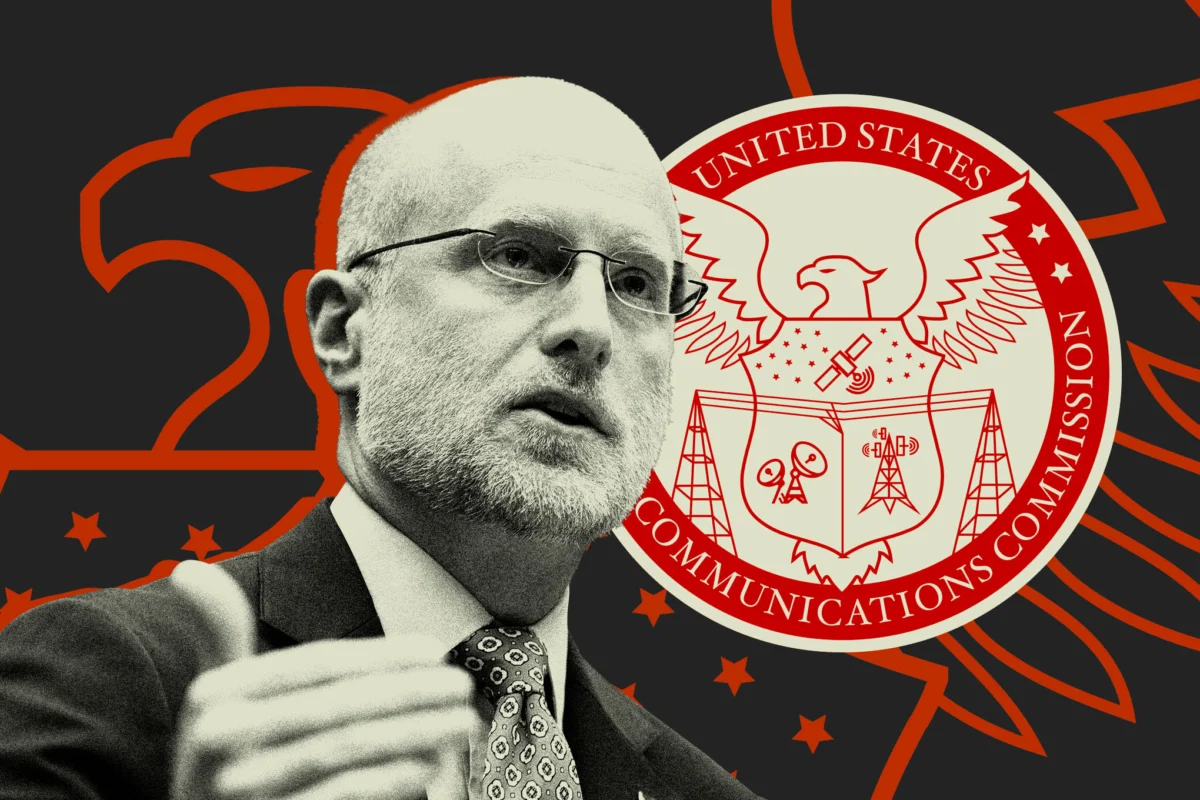
Federal Communications Commission (FCC) Chairman Brendan Carr has sought to clarify his recent pronouncements regarding broadcast licenses, asserting that his remarks were not specifically aimed at influencing coverage of the conflict in Iran, but rather at broader issues of journalistic integrity and adherence to public interest obligations. Speaking at an event co-hosted by FGS and Semafor, Carr emphasized that the context of his statement was being misinterpreted, particularly concerning his retweet of a post by former President Donald Trump that criticized "intentionally misleading headlines" related to U.S. military actions in the Middle East.
The controversy ignited on March 14th when Carr quote-tweeted a Truth Social post from Trump. The former President had expressed dissatisfaction with news reporting on the U.S. military engagement, labeling certain headlines as deceptive. Carr’s accompanying tweet stated, "Broadcasters that are running hoaxes and news distortions – also known as the fake news – have a chance now to correct course before their license renewals come up. The law is clear. Broadcasters must operate in the public interest, and they will lose their licenses if they do not." This statement was widely reported as a direct threat to broadcast licenses based on their coverage of the war in Iran, a perception Carr now aims to dislodge.
Carr’s previous engagement with media content, notably his warnings to broadcasters regarding late-night comedian Jimmy Kimmel, have also drawn scrutiny. Following Carr’s comments, Disney briefly removed Kimmel from the air. Carr has since maintained that his actions were not intended as threats, but as reminders of broadcasters’ responsibilities. During the recent event, when pressed about the possibility of revoking broadcast licenses, Carr stated, "You never know, but I don’t have plans." He then added, echoing a phrase attributed to a prominent political figure, "Maybe we will, maybe we won’t." This statement, while perhaps intended to convey flexibility, also underscores the inherent power vested in the FCC’s regulatory authority.
The Chairman elaborated on his core concern, articulating that the focus of potential license revocation would be on operators failing to uphold the public interest mandate. "The only thing we’ve ever talked about pulling broadcast licenses are for operators that aren’t operating in the public interest, that are doing broadcast hoax, news distortion," he asserted. Carr underscored that as long as broadcasters are not engaging in such practices, they retain considerable latitude in their reporting. "As long as you’re not doing that, you can cover anything any way you want," he concluded, drawing a distinction between permissible content and deliberate disinformation.
Beyond the realm of content regulation, Carr also expressed confidence in the FCC’s recent decision to ban routers manufactured outside the United States. This confidence persists despite a significant Supreme Court ruling that has altered the landscape of judicial deference to agency expertise. The Supreme Court’s decision, which has been interpreted as diminishing the weight given to administrative agencies’ interpretations of the laws they administer, could potentially create new avenues for legal challenges to agency actions. However, Carr remains sanguine about the legal standing of the router ban, stating, "I don’t think there’s really significant litigation risk from that FCC decision." This suggests a belief that the ban is firmly grounded in established legal frameworks and national security considerations, rather than solely relying on agency interpretation.
Carr also highlighted positive developments in the digital platform space, noting what he perceives as a more responsible approach by major social media companies. He indicated that platforms like X (formerly Twitter) and Meta have adjusted their policies in ways that he views as more equitable. "That sort of course correction in the market has resulted in a decrease in a lot of the sort of calls for regulatory intervention," he remarked during an on-stage discussion. While speaking with reporters, Carr indicated a strategic shift in his public discourse, stating he has "sort of stopped talking about free speech" in the context of tech platforms. He explained this by suggesting that public understanding can become muddled when discussing the distinct regulatory environments of internet platforms and broadcast media. He characterized these as "apples and oranges" issues, emphasizing that broadcasters operate under a different regulatory regime due to their use of the public airwaves. This distinction is crucial, as broadcast licenses are inherently tied to a public trust, unlike the less regulated nature of online content distribution.
The FCC’s recent approval of a significant merger between Nexstar and Tegna, creating a broadcasting entity that will reach an estimated 80 percent of U.S. television households, has also been a point of discussion. This consolidation surpasses the previous 39 percent ownership limit, raising questions about market concentration and its implications for local news diversity. While this merger was approved, it underscores the evolving landscape of media ownership and the FCC’s role in managing it. The approval of such a large-scale consolidation, even if within revised regulatory parameters, signals a potential shift in the FCC’s approach to media consolidation under Carr’s leadership.
The ongoing debate surrounding the regulation of technology platforms continues to be a significant concern. Carr frames the need for regulation not as an impediment to free expression, but as a necessary response to "bad conduct" that can emerge from dominant market players. When questioned about whether regulatory interventions become content-based if their necessity fluctuates with platform moderation policies, Carr reiterated that the core issue remains conduct. He stated, "It’s when you have market power, or when you abuse that market power in a way that stifles individual liberty, I think that potentially creates the basis for regulation." This perspective suggests that the FCC’s focus is on preventing the misuse of market power, rather than dictating specific viewpoints or content.
In response to accusations that he has "weaponized" the tools at his disposal, mirroring claims made against Democratic commissioners, Carr presented his approach as one of impartial application of the law. "Why don’t we just apply the law in a neutral, even handed way? Which is what I think that we’re doing here," he stated. This assertion underscores his commitment to a non-partisan regulatory framework, aiming to ensure that FCC actions are perceived as consistent and fair, irrespective of political pressures.
The broader implications of Carr’s statements extend to the fundamental principles governing broadcast media in the United States. The Communications Act of 1934, which established the FCC, mandates that broadcasters serve the "public interest, convenience, and necessity." This broad mandate has historically allowed for considerable flexibility in its interpretation, leading to periodic debates about the scope of government oversight in media. Carr’s emphasis on "hoaxes and news distortions" as grounds for regulatory action suggests a more active interpretation of this mandate, particularly in an era of pervasive misinformation.
The distinction between regulating broadcast media and internet platforms is a critical one in Carr’s argument. Broadcast licenses are a finite public resource, and their holders are granted a quasi-monopoly in their geographic service areas. This inherent scarcity and public trust have historically justified a higher degree of regulatory scrutiny compared to the largely unregulated internet. Carr’s efforts to delineate these differences aim to preempt conflation and ensure that regulatory actions are appropriately contextualized. His engagement with tech platforms’ policies, while seemingly outside the FCC’s direct purview, reflects a broader concern with the information ecosystem and the potential for concentrated power to influence public discourse.
The evolving legal landscape, particularly post-Supreme Court decisions that re-examine administrative agency power, adds another layer of complexity. While Carr expresses confidence in the router ban, future challenges to FCC actions may see agencies needing to more rigorously justify their regulatory authority and the scientific or technical basis for their decisions. The concept of "Chevron deference," which previously granted significant weight to agencies’ interpretations of ambiguous statutes, has been significantly curtailed. This shift necessitates a more robust defense of FCC policies based on statutory text and established legal precedent.
Carr’s approach, therefore, represents a delicate balancing act. He seeks to uphold the FCC’s mandate to ensure broadcasters operate in the public interest, while simultaneously navigating a complex and often politically charged media environment. His clarifications suggest a desire to move beyond the immediate controversy surrounding the Iran war coverage, and to reframe the discussion around the enduring principles of broadcast regulation and the responsible use of market power in the digital age. The effectiveness of his approach will ultimately be judged by its impact on media practices, public trust, and the enduring health of the information landscape in the United States.




 Lisa Mariana
 Safa Marwah
 Ayu Aulia