Aura Kasih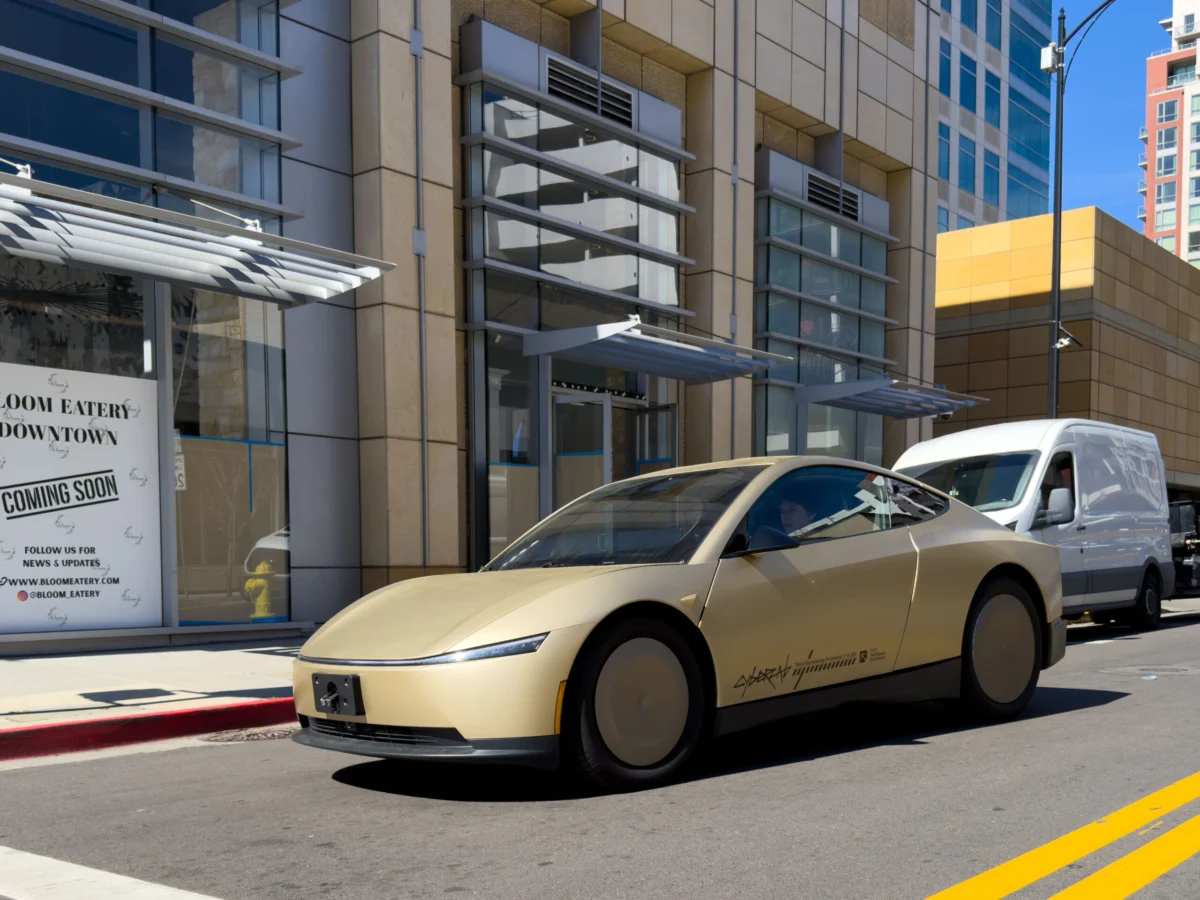
The burgeoning landscape of autonomous ride-hailing services is witnessing a counterintuitive design trend: the emergence of two-seater robotaxis, exemplified by Tesla’s Cybercab and Lucid’s concept, the Lunar. While initially met with skepticism regarding their limited passenger capacity, a deeper analysis reveals a compelling strategic rationale centered on operational efficiency, cost reduction, and market suitability for a significant segment of the future mobility market.
When Tesla unveiled its Cybercab in 2024, the automotive world largely expressed bewilderment at the decision to design a taxi with a mere two-seat configuration. This sentiment was echoed by many observers, myself included, upon its later debut at the LA Auto Show. The immediate question arose: what kind of taxi service would deliberately limit its passenger count? The prevailing notion was that such a design, deviating significantly from the multi-passenger norms of public transportation and even many ride-sharing services, would be impractical and ultimately undesirable for consumers. This initial perception seemed to hold sway for a considerable period, with online forums and social media buzzing with commentary questioning the utility of a two-seat autonomous vehicle. This skepticism, however, is beginning to be challenged by industry developments.
Despite the widespread doubts, the first Tesla Cybercab has recently entered production, with prototypes actively undergoing validation on public roads and within Tesla’s manufacturing facilities. This development is further amplified by the recent unveiling of Lucid Motors’ Lunar concept, another two-seat robotaxi designed for autonomous operation. The synchronized emergence of these vehicles from two prominent players in the electric vehicle and technology sectors suggests a deliberate strategic shift in the approach to autonomous mobility solutions, prompting a re-evaluation of the perceived limitations of smaller passenger configurations.

Lucid Motors, in its recent Investor Day presentation, outlined a comprehensive strategy aimed at achieving profitability. A cornerstone of this strategy involves the introduction of three new models based on a more affordable, mid-size platform, slated for release starting next year. This expansion will be complemented by an entirely new electric powertrain and a continued emphasis on advanced semi-autonomous driving capabilities and strategic partnerships within the robotaxi sector. During a subsequent "fireside chat," Lucid’s acting CEO, Marc Winterhoff, revealed the company’s vision for the future with the debut of the Lucid Lunar concept. This two-seat robotaxi, presented without doors to showcase its interior, including a substantial luggage compartment, immediately drew parallels to Tesla’s Cybercab, signaling a convergence of design philosophy in the nascent autonomous taxi market.
The significance of this convergence was further underscored by the announcement of a substantial commitment from Uber. In conjunction with Lucid, Uber has pledged to acquire 20,000 Lucid Gravity models, equipped with specialized robotaxi sensors and software developed by Nuro. The companies also intend to establish a similar arrangement for an upcoming Lucid mid-size electric vehicle. This strategic alliance with a major rideshare operator provides tangible evidence of a burgeoning market for dedicated autonomous ride-hailing vehicles, even those with limited seating.
My own understanding of the strategic advantages of two-seat robotaxis evolved significantly after engaging with Lucid Motors executives. The core argument for this design centers on its potential to drastically improve operational efficiency and reduce costs for fleet operators. While the initial user experience of summoning a ride might require an additional step – specifying the number of passengers to ensure appropriate vehicle allocation – this minor friction is likely to be readily accepted by consumers if it translates into lower fares. Studies by rideshare giants like Uber consistently indicate that a substantial majority of their trips, often exceeding 90 percent, involve only one or two passengers. This data point is pivotal in understanding the economic rationale behind smaller, dedicated vehicles.
The fundamental principle at play is one of optimized resource allocation. A two-seat electric vehicle inherently possesses a smaller and lighter chassis compared to its multi-passenger counterparts. This reduction in size and weight directly translates into lower manufacturing costs and, crucially, significantly reduced operational expenses. A lighter vehicle requires a smaller battery pack to achieve a comparable range, thereby lowering the initial purchase price of the vehicle and decreasing energy consumption. Furthermore, smaller battery packs generally recharge faster, minimizing downtime and maximizing vehicle utilization for fleet operators. For companies like Uber and Lyft, the ultimate competitive advantage in the robotaxi market will hinge on achieving the lowest possible lifetime cost per mile, making autonomous technology economically viable against human-driven fleets.

Lucid’s chief engineer, Zach Walker, elaborated on the economic impact of battery size reduction. He estimated that a reduction of just 1 kWh in battery capacity can save a robotaxi operator approximately $1,000 annually in recharging costs, assuming an annual mileage of 100,000 miles. This economic incentive is substantial and forms the bedrock of the argument for smaller, more efficient vehicles. The projected energy efficiency for these two-seat robotaxis is remarkably high, with Lucid anticipating efficiencies of 5.5 miles per kilowatt-hour, potentially reaching as high as 6 mi/kWh in typical operating conditions. For context, this significantly surpasses the efficiency of most current production electric vehicles, underscoring the design focus on pure utility and operational performance.
Beyond the direct impact of size and weight, there is a cascading effect of engineering for purpose. While vehicles intended for private ownership often prioritize dynamic handling and sophisticated suspension systems to cater to a wide range of driving styles and road conditions, a dedicated robotaxi’s operational parameters are predictable and constrained. The driving algorithms are programmed for safety and efficiency, minimizing extreme maneuvers. This allows engineers to optimize suspension systems for ride comfort rather than performance, potentially utilizing softer, less complex components. Furthermore, the structural reinforcements required to withstand aggressive handling can be reduced or eliminated, further contributing to weight savings and cost reduction. This "virtuous circle" of design optimization, driven by the specific needs of a commercial fleet, is a key differentiator for dedicated robotaxi platforms.
The aerodynamic design of these two-seat vehicles also plays a critical role in their efficiency. Both the Tesla Cybercab and the Lucid Lunar exhibit low, sleek profiles, which are engineered to minimize aerodynamic drag. This is particularly beneficial at higher speeds, typically above 30 mph, where wind resistance becomes a dominant factor in energy consumption. While this is advantageous for longer-haul routes, such as airport transfers that involve highway driving, its impact may be less pronounced in predominantly urban, low-speed environments. Reilly Brennan of Trucks VC has noted this distinction, suggesting that while aerodynamic efficiency is a factor, the primary considerations for urban robotaxis might differ.
Brennan has also raised an interesting point regarding the form factor of these vehicles, questioning the adoption of coupe-like designs that may present challenges for passenger entry and exit. He references a seminal concept design by Giorgetto Giugiaro for a modern New York City taxi from 50 years ago, characterized by its upright, accessible design. While such a design would undoubtedly improve ingress and egress, it would likely incur a penalty in aerodynamic drag. Brennan posits that for the majority of low-speed urban trips, the impact of a higher drag coefficient might be negligible, suggesting that accessibility could be prioritized over aerodynamic finesse in certain operational contexts.

The visual impression of both the Tesla Cybercab and the Lucid Lunar, with their futuristic, minimalist designs, also sparks a thought about their potential beyond the robotaxi realm. Their sleek proportions and advanced technology could easily lend themselves to conversion into high-performance electric sports coupes. When questioned about such a possibility, Lucid’s chief engineer, Zach Walker, acknowledged the inherent appeal but firmly reiterated the immediate focus on the Lunar’s intended purpose as a dedicated autonomous ride-hailing vehicle.
In conclusion, the emergence of two-seat robotaxis, initially perceived as a design quirk, represents a calculated and strategically sound approach to the future of urban mobility. By prioritizing efficiency, cost reduction, and tailored design for high-volume passenger trips, manufacturers are addressing the core economic imperatives of fleet operators. As autonomous technology matures and its widespread adoption becomes a reality, the unassuming two-seater robotaxi may very well prove to be the most practical and economically sensible solution for a significant segment of the global transportation network, reshaping how we think about personal mobility in the years to come.


 Lisa Mariana
 Safa Marwah
 Ayu Aulia