Lisa Mariana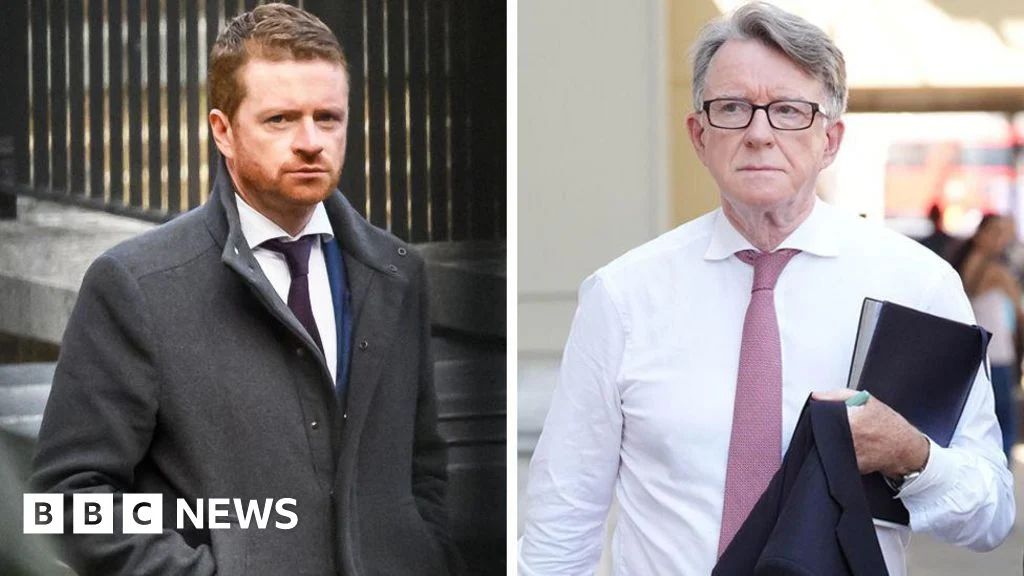
A swirling vortex of political intrigue, national security concerns, and questions of governmental transparency has engulfed Westminster following the disclosure that a crucial mobile device belonging to a senior Downing Street aide was reported stolen, potentially erasing key communications related to a contentious diplomatic appointment. Sir Keir Starmer, the current Prime Minister, has staunchly defended his former chief of staff, Morgan McSweeney, dismissing as "far-fetched" any insinuation that the phone’s disappearance was anything other than a genuine street theft, despite growing calls from opposition parties and even some within his own ranks for a more comprehensive explanation.
The heart of the controversy lies in the proposed appointment of Lord Mandelson as the British Ambassador to the United States. This nomination has been subject to intense scrutiny due to Lord Mandelson’s well-documented historical connections to the late convicted sex offender Jeffrey Epstein. Critics argue that these associations posed a significant reputational risk and warranted a more cautious approach from the government. Indeed, internal documents released earlier this month confirmed that the Prime Minister’s office had received explicit warnings regarding the potential fallout of Lord Mandelson’s appointment. The demand for full transparency led to a commitment from the government to publish all relevant communications pertaining to this decision, a disclosure that now faces a considerable hurdle with the loss of McSweeney’s device.
Morgan McSweeney, who served as Sir Keir Starmer’s chief of staff, was reportedly a key proponent of Lord Mandelson’s appointment, making his communications particularly pertinent to the ongoing parliamentary inquiry. The theft, which occurred in October of the previous year, saw his work phone snatched from his hand by an individual on a bicycle. The Metropolitan Police, in an unusual move, recently released a full transcript of McSweeney’s initial report call, a step seemingly aimed at providing clarity amid escalating speculation. However, rather than quelling doubts, this release appears to have further fuelled the narrative of a convenient disappearance.
Speaking from a security summit in Finland, Prime Minister Starmer addressed the burgeoning scandal, expressing his conviction that any notion of a deliberate fabrication or governmental cover-up was baseless. "Unfortunately, thefts like this are a common occurrence," Starmer asserted, emphasizing that the incident was reported promptly and confirmed by law enforcement. He articulated the improbability of anyone foreseeing a future demand for the phone’s contents, thereby rendering the idea of a pre-emptive staged theft "a little bit far-fetched." This defence, while firm, has done little to appease a sceptical opposition and a public increasingly attuned to issues of political accountability.
The Conservative leader, Kemi Badenoch, has been particularly vocal in her criticism, publicly stating that "we are all raising eyebrows" at the timing and circumstances surrounding the phone’s disappearance. During Prime Minister’s Questions, Badenoch pointedly questioned the credibility of such an excuse, rhetorically asking, "I wonder what a director of public prosecutions would make of the defence, ‘sorry, I can’t produce my WhatsApps, my phone’s been stolen’." This was a thinly veiled reference to Sir Keir Starmer’s distinguished past career as the Director of Public Prosecutions (DPP), a role that demanded rigorous adherence to legal processes and evidence retention.
Following PMQs, Badenoch’s official spokesperson amplified these concerns, suggesting that "from the very outset of the Mandelson affair, the prime minister’s first instinct has been to obfuscate and cover up." While stopping short of directly accusing McSweeney of fabricating the theft, the spokesperson highlighted the "very fortunate timing" of the incident. Badenoch has since intensified her demands, calling for McSweeney to appear before Parliament to provide direct testimony, citing "too many unanswered questions." She pressed for an explanation as to "exactly what happened and why Keir Starmer signed off on Peter Mandelson’s appointment despite the warnings," implicitly linking the phone theft to the broader transparency issues surrounding the ambassadorial decision.
The ripple effects of the controversy extend beyond the immediate political adversaries. Labour backbencher Karl Turner publicly expressed his disbelief on social media, stating, "I don’t believe McSwindle had his iPhone stolen," though he offered no substantiating evidence for this assertion. Another Labour MP, Richard Burgon, has taken a more formal route, submitting a written parliamentary question to the Cabinet Office. His inquiry seeks clarification on whether McSweeney reported the theft to the Cabinet Office, the established guidance for data backup on government-issued devices, and, crucially, the potential impact of the theft on national security. Burgon highlighted the "serious impact this could have on getting the truth about the Mandelson scandal," underscorifying the cross-party consensus on the need for answers.
The government’s initial commitment to full disclosure, prompted by parliamentary pressure, aimed to release all communications related to Lord Mandelson’s appointment. The first tranche of internal documents, which confirmed warnings issued to the Prime Minister regarding the reputational risks, has already been made public. However, the eagerly anticipated second release, expected to include messages from ministers and key government aides, now faces uncertainty regarding the recoverability of communications held on McSweeney’s stolen device. While the Cabinet Office reportedly possesses some exchanges between McSweeney and Lord Mandelson, the completeness of this record, particularly in light of the aide’s significant role, remains a critical question.
Adding another layer of expert scrutiny, Helen MacNamara, a former Deputy Cabinet Secretary, weighed in on the security implications of the incident. While commending McSweeney for promptly reporting the theft to Downing Street and requesting a remote data wipe, MacNamara raised serious concerns about the government’s subsequent actions. She criticized the apparent delay in Downing Street’s response, emphasizing that the device and its data were "their phone, their data, their risk." MacNamara expressed surprise that Downing Street seemingly did not immediately escalate the matter to the Metropolitan Police as a significant national security risk, given the sensitive nature of a chief of staff’s communications. She stressed the paramount importance of robust security protocols for government material on mobile devices, advocating for swift and comprehensive responses to such incidents.
MacNamara also highlighted the broader corrosive effect of information vacuums in political discourse. She urged for the expedited release of the second batch of documents concerning Mandelson’s appointment, arguing that delays only serve to breed "paranoia and suspicion," allowing "people to imagine all sorts of amazing things." Her plea underscored the fundamental importance of transparency in maintaining public "trust in politics and government," asserting that "it’s better to get it out there."
The gravity of the situation was further underscored by Kemi Badenoch, who questioned why McSweeney did not disclose his identity as the Prime Minister’s chief of staff during his call to the police. She speculated on the potential involvement of foreign state actors, such as "China, could have been Russia," given the extensive access to sensitive information held by such a senior official. Badenoch reiterated her call for the government to "come clean about what happened," maintaining that "the story doesn’t add up" and describing the timing of the theft as "very suspicious."
The Scottish National Party’s Westminster deputy leader, Pete Wishart, joined the chorus of condemnation, demanding a full investigation. Wishart presented a stark dichotomy: "Either the prime minister is completely incompetent, and failed to ensure key evidence was retained, or there has been a deliberate cover-up to conceal the truth from voters." He concluded by declaring that "This Labour Party scandal is getting worse every day," framing the controversy as a significant stain on the government’s credibility.
This complex series of events, unfolding against a backdrop of heightened political tensions, paints a concerning picture of digital security vulnerabilities within the highest echelons of government and the profound impact these can have on transparency and public trust. The demand for clarity on the Mandelson appointment, initially focused on the appropriateness of the nomination, has now broadened to encompass fundamental questions about data retention, incident response protocols, and the integrity of official communications.
As Parliament continues to press for answers, the government faces an arduous task in restoring confidence. The immediate future will likely see continued calls for McSweeney’s testimony, further scrutiny of the Cabinet Office’s data management policies, and potentially, a re-evaluation of how sensitive governmental information is handled on mobile devices. The Mandelson affair, now inextricably linked with the mysterious disappearance of a critical phone, has evolved into a significant test of the current administration’s commitment to openness and accountability, with long-term implications for the perceived probity of British statecraft. The ongoing saga underscores the critical need for robust digital hygiene and transparent governance in an increasingly interconnected and scrutinised political landscape, where the absence of information can be as damaging as its presence.




 Aura Kasih
 Safa Marwah
 Ayu Aulia