Aura Kasih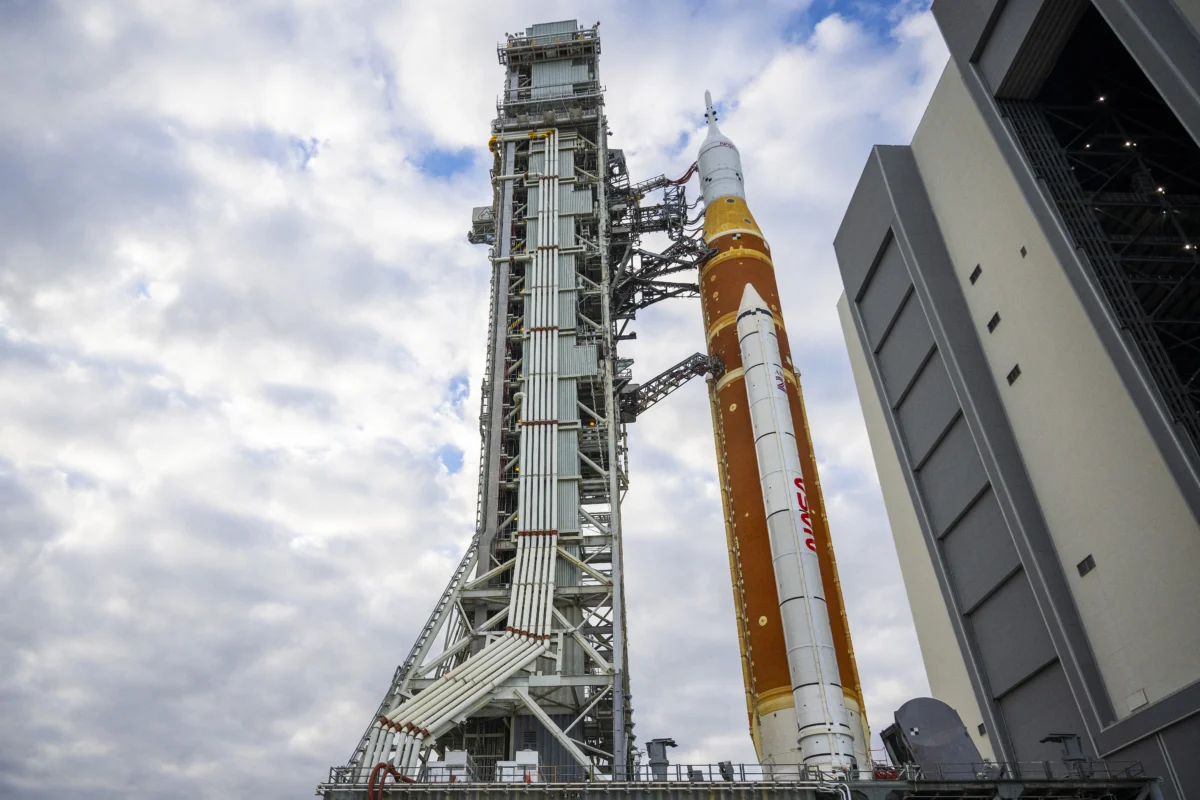
In a significant announcement that signals a paradigm shift in lunar exploration strategy, the National Aeronautics and Space Administration (NASA) has unveiled a comprehensive, multi-year initiative to establish a permanent human presence on the Moon, complemented by groundbreaking advancements in interplanetary spacecraft propulsion. This ambitious undertaking, projected to cost approximately $20 billion over the next seven years, represents a decisive pivot from orbital lunar infrastructure towards sustained surface operations, aiming to secure a lasting foothold on Earth’s natural satellite.
The genesis of this transformative plan was revealed by NASA Administrator Jared Isaacman during the agency’s recent "Ignition" event. His vision transcends mere flag-planting expeditions; it is about forging an "enduring presence," a phrase that encapsulates the long-term commitment to lunar habitation and scientific exploration. This strategic recalibration has led to a significant revision of existing programs, most notably the phasing out of the Gateway lunar orbiting outpost in its current configuration. Instead, NASA is redirecting its resources and expertise towards developing the critical infrastructure necessary for continuous human activity on the lunar surface. This includes repurposing components and technologies originally slated for the Gateway, demonstrating a pragmatic and adaptable approach to achieving lunar permanence.
The phased development of the lunar base is envisioned as a meticulous, step-by-step process designed to build capabilities incrementally. Phase one focuses on establishing fundamental support systems, including the deployment of advanced communication and navigation networks, essential for maintaining constant contact and precise positioning across the lunar terrain. This phase will also witness the delivery of sophisticated robotic landers and rovers, which will serve as crucial enablers for astronauts, facilitating their movement and operational reach across the lunar landscape. The subsequent phase will transition to "recurring astronaut operations on the surface," marking the commencement of regular human missions with a focus on habitation and scientific research. The ultimate goal, phase three, is the establishment of a "long-duration human presence," laying the groundwork for the delivery of more substantial infrastructure and the realization of a truly permanent lunar base. While a definitive timeline for the completion of the entire base has not been publicly disclosed, the commitment to invest $20 billion over seven years, executed through numerous missions, underscores the scale and urgency of this endeavor.
Establishing a sustainable human presence on the Moon presents a formidable array of scientific and engineering challenges. The lunar environment is characterized by extreme temperature fluctuations, ranging from scorching highs in direct sunlight to frigid lows in permanently shadowed regions. Astronauts will also be exposed to the pervasive threat of deep-space radiation, which poses significant health risks. The Moon’s low gravity environment, approximately one-sixth that of Earth’s, necessitates the development of countermeasures to mitigate potential long-term physiological effects such as bone density loss and muscle atrophy. Furthermore, the constant bombardment of micrometeorites, though small, poses a persistent threat to surface infrastructure and requires robust protective measures. NASA’s phased approach, emphasizing gradual capability development, is a direct acknowledgment of these formidable environmental hurdles.
The leadership driving this ambitious lunar agenda is headed by Administrator Isaacman, a figure whose background in both entrepreneurship and spaceflight positions him uniquely to navigate the complexities of this undertaking. A billionaire entrepreneur and accomplished aviator, Isaacman has previously participated in pioneering commercial space missions, including leading the Inspiration4 mission aboard a SpaceX Crew Dragon. His nomination to lead NASA, though subject to political shifts, ultimately saw him at the helm, tasked with steering the agency’s future. During his confirmation hearings, Isaacman consistently highlighted the escalating competition in space, particularly with China, framing it as a critical geopolitical imperative. He has articulated a sense of urgency, stating that "the clock is running in this great power competition, and success or failure will be measured in months, not years." This sentiment is echoed by China’s own ambitious lunar objectives, including a stated goal of landing humans on the Moon by 2030 and subsequently establishing its own lunar research station. NASA’s decision to push back its Artemis Moon landing mission to 2028 reflects this intensified global race and the strategic adjustments being made to maintain a competitive edge.

Beyond the lunar frontier, NASA is simultaneously advancing its capabilities for deep-space exploration with the unveiling of the Space Reactor-1 Freedom. This initiative marks a significant leap forward, aiming to launch the "first nuclear-powered interplanetary spacecraft" to Mars by the close of 2028. The utilization of nuclear propulsion promises to dramatically reduce transit times to the Red Planet, opening up new possibilities for scientific discovery and human missions. Upon arrival, the spacecraft will deploy a payload of advanced aerial vehicles, analogous to the groundbreaking Ingenuity helicopter, which demonstrated the feasibility of powered, controlled flight on Mars in 2021. This capability will significantly enhance the scope of Martian exploration, allowing for more extensive aerial surveys and reconnaissance.
The strategic implications of establishing a permanent lunar base are far-reaching. It will serve as a crucial proving ground for technologies and operational strategies essential for future human missions to Mars and beyond. The Moon’s proximity makes it an ideal location for testing life support systems, radiation shielding, in-situ resource utilization (ISRU) techniques, and advanced construction methodologies in a relevant, albeit challenging, extraterrestrial environment. A sustained lunar presence could also foster a burgeoning cislunar economy, stimulating commercial innovation in areas such as resource extraction, tourism, and scientific research. Furthermore, it provides a platform for enhanced astronomical observation, free from the atmospheric distortions and light pollution of Earth.
The development of nuclear propulsion for interplanetary travel represents another monumental stride in humanity’s ability to explore the solar system. Traditional chemical rockets, while effective for Earth orbit and short-duration missions, are inherently limited by the amount of propellant they must carry. Nuclear thermal or nuclear electric propulsion systems, in contrast, can generate significantly higher thrust-to-weight ratios and operate far more efficiently, enabling faster and more ambitious missions to distant celestial bodies. The Space Reactor-1 Freedom project signifies NASA’s commitment to unlocking this transformative technology, paving the way for more frequent and cost-effective exploration of the outer planets and potentially the Kuiper Belt.
The scientific objectives for a lunar base are multifaceted and ambitious. Researchers will have unprecedented opportunities to study lunar geology, understand the Moon’s formation and evolution, and investigate the potential for lunar resources, such as water ice, which could be crucial for future propellant production and life support. The Moon’s surface also offers a unique platform for observing the universe, with potential for radio astronomy observatories on the far side, shielded from Earth’s radio interference. Furthermore, the long-term presence of humans will allow for in-depth studies of the physiological and psychological effects of living and working in a low-gravity, high-radiation environment, providing invaluable data for future deep-space missions.
The projected $20 billion investment over seven years, while substantial, must be viewed within the context of long-term space exploration goals. This figure encompasses research and development, the construction and launch of numerous robotic and human missions, the establishment of surface infrastructure, and ongoing operational costs. The decision to repurpose components from the Gateway project demonstrates a fiscally responsible approach, maximizing the return on investment from previous endeavors. The success of this initiative will likely depend on sustained political will, public support, and continued technological innovation.
The narrative of lunar exploration is entering a new and exciting chapter. From the initial "flags and footprints" era of the Apollo missions to the current drive for sustained human presence, the ambitions have evolved dramatically. NASA’s commitment to building a $20 billion lunar base and developing nuclear-powered spacecraft underscores a renewed determination to push the boundaries of human endeavor beyond Earth. These endeavors are not merely scientific pursuits; they are strategic investments in humanity’s future, shaping our understanding of the cosmos and our place within it, while simultaneously engaging in a vital global competition for leadership in space exploration. The coming years will undoubtedly be pivotal as NASA works to translate these grand visions into tangible realities, charting a course for a future where humanity is a multi-planetary species.




 Lisa Mariana
 Safa Marwah
 Ayu Aulia