Safa Marwah
Microsoft has deployed a critical out-of-band (OOB) update, designated KB5085516, designed to rectify a severe system anomaly that had rendered Microsoft account sign-ins inoperable across numerous core applications and services. This urgent patch addresses a fundamental disruption that prevented users from authenticating into essential Microsoft platforms, including collaboration tools like Teams, cloud storage solutions such as OneDrive, and productivity suites like Office. The issue, which stemmed from a prior cumulative update, significantly hampered user access and productivity, prompting an expedited response from the technology giant.
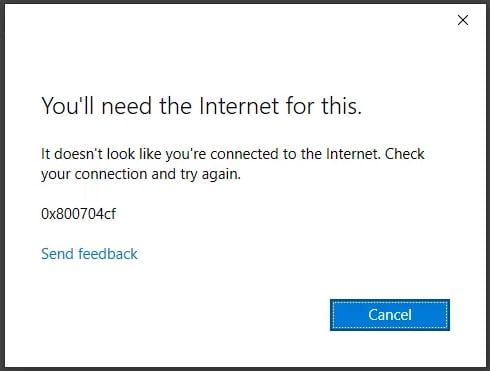
The genesis of this pervasive authentication breakdown can be traced to the deployment of cumulative update KB5079473, released as part of Microsoft’s routine Patch Tuesday cadence for the current month. Intended to deliver a suite of security enhancements and non-security fixes, this update inadvertently introduced a critical flaw that manifested as an inability for applications to properly validate user credentials tied to Microsoft accounts. Users attempting to log in were met with a perplexing error message, stating, "You’ll need the Internet for this. It doesn’t look like you’re connected to the Internet." This diagnostic misdirection was particularly frustrating as it appeared even on devices with fully functional network connectivity, pointing to a more intricate underlying issue within the operating system’s interaction with Microsoft’s identity services.
The scope of this disruption was considerable, encompassing a broad spectrum of Microsoft’s ecosystem. Beyond Teams and OneDrive, applications such as the Edge browser, the nascent Microsoft 365 Copilot, and individual Office components like Excel and Word were all impacted. Any feature within these applications necessitating a Microsoft account for authentication or access was rendered inaccessible, effectively crippling functionality for a significant user base. This highlights the deep integration of Microsoft accounts across the company’s product portfolio, where a single point of failure in the authentication chain can cascade into widespread service unavailability. The incident underscores the critical dependency of modern computing environments on robust and uninterrupted identity management systems.
Microsoft’s acknowledgment of the bug on Friday provided initial clarity, noting that the problem specifically targeted operations involving Microsoft accounts, which are commonly utilized for consumer-oriented services such as the free tier of Microsoft Teams. Crucially, the issue did not extend to businesses leveraging Entra ID (formerly Azure Active Directory) for application authentication. This distinction is vital for understanding the demographic impact of the flaw. Entra ID serves as Microsoft’s cloud-based identity and access management service for enterprise customers, offering a more robust and distinct authentication framework compared to the consumer-focused Microsoft Account system. The architectural separation between these two identity platforms meant that corporate users, operating within managed environments and often under stricter security protocols, largely remained unaffected, thereby localizing the immediate operational fallout to individual consumers and smaller organizations.
The initial temporary workaround suggested by Microsoft – a simple PC restart – offered a glimpse into the potential transient nature of the bug, hinting at issues like corrupted session states, service deadlocks, or caching anomalies that could be resolved through a system reinitialization. While providing some relief for affected users, this solution was hardly sustainable or indicative of a root cause fix. The necessity for a more definitive resolution was clear, leading to the rapid development and deployment of the out-of-band update. This swift action reflects Microsoft’s commitment to maintaining service integrity, particularly when core functionalities like account access are compromised.
The deployment of KB5085516, initiated over the weekend, signifies an expedited intervention outside the standard monthly patching schedule. Out-of-band updates are reserved for critical issues that cannot await the next Patch Tuesday, underscoring the severity and widespread impact of the Microsoft account sign-in problem. This specific OOB update not only resolves the authentication bug but also incorporates all previously delivered patches from the current month’s Patch Tuesday Windows security update. This bundling strategy simplifies the remediation process for users, ensuring that systems receive all critical updates in a single installation, particularly beneficial for those who may have delayed applying the problematic initial update.
The availability of KB5085516 extends to Windows 11 versions 25H2 and 24H2, catering to devices configured to receive standard Windows updates. Users can procure and install this essential update either through the integrated Windows Update mechanism within their operating system settings or by directly accessing the Microsoft Update Catalog. The dual distribution channels provide flexibility and ensure broad accessibility for all affected users. Microsoft’s prompt communication via its Windows release health dashboard on Saturday further reinforced the resolution, advising users to install the latest updates for their devices to benefit from critical improvements and issue resolutions, including the fix for this particular authentication failure.
The occurrence of such a fundamental issue following a routine cumulative update raises pertinent questions regarding the robustness of quality assurance (QA) processes within such a complex software ecosystem. The sheer scale and intricate interdependencies of the Windows operating system and its integrated services present an immense challenge for comprehensive pre-release testing. While Microsoft employs extensive internal testing, telemetry, and insider programs, unforeseen interactions can still emerge in the vast diversity of real-world hardware and software configurations. This incident serves as a reminder of the inherent complexities in delivering seamless, secure updates to hundreds of millions of devices globally.
The recent spate of out-of-band updates from Microsoft points to an increasing frequency of critical issues requiring immediate attention beyond the predictable monthly patching cycle. In addition to the current authentication fix, Microsoft has recently deployed other emergency updates addressing diverse challenges. These include a hotpatch for Windows 11 Enterprise devices to resolve a Bluetooth device visibility problem, another OOB hotpatch to mitigate security vulnerabilities within the Routing and Remote Access Service (RRAS) management tool, and specific guidance for resolving C: drive access issues on certain Samsung Windows 11 laptops, which were triggered by a flawed version of the Samsung Galaxy Connect (or Samsung Continuity Service) application. This pattern suggests that while Microsoft remains highly responsive to emergent threats and functional breakdowns, the underlying complexity of the Windows platform and its myriad integrations with third-party hardware and software continue to generate unexpected challenges that necessitate rapid, targeted interventions.
The implications of such authentication failures extend beyond mere inconvenience. For individual users, the inability to sign into Microsoft accounts directly impacts productivity, access to personal files on OneDrive, and communication through Teams. For small businesses or freelancers relying on Microsoft 365, this can translate into lost work hours, missed deadlines, and potential financial repercussions. While enterprise users were largely spared due to their reliance on Entra ID, the incident still highlights the fragility of digital identity systems and the profound impact when they falter. Maintaining trust in the reliability and security of core operating system components and cloud services is paramount for Microsoft, and rapid remediation like KB5085516 is critical for upholding that trust.
In conclusion, the deployment of KB5085516 represents a critical and timely intervention by Microsoft to restore essential functionality to its vast ecosystem. While the occurrence of such a widespread authentication failure following a routine update is concerning, the swift identification, acknowledgment, and resolution through an out-of-band update underscore Microsoft’s commitment to mitigating severe disruptions. The incident serves as a valuable case study in the ongoing challenges of software maintenance at scale, emphasizing the need for robust testing, proactive monitoring, and agile response mechanisms to safeguard the integrity and usability of modern computing environments. Users are strongly advised to ensure their systems are updated to the latest available patches, particularly those designated as critical OOB releases, to maintain optimal security and functionality.



 Lisa Mariana
 Aura Kasih
 Ayu Aulia