Ridwan Kamil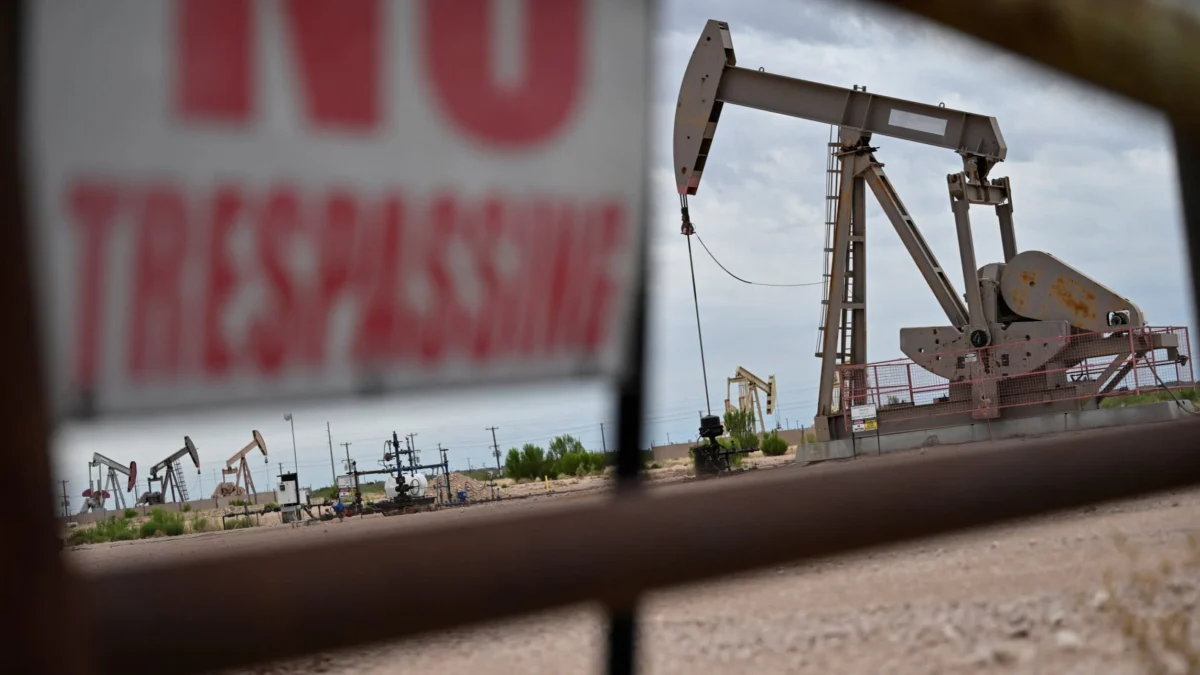
The escalating conflict in the Middle East, fueled by Iran’s increasingly assertive regional posture, has cast a long shadow over the global oil and gas sector, inducing a state of profound uncertainty and effectively paralyzing dealmaking activity. This pervasive apprehension, stemming from the potential for wider regional conflagration and its attendant disruption to vital energy supply routes, has compelled major energy players and financial institutions to adopt a decidedly cautious stance, freezing planned investments and acquisitions until a clearer geopolitical landscape emerges.
The strategic significance of the Persian Gulf as a linchpin of global energy security cannot be overstated. Home to a substantial proportion of the world’s proven oil reserves and critical chokepoints for maritime transport, any instability in this region carries immediate and far-reaching implications for energy markets. Iran, under its current administration, has demonstrated a willingness to leverage its geopolitical influence and military capabilities to project power, often through proxy forces and a more aggressive stance towards its regional adversaries. This has heightened concerns among international powers and energy companies alike regarding the potential for miscalculation, escalation, and the direct disruption of oil and gas flows.
The ripple effects of such anxieties are already palpable within the oil and gas industry. The intricate web of mergers, acquisitions, and joint ventures that typically characterizes this capital-intensive sector has ground to a near halt. Companies that might have been actively pursuing opportunities for exploration, production, or infrastructure development are now deferring decisions, reassessing risk profiles, and hunkering down. This paralysis is not merely a matter of cautious optimism; it reflects a tangible fear that any significant investment could be jeopardized by unforeseen geopolitical events, ranging from targeted attacks on energy infrastructure to broader military confrontations that could engulf the region.
Deepening Roots of Instability: Iran’s Assertive Stance and Regional Dynamics
To fully grasp the current paralysis in oil and gas dealmaking, it is crucial to understand the underlying geopolitical currents. Iran’s foreign policy has become increasingly characterized by a strategy of regional assertiveness, often framed as a response to perceived external threats and a desire to counter the influence of its principal rivals, notably Saudi Arabia and the United Arab Emirates. This assertiveness manifests in several ways:
- Support for Proxy Networks: Iran has cultivated and supported a network of non-state actors and allied regimes across the Middle East, including Hezbollah in Lebanon, Houthi rebels in Yemen, and various Shi’a militias in Iraq and Syria. These proxies serve as instruments of Iranian influence, capable of projecting power and disrupting regional stability in ways that often fall short of direct Iranian military engagement, thereby offering Tehran a degree of plausible deniability.
- Naval Presence and Strait of Hormuz: The Strait of Hormuz, a narrow maritime passage through which a significant portion of the world’s oil supply transits, is a focal point of Iranian strategic calculations. Iran has repeatedly threatened to disrupt shipping in this vital waterway, and its naval capabilities, though asymmetric, pose a persistent threat to the unimpeded flow of energy resources. Recent incidents involving maritime seizures and drone attacks in the Gulf have amplified these concerns.
- Nuclear Program and International Sanctions: The ongoing development of Iran’s nuclear program and the subsequent imposition of international sanctions have created a volatile dynamic. While direct military conflict over the nuclear issue remains a possibility, the economic pressure exerted by sanctions has also contributed to Iran’s strategic calculus, potentially incentivizing it to employ asymmetrical tactics to assert its influence and disrupt its adversaries.
- Inter-Arab Rivalries: The broader regional landscape is marked by deep-seated rivalries, particularly between Iran and the Sunni-led states of Saudi Arabia and the UAE. These rivalries, often playing out through proxy conflicts, create a complex and unstable environment where any localized flare-up can quickly escalate, with direct implications for the energy-rich territories of the Gulf.
The confluence of these factors has created an environment where the risk premium associated with any investment in or around the Middle East has risen dramatically. Energy companies, accustomed to navigating complex regulatory and operational landscapes, find themselves confronting a level of geopolitical risk that is proving exceptionally difficult to quantify and mitigate.
The Investment Freeze: Implications for the Energy Sector
The current paralysis in oil and gas dealmaking has profound implications for the global energy landscape. Several key areas are being adversely affected:
- Exploration and Production (E&P) Ventures: The most immediate impact is on new exploration and production ventures. Companies are hesitant to commit the vast capital required for upstream projects, particularly in regions perceived as high-risk. This could lead to a slowdown in the discovery of new reserves and a potential tightening of future supply, even as demand continues to grow.
- Mergers and Acquisitions (M&A): The M&A market, a vital mechanism for industry consolidation, asset optimization, and strategic repositioning, has been severely curtailed. Potential acquirers are unwilling to take on the uncertainty of integrating assets or businesses in a volatile geopolitical climate. This can lead to a lack of strategic flexibility for companies and hinder the efficient allocation of capital.
- Infrastructure Development: Projects involving the construction of pipelines, liquefied natural gas (LNG) terminals, and other critical energy infrastructure are also being put on hold. The long-term nature of these investments makes them particularly vulnerable to geopolitical shifts, and the current climate offers little reassurance for the security and viability of such projects.
- Financing Challenges: Financial institutions, including banks and private equity firms, are increasingly risk-averse when it comes to funding projects in or connected to the Middle East. The heightened geopolitical risk translates into higher borrowing costs and more stringent lending conditions, making it more difficult for energy companies to secure the necessary capital for their endeavors.
- Technological Advancement and Innovation: A slowdown in investment can also stifle innovation. Companies may be less inclined to invest in research and development for new exploration technologies, more efficient extraction methods, or advanced energy transition solutions when their core business is facing such significant headwinds.
Expert Analysis and Future Outlook
Industry analysts and seasoned observers of the energy markets are unanimous in their assessment of the current situation. "The Middle East remains the world’s energy fulcrum, and any instability there has a disproportionate impact on global markets," notes Dr. Anya Sharma, a senior energy security analyst at the Global Energy Institute. "The current Iranian posture, coupled with the existing regional rivalries, has created a ‘fog of war’ effect that is making rational investment decisions incredibly challenging. Companies are not just looking at immediate market dynamics; they are factoring in the potential for significant geopolitical shocks that could render entire projects unviable overnight."
The long-term implications of this investment paralysis are significant. A sustained period of underinvestment in exploration and production could lead to a future supply crunch, driving up energy prices and exacerbating inflationary pressures globally. Furthermore, it could slow down the transition to cleaner energy sources, as capital that might have been allocated to renewables is instead diverted to maintaining existing fossil fuel operations or simply held in reserve due to uncertainty.
The path forward for the oil and gas sector hinges on a de-escalation of tensions in the Middle East and a clearer geopolitical outlook. Until then, a degree of stagnation in dealmaking activity is likely to persist. The strategic imperative for energy companies is to maintain operational resilience, carefully manage existing assets, and adopt a highly selective approach to new ventures. Diversification of supply chains and exploration efforts away from the most volatile regions may also become a more pronounced strategy for some.
However, the allure of the Middle East’s vast hydrocarbon resources remains undeniable. As soon as a semblance of stability returns, and the geopolitical risks are perceived to be manageable, dealmaking is expected to rebound, potentially with a surge of pent-up investment. The challenge for policymakers and industry leaders will be to navigate this delicate balance between immediate security concerns and the long-term need for sustained investment to ensure global energy security and facilitate the ongoing energy transition. The current period of paralysis, therefore, represents not an end, but a significant, albeit costly, pause in the dynamic and ever-evolving global energy landscape. The ultimate resolution of the geopolitical tensions will dictate the pace and nature of the sector’s recovery and future trajectory.

 Aura Kasih
 Safa Marwah
 Ayu Aulia