Ridwan Kamil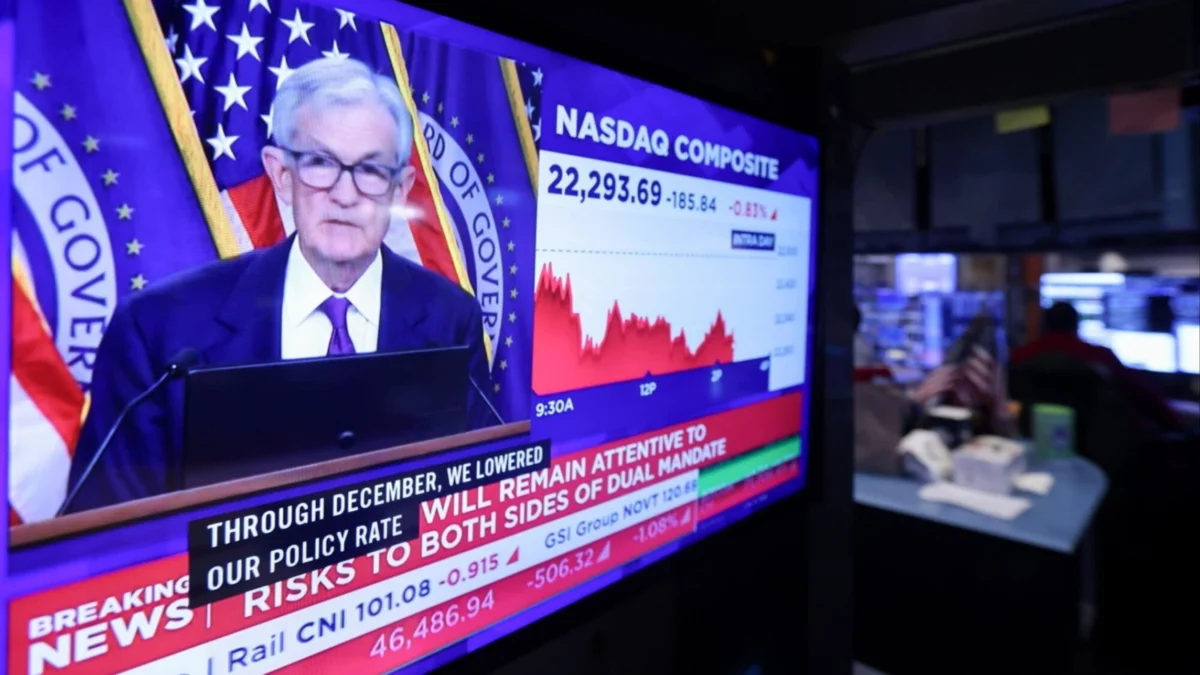
Financial markets are increasingly pricing in the likelihood of a series of interest rate increases by the US Federal Reserve, as persistent inflationary concerns gain traction among investors and economists. This shift in sentiment reflects a growing consensus that the central bank may need to adopt a more aggressive monetary policy stance to curb rising price pressures and maintain economic stability.
The landscape of American monetary policy is undergoing a significant recalibration, driven by a confluence of economic indicators that point towards sustained inflation. For months, the narrative surrounding inflation has been dominated by the debate over its transience – whether it represents a temporary surge in prices linked to pandemic-related supply chain disruptions and pent-up demand, or a more entrenched phenomenon that requires decisive intervention. Increasingly, the latter perspective appears to be winning out in the minds of market participants.
This evolving outlook is not merely theoretical; it is manifesting in tangible shifts within financial markets. Investors, a notoriously forward-looking cohort, are actively adjusting their portfolios and strategies to account for a future where borrowing costs are higher. This manifests in various ways, including a re-evaluation of bond yields, a recalibration of equity valuations, and a heightened focus on sectors and companies that are better positioned to weather a rising interest rate environment. The very act of "betting" on rate hikes implies a degree of conviction that the Federal Reserve’s current monetary stance will prove insufficient to anchor inflation expectations, necessitating a more hawkish pivot.
The Inflationary Undercurrent: A Deep Dive into the Drivers
Understanding the current market sentiment requires a thorough examination of the underlying inflationary pressures. Several key factors are contributing to this elevated price environment:
-
Supply Chain Bottlenecks: The global supply chain, already strained by the pandemic, continues to experience disruptions. Geopolitical events, localized lockdowns in manufacturing hubs, and a persistent shortage of key components, particularly semiconductors, have led to delays and increased costs for a wide range of goods. This has directly translated into higher prices for consumers and businesses alike. The ripple effects are felt across industries, from automotive manufacturing to consumer electronics.
-
Robust Consumer Demand: Despite ongoing supply challenges, consumer demand in the United States has remained remarkably resilient. Stimulus measures enacted during the pandemic, coupled with accumulated savings, have provided households with substantial purchasing power. This strong demand, when met with constrained supply, inevitably pushes prices upward. The shift in consumer spending patterns, with a greater emphasis on goods over services during certain phases of the pandemic, has further exacerbated these imbalances.
-
Labor Market Tightness and Wage Growth: The US labor market is exhibiting signs of significant tightness, with a high number of job openings and a relatively low unemployment rate. This scarcity of labor has empowered workers, leading to increased wage growth across various sectors. While wage increases can be a positive indicator of economic health, when they outpace productivity gains, they can contribute to inflationary pressures as businesses pass on higher labor costs to consumers. The "Great Resignation" phenomenon, where a significant number of workers voluntarily left their jobs, has further intensified this dynamic.
-
Energy Price Volatility: Fluctuations in global energy prices, particularly for oil and natural gas, have a pervasive impact on the broader economy. Higher energy costs translate into increased transportation expenses, higher utility bills, and elevated input costs for many industries. Geopolitical events and shifts in global supply and demand for energy resources can trigger rapid price increases, adding another layer of inflationary pressure.
-
Fiscal Stimulus and Monetary Accommodation: The extensive fiscal stimulus packages implemented in response to the pandemic injected a substantial amount of liquidity into the economy. While necessary to prevent a deeper economic downturn, this increased money supply, when combined with historically low interest rates maintained by the Federal Reserve, has been cited by some as a contributing factor to inflationary pressures. The long-term effects of such expansive policies are a subject of ongoing economic debate.
The Federal Reserve’s Dilemma: Balancing Inflation Control with Economic Growth
The Federal Reserve finds itself in a delicate balancing act. Its dual mandate is to promote maximum employment and price stability. The current economic environment presents a significant challenge to achieving both simultaneously.
-
The Inflation Target: The Federal Reserve has an explicit inflation target of 2 percent, measured by the Personal Consumption Expenditures (PCE) price index. Current inflation readings have significantly exceeded this target for an extended period, raising concerns about the central bank’s credibility in anchoring inflation expectations. If businesses and consumers begin to expect persistently higher inflation, it can become a self-fulfilling prophecy, making it more difficult to bring prices under control.
-
The Risk of Overtightening: Conversely, an overly aggressive approach to raising interest rates could stifle economic growth, potentially leading to a recession. The Fed must carefully gauge the appropriate pace and magnitude of rate hikes to cool inflation without causing undue harm to employment and overall economic activity. The specter of stagflation – a period of high inflation coupled with stagnant economic growth – is a concern that policymakers are keen to avoid.
-
Forward Guidance and Market Expectations: The Federal Reserve’s communication strategy, known as forward guidance, plays a crucial role in shaping market expectations. By signaling its intentions regarding future monetary policy, the central bank aims to influence economic behavior and financial conditions. The recent shift in market sentiment suggests that investors are anticipating a more hawkish tone from the Fed, and potentially a departure from the accommodative policies of the recent past.
Investor Strategies in a Rising Rate Environment
As the prospect of higher interest rates becomes more concrete, investors are adjusting their strategies to navigate this evolving economic landscape:
-
Bond Market Adjustments: In a rising interest rate environment, the value of existing bonds typically declines, as newly issued bonds will offer higher yields. Investors are therefore re-evaluating their fixed-income portfolios, potentially favoring shorter-duration bonds or floating-rate instruments that are less sensitive to interest rate changes. The yields on longer-term government bonds, a key indicator of market expectations for future rates, have seen upward pressure.
-
Equity Market Reassessment: Equity valuations are also susceptible to rising interest rates. Higher borrowing costs can impact corporate profitability, and discount rates used in valuation models increase, leading to a potential recalibration of stock prices. Growth stocks, which often rely on future earnings that are heavily discounted in a low-rate environment, may face particular headwinds. Investors are likely to favor companies with strong balance sheets, consistent earnings, and pricing power that can pass on higher costs. Value stocks and dividend-paying stocks might become more attractive.
-
Sectoral Shifts: Certain sectors of the economy are inherently more sensitive to interest rate changes than others. Financial institutions, for example, can benefit from higher net interest margins as rates rise. Conversely, interest-rate sensitive sectors such as real estate and utilities might face challenges. Investors are likely to be scrutinizing companies based on their sensitivity to borrowing costs and their ability to adapt to a changing economic climate.
-
Commodities as an Inflation Hedge: Historically, commodities have been viewed as a potential hedge against inflation. As prices for raw materials and energy rise, investors may allocate a portion of their portfolios to commodity-linked assets, seeking to benefit from the upward price momentum.
The Road Ahead: Uncertainty and the Outlook for Policy
The path forward for monetary policy remains subject to considerable uncertainty. The Federal Reserve will be closely monitoring a wide range of economic data, including inflation reports, employment figures, and consumer spending trends, to inform its decisions.
-
Data Dependency: The central bank has emphasized its data-dependent approach, meaning that its policy actions will be guided by the incoming economic information. This implies that a significant deterioration in inflation figures could accelerate the pace of rate hikes, while signs of a significant economic slowdown could lead to a more cautious approach.
-
The Pace of Rate Hikes: A key question for investors is not only if the Fed will raise rates, but also at what pace and how high they will ultimately go. Market participants are constantly adjusting their expectations based on Fed communications and economic data, leading to potential volatility in financial markets.
-
Quantitative Tightening: In addition to raising interest rates, the Federal Reserve may also consider unwinding its balance sheet, a process known as quantitative tightening. This involves reducing the amount of assets the central bank holds, which can further tighten financial conditions.
In conclusion, the growing conviction among investors that the Federal Reserve will embark on a path of interest rate increases reflects a pragmatic response to persistent inflationary pressures. This strategic shift is reshaping investment strategies and underscoring the critical juncture at which the US economy finds itself. The coming months will be crucial in determining the trajectory of inflation, the Federal Reserve’s policy response, and the broader implications for financial markets and economic growth.



 Aura Kasih
 Safa Marwah
 Ayu Aulia