Aura Kasih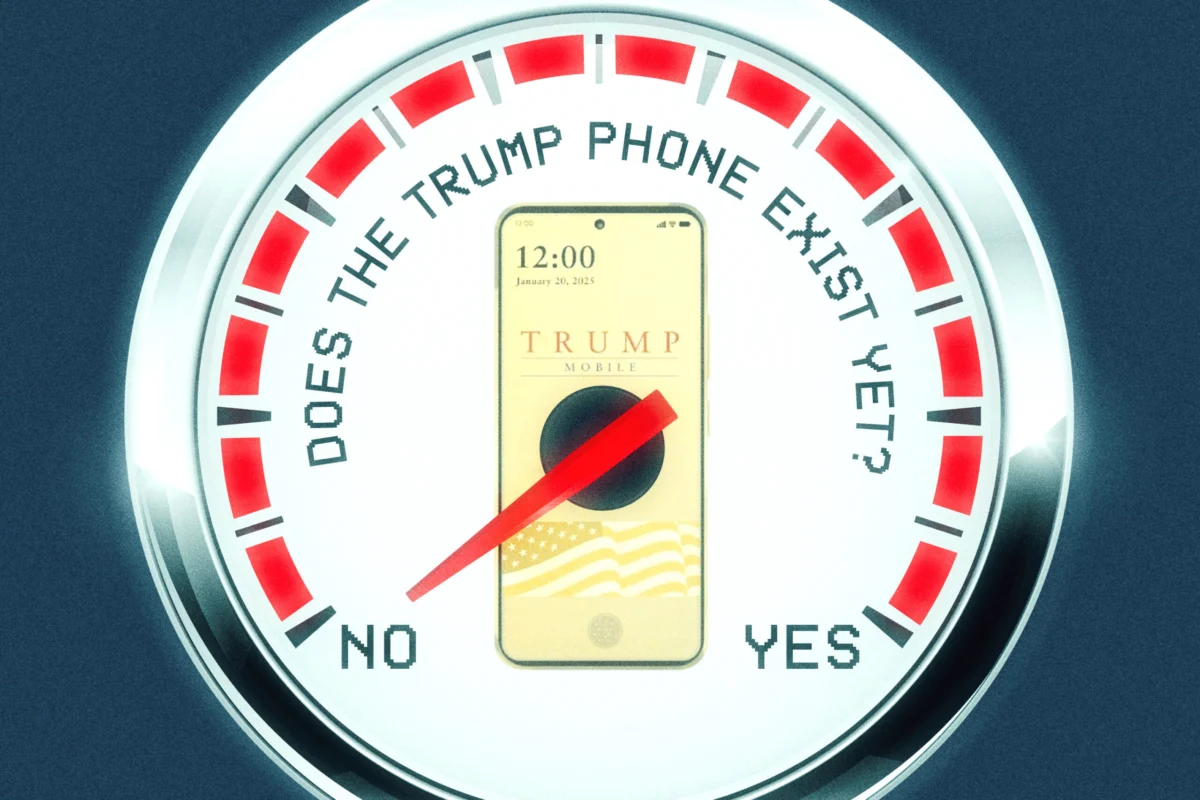
Nearly a year has elapsed since the initial unveiling of what was purported to be the Trump Mobile T1, a premium smartphone bearing the name and endorsement of former President Donald Trump. Despite repeated assurances and projected release timelines, the device has yet to materialize, leaving consumers and industry observers alike in a state of perpetual anticipation and growing skepticism. This prolonged absence, punctuated by a conspicuous lack of substantive updates and engagement from the company, raises significant questions about the viability and operational transparency of Trump Mobile.
The saga of the Trump phone began with an announcement that promised a fusion of cutting-edge technology and the distinctive branding associated with the Trump name. Initially presented with a degree of fanfare, the concept of a Trump-endorsed smartphone was met with a mixture of curiosity and partisan interest. However, as the months have progressed, the narrative has shifted from one of imminent technological innovation to one of persistent delay and unanswered inquiries.
In early February, representatives from Trump Mobile, Don Hendrickson and Eric Thomas, offered a glimpse of what they described as the T1 Phone via a video conference. At that juncture, a commitment was made to update the official Trump Mobile website with comprehensive specifications and detailed imagery of an improved version of the device within a matter of weeks. This promised update has not materialized; the website continues to present a static facade, devoid of the promised enhanced content. This lack of follow-through on a basic communicative promise signals a potential disconnect between stated intentions and operational execution.
Further compounding the mystery, Hendrickson and Thomas indicated that the T1 Phone was on the cusp of completing its certification process with T-Mobile, a critical step preceding its official market launch and subsequent distribution to consumers. This milestone was anticipated by mid-March. As of late March, however, there has been no public confirmation of this certification. Direct inquiries to Trump Mobile executives regarding the status of this crucial regulatory hurdle have reportedly gone unanswered. Similarly, T-Mobile has declined to offer any comment on the matter, further contributing to the information vacuum surrounding the product.
While Trump Mobile executives deliberately avoided committing to a firm March release date during their earlier discussions, the cumulative delays have surpassed several previously missed launch windows. The phone was initially announced over nine months ago, and in that span, the public has been privy to a single, rudimentary render, two disparate spec sheets, and a brief, grainy visual confirmation during a virtual meeting. This prolonged gestation period, characterized by a dearth of tangible progress and a consistent pattern of missed self-imposed deadlines, invites scrutiny into the foundational aspects of the Trump Mobile project.
The implications of such protracted development cycles within the fiercely competitive mobile technology sector are considerable. In a market that thrives on rapid innovation, swift product cycles, and immediate consumer gratification, a device that remains perpetually on the horizon risks becoming obsolete before it even reaches the market. Competitors are continuously iterating on existing technologies, introducing new features, and refining user experiences. A significant delay can render a product’s specifications and design choices outdated, diminishing its competitive edge and market appeal.

Furthermore, the lack of transparent communication from Trump Mobile raises concerns about the company’s operational maturity and its ability to navigate the complex landscape of smartphone manufacturing and distribution. Building a smartphone is an intricate process that involves securing supply chains, managing manufacturing partnerships, adhering to stringent quality control standards, and executing sophisticated marketing and distribution strategies. A consistent inability to provide updates or meet projected timelines can erode confidence among potential investors, partners, and, most importantly, consumers.
The history of technology ventures, particularly those associated with high-profile individuals, is replete with examples of ambitious projects that faltered due to a combination of overpromising, underdelivering, and operational challenges. The Trump phone’s trajectory thus far mirrors some of these cautionary tales, where the initial excitement generated by a brand name fails to translate into a tangible, market-ready product.
From a business perspective, the prolonged absence of the T1 Phone represents a significant opportunity cost. Each month that passes without a product launch is a month where potential revenue is forgone. Moreover, the considerable investment required for product development, marketing, and regulatory compliance continues to accrue without any return. This financial drain, coupled with the diminishing public interest due to repeated delays, can create a precarious financial situation for the company.
The digital landscape itself plays a critical role in shaping consumer perception and market entry. In an era where product launches are often accompanied by extensive online campaigns, influencer collaborations, and immediate availability through e-commerce channels, a product that remains shrouded in mystery and inaccessible to the public faces an uphill battle. The initial buzz can quickly dissipate, replaced by a narrative of unreliability.
The technological specifications that have been sporadically revealed for the Trump phone, while ostensibly aimed at appealing to a premium market segment, must be rigorously evaluated against current industry benchmarks. Without a physical device to test and review, claims regarding its performance, camera capabilities, battery life, and overall user experience remain speculative. The smartphone market is saturated with devices that offer advanced features at competitive price points. Any new entrant must demonstrate a compelling value proposition to capture market share.
The reliance on specific carriers for certification and distribution, such as the reported pending T-Mobile approval, highlights the interdependencies within the mobile ecosystem. Delays in these crucial partnerships can have a cascading effect on the entire launch plan. The fact that T-Mobile has declined to comment suggests that any potential partnership may be either non-existent, in a highly preliminary stage, or subject to significant contractual complexities that prevent public disclosure.
Looking ahead, the future of the Trump Mobile T1, and indeed the company itself, hinges on a dramatic shift in its operational approach. Transparency, consistent communication, and the demonstrable delivery of a product that meets or exceeds market expectations are paramount. Without these fundamental elements, the T1 Phone risks becoming a footnote in the annals of consumer technology – a product that was announced but never truly arrived. The prolonged silence and unanswered questions surrounding this venture cast a long shadow of doubt over its ultimate success, leaving many to question whether the Trump phone will ever transcend its status as a digital phantom. The persistent lack of tangible evidence of its existence, coupled with the consistent pattern of missed deadlines, fuels speculation that the project may be experiencing significant, perhaps insurmountable, developmental hurdles.




 Safa Marwah
 Ayu Aulia
 Lisa Mariana