Lisa Mariana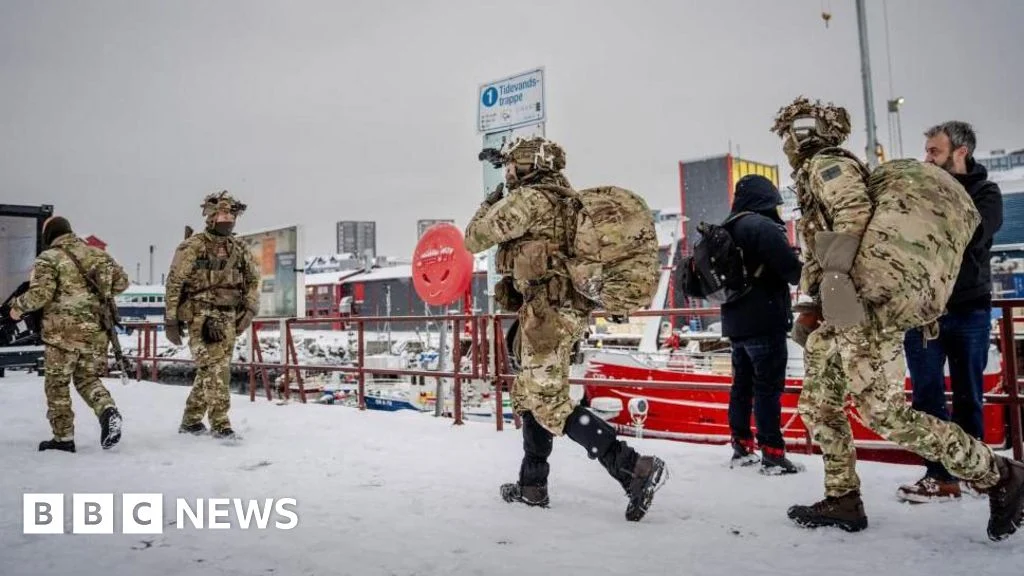
Revelations have surfaced detailing a clandestine operational readiness by Denmark to undertake drastic measures, including the incapacitation of critical aviation infrastructure, should the United States have proceeded with a perceived threat of military annexation of the semi-autonomous territory of Greenland. This extraordinary defensive posture, reportedly adopted in response to public statements by then-President Donald Trump, underscored the profound diplomatic tensions and strategic anxieties that permeated transatlantic relations during a period of heightened geopolitical uncertainty, presenting a stark illustration of an allied nation preparing for a defensive stand against its primary security partner.
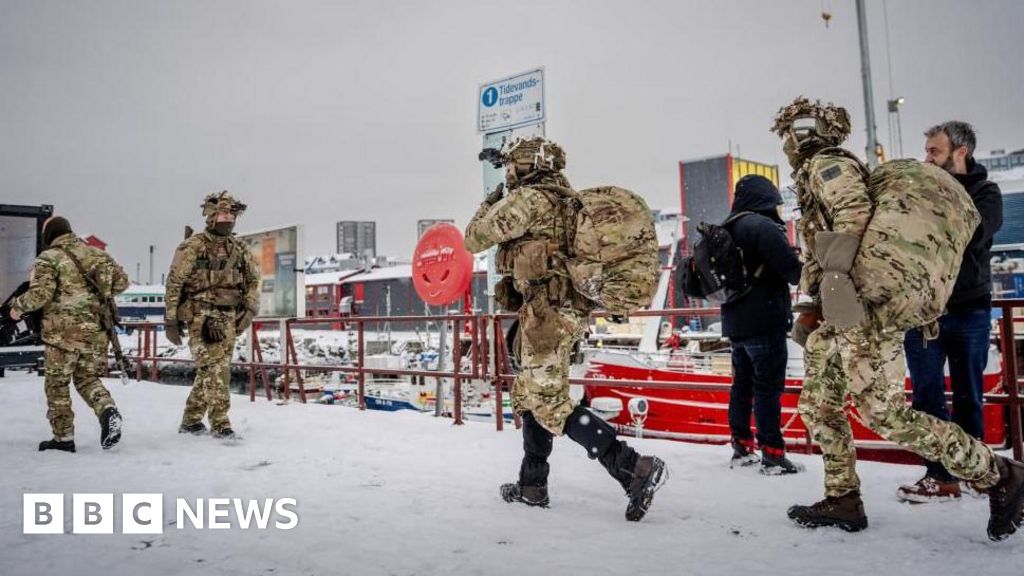
The extraordinary disclosure, attributed to a prominent Danish public broadcaster and subsequently corroborated by international media outlets citing European officials, outlines a scenario where Danish military personnel deployed to Greenland in January were equipped not merely for routine exercises but for a potential confrontation. Critical logistical provisions, including medical supplies for anticipated casualties, were reportedly part of this contingency planning. While the Danish Ministry of Defence has refrained from official comment, anonymous high-ranking military sources have indicated that the sensitive nature of the operation necessitated strict compartmentalization of information, known only to a select few within the command structure.
At the heart of this remarkable episode lies the complex geopolitical status of Greenland, a vast, strategically vital island enjoying a high degree of self-governance within the Kingdom of Denmark. Both Denmark and the United States are foundational members of the North Atlantic Treaty Organization (NATO), an alliance predicated on collective defense and mutual security. The prospect of one member contemplating military action against the territory of another represents an unprecedented breach of alliance principles and a significant historical anomaly. This diplomatic rupture was precipitated by repeated public pronouncements from then-President Trump expressing a desire to acquire Greenland, a notion consistently and unequivocally rejected by both the Greenlandic leadership and the Danish government.
The historical context of American interest in Greenland provides a crucial backdrop to these events. Greenland’s immense landmass, situated strategically between the North Atlantic and Arctic Oceans, has long been recognized for its geopolitical significance. During World War II, the United States established military bases on the island to protect shipping lanes and monitor Nazi activity. This presence was formalized by a defense agreement with Denmark. The Cold War further cemented Greenland’s role as a critical outpost, particularly with the establishment of Thule Air Base, a key component of North American aerospace defense. Indeed, the idea of American acquisition of Greenland is not entirely novel; the U.S. government had previously explored purchasing the island from Denmark in 1867 and again in 1946. However, these historical inquiries were always conducted through diplomatic channels, never through coercive rhetoric that hinted at unilateral action.
President Trump’s renewed interest in Greenland, which emerged publicly in mid-2019, was framed by his administration as a matter of "national security" and economic opportunity, given the island’s vast, largely untapped mineral resources, including rare earth elements. His transactional approach to international relations and propensity for unconventional diplomacy led to a public proposal to purchase Greenland, which was met with incredulity and firm rebukes from Copenhagen and Nuuk. The Danish Prime Minister, Mette Frederiksen, famously dismissed the idea as "absurd," leading to Trump abruptly canceling a planned state visit to Denmark. The subsequent escalation in rhetoric, including Trump’s refusal to rule out the use of force, evidently compelled Denmark to consider extreme defensive measures.
The Danish strategic calculus behind preparing for a potential confrontation, even against a vastly superior military power, was rooted in a commitment to national sovereignty and the deterrence of hostile acts. Sources close to the Danish government and military, alongside officials from allied European nations, reportedly indicated that Copenhagen sought to galvanize political solidarity from partners such as France, Germany, and the Nordic countries. This collective European stance aimed to present a united front against any perceived American unilateralism and to emphasize the inviolability of sovereign territory within the transatlantic alliance framework. The invocation of potential analogies, such as the situation in Venezuela—where the Trump administration had openly entertained military options—reportedly fueled Danish concerns, suggesting that the United States might be willing to act outside conventional diplomatic norms.
The military operation itself, publicly designated as "Operation Arctic Endurance," involved the deployment of a multinational contingent of Danish, French, German, Norwegian, and Swedish soldiers to key locations in Greenland, including the capital Nuuk and Kangerlussuaq, home to a significant airport. Subsequent deployments included specialized elite Danish forces and French units trained for cold-weather and mountainous warfare. Simultaneously, Danish air assets and a French naval vessel were reportedly positioned in the North Atlantic. While presented as routine joint exercises aimed at enhancing Arctic defense capabilities, the underlying directive was far more critical: to prepare for a defensive stand against a potential American invasion.
The core of Denmark’s contingency plan involved a "scorched earth" strategy, specifically the readiness to render critical airport runways in Nuuk and Kangerlussuaq unusable. This drastic measure, intended to prevent the landing of large U.S. military transport aircraft, aimed not at repelling a full-scale invasion—an acknowledgment of the overwhelming disparity in military power—but rather at significantly increasing the "cost" and logistical complexity for an aggressor. As a Danish defense source reportedly articulated, the objective was to ensure that any American attempt to seize Greenland would constitute an undeniable "hostile act" with substantial material and political repercussions, thereby raising the threshold for such an undertaking. The very act of preparing to sabotage one’s own infrastructure underscored the gravity with which Denmark viewed the threat to its territorial integrity.
This episode cast a shadow over the cohesion and trust within NATO, an alliance fundamentally built on shared values and collective security. The notion of a NATO member planning defensive sabotage against another member’s potential aggression highlighted the fragility of even the strongest alliances when confronted with unconventional foreign policy approaches. It underscored the emerging geopolitical significance of the Arctic region, which is increasingly becoming a theater of strategic competition among major powers, including Russia, China, and the United States. Greenland, with its vast natural resources, strategic geographic position, and potential future role in Arctic shipping routes, is central to these evolving dynamics.
The diplomatic crisis ultimately de-escalated. At the World Economic Forum in Davos on January 21, President Trump publicly clarified his position, stating, "I don’t want to use force. I won’t use force. All the United States is asking for is a place called Greenland." This marked a significant shift from his earlier refusal to rule out military options and was followed by expressions of a desire for "immediate negotiations" to find a compromise. While the precise factors leading to this de-escalation remain subject to interpretation—whether it was the subtle show of European solidarity, direct diplomatic pressure, or a recalculation within the U.S. administration—the Danish preparations undoubtedly sent a clear message regarding the unwavering commitment to Greenland’s sovereignty.
In the aftermath, the incident has left lingering questions about the future of transatlantic relations and the resilience of international norms. It served as a stark reminder of how rhetorical provocations, even from allied leaders, can trigger serious military and diplomatic contingencies. For Denmark, it reaffirmed the profound responsibility it holds for Greenland’s security and autonomy, while for Greenlanders, it underscored their unique geopolitical position and the imperative of safeguarding their self-determination. The episode underscores the continued strategic importance of the Arctic and the imperative for clear, respectful diplomatic engagement to prevent similar crises from destabilizing global security in an increasingly unpredictable world.




 Aura Kasih
 Safa Marwah
 Ayu Aulia