Lisa Mariana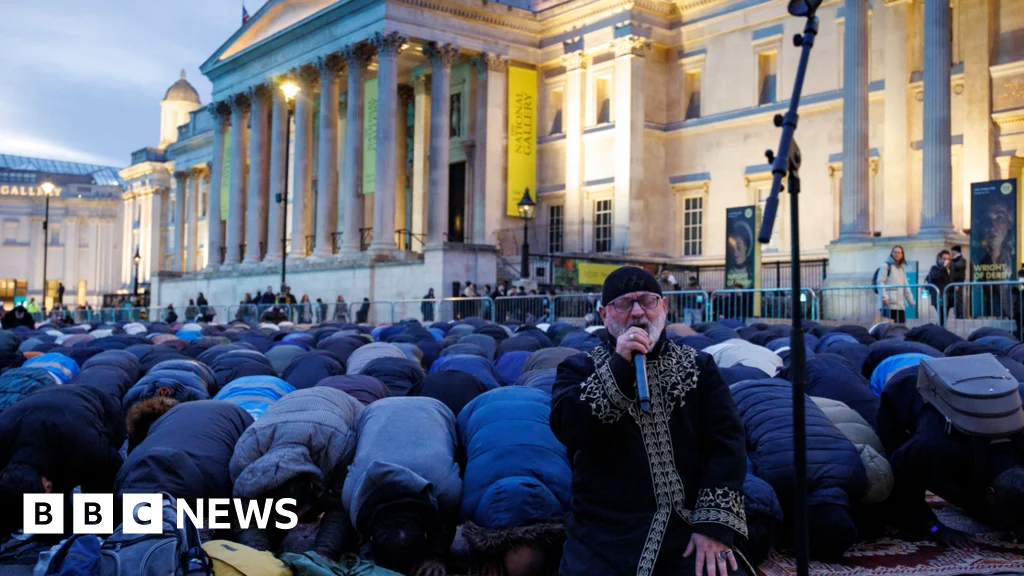
A prominent Conservative minister’s unequivocal condemnation of a public Ramadan prayer gathering in a central London landmark has triggered a significant political and societal controversy, intensifying discussions around religious expression, cultural assimilation, and the appropriate use of civic spaces within a diverse metropolitan context. This intervention by a senior government figure has not only deepened an existing internal party rift but also propelled a sensitive cultural debate into the national political spotlight, prompting widespread commentary on the delicate balance between religious freedom and evolving societal norms.
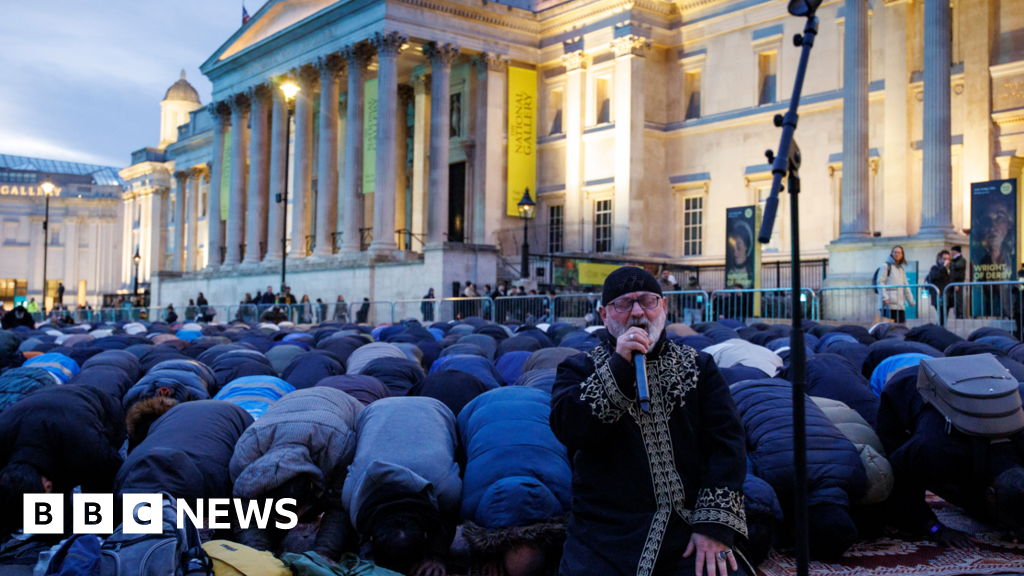
The core of the dispute emanates from an "open iftar" event, a communal breaking of the fast during the holy month of Ramadan, which recently took place in London’s iconic Trafalgar Square. Such gatherings, organized by the Ramadan Tent Project charity, typically involve shared meals and often include collective prayers, a fundamental aspect of Islamic observance. It was footage depicting these public prayers that drew sharp criticism from Nick Timothy, a Conservative Member of Parliament and Shadow Justice Secretary, who provocatively characterized the display as an "act of domination" and explicitly stated that such rituals were "not welcome in our public places and shared institutions." This strong denunciation immediately provoked a fierce backlash, particularly from opposition benches and various community groups.
The controversy escalated dramatically following the intervention of Kemi Badenoch, a Cabinet minister holding the portfolios of Business and Trade, and Women and Equalities. Far from distancing herself from Timothy’s remarks, Badenoch offered robust support for her colleague, articulating her own reservations about the event’s legitimacy. She asserted that the gathering "should not have been allowed to go ahead at all," citing her personal discomfort with what she had observed in recorded footage. Her criticism extended beyond Timothy’s original points, introducing an additional dimension by claiming that women at the event were "pushed to the back," thereby rendering the gathering "exclusionary" and out of step with "the norms of British culture." This expansion of the critique transformed the discussion from one purely about public religious display to one encompassing gender dynamics and perceived cultural incongruity.
The historical and symbolic significance of Trafalgar Square as a locus for public assembly and expression in the United Kingdom cannot be overstated. Since its completion in the mid-19th century, the square has served as a pivotal site for political demonstrations, national celebrations, and cultural events, embodying the democratic spirit of public discourse and collective gathering. Its history as a stage for diverse events—ranging from political rallies and protests to royal celebrations, artistic performances, and indeed, numerous religious festivals—underscores its role as a genuinely shared public realm. For instance, the square has regularly hosted events for Christian Easter celebrations, the Sikh festival of Vaisakhi, and the Jewish holiday of Chanukah, among others. This established precedent of religious and cultural plurality in the square forms a critical backdrop against which the current debate unfolds, highlighting the perceived inconsistency in criticisms directed specifically at a Muslim observance.
The Greater London Authority (GLA), responsible for authorizing events in Trafalgar Square, has confirmed that the recent iftar was the sixth such event to be held in the square, operating under established protocols for public gatherings. Organizers are required to submit detailed applications, outlining proposed activities and expected attendance, ensuring adherence to public safety and order regulations. The routine nature of these approvals, alongside the square’s diverse event history, raises questions about the specific criteria or concerns that might lead a senior minister to advocate for a ban on such an event retrospectively.
The political ramifications of Badenoch’s stance have been immediate and pronounced. Labour’s response was swift and condemnatory, with party chair Anna Turley describing Timothy’s initial comments as "utterly appalling" and demanding his removal from the front bench. London Mayor Sadiq Khan, directly involved in the event and featured in the controversial footage, strongly defended the right of Muslims to celebrate their religion publicly, drawing parallels with other faith groups. He questioned the underlying motives of the Conservative Party in objecting to Muslim observance while seemingly accommodating other faiths. This sharp exchange underscores the deepening cultural divide within British politics, with the Conservative party’s positioning interpreted by some as an appeal to a segment of the electorate concerned about national identity and the perceived erosion of traditional values. Reform UK leader Nigel Farage further amplified this narrative, echoing Timothy’s sentiment by alleging that the event signified an "attempt at dominance" over the capital, thus aligning the critique with a broader anti-establishment, culturally conservative platform.
At the heart of this controversy lies a complex interplay between the fundamental right to freedom of religion and the contested notion of "British culture" and "shared public spaces." International human rights frameworks, including the European Convention on Human Rights to which the UK is a signatory, protect the right to manifest one’s religion or belief in worship, teaching, practice, and observance, both individually and in community with others, in public or private. However, these rights are not absolute and can be subject to limitations prescribed by law and necessary in a democratic society in the interests of public safety, for the protection of public order, health or morals, or for the protection of the rights and freedoms of others.
The language employed by Timothy and Badenoch—phrases such as "act of domination," "not welcome," "exclusionary," and the invocation of "British values" and "British identity"—is particularly potent and, to many, highly problematic. Critics argue that such rhetoric risks alienating minority communities, fostering division, and potentially legitimizing discriminatory attitudes. The accusation regarding women being "pushed to the back" at the event, while a serious allegation if substantiated, adds a layer of complexity. This claim, distinct from Timothy’s original critique focused on public prayer itself, shifts the debate towards specific conduct within a religious gathering and its alignment with egalitarian principles often associated with modern British society. The Ramadan Tent Project, however, has vehemently refuted these claims, describing them as a "gross misrepresentation" and "totally untrue," emphasizing the event’s inclusive nature and the positive interfaith attendance.
Expert analysis suggests that this debate taps into a broader "culture war" narrative increasingly prevalent in Western democracies, where questions of national identity, multiculturalism, and religious practice become flashpoints in political discourse. For some, the public display of minority religious practices in prominent civic spaces represents a welcome demonstration of diversity and integration. For others, it is perceived as an assertion that challenges established cultural norms or even an unwelcome imposition. The challenge for political leaders and policymakers lies in navigating these deeply held, often conflicting perspectives without resorting to divisive rhetoric that undermines social cohesion.
The implications of this ministerial intervention are multifaceted. Firstly, it could signal a more assertive stance from certain factions within the Conservative Party regarding religious expression in public life, potentially influencing future policy decisions related to public events and cultural funding. Secondly, it risks exacerbating tensions between the government and various faith communities, particularly Muslim groups, who may feel unfairly targeted or misunderstood. Thirdly, it places additional pressure on local authorities like the GLA, who are tasked with balancing diverse community needs with maintaining public order and ensuring inclusivity in shared spaces.
Looking ahead, this controversy is unlikely to dissipate quickly. With local elections on the horizon and a general election looming, issues pertaining to identity, culture, and social integration are likely to remain salient. The debate over the Trafalgar Square iftar serves as a microcosm of larger societal questions about how a modern, diverse Britain accommodates and celebrates its multiple identities while upholding a shared sense of national purpose. The challenge will be for political leaders to articulate a vision that fosters genuine inclusion and mutual respect, rather than one that inadvertently creates further fragmentation and misunderstanding. The discussion highlights the critical need for nuanced understanding and careful consideration of how public spaces are used, interpreted, and regulated in a pluralistic society, ensuring that they remain truly open and welcoming to all its citizens.



 Aura Kasih
 Safa Marwah
 Ayu Aulia